





 Portuguese
  English
  Spanish
  5 min of reading
  0 comments


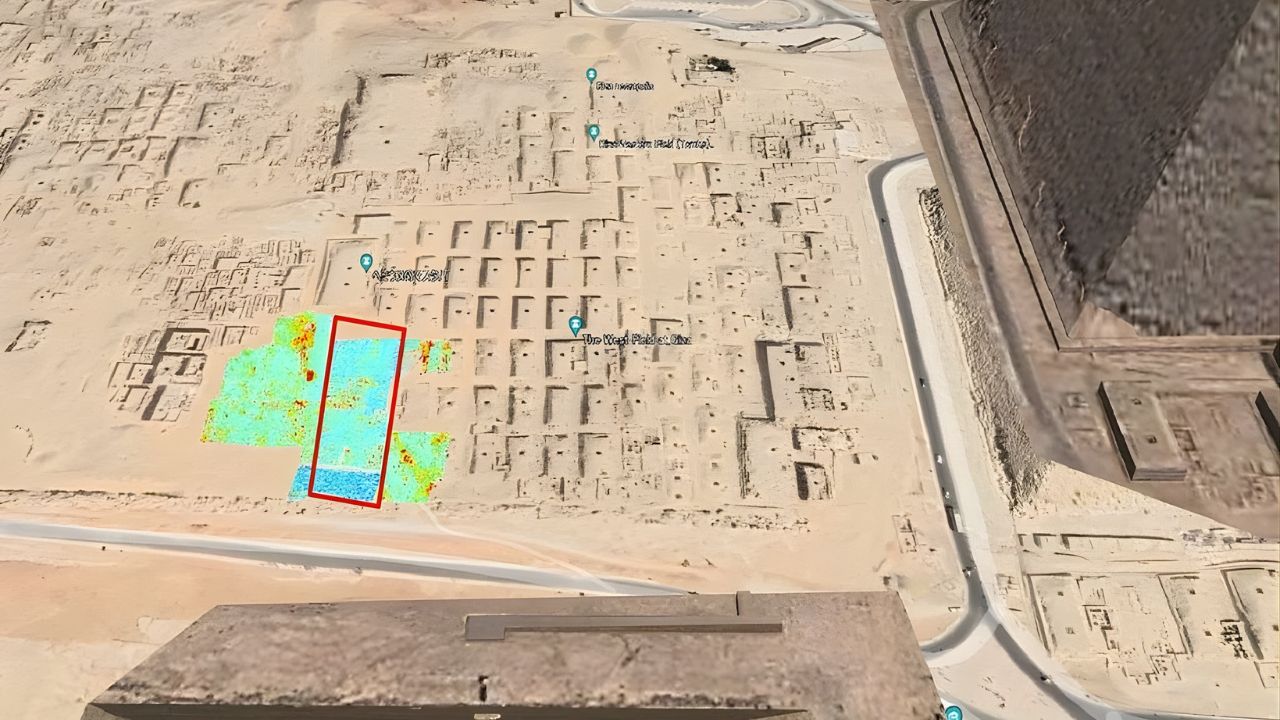
Scanning detects 30-meter empty space with sealed door inside the Great Pyramid of Cheops and complete revelation may happen in 2026.
The Great Pyramid of Giza is approximately 4,500 years old, about 140 meters tall, made up of over 2.3 million stone blocks, and remained the tallest man-made structure until the Eiffel Tower was inaugurated in 1889. It is also the only one of the Seven Wonders of the Ancient World that still stands. Even after centuries of exploration, the pyramid continues to reveal new elements.
In November 2025, archaeologist Zahi Hawass, former Minister of Antiquities of Egypt, announced during the 44th Sharjah International Book Fair that an unknown structure was identified inside the pyramid using advanced scanning technologies. According to information released by outlets such as the Jerusalem Post, Egypt Independent and Greek Reporter, it is a corridor about 30 meters long that ends in a sealed door, never opened since the construction of the pyramid.
Pyramid of Cheops has known chambers, but empty sarcophagus raises questions for centuries
The pyramid was built for Pharaoh Cheops, who ruled between 2509 and 2483 BC, during the Fourth Dynasty of Ancient Egypt.
-
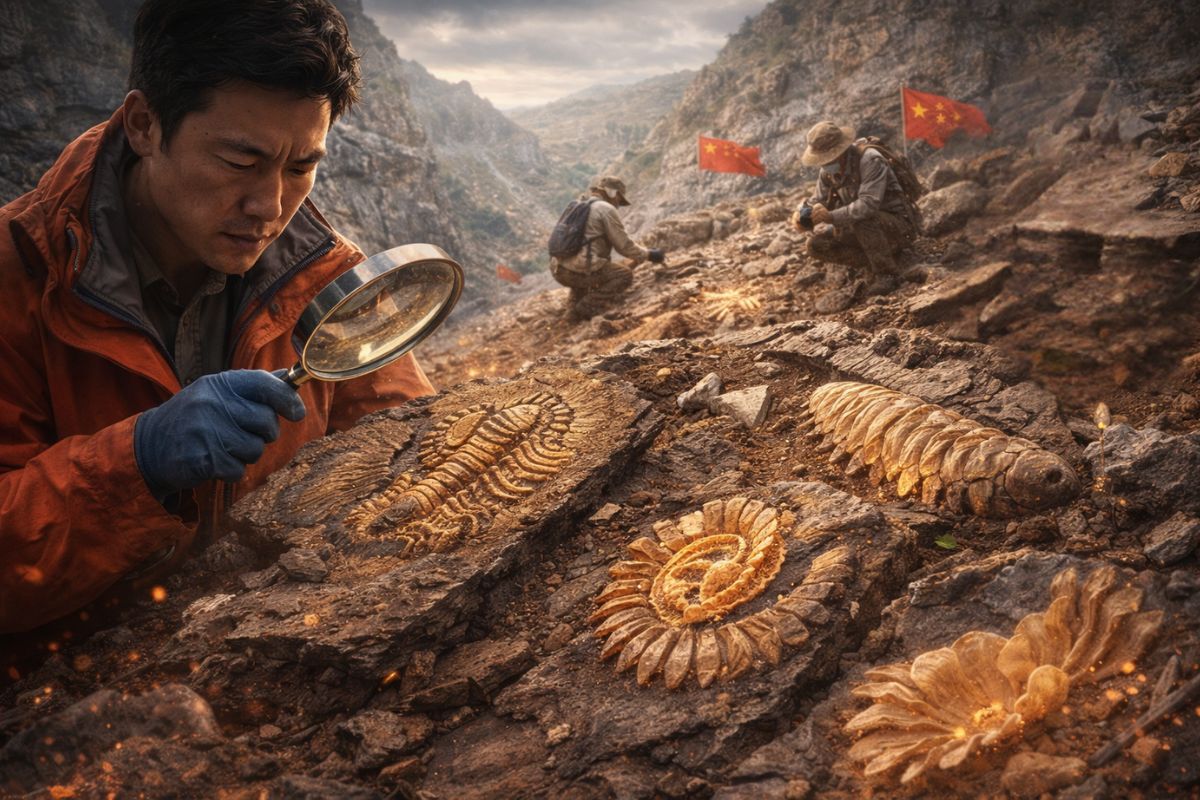
Scientists in China have discovered more than 700 animal fossils that should not exist and that lived millions of years earlier than science believed was possible for complex life on Earth.
-
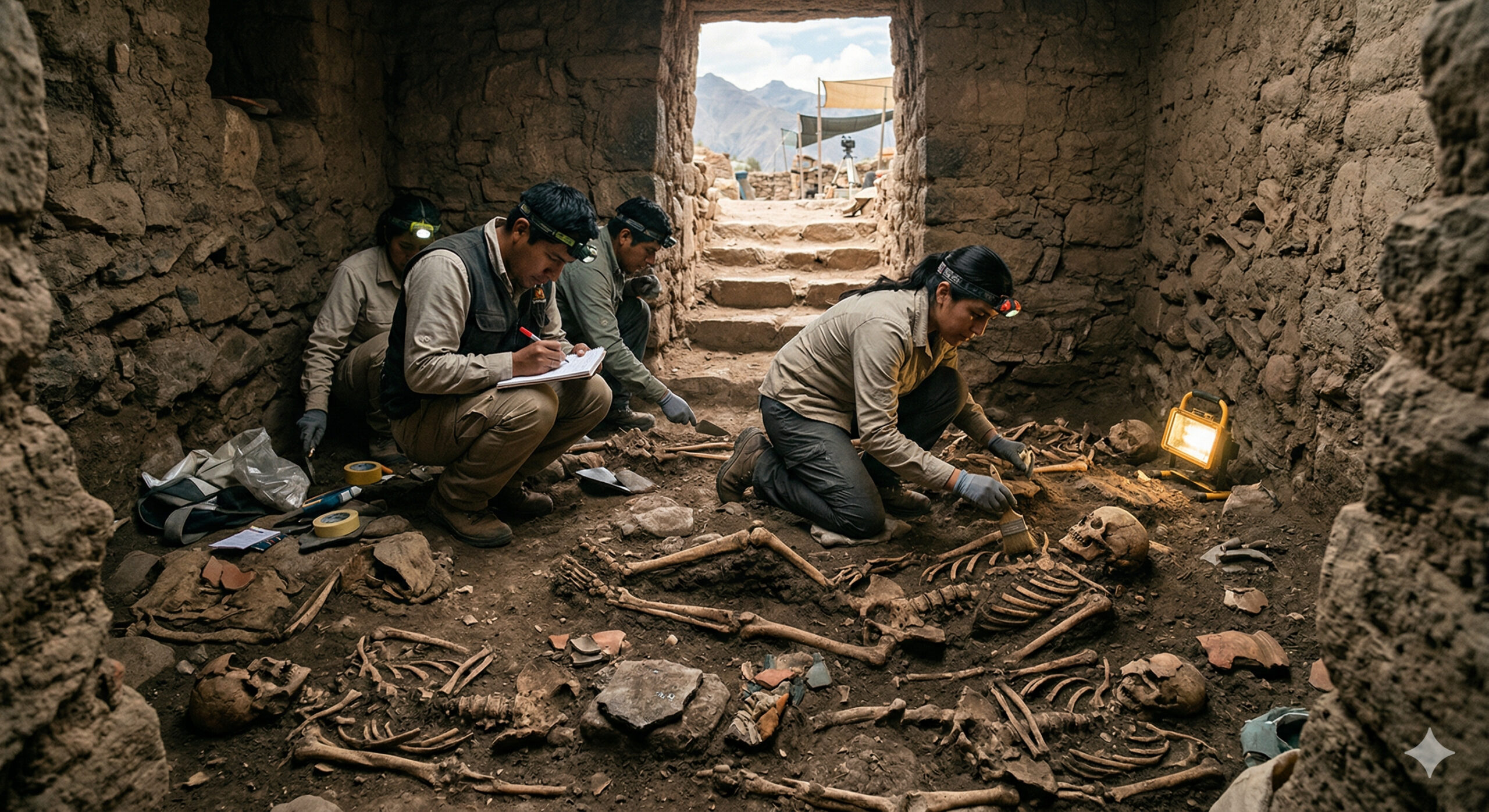
In Peru, archaeologists opened a temple dating back about 3,000 years and found 14 bodies associated with human sacrifices. This discovery expands the timeline of Andean rituals and indicates organized practices long before the great empires of the region.
-
Chinese engineer goes viral teaching how to take down F-35, and the video gains attention after Iran targets US fighter jet.

-
The University of California reveals what remains of the United States flag left on the Moon by NASA astronauts during the Apollo mission, and the answer will leave you speechless.

Three internal chambers have long been known: the Subterranean Chamber, the Queen’s Chamber, and the King’s Chamber.
In the King’s Chamber is a granite sarcophagus that remains empty. The mummy of Cheops has never been found, nor has any associated funerary treasure. The most accepted explanation is that it was looted in antiquity, but there are hypotheses that the pharaoh may be buried in a chamber yet to be discovered within the structure itself.
Muography technology uses cosmic particles to see inside the pyramid without excavation
The identification of the empty space was made possible thanks to muography, a technique based on the detection of cosmic muons.
Muons are subatomic particles generated when cosmic rays interact with the Earth’s atmosphere. They pass through dense materials like stone but are partially absorbed depending on the density.

By measuring the number of muons that pass through different parts of the pyramid, researchers can identify less dense regions, indicating the presence of empty spaces.
The method works like a large-scale X-ray and has the advantage of being completely non-invasive.
ScanPyramids project had already identified giant empty space inside the pyramid in previous studies
The discovery announced by Hawass is related to the advances of the ScanPyramids project, initiated in 2015 by institutions such as Cairo University and the French institute HIP.
In 2017, the project revealed the so-called “Big Void,” an empty space over 30 meters located above the Grand Gallery, considered one of the most important discoveries in recent archaeology.
This finding was published in the journal Nature and described as the first major internal structure identified in the pyramid since the 19th century.
9-meter corridor discovered in 2023 reinforces existence of hidden structures in the pyramid
In 2023, another study published in Nature Communications revealed a corridor on the north face of the pyramid.
About 9 meters long and 2 by 2 meters in section, the structure was identified with high precision using advanced detectors.
According to statements from Hawass, this corridor may lead to unexplored areas, possibly connected to a deeper chamber.
Robots explore inaccessible areas and may reveal content behind sealed door
Due to the reduced dimensions of the corridors, exploration has been conducted with remotely operated robots.

These devices can access narrow passages and capture images of areas that have remained inaccessible to humans for millennia.
The team confirmed that they located the exact position of the 30-meter corridor, but the content behind the sealed door has not yet been disclosed.
New chamber may change understanding of the internal architecture of the pyramid of Cheops
The presence of new voids indicates that the internal structure of the pyramid may be much more complex than previously thought.
If a new chamber is confirmed, it may contain funerary artifacts, structural elements, or even new information about the construction process. There is also the hypothesis that the true funerary chamber of Cheops has yet to be found.
Zahi Hawass is one of the leading figures in contemporary Egyptology, with decades of experience in excavations in Giza. During the announcement, he stated that the discovery could represent a new chapter in the history of Ancient Egypt and indicated that the complete revelation will be presented to the public in 2026.
Muon technology is already used to investigate volcanoes, nuclear reactors, and historical structures
Muography is not exclusive to the pyramids. The technique has been applied in the analysis of volcanoes, inspection of nuclear reactors, and study of archaeological structures in different parts of the world.
Its growing use demonstrates the potential of non-invasive technologies in exploring historical heritage.
The possible revelation in 2026 occurs in the context of the inauguration of the Grand Egyptian Museum, near the pyramids of Giza. With over 100,000 square meters and thousands of artifacts, the museum is considered the largest dedicated to a single civilization.
The combination of a new discovery inside the pyramid with the museum’s infrastructure may boost tourism and increase global interest in Ancient Egypt.
The existence of a 30-meter corridor ending in a sealed door raises one of the most intriguing questions in modern archaeology.
It could be an unprecedented funerary chamber, an unknown architectural structure, or something yet to be imagined.
In your view, what could have been hidden for 4,500 years inside the Great Pyramid of Cheops?







Seja o primeiro a reagir!