





 Portuguese
  English
  Spanish
  3 min of reading
  2 comments


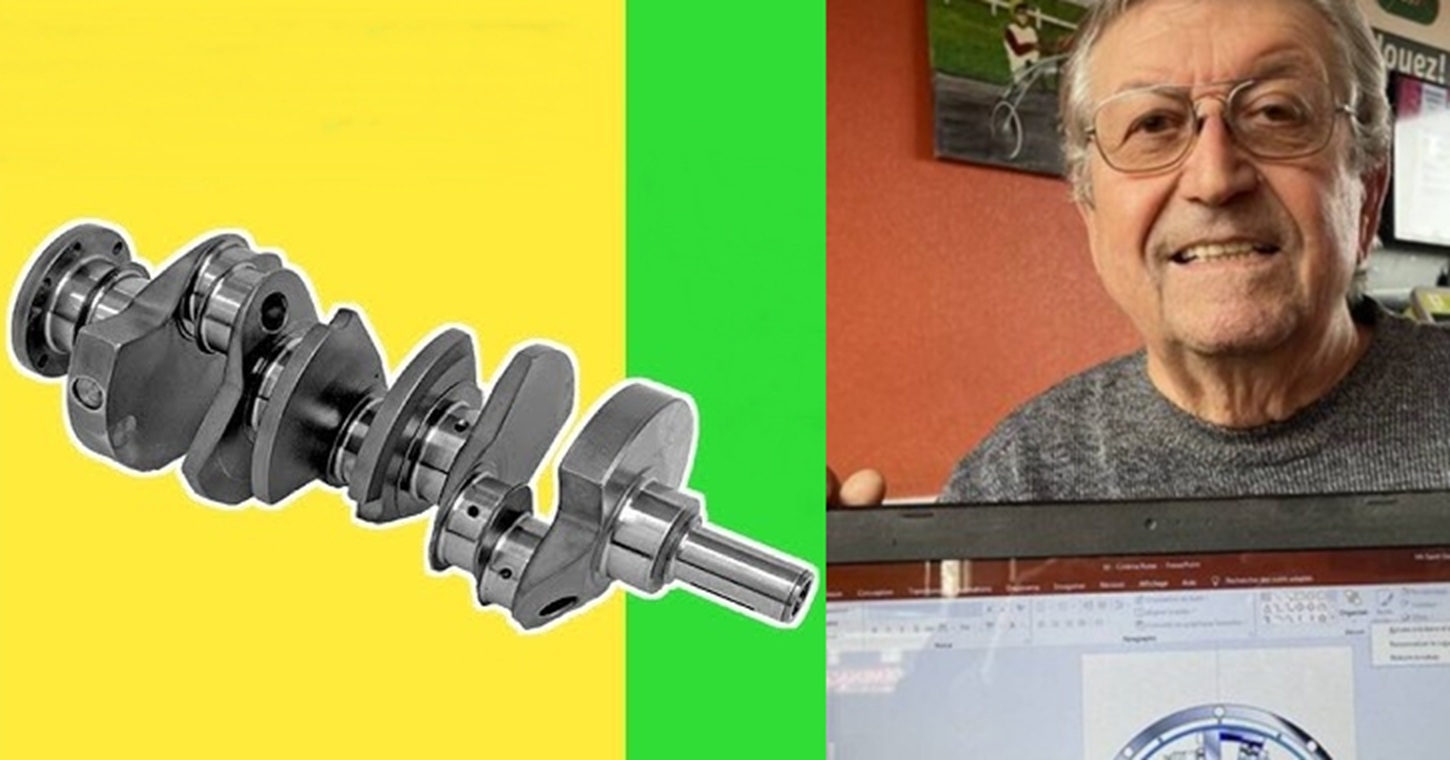


81-Year-Old Inventor Creates Crankless Engine That Promises to Revolutionize the Automotive Industry by Reducing Fuel Consumption and Carbon Emissions.
The automotive sector is constantly evolving, driven by the search for more eco-friendly and much more efficient solutions. Among the latest innovations in the sector, the creation of a crankless internal combustion engine has stood out.
The invention was the result of much study and effort by an elderly Frenchman named Maurice Saint-Germain, who is 81 years old. This technology has the potential to stand out in this market by reducing fuel consumption and carbon emissions while maintaining energy efficiency.
The Innovation Behind the Crankless Engine
Maurice Saint-Germain, from Denée, France, developed a crankless thermal engine, an innovation protected by a registered patent at the French National Institute of Industrial Property in 2015.
-
Honda performs miracles in fuel consumption with a hatch that marks 13.2 km/l in the city and 15 km/l on the highway, leaving Polo, HB20, 208, and Onix behind and becoming a reference among compact cars without resorting to turbo or hybrid systems.

-
Six diseases that seem common but can prevent the renewal of the driver’s license for the elderly throughout Brazil and surprise experienced drivers — could any of them affect you without showing clear signs?

-
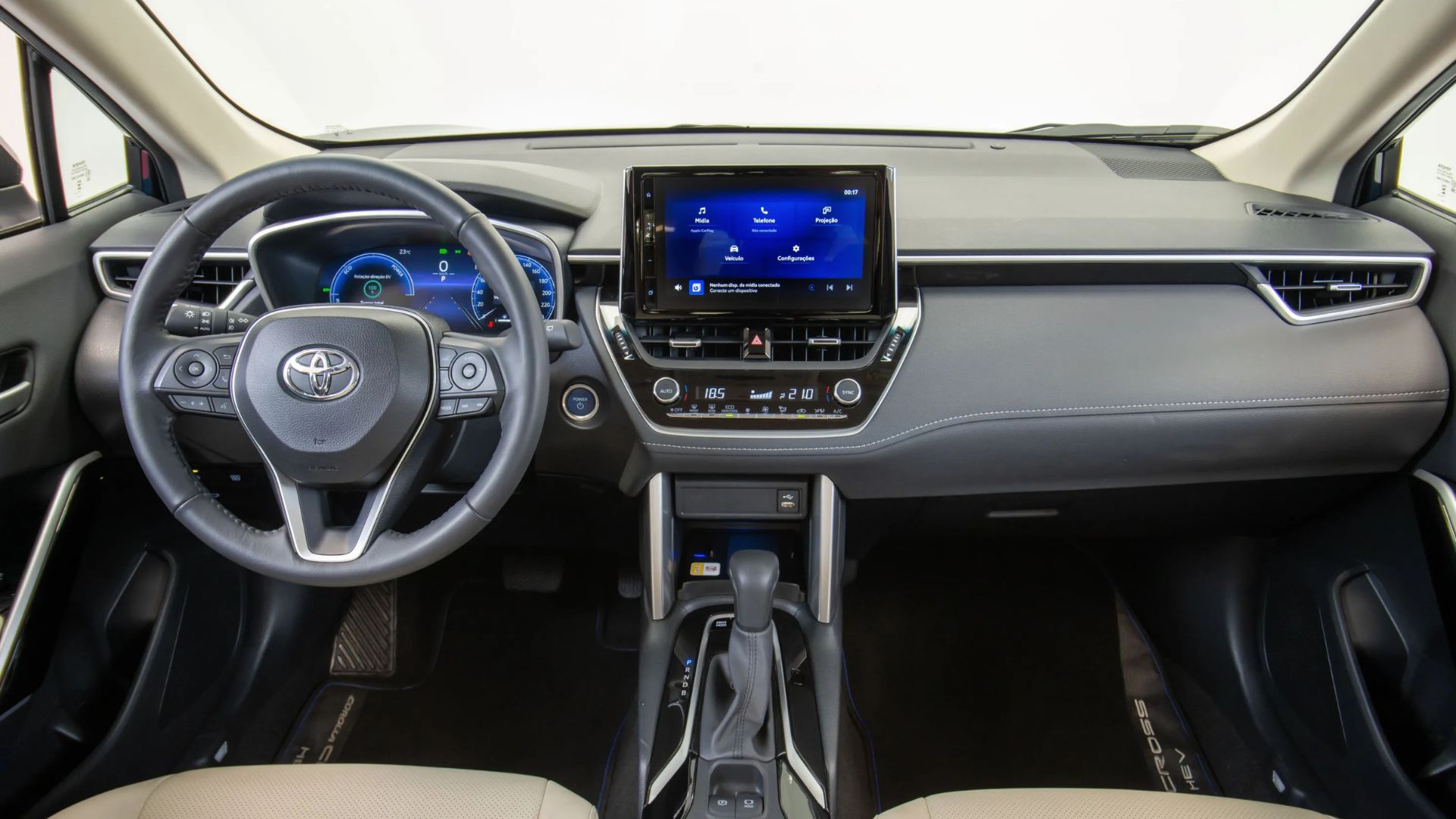
With 122 hp, fuel consumption of up to 17.7 km/l, and a trunk capacity of 440 liters, this hybrid SUV impresses even though it costs up to R$ 47,000 more than the Yaris — meet the Toyota Corolla Cross.
-
600 km with three Chinese plug-in SUVs, same mode and air conditioning on: Jaecoo 7, BYD Song Plus, and Haval H6 hit the road, and the pump reveals who was truly the most economical.

The inventor’s proposal consists of an eccentric rotation system that converts the reciprocating motion of the pistons into circular motion, without the need for the traditional crank-connecting rod system.
Less Friction, More Efficiency
In conventional thermal engines, the crank-connecting rod system generates lateral friction in the cylinders, reducing efficiency.
With Saint-Germain’s design, this problem is overcome thanks to a rotating plate that supports the cylinders, accompanied by a central and eccentric pinion system that converts the pistons’ motion.
This design significantly reduces friction, resulting in lower fuel consumption and lower pollutant emissions.
Potential for Various Applications
Besides its application in the automotive sector, the technology developed by Saint-Germain can also be employed in pumps and compressors, expanding its impact to other areas of industry.
The inventor is currently seeking partnerships with companies to enable the construction of a functional prototype, which could accelerate the adoption of this innovative technology.
What Is the Purpose of the Crankshaft?
The crankshaft is an essential component of the internal combustion engine, responsible for converting the linear motion of the pistons into rotary motion. This component consists of bearings, arms, and counterweights that work together to transform the force generated by combustion into mechanical energy.
Directly connected to the connecting rods, it receives the back-and-forth motion of the pistons and converts it into rotation, allowing the force to be transferred to the transmission system and, consequently, to the vehicle’s wheels.
Its robust construction is crucial for withstanding the intense pressures and forces generated during engine operation.
In addition to its main mechanical function, the crankshaft plays an important role in the engine’s balance and smoothness. The counterweights help reduce vibrations, providing a more stable operation.
Environmental and Economic Impacts
By reducing friction and fuel consumption, the crankless engine directly contributes to lowering the carbon footprint.
This innovation aligns with global sustainability goals, favoring the transition to cleaner vehicles. Moreover, greater energy efficiency can reduce operational costs, benefiting consumers and businesses.
Despite its enormous potential, the viability of the technology still depends on the construction of a functional prototype and large-scale testing.
However, Saint-Germain’s innovation paves the way for new approaches in thermal engine design, challenging paradigms and encouraging further research in this field.
With information from NeoZone.










Ese motor ya existe desde hace años. Lo tengo, funcional, en mi casa para el que lo quiera ver.
Yeas I’d like to see it… at least a video or a 3d animation