





 Portuguese
  English
  Spanish
  5 min of reading
  2 comments





Silent Control And Growing Land Inequality Worry Authorities And Expose Serious Failures In State Supervision
A silent appropriation of Brazilian land by foreign investors has raised strong concerns among experts and authorities. Moreover, the phenomenon is advancing in a discreet and strategic manner, making control more difficult.
The issue was widely discussed on September 30, 2025, during the International Symposium on Property and Foreigners, held at the Law School of USP, in São Paulo. Therefore, experts warn of the lack of transparency and effective regulation on the topic.
According to the National Institute of Colonization and Agrarian Reform (Incra), 1% of owners hold 46% of Brazilian land, reinforcing land concentration and inequality in the countryside. Thus, the scenario reveals a structural and urgent problem.
-
With the arrival of Law 11.788, internships are now recognized as professional experience.

-
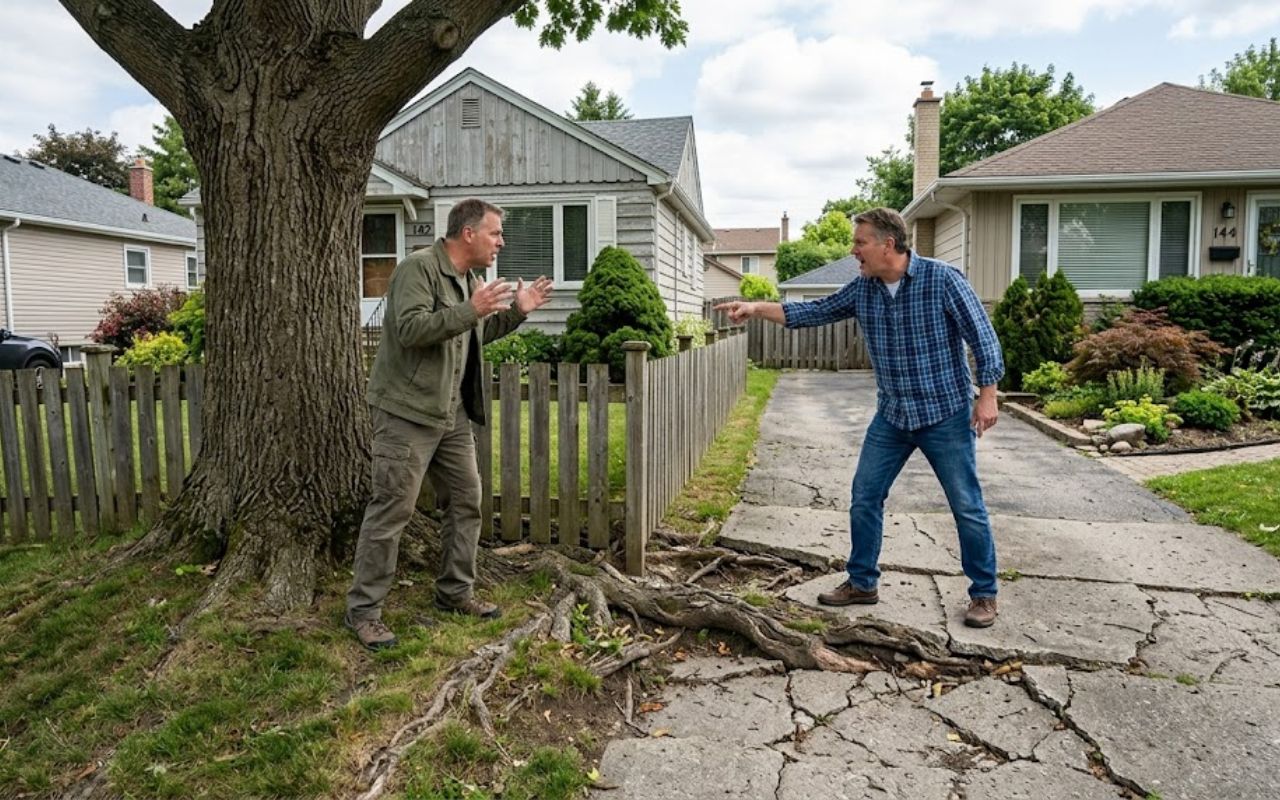
The Brazilian Civil Code states that a property owner has the right to cut the roots of a neighbor’s tree that invade their land, as long as it does not harm the tree itself. The owner must notify the neighbor before taking such action.
-
Engineer is sentenced to repay R$ 148 thousand after holding public positions in three municipalities in Rondônia with incompatible schedules, and the decision is upheld by the Court of Justice.

-
Chamber approves project that creates mandatory Life Insurance for police officers, firefighters, guards, and traffic agents.

For the researchers present, this international advance represents a direct threat to national sovereignty and food security, in addition to weakening the social function of property.
Legal Appropriation And Failures In State Control
During the panel “Foreignization and Land Grabbing“, lawyer Ney Strozake, from the Movement of Landless Rural Workers (MST), highlighted the legal actions of foreign companies to control national lands. Thus, the process occurs in a legalized manner but outside the reach of supervision.
These companies use Brazilian subsidiaries to escape the legal restrictions imposed by the federal government. However, this method, while discreet, expands foreign control over the territory.
He explained that such companies produce commodities aimed at export, such as soy, cotton, and cellulose, without contributing to domestic supply. On the other hand, local communities are displaced, living without access to basic services and in conditions of poverty.
Strozake stated that control over land use is the state’s duty, according to the Federal Constitution. Furthermore, he argued that the lack of supervision compromises sovereignty and the social function of property.
The lawyer proposed the creation of a consortium between universities and civil associations capable of putting pressure on the federal government and increasing Incra’s budget. In this way, it would be possible to reassert control over national territory.
Disguised Foreign Capital And Growing Land Speculation
Economist Sérgio Pereira Leite, from the Federal Rural University of Rio de Janeiro (UFRRJ), stated that official Incra figures underestimate foreign control. In fact, many international investors use national funds to disguise the source of capital.
He explained that the Fiagro (Investment Fund in Agro-industrial Production Chains) allows the entry of external resources without clear identification, which complicates supervision.
Between 2005 and 2023, the number of international funds specializing in land jumped from 43 to 960. As a result, Brazil became one of the main destinations for these global agricultural investments.
According to Leite, institutions like Harvard University and the TIAA fund operate in the country through national companies, masking their origin. Consequently, this drives up land prices and fuels land speculation.
In Luís Eduardo Magalhães (BA), land prices increased by 600% between 2001 and 2020, while inflation during that period was 230%. Therefore, the economic impact is evident.
Displacement Of Communities And Social Impacts
Leite warned that the advance of foreign capital causes forced displacements of farmers, indigenous people, and quilombolas. Moreover, the silent expulsion of these populations threatens traditional ways of life.
Cases recorded in São Raimundo Nonato (PI) and Cotegipe (BA) showcase the occupation of large productive areas by international funds. Thus, entire communities lose their territories.
The economist advocates urgent strengthening of Incra, which currently lacks adequate structure to monitor land transactions. Therefore, he calls for more investment and permanent oversight.
Leite warned that without effective public policies and continuous control, the country may lose control over its productive lands. Thus, sovereignty and food security are at risk.
Land Sovereignty And Gender Inequality In The Countryside
Attorney Mônica Sapucaia Machado, from the Brazilian Institute of Education, Development, and Research (IDP), stated that the foreignization of land goes beyond agrarian issues. In fact, it is a debate about development, democracy, and decolonization in Latin America.
Machado emphasized gender inequality in the countryside, noting that women control only 1% of the world’s agricultural land, despite representing 40% of the rural workforce.
Moreover, she stated that this exclusion limits women’s participation in decisions regarding property and sustainability. Thus, the topic needs to be integrated into the debate on land sovereignty.
Property Model And Invisibility Of Traditional Peoples
Professor Adriana Espíndola Corrêa, from the Federal University of Paraná (UFPR), highlighted that the Brazilian land model historically ignores traditional communities. Thus, indigenous and quilombola peoples remain without territorial recognition.
She explained that communal forms of land occupation are often disregarded by public policies. Consequently, this amplifies land conflicts.
The professor cited the case of an Italian fashion company that became one of the largest landowners in Argentina. In this process, it acquired territories occupied by the indigenous Mapuche people, who became culturally and socially invisible.
What The Future Holds For Brazil?
Experts argue that the federal government must act quickly to regulate foreign control over national lands. For this, it will be essential to strengthen Incra and review rural investment legislation.
Moreover, it will be necessary to ensure transparency in land transactions and establish clear limits on international presence in the countryside.
Meanwhile, the advance of external capital and the silent expulsion of communities show that the dispute for land in Brazil is far from over.
Therefore, the country will have to choose between a firm and sovereign policy or a model that favors foreign interests.
And you, do you think Brazil should tighten control over foreign investments in agricultural lands or allow external capital to advance in search of economic development?










I must say this article is extremely well written, insightful, and packed with valuable knowledge that shows the author’s deep expertise on the subject, and I truly appreciate the time and effort that has gone into creating such high-quality content because it is not only helpful but also inspiring for readers like me who are always looking for trustworthy resources online. Keep up the good work and write more. i am a follower.
I must say this article is extremely well written, insightful, and packed with valuable knowledge that shows the author’s deep expertise on the subject, and I truly appreciate the time and effort that has gone into creating such high-quality content because it is not only helpful but also inspiring for readers like me who are always looking for trustworthy resources online. Keep up the good work and write more. i am a follower.