





 Portuguese
  English
  Spanish
  5 min of reading
  2 comments


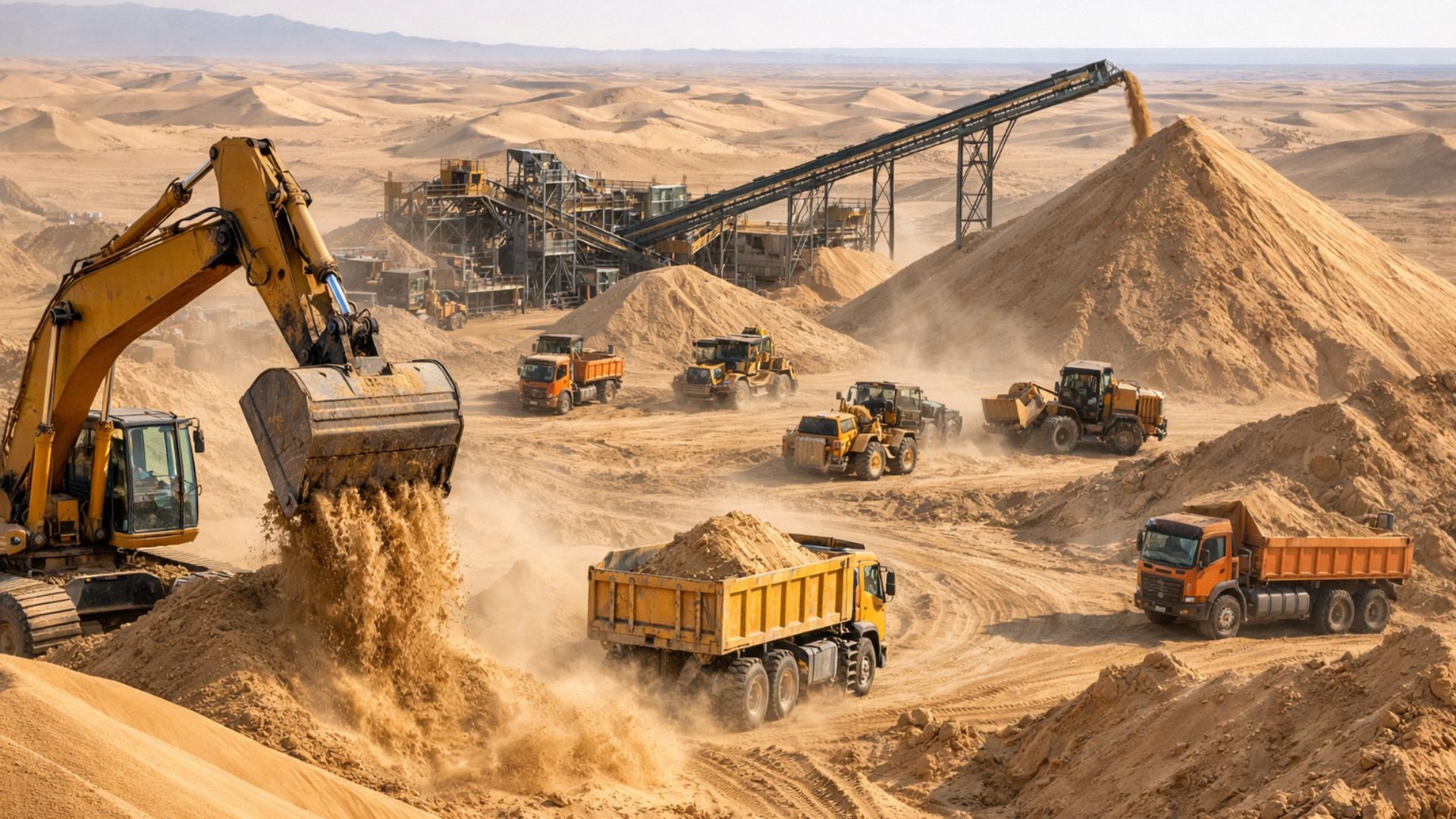


Megaproject Railway Crosses Saudi Desert with Gigantic Excavation, Engineering Adapted to Extreme Heat, and Infrastructure Created to Connect Sacred Cities of Islam at High Speed, Reducing Travel Time and Reorganizing the Flow of Millions of Pilgrims Who Move Annually Between Mecca, Medina, and Jeddah.
Saudi Arabia has consolidated one of the most complex railway works of its recent infrastructure in the west of the country by launching the Haramain High Speed Railway, a link between Mecca and Medina that required the removal of about 150 million cubic meters of sand and rocks, as well as the construction of 130 bridges and 850 drainage channels along the route.
The line serves five stations, reaches a commercial speed of up to 300 km/h, and also connects Jeddah, the city’s international airport, and King Abdullah Economic City.
More than just shortening a trip between two of the most important cities in the Islamic world, the project reorganized passenger circulation in a territorial area subjected to extreme heat, constant dust, shifting sands, and seasonal peaks of demand related to Hajj and Umrah.
-
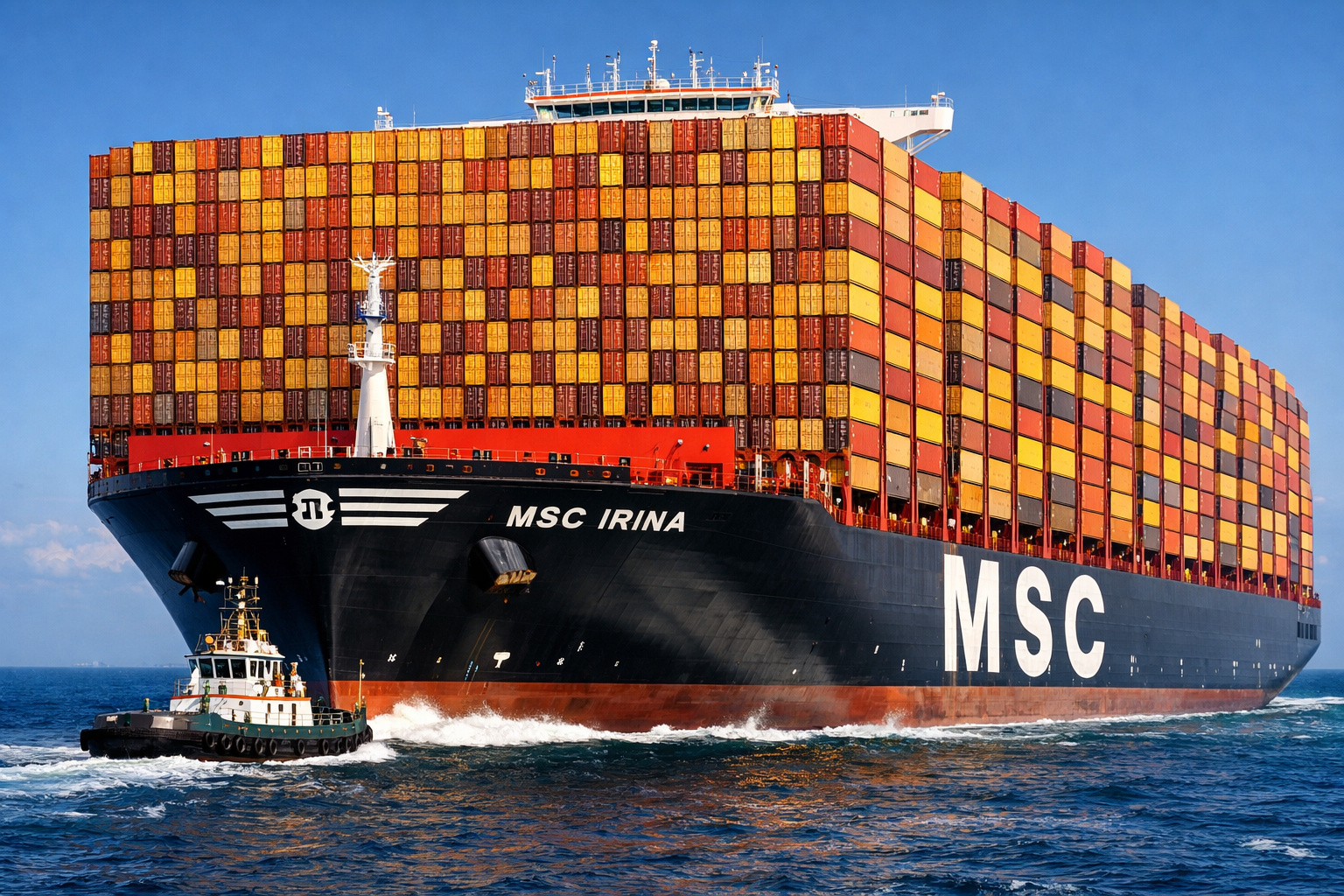
With a length of 399.9 meters and a capacity for over 24,346 containers, the MSC Irina becomes the largest ship in the world and revolutionizes global maritime transport.
-
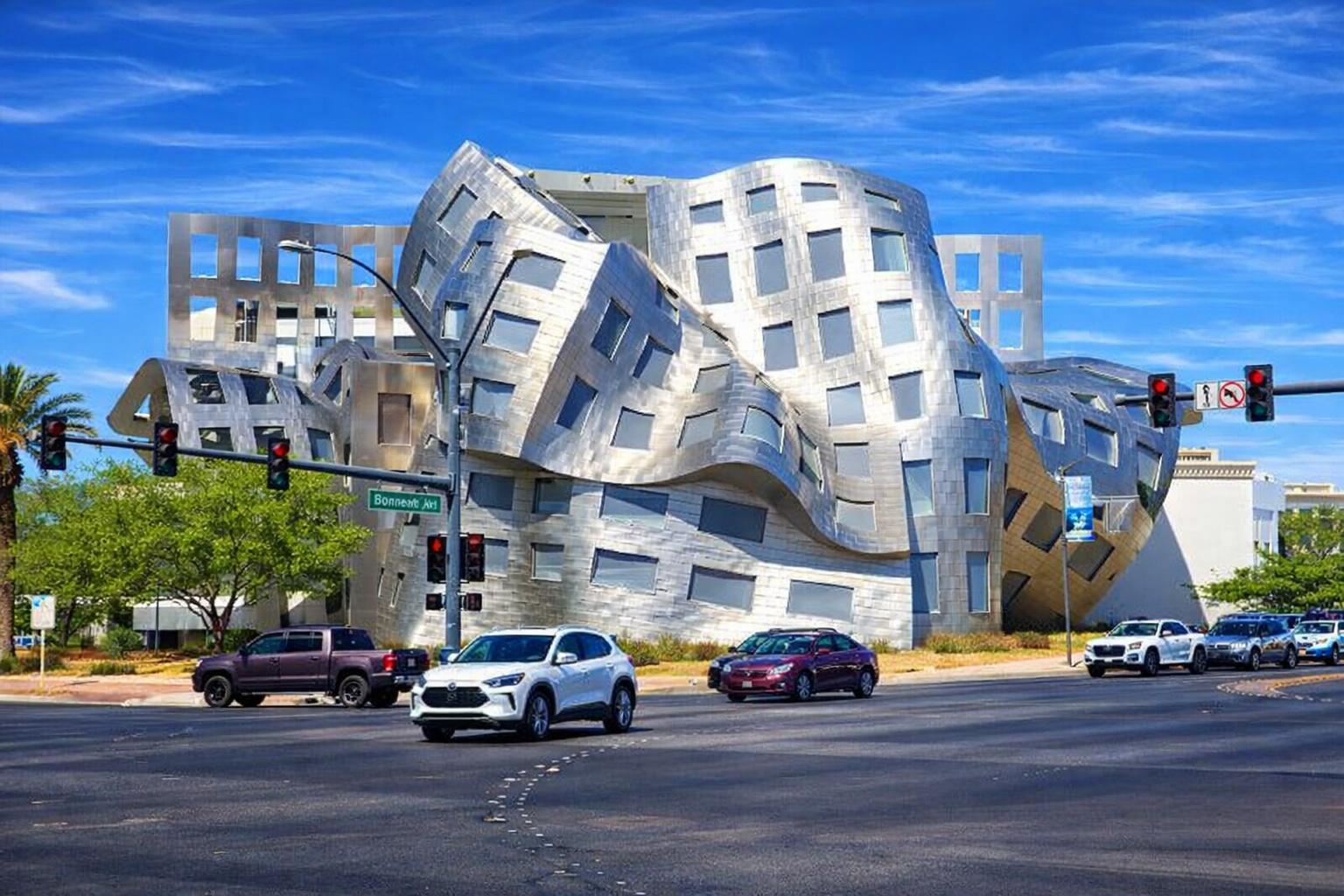
With nearly 6,000 square meters and an investment of $100 million, the building that seems to move in Las Vegas has a reflective stainless steel façade, creates optical illusions, and has become a symbol of creativity worldwide.
-
From Florianópolis to Antarctica non-stop at 60 years old: 1st Brazilian woman to sail solo makes history by facing one of the most dangerous routes on the planet.

-
A Brazilian recounted how a sudden malaise triggered the entire hospital machinery in the United States, with emergency protocols, tests to rule out a heart attack, and a bill that could reach $40,000.

The route is described by official and sector sources as a corridor of about 450 kilometers, or 453 kilometers in more detailed technical measurements.
The entire journey can be completed in approximately two hours and 20 minutes.
Engineering to Open Path in the Desert
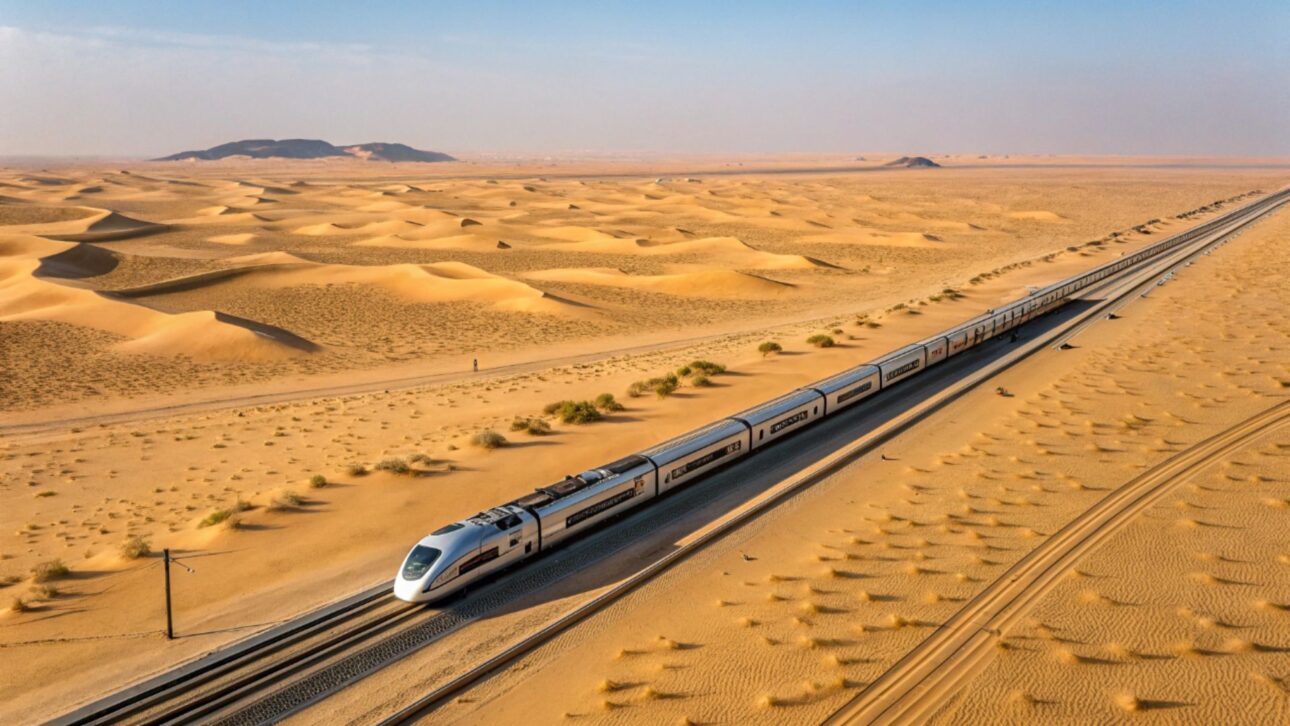
The heaviest phase occurred before the installation of the tracks when the earthworks teams needed to stabilize a corridor that crosses one of the harshest geographies of the Arabian Peninsula.
In the project’s presentation, reports noted that the initial civil works package was executed in three phases and started precisely with massive material removal, bridge implementation, and drainage channel openings that made the route viable.
This volume of intervention helps explain why the line has come to be regarded as a benchmark outside the railway sector, as the challenge was not only to connect strategic cities but also to prevent the desert from reclaiming the space opened for the railway.
Technical reports indicate that about 20 kilometers of the route are subject to dune encroachment, with an estimated displacement of up to 30 meters per year.
Another 197 kilometers of the railway remain exposed to sand transport caused by desert winds.
In such a scenario, sand not only affects the landscape but also reduces operational visibility, accelerates component wear, and compromises the interface between wheel and rail.
It also increases the pressure on railway infrastructure maintenance.
Hence, the engineering of the line itself incorporated solutions aimed at continuous environmental control, with sections prepared to limit sand infiltration and facilitate track cleaning.
Railway Technology Adapted to Extreme Heat
Part of the technical response included retaining walls, protective ditches, and segments with slab track.
In this system, the railway is laid on a concrete slab instead of the traditional ballast of stones.
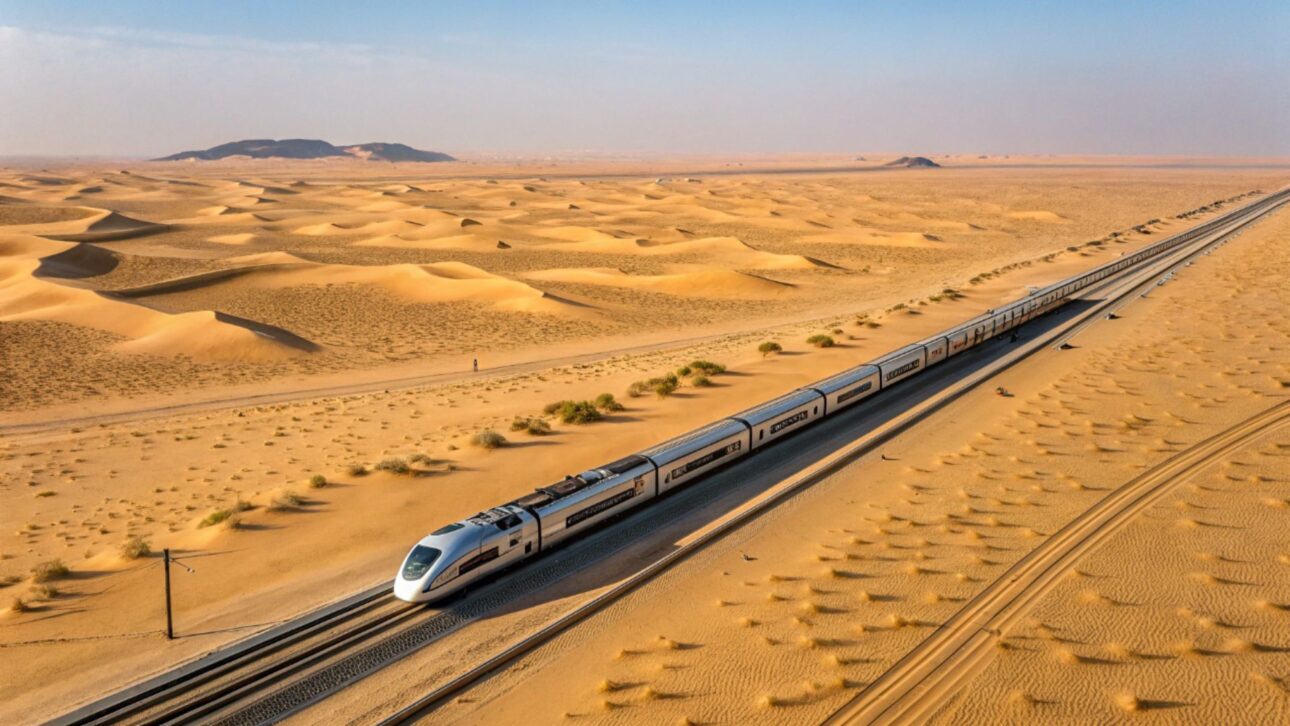
This choice was made precisely to reduce sand entry into the railway structure and make sand removal more efficient.
Even after the completion of the works, the desert continues to directly impact the infrastructure.
The constant presence of sand requires frequent cleaning of the tracks and ongoing monitoring of the most exposed areas of the railway corridor.
Trains Designed to Withstand Sand and Temperatures of Up to 50 °C
The adaptation was not limited to the route, as the trains also needed to be configured to operate stably in an extreme and abrasive environment.
Technical reports on the project indicate certified thermal resistance for external temperatures of up to 50 °C.
The train compositions also include positive pressurization, reinforced air filters, and additional sealing against dust.
Devices positioned near the wheels help to push sand away from the contact zone between wheel and rail, reducing interference in the railway’s operation.
This combination transformed the Haramain into an emblematic case of railway technology applied to the desert.
Besides speed, the system needed to reconcile high performance with continuous operation under adverse environmental conditions.
Strategic Link Between Mecca, Medina, and Jeddah
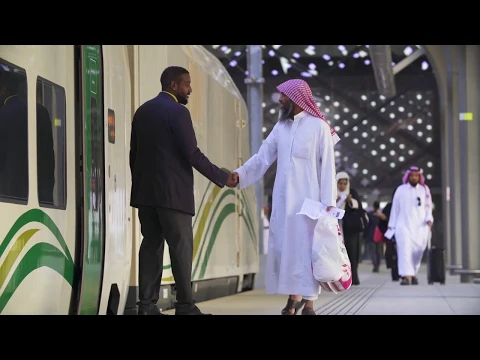

In Saudi transportation design, the line was conceived as a dedicated passenger transport service and as a structural axis of mobility in the west of the country.
The operation connects five stations: Makkah, Al‑Sulimaniyah in Jeddah, Airport‑Jeddah, King Abdullah Economic City, and Madinah.
This structure integrates religious displacements, urban connections, and direct access to the region’s main international airport.
The project gained strategic weight because it serves both the everyday flow of passengers and the concentrated peaks of travel during pilgrimage periods.
The railway operates with 35 high-speed trains, each consisting of 13 cars and about 417 seats.
The infrastructure was designed to transport up to 60 million passengers per year.
Railway Operation Must Coexist Daily with the Desert
Even after the official inauguration on September 25, 2018 and opening to the public on October 11, 2018, the desert environment remained central to the railway’s operational routine.
Operation and maintenance teams use simulations to anticipate dune movements and reduce the impact of sand on service regularity.
The extensive earthworks carried out during construction opened the railway corridor, but the sand encroachment continues to require constant technical responses.
This permanent coexistence with the landscape is precisely what differentiates the Saudi project from other high-speed railways around the world.
The line combines massive excavation, large-scale drainage, bridges, electrification, and trains adapted to the desert, transforming the connection between sacred cities into one of the most complex examples of railway engineering in an extreme environment.






Quando se tem dinheiro e não tem corrupção tudo é possível.
Houve uma limpa a poucos anos, com envolvimento de elementos do alto escalão saudita, e também de componentes da família real. E hoje, dada as restrições a liberdade de imprensa não se sabe o que realmente acontece por lá.