Portuguese
  Spanish


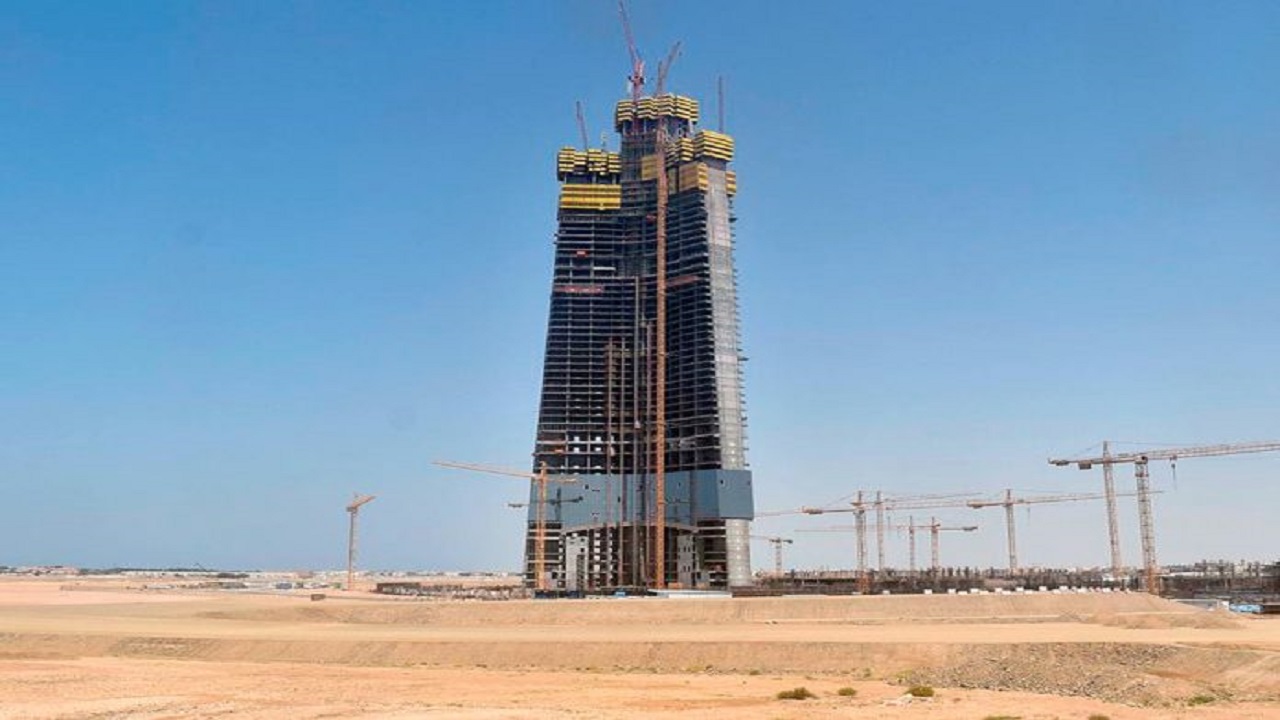

The World’s Tallest Building Is Being Built in Saudi Arabia, Reaching a Total Height of 1,008 Meters. The Project Received an Investment of US$ 1.23 Billion.
The world’s tallest building, Burj Khalifa, at 828 meters, may lose its title as the Jeddah Tower, currently under construction in Saudi Arabia, is set to have 200 floors and surpass 1,008 meters, requiring 515,000 m³ of concrete. This building is being constructed in Saudi Arabia’s second-largest city, Jeddah, and is designed to withstand wind storms, sand, and other natural phenomena present in the desert.
Investment of US$ 1.23 Billion
The initial estimate was that the world’s tallest building would be inaugurated by the end of 2020, but due to the pandemic and technical issues, the project has been delayed.
The Jeddah Tower also includes 80,000 tons of steel, with an estimated investment of US$ 1.23 billion. Along with the studies, the building will feature a unique architectural design, as traditional materials and designs do not work for skyscrapers of this height.
-
China’s Engineered Bamboo: The “Material of the Future” Stronger Than Steel and a Sustainable Wood Alternative

-
Egypt’s “New Nile”: 170 km Artificial River Aims to Turn Desert into Farmland, but Water Supply Concerns Loom
-
Eni Acquires 25% Stake in Chilean Lithium Project, Plans to Invest Up to $225 Million in Eco-Friendly Extraction Method
-
Unable to secure a mortgage as a self-employed single mother, she designed her own floating home from a 20-meter boat and now lives “off-grid” with her two children and solar panels on an English canal.



For example, to withstand wind load, it was necessary to change the building’s design as the height increased, allowing the wind to circulate around the structure without toppling it.
The building will be so tall that it will surpass the clouds and will be a mixed-use development, featuring a residential condominium with a shopping center, apartments, a hotel, and office spaces, with a tourist attraction located at the observatory nearly 700 meters high.
The concept of its tower resembles a desert plant sprouting with a leaf, with additional leaves emerging as it grows. Therefore, along the tower, there are three cutouts that are uniquely structured floors that separate to allow wind to pass through, ensuring stability.
Elevators in the World’s Tallest Building Will Reach Speeds of 60 km/h
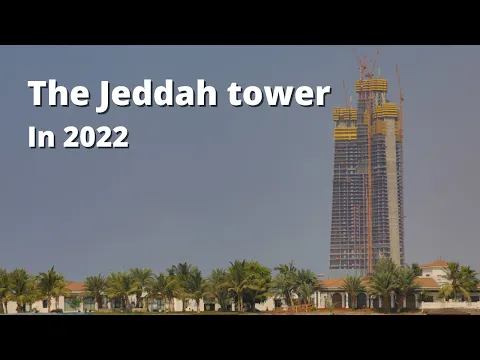

The building in Saudi Arabia will also feature 12 escalators and 59 elevators, with some reaching speeds of over 60 km/h. It will have powerful air conditioning systems, which, along with special glass, will enhance climate control and diffuse a significant portion of sunlight.
Additionally, it will include fire safety systems, a cooled electrical system, containment galleries with their own hydraulic and electrical systems, and medical and communication systems.
These galleries serve to accommodate a large number of people while others are quickly evacuated from the building. Apart from the technical challenges of constructing the world’s tallest building in Saudi Arabia, the pandemic affected the prioritization of financial resources, as they were directed towards combating the disease.
The World’s Tallest Building Already Has 270 Concrete Piles
One of its investors is Bill Gates’ Cascade Investment Management, holding a 47.5% stake.
The company bears the name of Bill Gates, the third richest man in the world. However, the issue is that the billionaire has shifted his focus, investing in projects with low carbon emissions, which is not the case for the Jeddah Tower. Despite the work being halted in recent years, the structure that has been built is monumental.
It features 270 reinforced concrete piles, each 1.8 meters in diameter and capable of withstanding 115 MPa pressure, extending up to 105 meters deep. They support a raft foundation with a thickness of 5 meters. This ensemble was designed to endure a load of 860,000 tons.