





 Portuguese
  English
  Spanish
  4 min of reading
  0 comments


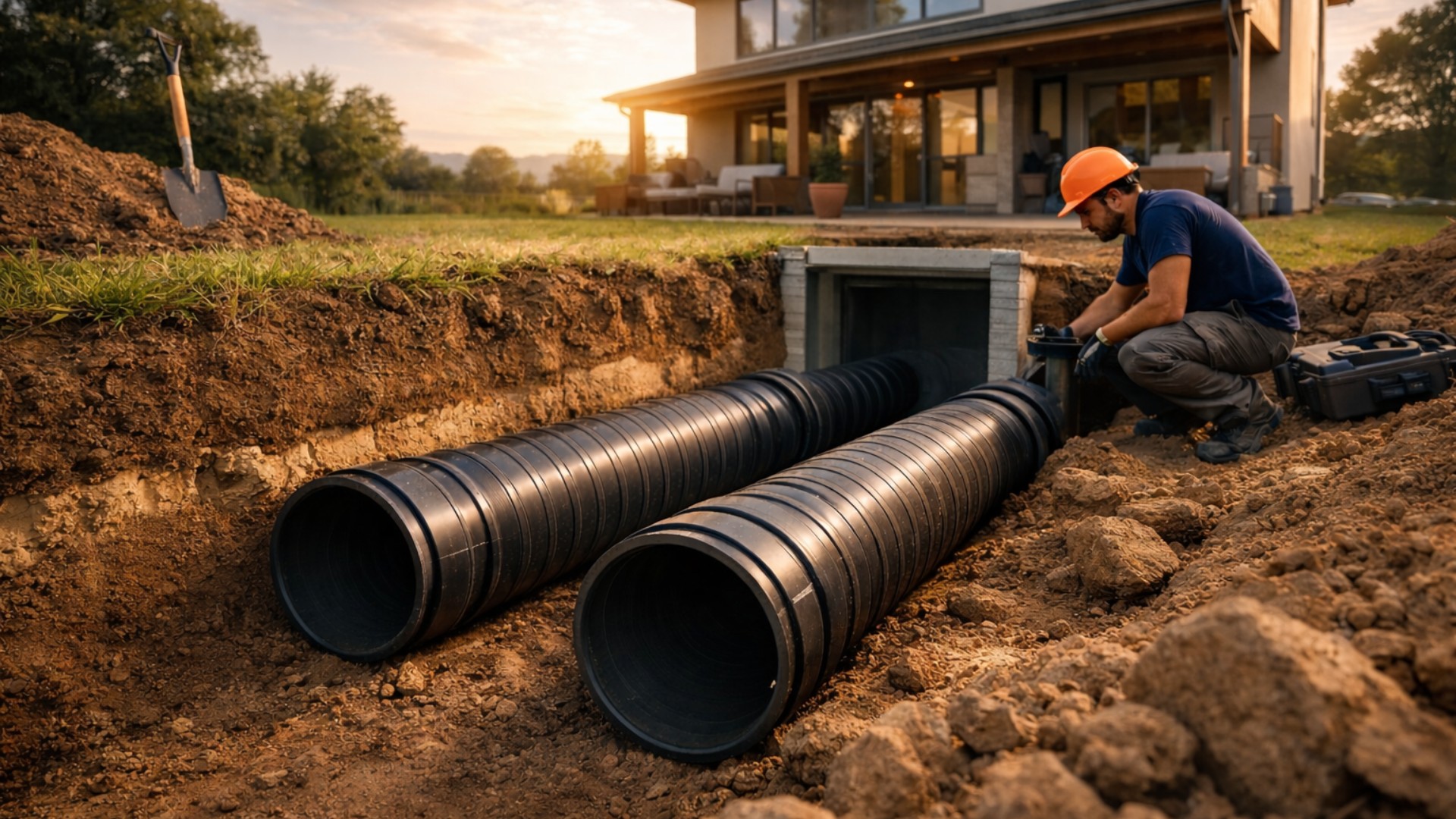
Technique that uses stable ground temperature gains ground as a sustainable alternative to reduce internal heat and electricity consumption in homes, combining controlled ventilation, thermal engineering, and adequate architectural planning for different types of climate and soil.
The use of buried pipes to pre-cool external air has returned to the center of the debate on sustainable construction because it offers a low electric demand alternative to reduce heat inside the home.
Known in various countries as Canadian well or ground-air heat exchanger, the system takes advantage of the more stable temperature of the ground to temper the air before it enters the indoor environments.
In practice, the solution does not automatically replace all air conditioning systems nor does it work the same way on any terrain.
-
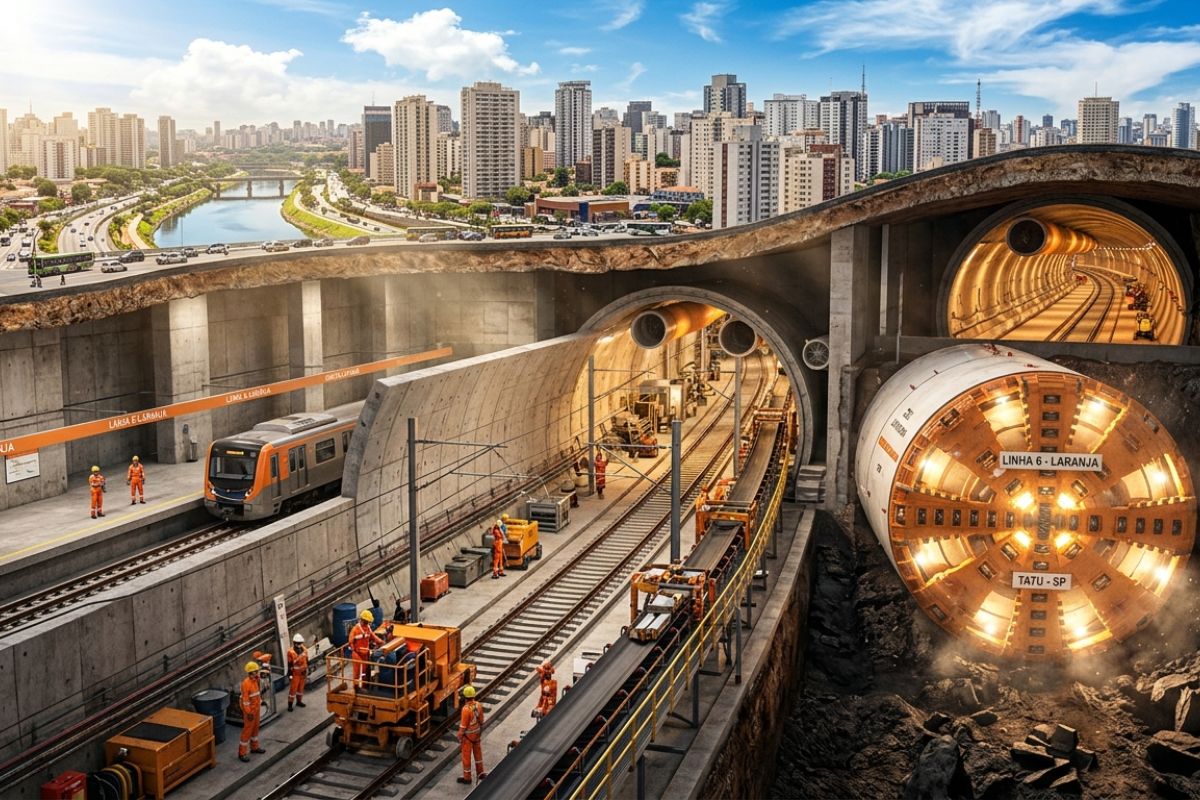
Under São Paulo, Line 6-Orange reaches 15.3 km and 15 stations, promising 23 minutes from Brasilândia to the Center and 633,000 passengers per day; with autonomous trains, it will open a partial section in October 2026.
-
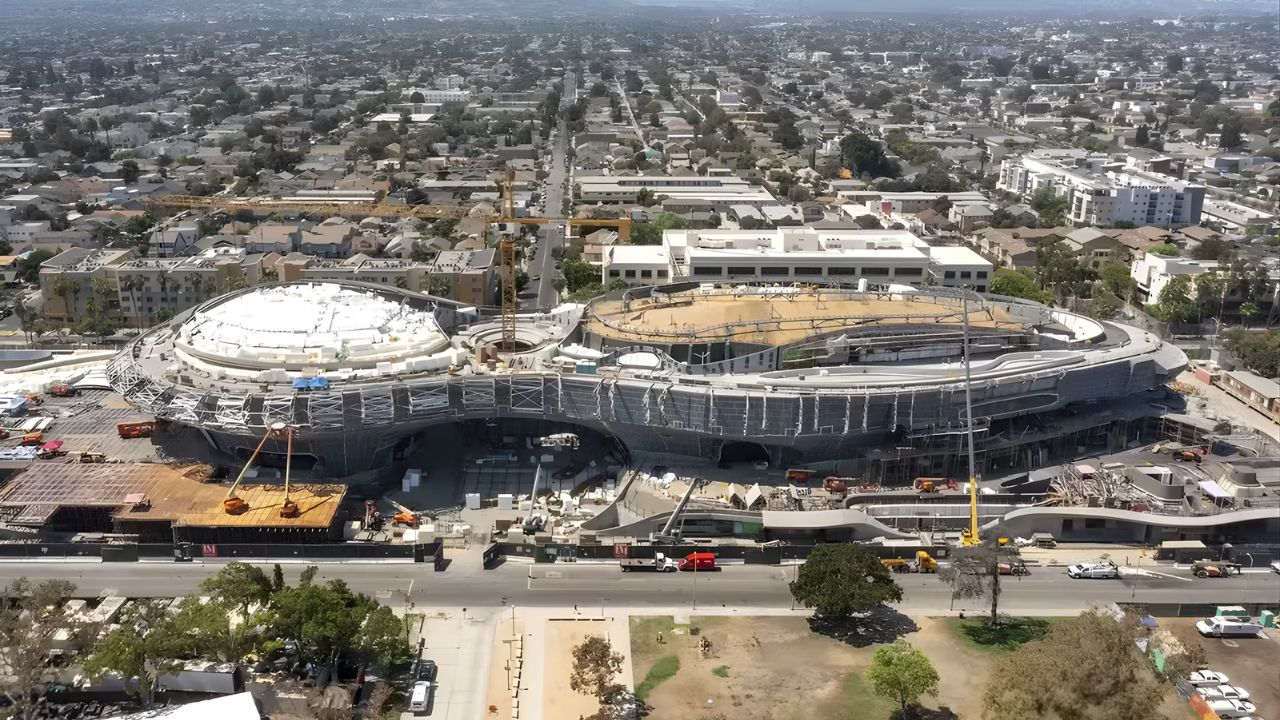
Created by George Lucas with over $1 billion, a futuristic museum in the shape of a spaceship with 1,500 curved panels is about to open in Los Angeles and will house one of the largest private collections of narrative art in the world.
-
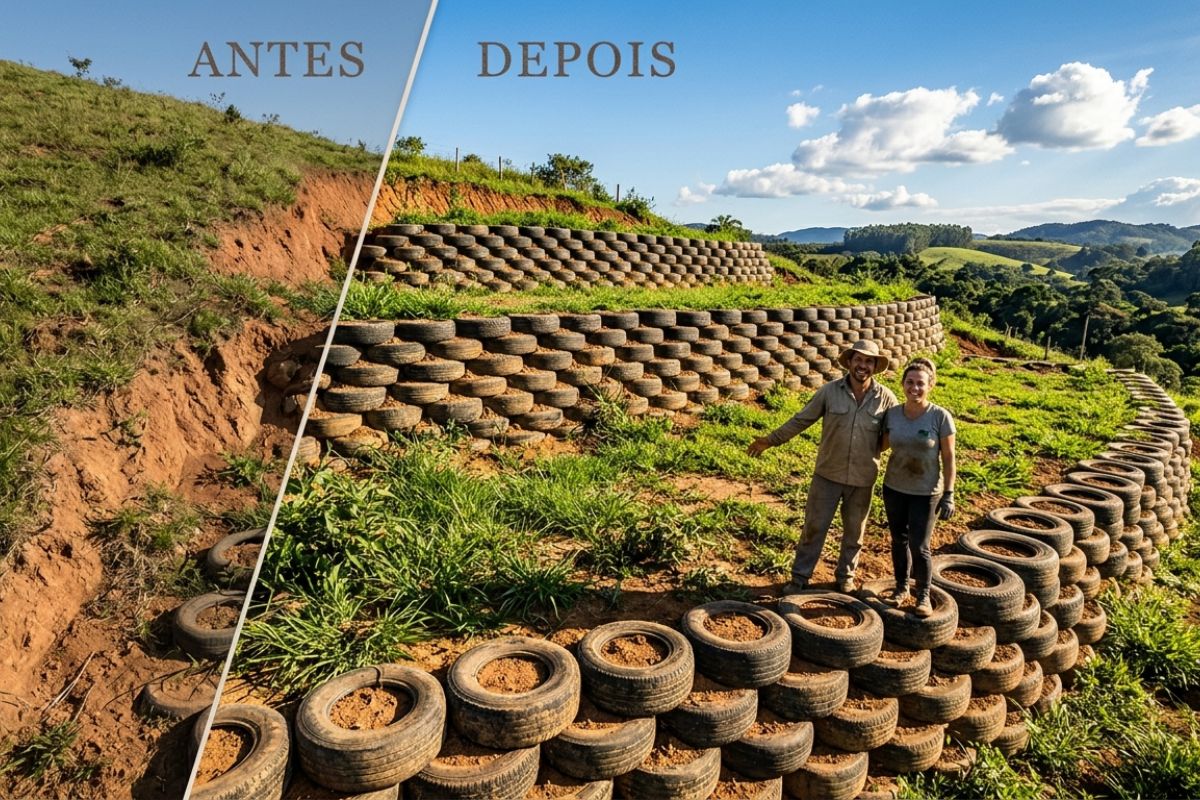
Couple shows how they built a retaining wall on their property using 400 old tires: sloped land turned into plateaus, tires are aligned, filled, and compacted with layers of soil, with grass helping in support and at almost zero cost.
-
Engineer explains drainage during the rainy season: the difference between surface water and deep water, ditches, gutters, and water outlets on the road, as well as drains and drainage mattresses, to prevent erosion, aquaplaning, and flooding at the construction site today.
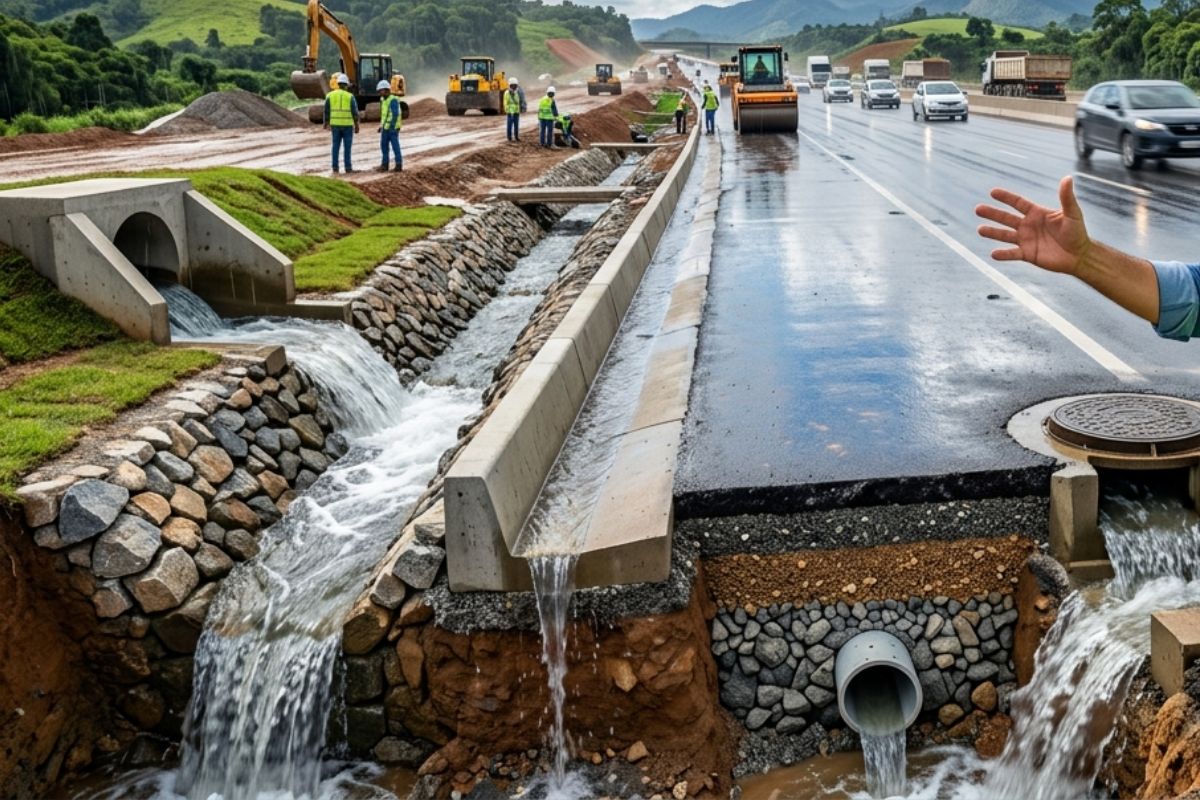

Still, the principle is established: the air travels through a buried duct, exchanges heat with the ground along the way, and arrives cooler in hot periods or milder in cold seasons, depending on the local climate and the adopted design.
How residential subterranean cooling works
The logic behind the technique lies in the difference between the air temperature at the surface and that of the ground at greater depths.
While the external environment can vary greatly throughout the day and seasons, the underground layers tend to fluctuate less, creating a thermal reserve usable by bioclimatic architecture.
It is this stability that allows the system to act as a pre-treatment stage for ventilation air.
The most common design uses buried tubes connected to an external intake and an injection point inside the residence.
In some cases, the flow occurs due to pressure difference and natural ventilation; in others, a low-consumption fan helps overcome pressure losses and maintain air flow.
Therefore, the description of “energy-free cooling” is often overly simplified, as many projects rely on mechanical support to operate regularly.
Depth and size of ducts influence performance
The depth and length of the piping, often cited as if there were a single measure, vary according to soil, humidity, climate, pipe diameter, air speed, and available space on the terrain.
Technical reviews and design guides indicate that the performance of the system is directly influenced by these parameters, without pointing to 2 meters of depth and 30 meters of length as a universal rule for all houses.
In residential areas, the adopted depth usually seeks a range where the ground temperature is less sensitive to immediate sunlight and abrupt weather changes.
The same applies to the length of the route: longer ducts increase the thermal exchange area but can also increase pressure losses, construction costs, and maintenance requirements.
The real gain, therefore, depends on engineering calculations and not just on repeating measures published in generic texts.
Humidity, mold, and air quality require attention
This technical care is crucial because the most critical point of the system is not the burial itself, but the control of humidity and air quality.
When warm air comes into contact with a cooler surface, condensation can occur inside the piping.
If the accumulated water does not have proper drainage, the environment favors mold, mildew, and other contaminants, compromising precisely the comfort that the solution aims to deliver.
For this reason, serious projects anticipate adequate slope for drainage, inspection points, materials compatible with sanitary use, and filtration at the air intake.
Ventilation also needs to be planned in a controlled manner, as humidity, insufficient ventilation, and condensation are linked to the deterioration of indoor air quality.
Another aspect that requires attention is the risk of soil pollutants entering.
Technical guides for ground-air exchangers recommend efficient sealing and installation care to reduce the possibility of infiltration of unwanted gases.
Energy savings depend on design and climate
In economic terms, the main attraction of the Canadian well is to reduce the thermal load that would fall on conventional cooling devices.
By delivering incoming air in a more favorable condition, the system can alleviate the use of compressors or, in certain situations, eliminate mechanical cooling during part of the day.
This does not mean automatic or “drastic” savings in any property, but indicates potential consumption reduction when the design is well integrated with solar orientation, shading, and insulation of the residence.
There is also an impact on acoustic comfort, although this benefit depends on the arrangement adopted.
In homes where the strategy allows for reduced operation time of air conditioning units or avoids noisy units next to windows and walls, the environment tends to be quieter.
Even so, this gain does not arise solely from the buried tube, but from the set of ventilation and cooling decisions chosen for the construction.
In Brazil, the feasibility of the system varies greatly between dry and humid regions.
Ventilation alone has limitations in hot and humid areas, where the high humidity load may require dehumidification or additional mechanical support.
In other words, the Canadian well may work better as a complementary strategy for thermal performance rather than as an isolated and universal solution for any climate.
The adoption of this technology, therefore, makes more sense when it is integrated from the beginning into the architectural project, with available land, thermal calculations, drainage studies, material definitions, and maintenance plans.
Without these precautions, the promise of passive comfort may give way to condensation problems, low air flow, and extra correction costs.
With proper sizing, however, the system remains a relevant alternative within low-energy consumption architecture and the pursuit of homes more resilient to heat.





Seja o primeiro a reagir!