





 Portuguese
  English
  Spanish
  3 min of reading
  0 comments


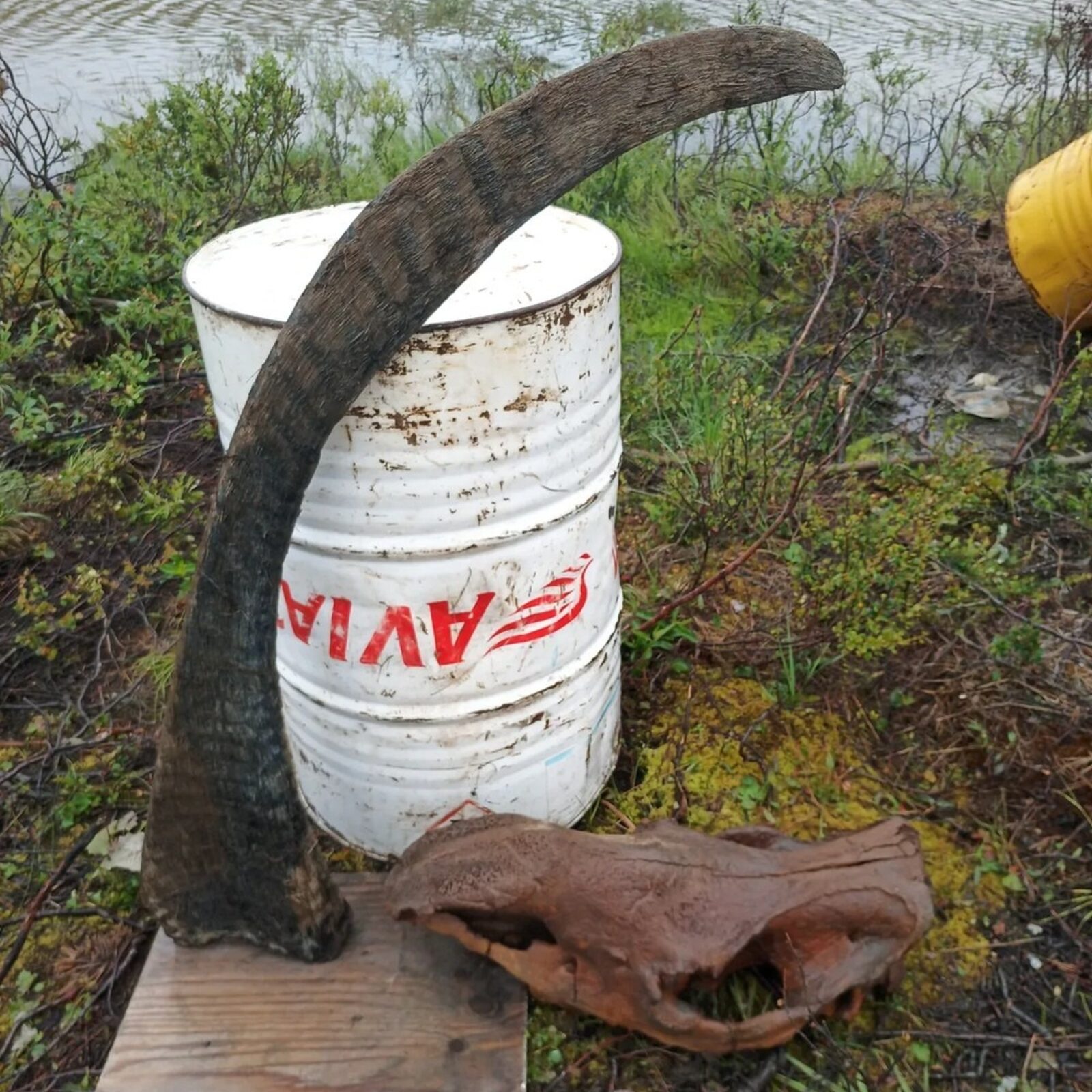
Measuring 1.6 Meters Long, The Woolly Rhinoceros Horn Found In Siberia Is The Largest Ever Recorded Of The Species And May Have Belonged To A Female That Lived About 19,600 Years Ago
Archaeologists located, in the frozen ground of Yakutia, Siberia, an impressive woolly rhinoceros horn (Coelodonta antiquitatis), measuring 1.6 meters long. The fossil is considered the largest ever found of the extinct species.
The discovery was detailed in a paper published in the scientific journal Journal of Zoology, which also describes other finds at the same location.
Discovery On The Banks Of The Kolyma River
A local fisher and hunter found the complete skull of the animal on the banks of the Kolyma River in Russia.
-
Scientists create a “molecular sponge” that transforms dirty water and even water from the Dead Sea into potable water using only sunlight and without consuming any electrical energy.

-
Chinese company creates solar cell that breaks the physical limit of silicon with 34.85% efficiency and promises to revolutionize electricity bills with panels that generate 20% more energy starting in 2026.

-
For the first time in over half a century, humans have seen the Moon up close and returned to tell the tale, and the technology that brought them back makes Apollo look like a toy.

-
From 1969 to 1972, only 12 human beings set foot on the Moon, and then the world simply stopped going, until this week when NASA showed that the journey back has finally begun.

The fossils, including the large horn, were taken to the Mammoth Museum in Yakutsk, where researchers began detailed studies on their preservation and origin.
Near the remains of the rhinoceros, the team found frozen small rodents, known as lemmings, which helped establish the environmental context of the find.
Dating And Age Of The Fossils
The scientists used carbon analysis to determine the age of the materials. The results revealed that the remains are about 19,600 years old.
This confirms that the animal lived at the end of the last Ice Age, when large mammals inhabited northern Eurasia.
The Coelodonta antiquitatis disappeared about 10,000 years ago. It is a distant relative of modern rhinoceroses, with which it shares a common ancestor, the Sumatran rhinoceros, which lived about nine million years ago.
Hypotheses About The Size Of The Horn
Researchers noted that the horn and skull do not have the typical proportions of an adult woolly rhinoceros. Therefore, the most accepted hypothesis is that the fossil belonged to a female.
This is because, according to comparative studies, males had thicker horns, while females had longer and narrower structures—a pattern similar to that observed in current species in Africa.
Researcher Ruslan Belyaev stated that it is still unknown whether the greater growth of female horns occurred due to a faster rate of growth or slower wear.
Longevity And Function Of The Horn
The study also revealed that the animal was at least 40 years old when it died. This longevity exceeds the average of modern rhinoceroses, both in captivity and in the wild.
Moreover, scientists believe that the flattened and long horn was used to clear snow while searching for food, as there are signs of wear on the front part.
“For the first time, we showed that, even under extreme conditions, these animals could live as long as current rhinoceroses,” concluded Belyaev.
With information from Revista Galileu.








-

Uma pessoa reagiu a isso.