





 Portuguese
  English
  Spanish
  4 min of reading
  0 comments


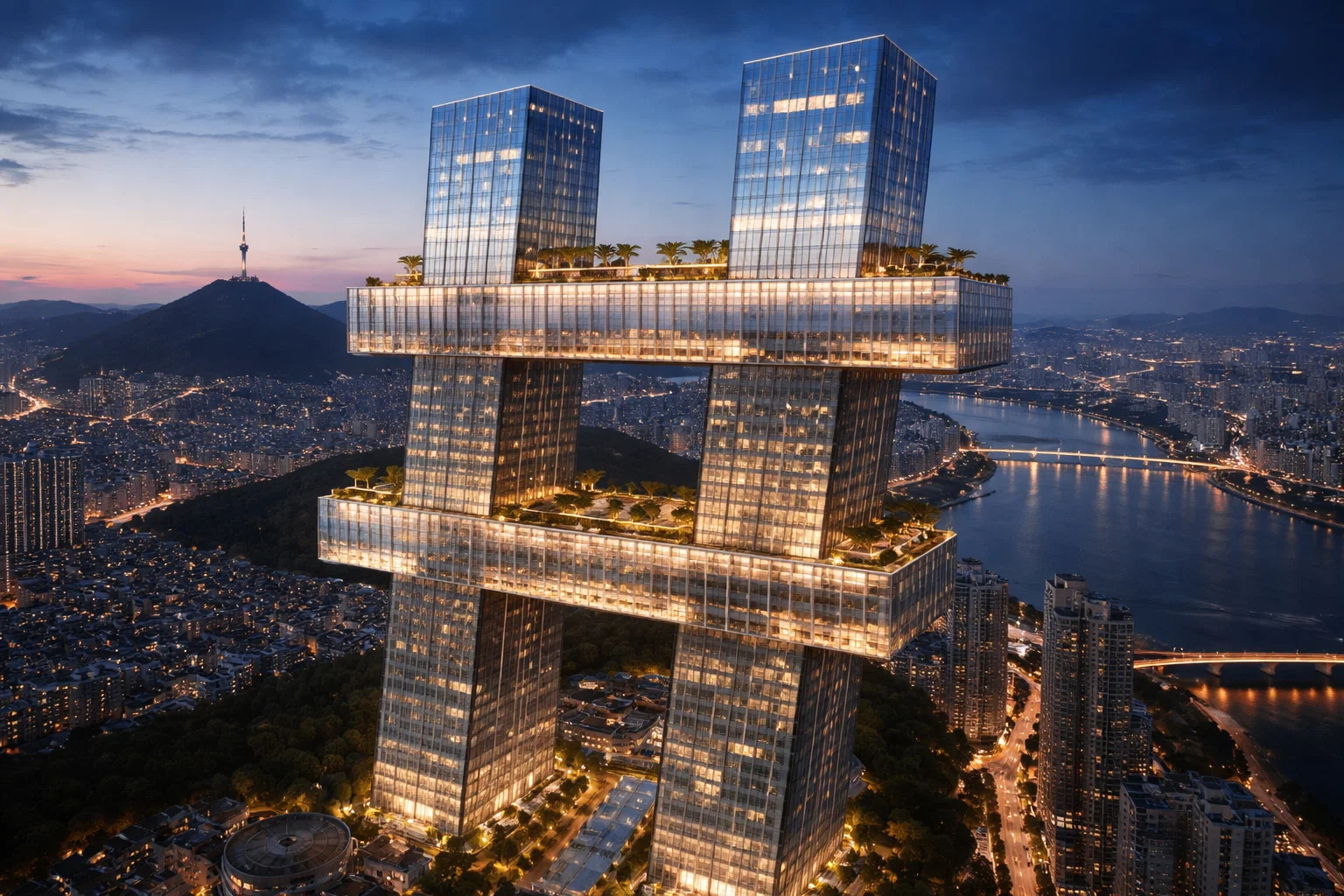
Designed By One Of The Most Influential Architecture Firms In The World, The Cross Tower Proposes A Skyscraper That Looks Like A Giant Hashtag On The Seoul Horizon, With Two Towers Over 200 Meters Connected By Suspended Structures That Challenge The Limits Of Modern Engineering
At first glance, many people think it is a digital rendering. A building that looks like a huge giant hashtag in the middle of the city sounds unlikely. But the Cross Tower, designed for Seoul, was born exactly with this proposal. To transform a well-known symbol of the digital age into a real urban mega-structure.
The project began to take shape in 2011, within an ambitious urban development plan for a new business zone in the capital of South Korea.
The idea caught global attention because it mixes bold architecture with a technical challenge that few buildings on the planet have faced.
-
Congonhas receives the monorail promised for the 2014 World Cup after more than a decade of delays and becomes the first airport in Brazil with integrated subway.
-
Goodbye, concrete: a new trend in civil construction reduces the weight of the structure by up to 30%, accelerates projects by up to 40%, cuts costs on steel and labor, and improves thermal insulation with EPS.
-
Russian engineers create an innovative propeller blade for aircraft that could completely change the way airplanes and helicopters operate.

-
Couple finishes building PVC chalet on the beach on the last day, with air conditioning and curtains, but discovers the bathroom drain is inverted: water escapes from the drain, risking breaking the floor, and the rush continues before the trip.

The Massive Urban Project That Aimed To Transform The Yongsan District Into A New Global Financial Center
The Cross Tower did not arise as an isolated work. It is part of a much larger urban transformation plan in the Yongsan area, a strategic location near the Han River.
The proposal anticipated the creation of a new international financial district, bringing together some of the most ambitious architectural projects in Asia.
In this scenario, the Cross Tower would appear as a visual landmark of the new neighborhood.
The planned dimensions help to understand the ambition of the project.
One of the towers would reach about 214 meters in height. The second would be close to 204 meters.
Between them, two aerial connections would emerge positioned approximately 70 meters and 140 meters above ground.
These suspended connections would create a design that resembles a giant hashtag floating on the city’s horizon.
The Structural Challenge That Intrigued Engineers: Connecting Two Giant Towers With Suspended Bridges Dozens Of Meters High
Creating a skyscraper is already a complex technical challenge. Connecting two of them in the air further amplifies the difficulty.
In the case of the Cross Tower, the horizontal connections would not just be aesthetic elements.
They would also function as stiffness structures, helping to stabilize the whole against wind forces acting on large buildings.
In skyscrapers over two hundred meters, wind gusts can cause noticeable oscillations.
The suspended structures would help distribute these loads between the two towers.
According to structural engineering experts, this type of solution creates a behavior similar to that of large interconnected systems, where each part helps balance the whole.
The Engineering Secret Behind The Giant Hashtag That Could Help Stabilize The Building Itself
The building’s shape did not arise merely from architectural creativity.
It also responds to urban planning restrictions of the region’s development plan.
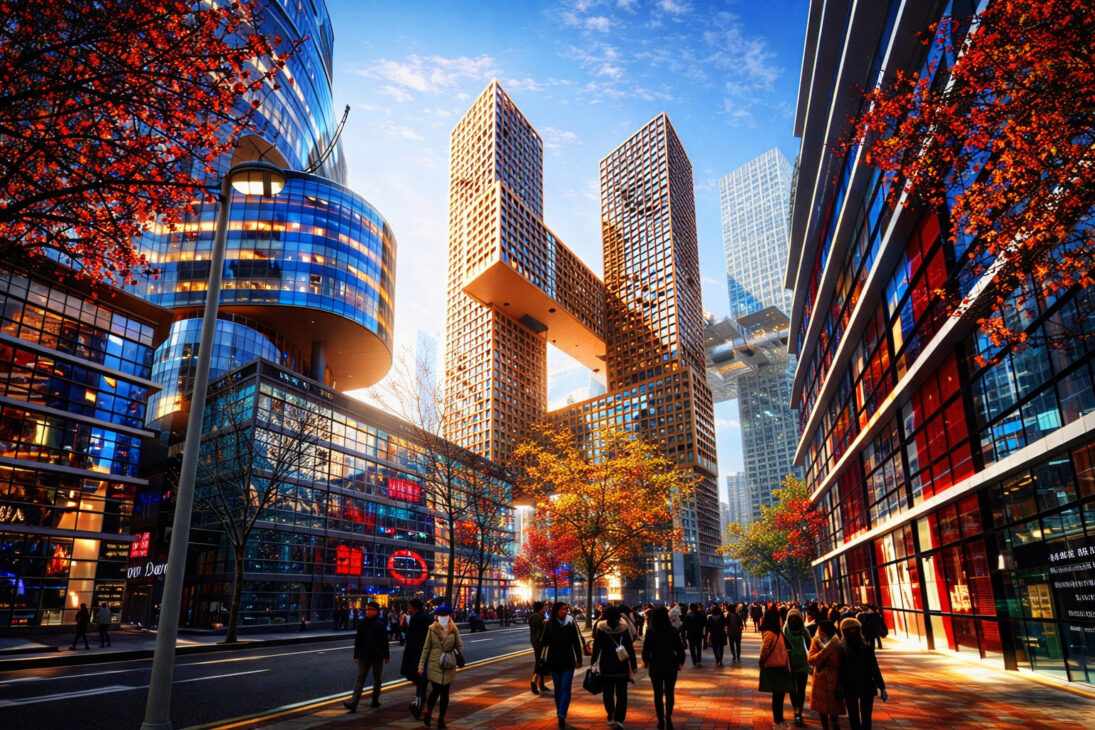
To respect volumetric and height limits set in the urban project of the district, the architects chose to redistribute part of the building’s mass.
Instead of concentrating all the volume in traditional vertical towers, part of the structure was shifted to the suspended horizontal blocks.
This movement created a design that resembles the digital symbol while addressing structural and urban planning issues.
The project was developed by the Bjarke Ingels Group, known for architectural proposals that mix bold design with unconventional engineering solutions.
The Suspended Passages Planned To Function As Streets In The Sky Amid A Skyscraper Over Two Hundred Meters
Another detail that stands out in the project is the use of horizontal structures.
They would not merely serve as corridors connecting the buildings.
The spaces were designed as elevated communal areas.
According to the original concept of the project, these environments could accommodate collective areas, hanging gardens, and circulation paths between the two buildings.
In practice, it would be an attempt to bring part of urban life dozens of meters above ground.
Architects call this approach three-dimensional urbanism, an idea that seeks to replicate the dynamics of traditional streets within large-scale buildings.
The Impact A Hashtag-Shaped Building Could Have On Global Architecture And The Future Of Urban Megaprojects
Even without being fully realized, the Cross Tower has become one of the most talked-about architectural projects of the last decade.
The proposal drew attention because it represents a rare intersection of digital culture, structural engineering, and urban planning.
Such projects help test technical limits and also influence how major cities envision their future skyscrapers.
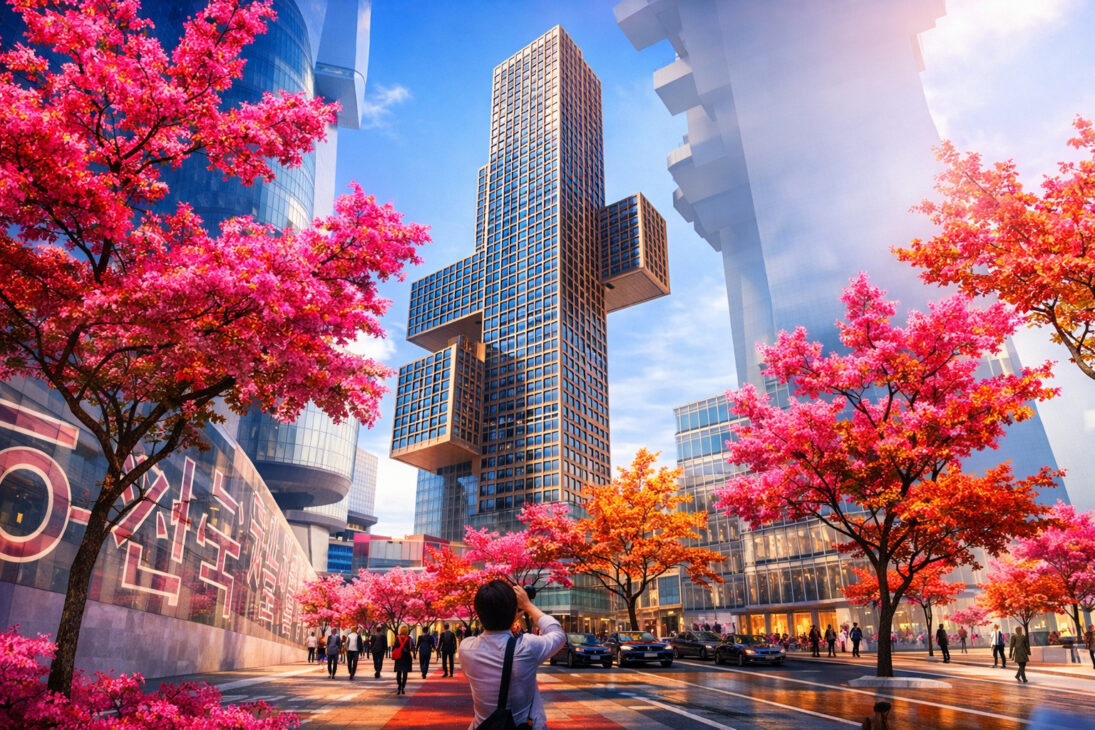
According to experts in contemporary architecture, ideas like this serve as a laboratory for new structural and urban solutions.
In other words, even when a bold project doesn’t get completed, it can still redefine the directions of global engineering and architecture.
The Cross Tower continues to be remembered for this reason. A concept that demonstrated how far modern engineering can go when creativity and structural calculation work side by side.
Projects like this attract attention because they reveal a less visible side of modern cities. Behind every iconic building, there is an enormous puzzle of engineering, urban planning, and technological innovation.
And now we want to know your opinion. Would you live or work in a building shaped like a hashtag connected by suspended bridges over a hundred meters high?









-

-

-

-

-

17 pessoas reagiram a isso.