





 Portuguese
  English
  Spanish
  5 min of reading
  0 comments


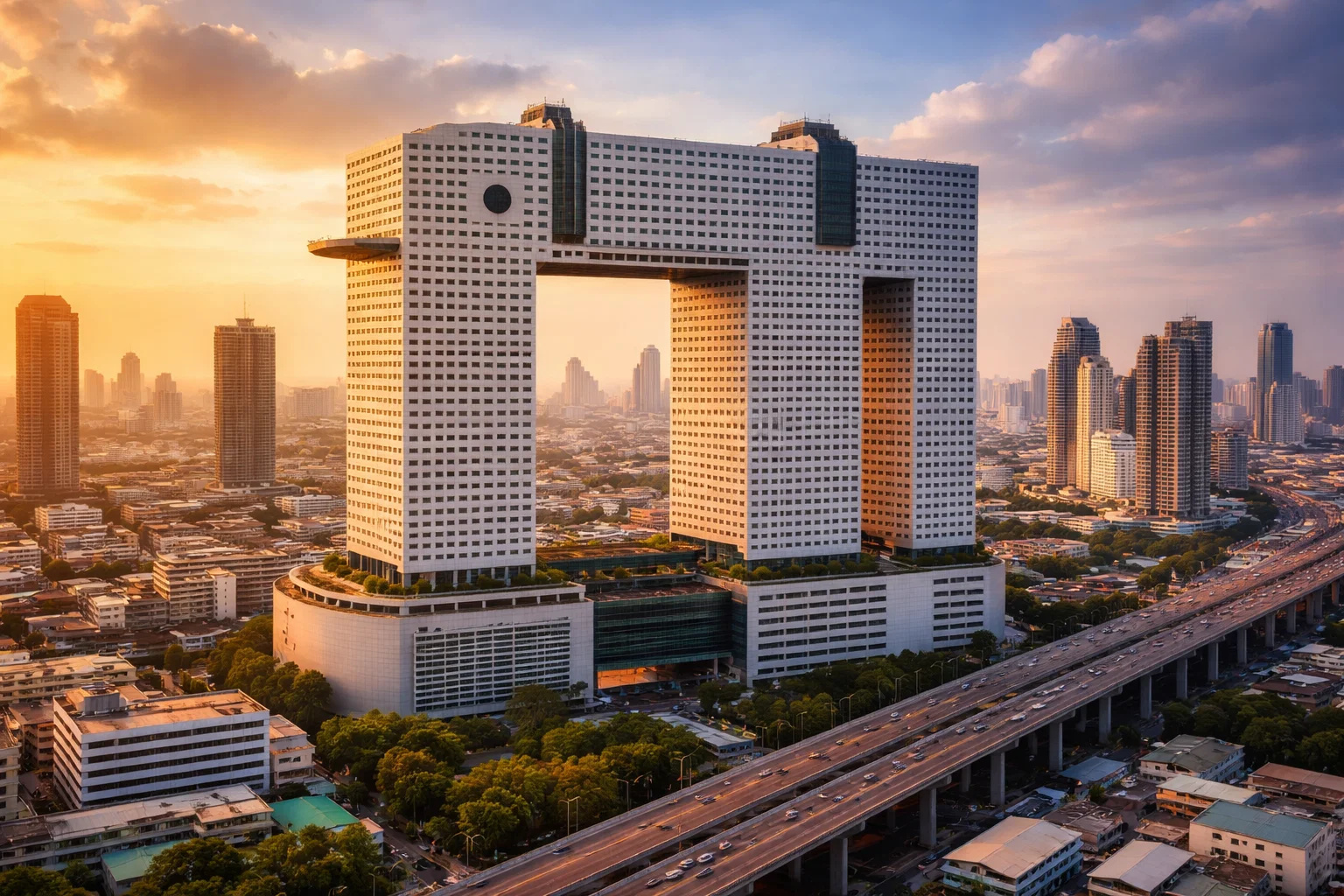
In The Middle Of Thailand’s Capital, There Is A 32-Floor Elephant Building That Looks Like The Giant Animal Looking At The City, But Behind The Curious Appearance, There Is A Structural Design That Caught The Attention Of Architects And Engineers Around The World
From a distance, it looks like an architect’s joke. A huge building with eyes, tusks, and a trunk designed into its very structure. But it is not an urban sculpture. The elephant building in Bangkok is a real skyscraper, inhabited and used daily by companies and residents.
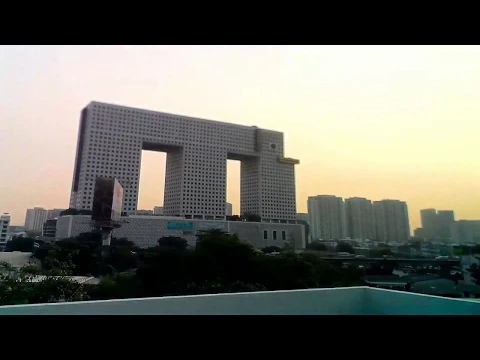

What stands out is not just the unusual appearance. The building serves as an interesting example of urban engineering that transformed three common towers into one of the most recognized structures in Asia.
And when observed closely, it becomes clear that the shape of the animal was not created for aesthetics alone. There is a structural logic behind the giant.
-
Congonhas receives the monorail promised for the 2014 World Cup after more than a decade of delays and becomes the first airport in Brazil with integrated subway.
-
Goodbye, concrete: a new trend in civil construction reduces the weight of the structure by up to 30%, accelerates projects by up to 40%, cuts costs on steel and labor, and improves thermal insulation with EPS.
-
Russian engineers create an innovative propeller blade for aircraft that could completely change the way airplanes and helicopters operate.

-
Couple finishes building PVC chalet on the beach on the last day, with air conditioning and curtains, but discovers the bathroom drain is inverted: water escapes from the drain, risking breaking the floor, and the rush continues before the trip.

The Skyscraper That Looks Like A Giant Elephant In The Heart Of Bangkok Began From An Urban Challenge That Seemed Simple
The story begins in the 1990s, when a real estate project was planned in Bangkok, the capital of Thailand.
The available land had a narrow and elongated shape. This made it difficult to construct a single large building.
The initial solution was to create three separate towers, a common strategy in urban projects where horizontal space is limited.
Each tower would serve a different function. Offices, residences, and commercial areas.
During the development of the project, the architects noticed something unexpected. When the towers were connected at the top, the ensemble resembled the silhouette of an elephant.
Instead of ignoring this coincidence, the project decided to embrace the shape.
Small architectural elements were added to reinforce the visual idea, transforming the ensemble into one of the most curious buildings on the planet.
The Engineering Behind The Elephant Building Shows That The Fun Appearance Hides An Intelligent Structural System
The structure of the building functions as a large system connected between three vertical blocks.
These towers support the entire weight of the complex and serve as a base for the horizontal block located at the top.
This elevated element creates what architects call a suspended volume, a kind of livable bridge connecting the towers.
In practice, the building functions as an enormous urban portico.
This solution generates two important advantages.
First, it better distributes structural loads among the building’s cores.
Second, it creates a large open space in the center of the ensemble, something rare in large constructions.
The result is a structure that attracts attention for its appearance but also presents interesting engineering solutions.
Each Part Of The Elephant Has A Real Function Within The Construction And Was Not Created Just As Decoration
When observing the building closely, it is possible to identify several elements that simulate parts of the animal.
The curious thing is that these details are part of the functioning of the building.
The so-called elephant eyes are large circular windows.
The ears appear in the form of wide balconies.
The tusks correspond to the building’s side structures.
Even the tail was incorporated into the design, represented by a vertical column of dark glass.
Nothing was included just for visual effect. Each element houses rooms, apartments, or circulation areas.
This type of figurative architecture is rare in skyscrapers, especially in buildings used for commercial and residential activities.
A 102-Meter Giant That Blends Offices, Apartments, And Commerce In The Same Urban Complex
The elephant building was completed in 1997 and stands about 102 meters tall, distributed over 32 floors.
Although there are much taller buildings in the world, what makes this project remarkable is the way it organizes different uses in a single space.
The complex brings together corporate, residential, and commercial areas.
Part of the towers houses company offices.
Another section was allocated for apartments.
At the base of the building, there are shops and services used by residents and visitors.
This mix of functions made the building a small urban center within the structure itself.
For a rapidly growing city like Bangkok, this model helps concentrate activities and reduce commutes.
Concrete, Steel, And Glass Form The Structural Base That Supports The Curious Building That Became A Symbol Of The City
From an engineering standpoint, the building follows common techniques used in skyscrapers in Southeast Asia.
The structure combines reinforced concrete, steel, and large glass panels.
Concrete plays a central role in supporting the building.
This material is widely used in the region because it has good resistance in tropical environments and provides structural stability for tall buildings.
According to specialists in the construction field, this type of structure helps reduce vibrations and improves performance in dense urban areas.
Despite its unusual appearance, the construction system follows traditional principles of modern engineering.
The Building That Divides Opinions Among Architects Has Become One Of The Most Recognized Symbols Of Bangkok
Since its inauguration, the elephant building has always aroused different reactions.
Some architects consider the project a creative idea that breaks with the rigid standard of traditional skyscrapers.
Others see the work as an interesting example of postmodern architecture, a style that gained traction in the late last century.
Regardless of opinions, the building has become a visual landmark in the city.
Tourists often photograph the building for its unusual appearance, while specialists observe the project with interest due to the structural solution that allowed the transformation of three common towers into a completely unexpected form.
At the end of the day, the elephant building proves that engineering and creativity can walk hand in hand, even in a skyscraper that resembles a giant animal watching over the city.
This project continues to attract attention as it shows that civil construction can also surprise when architecture and engineering operate outside traditional standards.
If you discovered a building like this in your city, would you find it brilliant or too strange? Share your opinion in the comments.









-

Uma pessoa reagiu a isso.