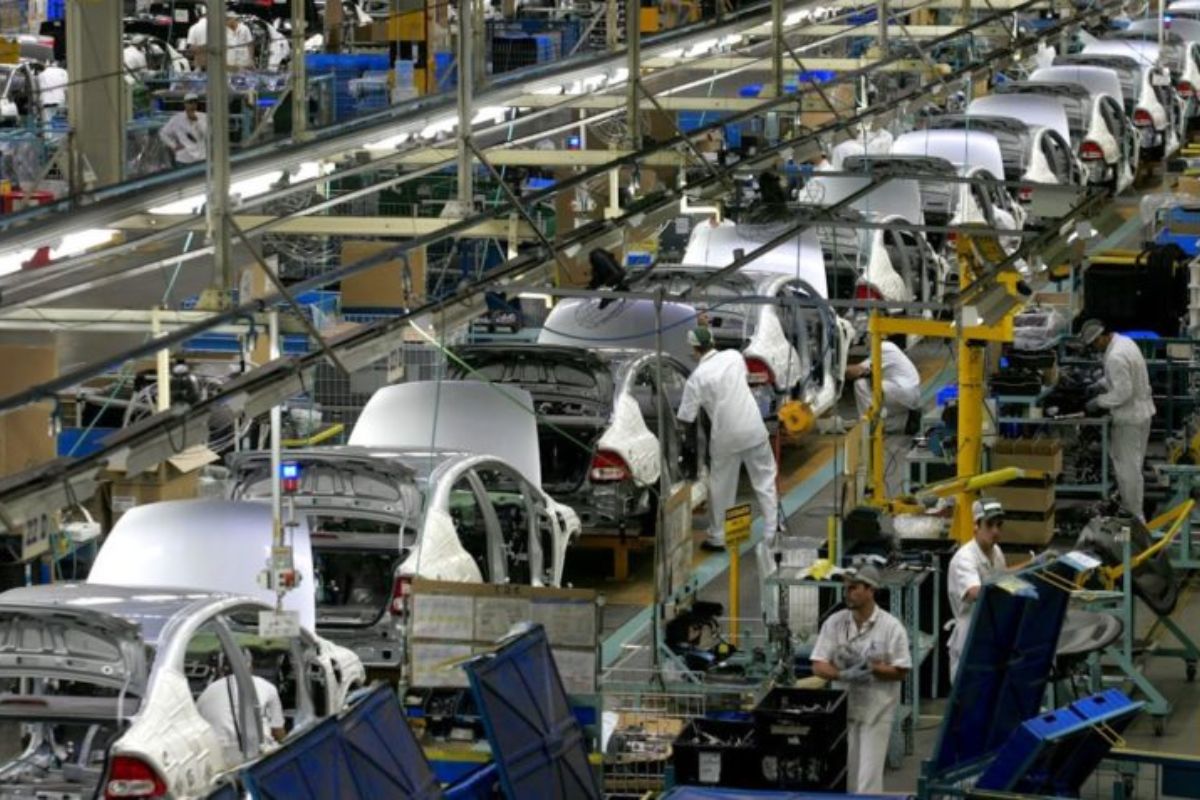
The artificial intelligence has moved beyond being just a tool for automating simple tasks and has started performing increasingly complex activities, accelerating profound changes in the job market.
Companies in various sectors are increasing investments in AI to boost productivity, reduce costs, and reorganize their teams, while experts warn that some roles are likely to disappear, others will be transformed, and new opportunities will arise.
According to an article published by G1 on July 27, 2026, the biggest differentiator for maintaining employability may be the ability to adapt and the development of new skills.
-
California stops withdrawing 65.2 billion gallons of water to try to prevent its gigantic reservoir, the largest of them, from reaching a concerning low.

-
What seemed like just a hole in a hill in France led four young people to a world hidden for millennia: inside the Lascaux Cave, hundreds of cave paintings awaited in the dark to transform everything experts knew about creativity, symbolism, and prehistoric art.

-
A 17-year-old teenager was buried about 2,500 years ago with more than 4,000 gold pieces, but DNA analysis of the Golden Man revealed evidence that elite Scythian families passed power and prestige between generations and controlled territories and resources.
-
Brought to Australia to eliminate insects in crops, bird spreads through cities, invades nests, and becomes a threat to native birds after 160 years


Artificial intelligence advances rapidly and expands its ability to perform complex tasks
In the last three years, the evolution of artificial intelligence has occurred at a pace that surprised even experts in the field. A survey by the organization METR, used as a reference by the technology sector, shows that large language models have evolved from systems capable of completing tasks in a few minutes to tools that can perform activities requiring about an hour of human work.
The chart compares the evolution between different models launched between March 2023 and April 2026:
- March 2023 — GPT-4;
- May 2024 — GPT-4o;
- October 2024 — Claude 3.5 Sonnet;
- April 2025 — OpenAI o3;
- February 2026 — Gemini 3.1 Pro;
- April 2026 — preview of Claude Mythos.


According to the research, more than 200 software engineering tasks were evaluated, ranging from basic programming exercises to complex machine learning projects. A task was considered completed when the model achieved a minimum success rate of 80%.
Today, some models can identify vulnerabilities in cryptocurrency smart contracts, write sophisticated code, and even optimize previous versions of AI systems themselves, something that a few years ago would have required many hours of specialized work.
The job market begins to feel the first effects of AI
Although there is still uncertainty about the speed of this transformation, various indicators show that the job market is already beginning to register changes.
Large companies have started investing billions of dollars in artificial intelligence solutions, mainly because they see potential to increase productivity and reduce operational expenses. Instead of expanding teams, many organizations have started to evaluate whether certain tasks can be performed by intelligent agents.
This strategy is being called by some executives a new phase of team stability, in which the expansion of companies happens more through efficiency gains than by hiring new professionals.
At the same time, there is growing concern among economists about how this change could affect millions of workers around the world if there are no professional adaptation policies.

Studies point to job reduction in more exposed sectors
The most comprehensive analyses available were conducted in the United States and tracked approximately four years of data on occupations most exposed to the advancement of AI.
Researchers from Stanford University observed that since the popularization of ChatGPT, there has been a 2.7% reduction in the level of employment among young people aged 22 to 25 years.
In sectors considered most vulnerable to automation — such as software, finance, and part of the creative industries — this drop reached 12.8%.
Even so, the researchers themselves emphasize that economic factors, such as high interest rates and a slowdown in economic activity, may also have influenced these results.
Another important study, conducted by the Organization for Economic Cooperation and Development (OECD), identified a reduction in job offers in areas highly exposed to technology, including:
- telemarketing;
- basic legal services;
- part of administrative activities.
On the other hand, professions related to health, personal care, construction, food, and in-person activities continue to show a lower level of exposure.
Workplace Automation Changes Functions, But Does Not Eliminate the Human Role
The main trend observed by experts is not the complete replacement of workers, but the reorganization of functions within companies.
In practice, workplace automation tends to take over repetitive, bureaucratic, and highly predictable tasks, while professionals focus their efforts on strategic, creative, and relationship activities.
Among the functions that are already beginning to intensively use artificial intelligence systems are:
- customer service;
- software development;
- financial analysis;
- digital marketing;
- content production;
- preliminary legal research.
Even in these cases, human supervision is still considered essential to ensure the quality, safety, and reliability of the decisions produced by the models.
Future Professions Will Require New Digital Skills
As technology advances, there is also a growing demand for professionals capable of working alongside intelligent systems.
The so-called professions of the future do not rely solely on the technical mastery of AI, but also on skills that are unlikely to be automated.
Among the most valued skills are:
- analytical thinking;
- complex problem solving;
- creativity;
- communication;
- emotional intelligence;
- leadership;
- constant adaptation to new technologies.
Experts state that professionals who learn to use artificial intelligence tools will have more opportunities than those who try to compete directly with them.
Growth in AI usage also increases company costs
Another noteworthy fact is the accelerated growth in token consumption, a unit used by models to understand and generate information.
On average, a token corresponds to approximately three-quarters of an English word.
According to industry companies, in 2026 consumption reached the trillions and even quadrillions of tokens, mainly through so-called intelligent agents, programs capable of performing tasks almost autonomously.
The increase in productivity, however, brought an unexpected effect: many organizations began to face extremely high bills for computational processing.
As a consequence, several companies started to limit the use of the most advanced models and also migrated part of their operations to cheaper solutions, including technologies derived from Chinese models made available openly.
This movement shows that labor automation still has significant economic limits and that, in many situations, human labor continues to be more efficient from a financial standpoint.
The greatest advantage will be learning to work alongside artificial intelligence
Nobel Prize-winning economists argue that governments, companies, and educational institutions should accelerate qualification programs to prevent the evolution of artificial intelligence from increasing inequalities in the job market.
Available data shows that technology will continue to advance rapidly, but also indicates that new opportunities should arise for professionals prepared for this transformation. Instead of merely posing a threat to jobs, AI tends to redefine roles, create new specializations, and drive the professions of the future. In this scenario, investing in continuous training and developing skills complementary to technology will be the safest path to remain competitive in the coming years.