





 Portuguese
  English
  Spanish
  3 min of reading
  0 comments


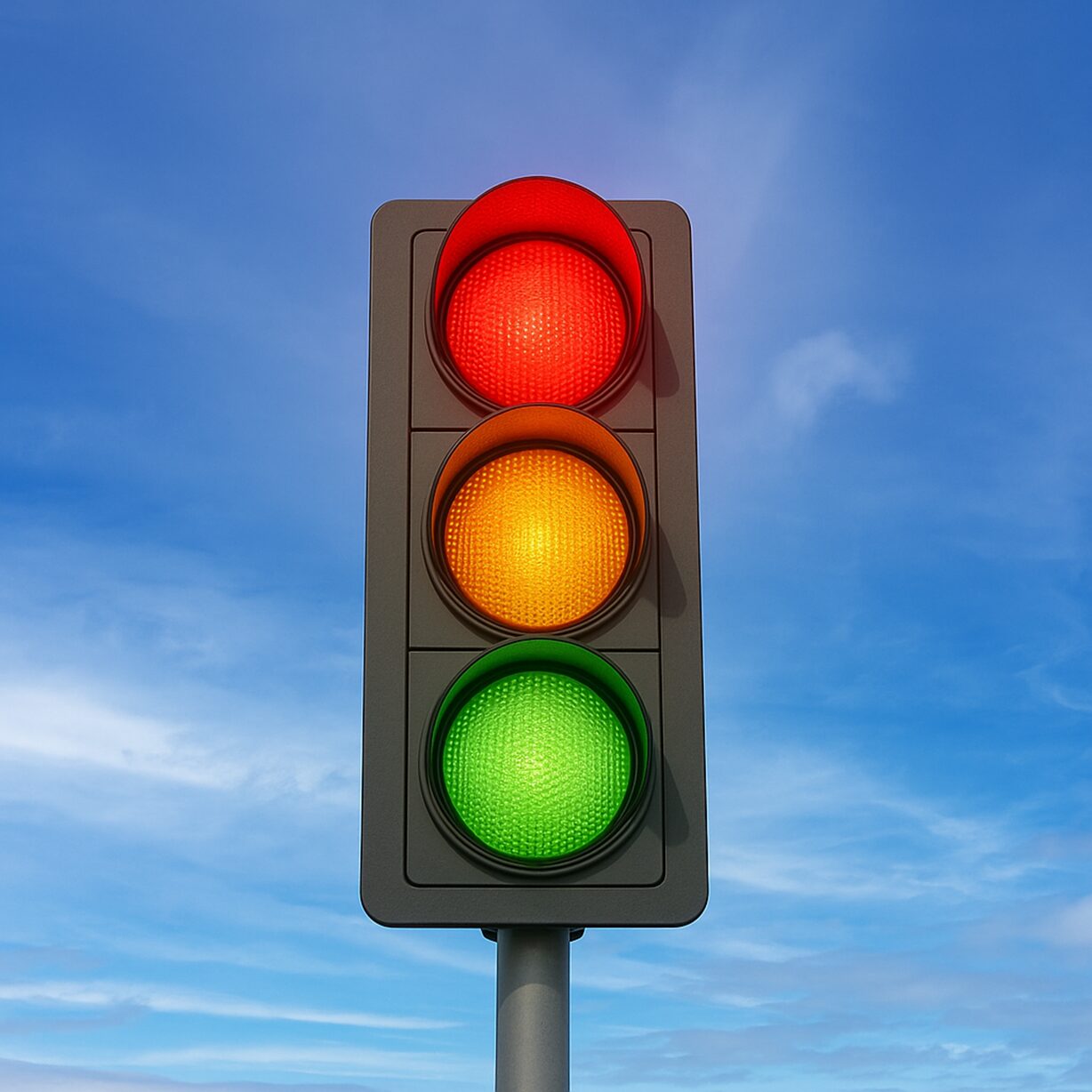
Long Before Regulating Traffic on Streets, Traffic Light Colors Emerged on Railways and Were Chosen Based on Visibility and Safety.
Red, yellow, and green. These traffic light colors that control traffic on the streets around the world were not chosen randomly.
How many times do you stop at red and go at green without thinking much? This behavior is automatic for most drivers.
But have you ever stopped to ask why these three colors — red, yellow, and green — were chosen to regulate traffic? The explanation goes beyond chance. It has origins in railway history and practical visibility tests.
-
The Brazilian colonial city that stopped in time and shares territory with a rocket launch base.
-
79-year-old woman challenges limits, visits 193 countries in the world after 56 years of planning and reveals the behind-the-scenes of a global journey that few have managed to accomplish.

-
These are the drivers who may stop paying tolls on highways in a project that promises to reduce costs for those who live from transportation in Brazil.
-
(Video): Italian pilot lands plane on moving train at 120 km/h and achieves unprecedented feat in aviation, even with a narrow runway and without direct visual contact.

It All Started with Trains
Before reaching the streets, traffic lights were born in the railway sector. Since the 1830s, railways had been using light signals.
The first lights were gas-powered and used three colors: red to stop, green for caution, and white to go.
The problem arose with the white color. From a distance, it could be confused with other lights, such as streetlights or headlights. This caused serious accidents.
One of the most emblematic incidents occurred in 1914, when the red lens fell from a signal and the light that was supposed to indicate “stop” turned white. The result was a collision between two trains.
Because of this, the green color was promoted from “caution” to “go.” And white was completely phased out.
William Potts and the Modern Traffic Light
The application of traffic lights on streets began in 1920. William L. Potts, a police officer in Detroit, was responsible for adapting the railway concept for urban traffic.
He created a four-way system with three lights, adopting the colors already used in railways but adjusting their functions. Thus, the traffic light model we know today was born.
Why These Colors?
The choice of colors is scientifically based. It was not a random decision. Each color has a specific wavelength that affects how we perceive it.
Red: The Warning Signal: The red color has been used for centuries to indicate danger. Furthermore, it has the longest wavelength in the visible spectrum. This means it can be seen from afar, even in poor conditions. Ideal for the function of “stop,” as it anticipates risks more effectively.
Green: The Freedom Signal: Originally used to indicate caution, the green color was adopted as “go” after the white light was removed. It is highly visible and contrasts well with red, which helps prevent confusion in interpreting the signal.
Yellow: Alert with Visibility: Yellow has the second longest wavelength. This makes it visible even in poorly lit areas.
For a long time, it was even used as the main stop color until technological advances made the red light more efficient at night. Today, yellow is used as an alert to indicate that the signal is about to change.
The adoption of these colors was solidified after years of testing and adjustments. The choice took into account visibility, contrast, and driver responses. The combination of red, yellow, and green is not just tradition: it is the result of practical experience and the science of visual perception.
This standardization helps maintain order and safety in traffic worldwide.







-

-

-

-

7 pessoas reagiram a isso.