






 Portuguese
  Spanish
  3 min of reading
  0 comments


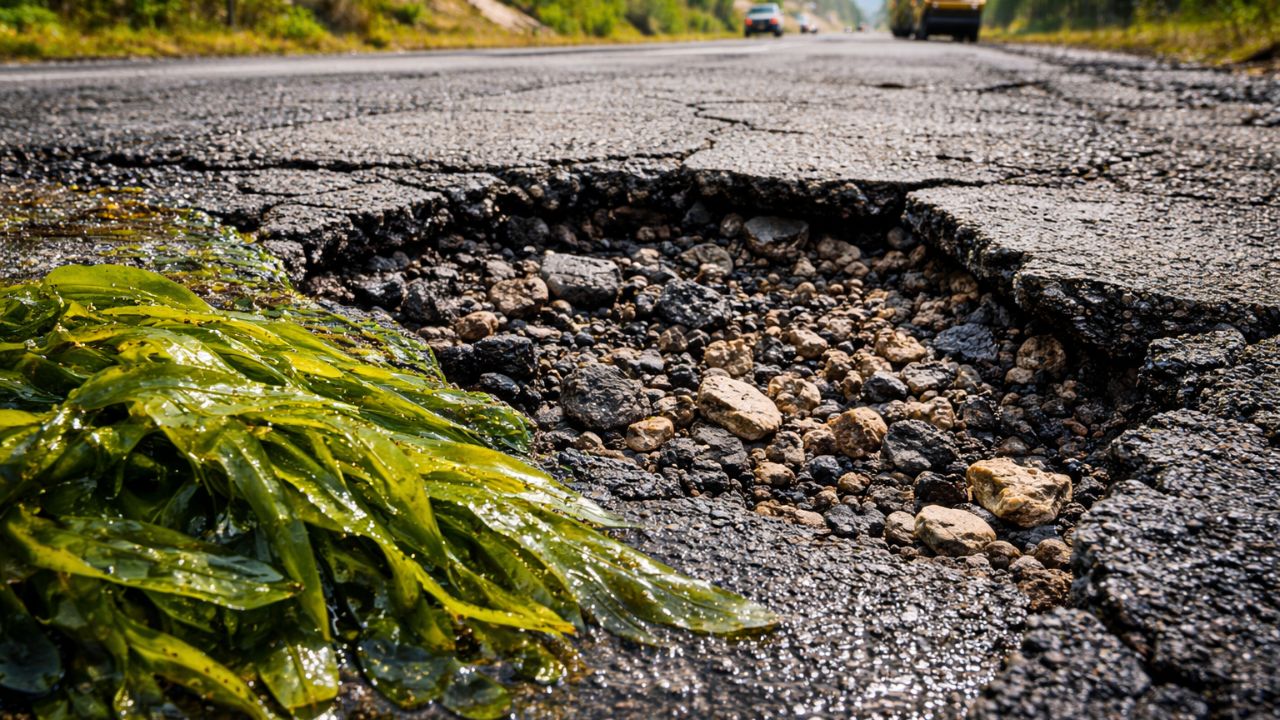
New Study Shows That Replacing Part of Bitumen With Algae Binder Increases Asphalt Strength, Reduces Emissions, and Prolongs the Lifecycle of Roads Even in Extreme Temperatures
The asphalt with algae binder emerges as an alternative to petroleum-derived bitumen, with the potential to reduce potholes, improve flexibility in cold weather, and cut emissions as the percentage of bio-aggregates added to the mix increases.
In laboratory tests, samples containing oil from a specific microalga showed up to 70% improvement in deformation recovery compared to traditional asphalt, along with greater resistance to moisture damage.
The idea behind asphalt with algae binder is straightforward: replace part of the bitumen with a bio-aggregator made from algae oil, preserving the function of the binder and reducing dependence on petroleum.
-
4 habits of people with superior intelligence that psychology associates with high mental performance: study shows link between intellect, active curiosity, review of opinions, attention control, and ability to learn from new evidence

-
Houses made from recycled plastic begin to materialize in Amazonas: government opens pre-registration for vulnerable families, promises free 50 m² homes, and transforms plastic waste into eco-friendly blocks for rapid construction.

-
American company receives historic authorization to build the world’s first nuclear fusion plant in Washington and promises to deliver 50 MW of energy to Microsoft’s data center by 2028, even without proven commercial technology.
-
FBI builds secret city with hospital, market, station, and data center to simulate hacker attacks capable of disrupting essential services




In addition to seeking a more durable pavement, the study points to measurable environmental gains: in computational models, each 1% of bio-aggregates in the mix could reduce net carbon emissions by 4.5% associated with that asphalt.
Why Traditional Asphalt Cracks and Forms Potholes in Cold Weather
Conventional asphalt relies on bitumen, a petroleum-derived substance that acts as a binder. It holds aggregates like rocks and sand together while the pavement stretches and contracts with traffic.
The problem arises when the temperature falls below zero. Bitumen tends to become more brittle, increasing the chance of cracks. Over time, these cracks evolve into fissures and potholes. Less flexibility in cold weather means more accumulated damage.
What Changes With Asphalt With Algae Binder
In asphalt with algae binder, part of the bitumen is replaced with an algae-based binder, produced from oil extracted from these organisms.
Previous research had already indicated that this oil could generate a material similar to bitumen, but with better flexibility in low temperatures.
The proposal doesn’t assume replacing all the bitumen, because the bio-aggregates would not necessarily be that cheap. The most likely approach is to use the algae binder to replace a portion of the bitumen in asphalt mixtures, balancing cost and benefit.
The Microalga That Stands Out and the Leap of Up to 70% in Recovery
The team evaluated oils from four different types of algae. The oil from a freshwater green microalga, called Haematococcus pluvialis, showed the best results in resistance to permanent deformation under simulated traffic stress and also greater resistance to moisture-induced damage.
In laboratory tests simulating traffic combined with freezing cycles, asphalt with the binder from H. pluvialis showed up to 70% improvement in deformation recovery compared to asphalt made with traditional bitumen. This suggests a pavement with a greater capacity to “bounce back” after being deformed, which could reduce the evolution of damage.
The Effect on Emissions and the Calculation of Bio-Aggregates
The study also provides an estimate based on computational models: for every 1% of bio-aggregates in an asphalt mix, the net carbon emissions from that mix could be reduced by 4.5%.
By the same reasoning, a mixture with about 22% of bio-aggregates would theoretically be carbon neutral within these projections. The key word here is estimate, as this point depends on modeling and how bio-aggregates production behaves at scale.
What This Could Mean for Maintenance and Lifecycle of Roads
According to the researcher who led the work, compounds derived from algae can improve resistance to moisture, flexibility, and self-repair capacity of asphalt, with the potential to prolong the pavement’s lifespan and reduce maintenance costs.
In practice, asphalt with algae binder points to a rare combination: better performance in critical conditions, lower environmental impact, and reduced need for frequent repairs, if laboratory results are confirmed in real-world applications.
And now the quick question: if your city adopted asphalt with algae binder, would you support it even if the initial cost was higher, in exchange for fewer potholes and less maintenance?







-

-

-

3 people reacted to this.