





 Portuguese
  English
  Spanish
  8 min of reading
  0 comments


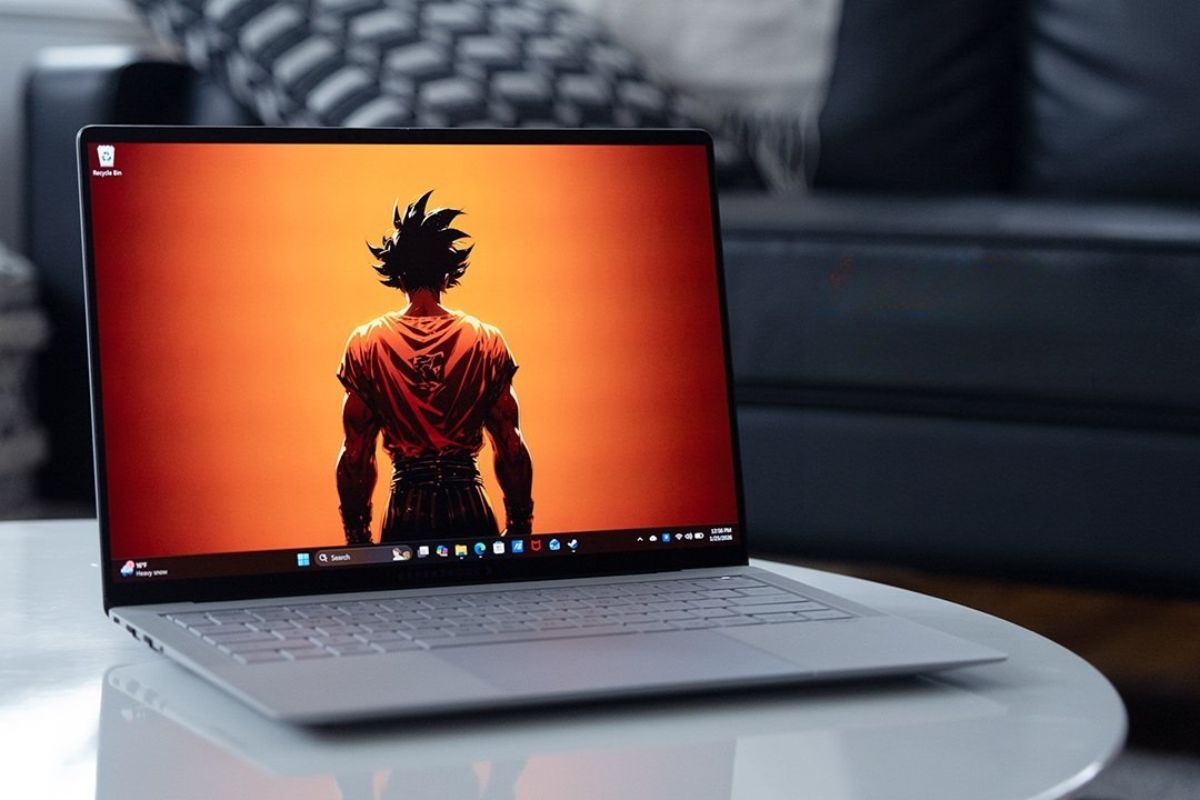
Asus ExpertBook Ultra Enters The Market As A High-End Business Notebook, With Real Battery Life Over Twelve Hours, New Intel Panther Lake Processor, Lightweight Magnesium Alloy Construction And Consistent Performance, Targeting Professionals Who Demand Mobility, Some Chance Of Gaming And A Concrete Alternative To The MacBook Air In 2026
The Asus ExpertBook Ultra is the type of notebook that is born with a clear target: to directly compete for the attention of those who have always looked at the MacBook Air as a reference for mobility and autonomy. Instead of betting on flashy designs or experimental solutions, Asus combines long battery life, a new Intel processor, and lightweight construction to try to convince daily work users.
In practice, this model fits the profile of professionals who need to carry their equipment all day, alternating between meetings, spreadsheets, light media editing, and, occasionally, some gaming or more intensive graphic tasks. The promise is not to be a gaming notebook, but rather a work computer that can handle more than the basic office routine and remains responsive even with many windows open.
Asus ExpertBook Ultra As A Direct Rival To The MacBook Air In 2026

The positioning is explicit: the Asus ExpertBook Ultra enters the premium ultrathin segment that has traditionally been dominated by the MacBook Air.
-
Supercomputer calculates when humanity may disappear from Earth, predicts a scorching supercontinent, temperatures of up to 70 degrees, and a planet moving towards becoming uninhabitable.

-
INMET danger alert: heavy rains between the 3rd and 4th may drop up to 100 mm/day and winds of 60 to 100 km/h in several regions of Brazil require extra caution.

-
The parts crisis may bring back the drop notch and microSD in 2026; while Windows 11 promises to become lighter, leaks mention batteries of up to 10,000 mAh and 200 MP cameras.
-
In Kenya, engineer Nzambi Matee created “bricks 2.0” using packaging plastic: a mixture with sand, heated and pressed; they are 5 times more resistant, already have official licensing, and are being used in streets and construction projects.

The difference is that here, Asus works with Windows, an Intel Core Ultra processor from the Panther Lake generation, and a set of features designed for businesses, corporate IT, and users who demand fine control of hardware.
While the MacBook Air relies on energy efficiency and ecosystem integration, the ExpertBook Ultra bets on extensive battery life, magnesium construction, and hardware tuned for intensive use.
The brand claims up to around 24 to 26 hours of theoretical autonomy, but in continuous video playback tests, with Wi-Fi and brightness at 50%, the result was around 13 hours and 46 minutes, a still solid scenario for real use, especially considering the processor’s performance.
This combination is relevant for a scenario where companies need to equip entire teams with lightweight, connected, and secure machines, but do not want to give up the flexibility of Windows.
Positioning the Asus ExpertBook Ultra on this “MacBook Air rival” shelf is as much a marketing strategy as it is a message to the corporate market.
Magnesium Construction And Focus On Professional Mobility

The foundation of the proposal lies in the structure. The Asus ExpertBook Ultra uses a machined magnesium alloy chassis, which allows the equipment to remain rigid while also being very lightweight.
The version with a non-OLED panel weighs in at approximately 0.99 kg, while the configuration with an OLED screen jumps to around 1.1 kg, still within the range of the lightest ultrathins on the market.
This construction is not just for marketing. For those who carry the notebook in their backpack every day, a few hundred grams make a real difference.
The nanocoating applied to the casing provides a softer tactile feel and promises better resistance to marks and splashes, which is of interest to those who work while traveling, in coworking spaces, or in less controlled environments than a traditional office.
Another detail of mobility is the design featuring a small “lip” at the back bottom of the device, which slightly raises the base when placed on the table.
This subtle angle improves typing ergonomics and, at the same time, allows air to circulate better through the cooling system, which is important for hardware that promises high performance in such a thin format.
Screen, Keyboard, And Trackpad Designed For Intense Use
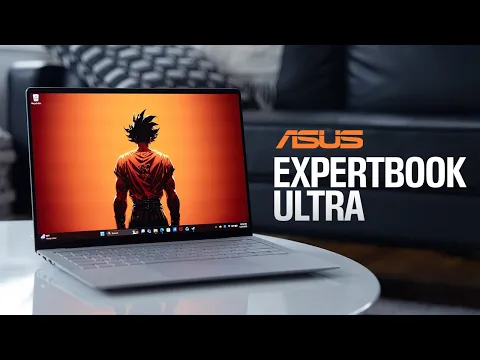

At the front, the Asus ExpertBook Ultra features a 14-inch screen in a 16:10 aspect ratio, a format that favors reading documents, spreadsheets, and browsing multiple windows.
There are options with either high-quality OLED or LCD panels, with the possibility of a matte finish, which is rare in ultrathins focused on design and very useful for those working under bright lights.
The maximum brightness reaches around 1,400 nits in high-end configurations, combined with Gorilla Glass Victus protection and Corning’s matte glass solution.
This allows for using the Asus ExpertBook Ultra in outdoor environments, very bright rooms, or near windows, without reflections making the experience uncomfortable. For those reviewing presentations, attending video meetings, and checking dashboards all day, the quality of the panel becomes more than a luxury and turns into a tool.
The keyboard follows the line of advanced business models: comfortable travel, consistent response, and adequate lighting. The trackpad, on the other hand, is one of the most praised points: large, extremely smooth sliding, and well-calibrated gestures.
In a productivity notebook, a poor trackpad can compromise the entire experience; here, it becomes a selling point. The model also offers a touchscreen on some versions, enhancing flexibility for navigation, quick drawing, or interaction with presentations.
Panther Lake Processor And Integrated Graphics For Work And Casual Gaming
The heart of the Asus ExpertBook Ultra is the new Intel Core Ultra series 3 family, based on Panther Lake. Configurations range from more basic versions to the Intel Core Ultra X7 and Intel Core Ultra X9, paired with up to 64 GB of RAM.
In practice, this translates into headroom for heavy multitasking, with multiple browser tabs, office applications, video conferencing clients, and corporate software open simultaneously.
In synthetic performance tests with Cinebench R23, the Intel Core Ultra X7 processor achieved robust results, especially in multicore tasks, which is relevant for workflows that involve file compression, light video export, and more complex automations.
The goal is not to compete with mobile workstations, but to deliver more than enough performance for most advanced office professionals and moderate content creators.
One point that differentiates the Asus ExpertBook Ultra from other business models is the use of the new integrated Intel Arc graphics.
In practical tests, it was possible to run Street Fighter 6 at 1080p with stable 60 frames per second, Marvel Rivals averaging around 70 frames, and even Cyberpunk 2077 at higher resolutions, using upscaling technologies like FSR to maintain smooth gameplay. All of this without the notebook being plugged in, reinforcing the balance between consumption and performance.
For those who travel a lot, this ability to run a modern game at the end of the day with still available battery, without relying on a heavy dedicated GPU, is a differentiator that brings the Asus ExpertBook Ultra closer to a hybrid profile between work and leisure.
Battery, Cooling, And Proposal Limits
The 70 Wh battery is one of the pillars of the proposal. Under continuous video usage conditions, with Wi-Fi on and brightness at 50%, the Asus ExpertBook Ultra delivered around 13 hours and 46 minutes, a scenario that accurately reflects a full day of work with some buffer.
In real mixed use, with alternation between browsing, documents, meetings, and breaks, the trend is that the device keeps up with the entire journey without needing to be plugged in.
During gaming tests, in about an hour and a half of intense use, the consumption dropped from 66% to 23% charge, a consistent result for such a thin notebook running modern titles.
This shows that the Asus ExpertBook Ultra is not a portable gaming console, but can handle occasional sessions without completely depleting the work battery.
The cooling system stands out for staying cool to the touch, both on the top and the bottom, even under prolonged load. The combination of vents on the base, well-positioned air outlets, and the slight rear angle prevents uncomfortable heat buildup in the palm rest area.
For those who type for hours, this thermal stability is as important as the number of cores in the processor.
However, not everything is perfect. The absence of an SD or microSD card slot somewhat limits use for photographers, videomakers, and journalists who work with external capture.
In compensation, the port set includes two Thunderbolt (USB-C), two full-size USB-A, HDMI 2.1, and a headphone jack, which covers most office scenarios without immediate need for hubs.
Connectivity, Audio, And Focus On Business Use
The package is completed with speakers compatible with Dolby Atmos, positioned on the sides, providing clear sound suitable for video conferencing, content streaming, and moderate volume music.
They are not multimedia notebook speakers aimed at entertainment, but they deliver clarity sufficient for meetings and casual media consumption.
From a corporate IT perspective, the Asus ExpertBook Ultra fits the typical profile of a modern business notebook: Windows, recent Intel processors, a good array of physical ports, and reinforced construction.
This facilitates integration into existing machine parks, security policies, and remote management systems, while also offering the end user something visually more appealing than many traditional models in this segment.
This combination of lightness, long battery life, solid performance, and reasonable multimedia features explains why the Asus ExpertBook Ultra is starting to be considered a candidate for “Business Notebook of the Year” within the Windows universe.
The competition with the MacBook Air is no longer just a matter of operating system, but now involves autonomy, comfort of use, and flexibility.
What The Arrival Of The Asus ExpertBook Ultra Indicates For The Future Of Ultrafines
The launch of the Asus ExpertBook Ultra indicates a clear trend: business notebooks need to stop being just “spreadsheet machines” and start offering a complete experience that includes comfort, real autonomy, some graphic power, and design closer to premium consumer models. In 2026, this means facing the MacBook Air directly, not only in specifications but also in perceived value.
For professionals who live between travel, home office, and the office, the equation begins to change. A notebook like the Asus ExpertBook Ultra allows for all-day work, attending video meetings, editing heavy documents, and still gaming at the end of the workday without switching devices.
It is at this point that the boundary between “business notebook” and “personal notebook” becomes increasingly blurred.
The big question now is strategic choice: in a scenario where the MacBook Air remains strong and alternatives like the Asus ExpertBook Ultra raise the stakes on the Windows side, which path makes more sense for those who rely on a notebook every day?
In your usage reality, would you prioritize a model like the Asus ExpertBook Ultra, with Windows, Panther Lake, and magnesium construction, or do you still prefer Apple’s ecosystem with the MacBook Air to handle work, mobility, and leisure on the same device?









Seja o primeiro a reagir!