





 English
  Francês
  Alemão
  Italiano
  Japonês
  Norueguês
  Portuguese
  Spanish
  4 min of reading


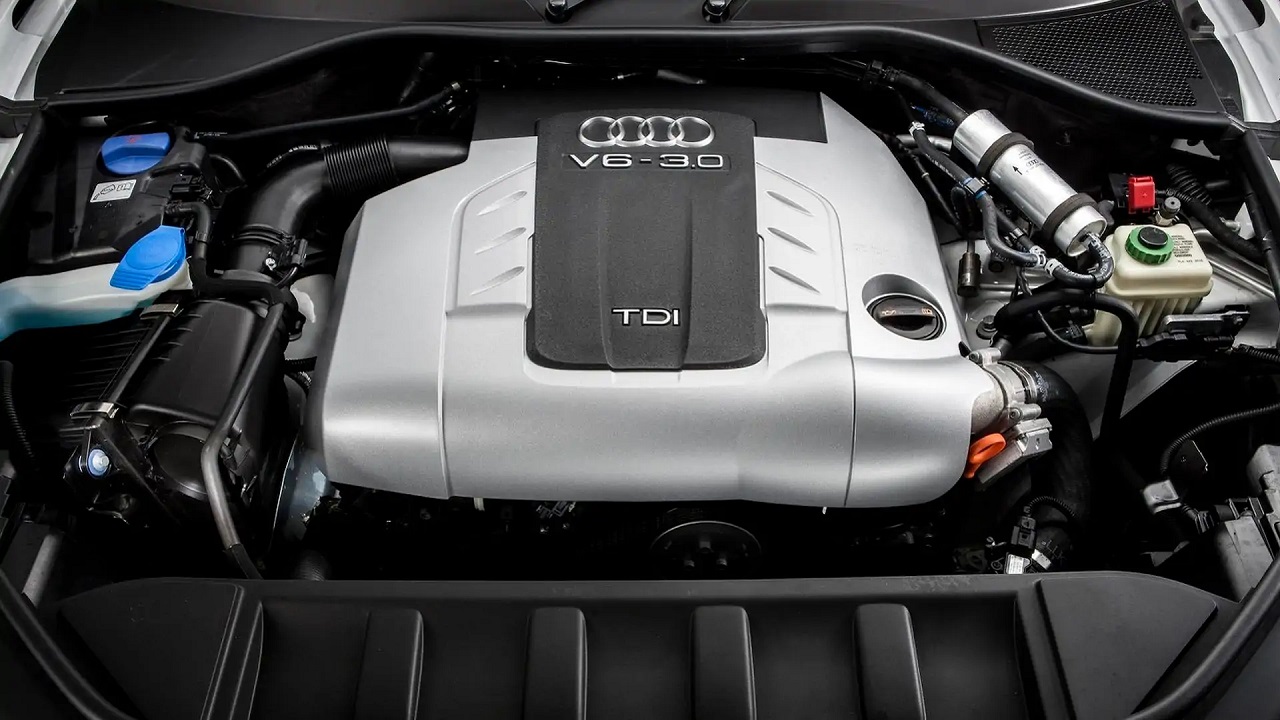
Audi Approved The Mass Production Of Its Six-Cylinder Diesel Engines For Use With Hydrotreated Vegetable Oil (HVO) As Part Of The Company’s Transition To Become Climate Neutral By 2050.
According to Automotive World, since mid-February, new models from the multinational Audi selected with V6 engines, including the company’s 282 hp unit, can be driven using renewable fuels (HVO). The models include the A4, A5, A6, A7, A8 SUVs and the Q7 and Q8 SUVs. The Q5 will also gain a V6 diesel engine compatible with hydrotreated vegetable oil in early March. Each Audi car compatible with renewable fuels can be identified by a sticker with the acronym ‘XTL’ on the fuel tank cap. The company’s four-cylinder diesel engines are already compatible with HVO. Audi claims that operating one of its vehicles using HVO can reduce CO2 emissions by 70-95% compared to diesel produced from fossil fuels.
Read Other Related News
- Toyota, Subaru, Mazda, Kawasaki, and Yamaha Set Aside Electric Vehicles and Form Alliance to Keep the Combustion Engine Market Alive
- British Company Develops Lighter, Lower-Cost Electric Motor by Replacing Copper Windings with Aluminum
- U.S. Is About To Develop The First Hydrogen-Powered, High-Efficiency Steam Engine For Commercial Aviation
- YouTuber From Minas Gerais Creates Wood-Powered Steam Tricycle and Gains National and International Fame
ARTICLE CONTINUES BELOWSee also
-
Engineers propose a fourth traffic light for intersections – the change promises to affect crossings, queues, and waiting times.

-
Chevrolet Suburban Z71 lands in Brazil with a V8 engine, off-road design, air suspension, seven seats, and colossal size, a rare version imported for around R$ 1.3 million with luxury and exclusivity.

-
The Chevrolet Onix 1.0 turbo achieves 17.7 km per liter on the highway and ranks among the three most economical cars in Brazil in 2026, alongside two more expensive Toyota hybrids available at dealerships.

-
Little sister of the Hilux: Toyota launches Land Cruiser FJ with 4 radical versions, 2.7 engine with 166 hp and 4×4 traction with locking.

-
- New Jaguar F-Pace SVR Arrives in Brazil More Powerful, Equipped with V8 Supercharger Engine and 550 hp
Audi’s Powertrain Development Chief Comments on the Use of HVO in Audi’s Combustion Cars
“As the cetane rating of HVO is about 30% higher, the combustibility of the engines is enhanced. The positive effects of this are particularly noticeable in cold starting,” said Matthias Schober, Head of Powertrain Development at Audi for V-TFSI, TDI, and PHEV Models.
“We tested the effects on various components, performance, and exhaust emissions in specific validation runs before granting approval,” he added.

HVO is a type of biofuel. Biofuels are created from renewable resources, such as plants, from waste like cooking oil from the food industry, or from agricultural residues. When combined with hydrogen, they can replace fossil components in conventional diesel fuels or can be used without blending as 100% pure fuel.
Audi Aims to Produce Its Last Combustion Car in 2023
Oliver Hoffmann, Audi’s Development Director, said: “With our Vorsprung 2030 strategy, we are pursuing the clearly defined objective that all new models we launch worldwide starting in 2026 will be fully electric, an essential contribution on the path to carbon neutral mobility.
“At the same time, we are optimizing our existing combustion engine portfolio to achieve more efficiency and less emissions. One way to do this is by creating the necessary technical foundations for the use of sustainable fuels like HVO.”
Audi plans to produce its last internal combustion car in 2033. For the future, Audi and the entire Volkswagen Group plan to approve more combustion engines for renewable synthetic fuels, thus making a valuable contribution to decarbonization.
Compatibility of Combustion Engines with Renewable Fuels (reFuels)
With various pilot projects, such as the gas power generation plant in Werlte, Audi has gained valuable insights into the production of sustainable fuels, which are being utilized across the Volkswagen Group. These experiences also provide an important foundation for developing concepts for a comprehensive sustainable energy system.
The VW Group is cooperating with mineral oil manufacturers and other energy suppliers and is contributing its technical knowledge to ensure the compatibility of existing engines with reFuels. Since March 2021, for example, the R33 Blue Diesel has been available at Audi’s filling stations in Ingolstadt and Neckarsulm. This diesel has a renewable component of up to 33%, based solely on residual and waste materials. The R33 has two main advantages: First, it reduces CO2 by at least 20% compared to fossil diesel.
Secondly, it is a premium fuel that positively impacts wear and longevity through special additives. The R33 Blue Diesel meets the most prevalent standard currently, EN 590, and is therefore certified for all diesel vehicles – even older ones. The Volkswagen Group played a significant role in the development of the fuel, and its expertise helped bring the fuel to market.
In addition to Audi and VW filling stations, the fuel is already available at some public stations. However, fossil diesel fuel with up to 7% biodiesel content is still the norm in Germany. This fuel is indicated by the B7 symbol at filling stations. Soon, R33 Blue Gasoline will also be available for gasoline engines – the gasoline equivalent of R33 Blue Diesel.









Seja o primeiro a reagir!