





 Portuguese
  English
  Spanish
  4 min of reading
  0 comments


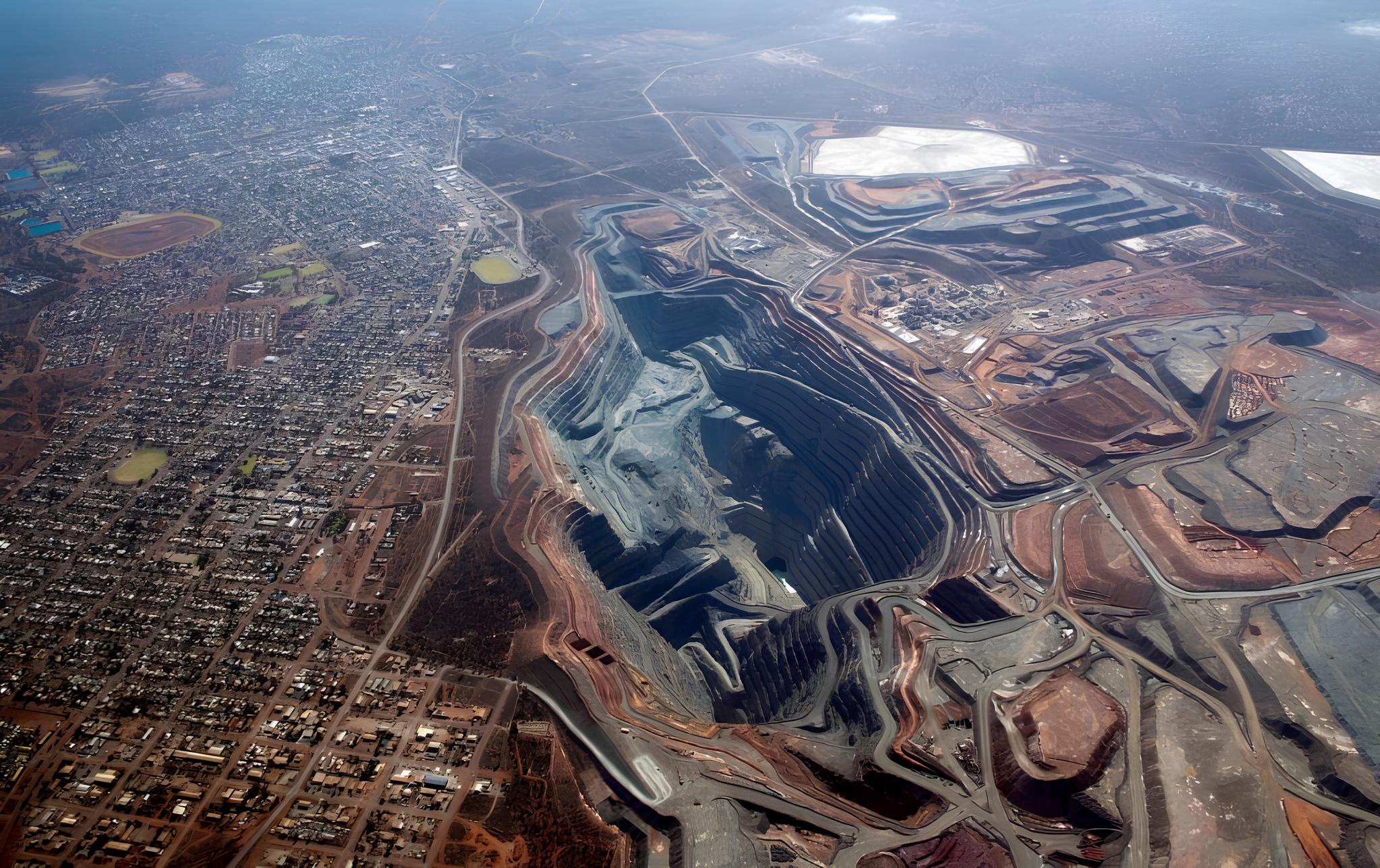
Gigantic Open-Pit Mine In Kalgoorlie Measures Kilometers In Length, Reached 650 Meters In Depth And Has Already Moved Hundreds Of Millions Of Tons Of Rock, Becoming One Of The Largest Holes Made By Humanity.
In the heart of the Australian outback, in the arid region of Kalgoorlie-Boulder, lies one of the largest cuts made by humanity directly in the Earth’s crust. The so-called Super Pit, officially known as Fimiston Open Pit, began to be opened in the 1980s to unify several smaller gold mines that had operated in the same vein since 1893, when the gold rush turned the city into a global mining hub.
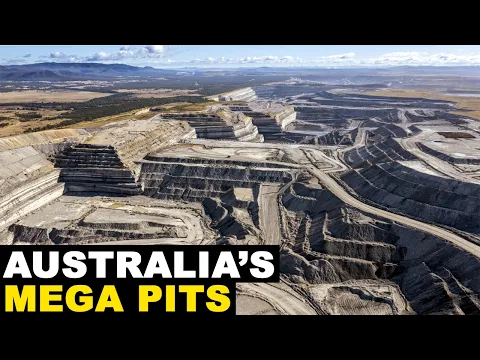
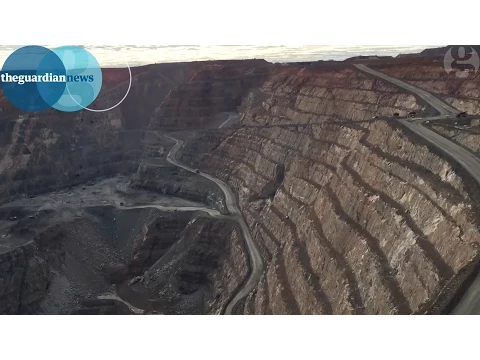
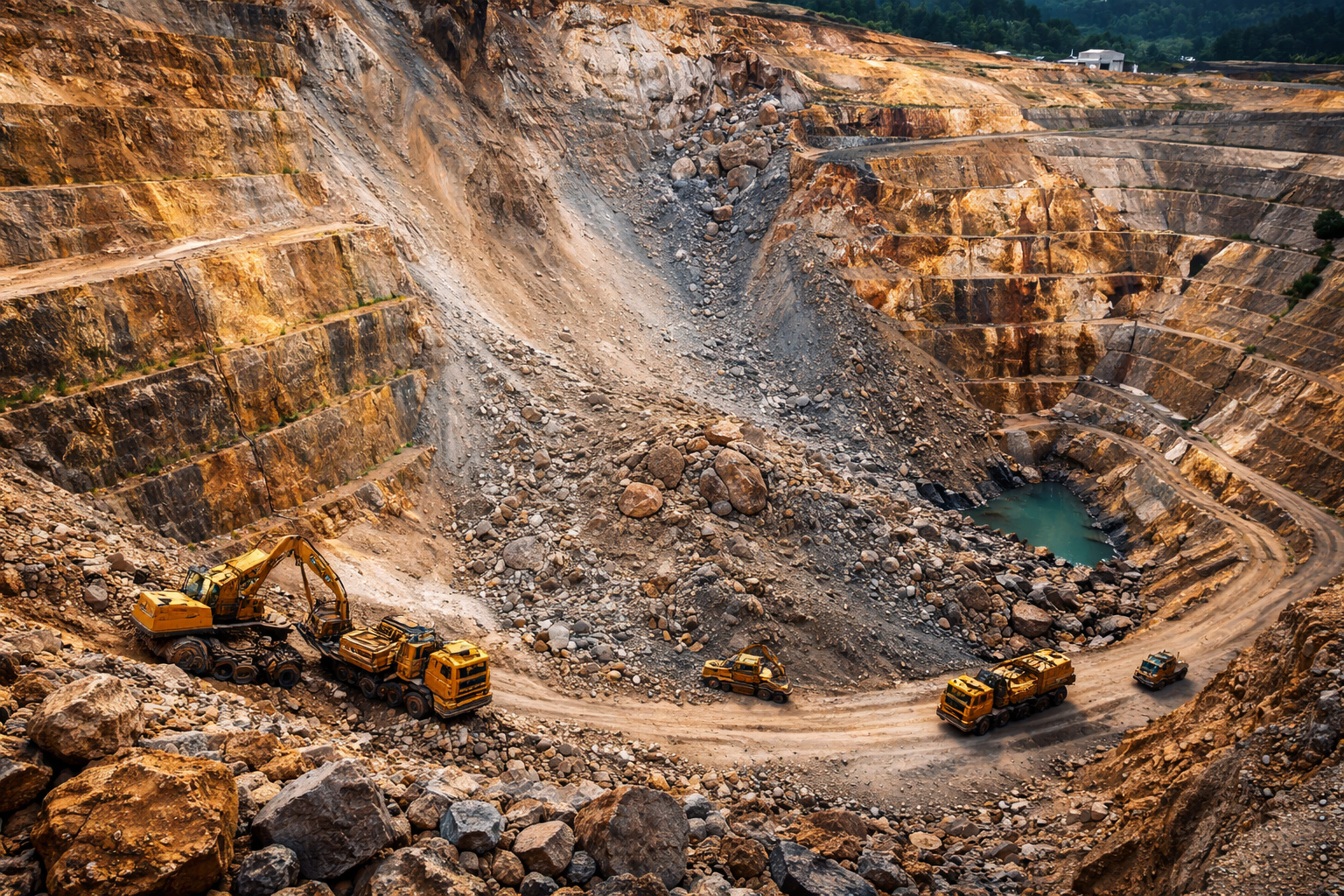
The decision to unify dozens of concessions created a milestone in open-pit mining engineering: a continuous excavation that today reaches 3.5 km in length, 1.5 km in width, and about 650 meters in depth, numbers sufficient to swallow entire buildings, ships, and even mid-sized skyscrapers.
The Geology That Enabled The Mega Cut
What enables a hole of this size is the alignment between geology, mineral value, and topography. The area of the Super Pit is part of the Yilgarn Craton, one of the oldest geological formations on the planet, composed of Archaean rocks over 2.5 billion years old.
-
After China, it’s now the turn of the USA to ‘secure’ a share of Brazil’s natural resources: the country buys critical rare earths for R$ 3 billion and enters the center of the global technology dispute.
-
Rare earths are in everything, from cell phones to bullet trains, and what almost no one realizes is why they have become the target of such a delicate global war.
-
Brazil extracts 26.3 million tons of ore from what was previously treated as waste, transforming residues into wealth, producing over 3 million tons of sand, and demonstrating how national mining is relearning to generate value.
-
A $3.5 billion megaproject in Latin America pumps desalinated seawater at 1,050 liters per second over 194 km to keep a copper supermine in the Andes operational for another 20 years.


The main ore is associated with gold-bearing shear zones and mineralized quartz veins, which justify the cost of rock removal — even when it means moving colossal volumes.
In other words, the geology is worth the excavation.
The Volume Of Material Removed Over The Decades
To achieve the current geometry, the Super Pit has already moved hundreds of millions of tons of rock, including both waste and ore.
During peak production periods, the off-road trucks extracted approximately 15 million tons per year, a figure that varied according to ore grades and international gold markets.
These operations involve:
• Drilling
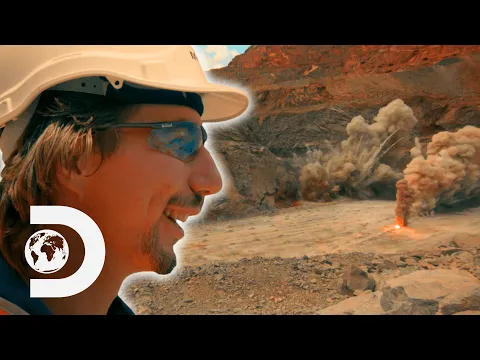
• Controlled Blasting
• Loading
• Transportation by Giant Trucks
• Chemical and Physical Processing
The end result is a phenomenon that resembles more planetary civil engineering than traditional mining: continuous excavation, in descending benches, until forming a crater with stepped walls that occupies virtually the entire horizon of Kalgoorlie.
The Machinery That Makes Excavation Possible
In the Super Pit, the protagonist is not the human, but the machines. The operation uses vehicles that look like they came out of science fiction:
• Komatsu 830E and Caterpillar 793 trucks with a capacity of 220 to 240 tons per trip
• Excavators with buckets of 36 to 50 m³, capable of filling a giant truck in just a few cycles
• Drilling rigs that drill dozens of meters into hard rock every day
• Crushing and grinding plants capable of turning solid rock into fine powder for chemical gold extraction
This entire arsenal operates 24 hours a day, 365 days a year, permanently transforming the landscape.
The Transformation Into An Artificial Lake
Mining in Kalgoorlie is undergoing a transition. With the gradual depletion of the most profitable benches and the rising costs of deepening, parts of the Super Pit have begun to experience natural filling, fed by:
• Water tables
• Rainwater
• Drainage systems
With the end of certain operations, the enormous void left by extraction turns into a deep artificial lake, a common phenomenon in large open-pit mines around the world.
The expectation is that, over the coming decades, the giant depression will accumulate millions of cubic meters of water, altering both the local ecology and the popular imagination: what was once a wound in the rock becomes a dark blue reservoir in the midst of the Australian desert.
Environmental Impacts And The Dilemma Of Modern Mining
The Super Pit highlights a geological and environmental dilemma: gold is extremely expensive and rare in terms of concentration, which requires removing enormous quantities of rock to extract small amounts of metal.
By comparison, in many periods, the average grade was below 2 g of gold per ton, which means that for every 1 ton of rock moved, only a few milligrams become final product.
This brings inevitable impacts:
• Permanent alteration of the landscape
• Exposure of sulfide rocks
• Risks of acid drainage
• High consumption of energy and reagents
• Waste and dam management
At the same time, advocates of the mine argue that Kalgoorlie exists because of gold, and that thousands of direct and indirect jobs depend on this chain.
The Geoeconomic Legacy Of The Super Pit
Even after over a century of gold mining in the region, Kalgoorlie remains active because gold is a strategic commodity, not only for jewelry but also for:
• Electronics and semiconductors
• Medicine and dentistry
• Space systems
• International financial reserves
The legacy of the Super Pit unfolds in three dimensions:
- Geological — a monumental cut that exposes billions of years of Earth history
- Economic — a global gold mining hub impacting regional GDP
- Social — an entire city that was born, grew, and continues to exist from mining
From The Gold Rush To Industrial Tourism
When extraction dynamics allow, the crater itself becomes a tourist attraction. Thousands of visitors flock to Kalgoorlie every year to watch trucks the size of houses descending benches that look like scars on an alien planet.
This phenomenon has created a peculiar form of tourism: industrial and geological tourism, where the object of contemplation is not untouched nature, but rather nature transformed on a continental scale.









-

-

-

-

-

15 pessoas reagiram a isso.