





 Portuguese
  English
  Spanish
  3 min of reading


Law Sanctioned In January Allows Utilization Of CDE Resources To Equalize Tariffs For Companies Below 350 GWh/Year With Those Of Larger Utilities
In 2022, seven small distributors with their own market under 350 GWh/year will receive a total of R$ 15 million from a new subsidy provided by the Energy Development Account aimed at tariff scarcity. The economic aid was defined in a law sanctioned by the Federal Government in January and will be applied, thus far, only to the low voltage sector, which will benefit consumers from the distributors João Cesa, Forcel, Urussanga, Sulgipe, Cocel, Cooperaliança, and DCelt.
Other News:
- Aker Solutions Selects For Job Vacancies For Young Apprentice And Engineering Analyst, For Rio de Janeiro And Paraná
- “BR do Mar”: After All, What Is This? Learn About The Project That Promises To Encourage Special Cabotage Operations In Brazil
- Rede Sollar Sul, A Solar Energy Company, Will Inaugurate A New Headquarters In The City Of Taquari (RS)
The National Electric Energy Agency (Aneel) will also regulate the aid defined in Law 14,299 for smaller utilities; however, it opted to immediately apply what is provided for in the legislation, aiming to equalize the tariffs of these companies to those of large distributors in the same state.
This assistance will result in a decrease in the average tariff for group B, which will vary from 3.66% to 30.25%, depending on the utility. The tariffs came into effect on January 6 and will remain until the month in which the tariff process for each of them occurs throughout 2022. According to Aneel’s calculations, R$ 2.2 million will be transferred monthly from the CDE until the end of August, when the last companies will receive adjustments.
-
Inflation in March reaches 0.88% according to IBGE and pressures the Brazilian economy, impacting family budgets and requiring more strategic decisions to maintain financial control.
-
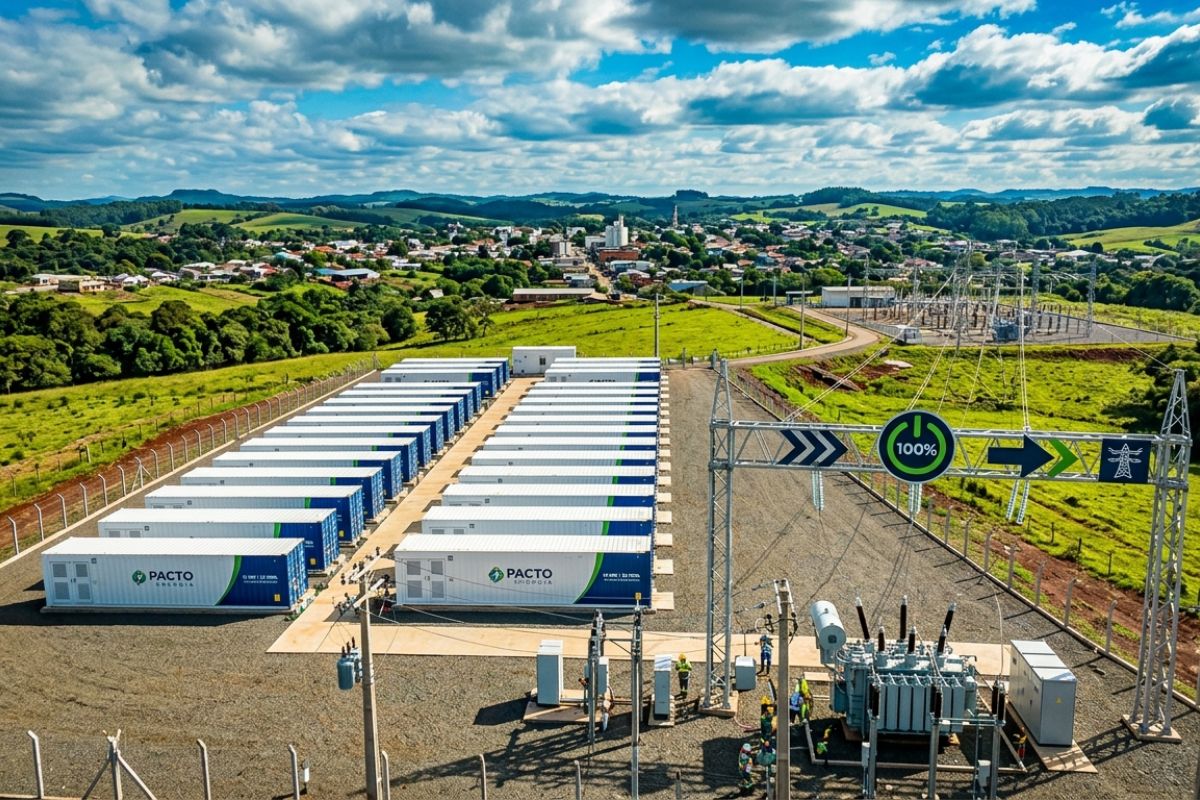
In Paraná, distributor Pacto connects 100% of the load in Coronel Vivida to batteries: a BES of 10 MW and 20 MWh costs just over R$ 30 million and lowers the local tariff now.
-
With a dependence of up to 80% on gas imported from the United States, Mexico is responding with a robust energy strategy, betting on shale gas, creating a scientific committee, and preparing to expand natural gas production to reduce vulnerability and strengthen its energy security in the coming years.

-
The United States proposes to Brazil a critical minerals agreement with a minimum price to combat Chinese dumping and priority for investment, but the Planalto is blocking the signing out of fear of upsetting China and due to electoral calculations in a year of competition.
According to the law, small utilities cannot have tariffs higher than those of nearby utilities with their own annual market exceeding 700 GWh. Furthermore, it also allows a ceiling tariff to be applied, which Aneel will now resolve to enact for group B of the distributors that charge higher rates than those of large companies in the same state.
Companies That Will Not Undergo Adjustments
Eight of the 15 utilities with a market below 350 GWh/year will not need any adjustments, as they have a tariff level for group B lower than that of adjacent utilities. These utilities are: Energisa Nova Friburgo, DMED, Eletrocar, Demei, Chesp, Hidropan, Uhenpal, and Mux Energia.
According to an explanation from Aneel, for the low voltage market, “there is technical conviction regarding the application of the legal provision.” The complete regulation, which is planned for a second phase, will require a deeper analysis that will also include, in addition to group A (high voltage), the effects of the law on tariff processes, impacts on the Energy Development Account, and the timing of the regulation’s implementation, along with other aspects. The discussion will be held through public consultation.




Seja o primeiro a reagir!