





 Portuguese
  English
  Spanish
  6 min of reading
  0 comments


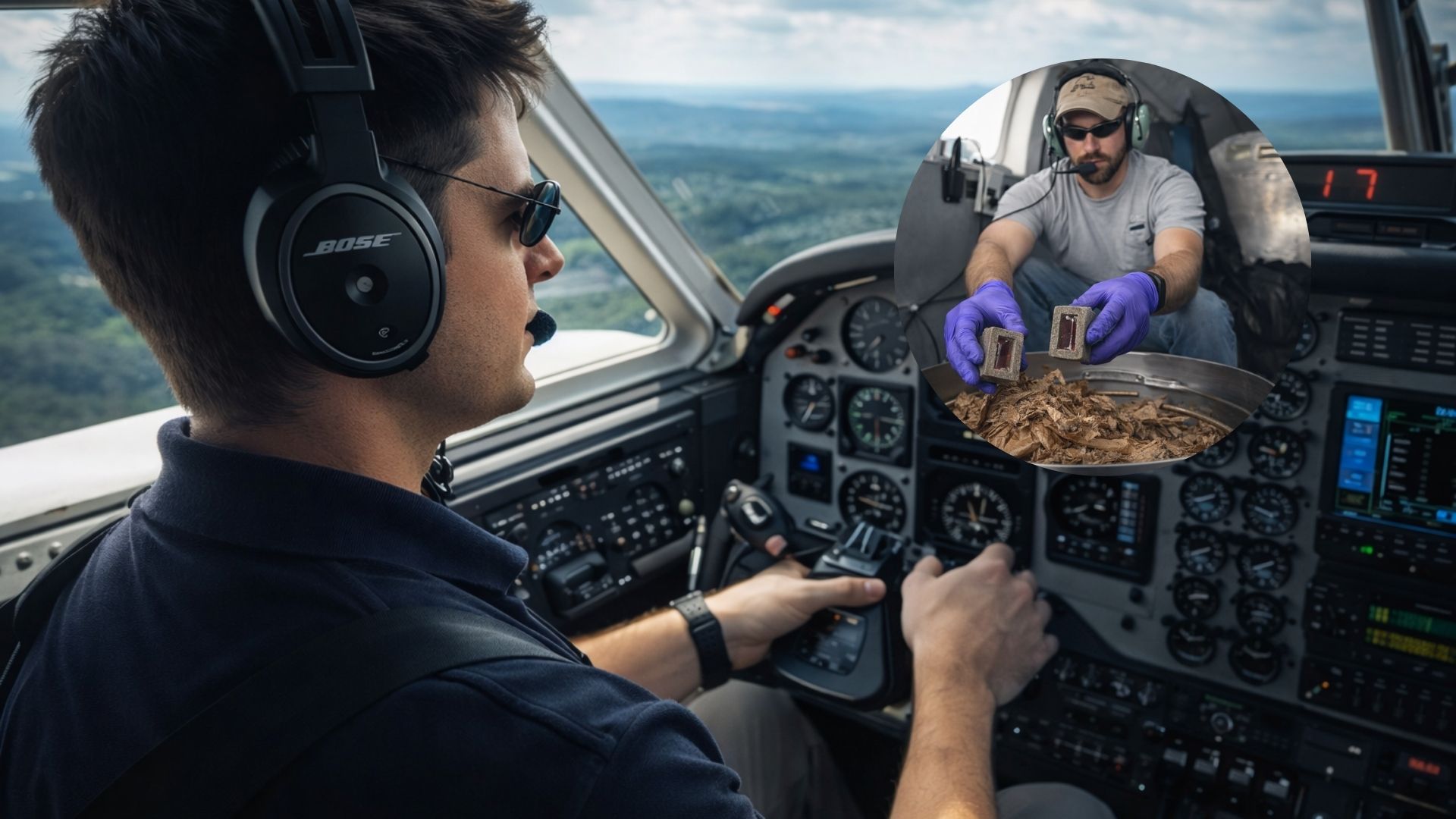
Aerial Campaigns of Oral Rabies Vaccination Drop Baits from Above to Reach Wildlife in Large Areas, Combining Aviation Logistics, Distribution Maps, and Public Guidance. Strategy Aims to Reduce the Circulation of the Virus in Specific Regions and Prevent Expansion into New Zones.
The scene looks like something out of a movie: aircraft flying low over green areas, rivers, farms, and even the edges of residential neighborhoods, as small units are dropped to the ground at regular intervals.
It is not feed, nor fertilizer, nor some type of military monitoring.
What falls from the sky, in planned and repeated operations across large swaths of territory, are baits carrying oral rabies vaccine, a strategy used in the United States to reduce the circulation of the virus in wildlife and prevent disease variants from advancing into new areas.
-
HONOR X80i arrives with a massive 7,000 mAh battery, a 120 Hz AMOLED display with a brightness of 6,500 nits, and the new Dimensity 6500 Elite chip, promising up to 22 hours of video playback and impressive performance in casual gaming.

-
Xiaomi TV Stick HD 2 is announced with Google TV and dual-band Wi-Fi, offering 38% superior performance, HDR10+, Dolby Atmos, a quad-core chip, Mali-G31 GPU, 1 GB RAM, and support for 1080p at 60 Hz.

-
Brazil joins the select group of countries by producing a supersonic fighter that reaches 2,400 km/h with advanced electronic warfare technology, US$ 4 billion in investments, 36 units planned, 350 trained engineers, and unprecedented national production by 2032.

-
At the bottom of the sea, scientists have found a true underwater cathedral measuring 62 meters at the base, 31 meters at the top, and 1,347 square meters of giant coral in the Maug Islands, estimated to be 2,050 years old.

Rabies Vaccine Baits and the Target on Raccoons
The most well-known target of this campaign is the raccoon, a highly adaptable mammal, common in urban and rural areas, and historically associated with outbreaks of a rabies variant that spread through parts of the eastern United States.
The logic is simple, but it requires high-precision logistics: instead of capturing animal by animal, teams spread attractive baits in locations where wildlife circulates.
When the animal bites the bait, it comes into contact with the vaccine and can develop immunity, helping to create a collective barrier that slows transmission.
How the USDA Coordinates Aerial Operations with States and Municipalities

Coordination often involves the United States Department of Agriculture (USDA), through the service responsible for wildlife, in partnership with state and local agencies.
The method combines remote areas, where planes can cover large expanses at once, with denser zones, where helicopters and ground teams can operate with more control.
In announcements and official materials, the USDA describes the use of fixed-wing aircraft for distribution in rural regions and the employment of helicopters, vehicles, and bait points in suburban or urban areas, where proximity to people and domestic animals requires even more care in the route and the method of launch.
Inside “Bait Vaccination” and the Format of the Dose
The secret to making the operation work lies in the design of the “package.”
The baits are not random: they are made to catch the attention of the right animal and withstand the handling necessary for transport, launch, and permanence in the environment for the expected encounter time.
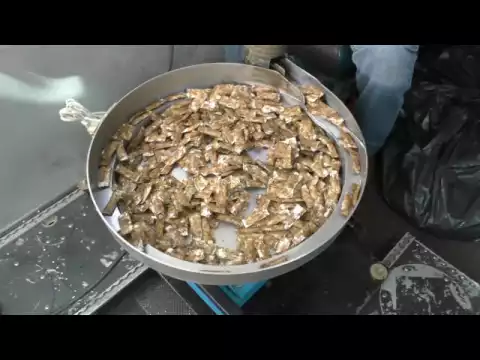
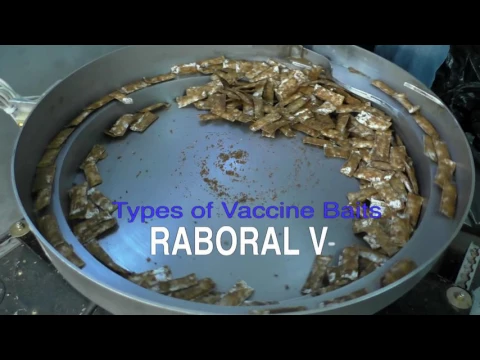
In the US, the USDA describes baits with attractive coating, often associated with strong-smelling components, and small packaging designed for the animal to bite and break the contents.
This detail explains why the campaign is often referred to as “Bait Vaccination”: the vaccine does not come in a syringe, but rather inside a format that the animal seeks and chews.
Rabies, Public Health, and Why Wildlife Is at the Center of the Strategy

Rabies, in turn, is a public health issue that remains relevant even in countries with robust dog vaccination systems and sanitary control.
The disease is caused by a virus that affects the nervous system of mammals and can be transmitted primarily through bites.
Health authorities in the US emphasize that most rabies reports in animals involve wildlife, which makes control in the natural environment a central element to reducing chain risks, including in areas where people coexist with wildlife in backyards, parks, or in transitional zones between wooded areas and cities.
Airplanes and Helicopters on Distribution Routes Planned by Maps
It is in this scenario that “Sky Vaccination” gains scale.
The US maintains a national rabies management structure in wildlife, aimed at preventing the spread of variants and, when possible, reducing their circulation in designated areas.
The operation is planned with maps, distribution strips, and flight routes that need to fit aviation safety, terrain characteristics, and the expected behavior of the target animal.
In rural areas, airplanes can cover large surfaces with standardized drops.
In neighborhoods and regions with streets, schools, yards, and heavy traffic, helicopters allow for more careful distribution, with fine adjustments and the ability to stop passages at sensitive points.
Public Guidance When Baits Appear in Yards and Parks
The procedure also carries a component of communication with the public.
As baits may be found by people during walks, in gardens and green areas, the involved agencies usually guide not to touch them and to leave them in place.
In official materials, the USDA states that humans and pets do not contract rabies through simple contact with these baits, but recommends avoiding handling them and washing hands if contact occurs.
The concern is not only sanitary: the campaign depends on the bait reaching the wildlife, and removal out of human curiosity decreases the effectiveness of the vaccination barrier.

Millions of Baits and the Challenge of Covering Large Areas
Aerial distribution is precisely carried out because the territorial dimension is part of the challenge.
Raccoons and other animals move through natural corridors, riverbanks, forest fragments, and periurban areas, and the circulation of the virus accompanies this mobility.
A campaign aiming to contain a variant cannot rely solely on isolated points.
It needs to form a continuous strip of protection, with a sufficient density of baits so that a relevant portion of the target population comes into contact with the vaccine.
In explanatory pages, the USDA describes that the strategy uses millions of baits distributed annually in selected states, reinforcing that it is a recurring intervention, not a one-time event.
Why Helicopters Enter Urban and Suburban Areas
The choice of aircraft, and especially the use of helicopters, usually draws attention due to the cost and degree of complexity.
Operating at low flight requires training, route planning, and constant communication with ground teams, as well as monitoring of weather conditions.
The decision to use helicopters in urban and suburban areas is linked to control: it allows for distributing baits with more precision and adapting the drop to green spaces, urban riverbanks, and strips of vegetation where raccoons usually move, reducing the chance of baits falling into unsuitable locations.
Control of Wild Reservoirs and Indirect Protection for Pets
The campaign also connects to a principle known in public health and wildlife management: when the disease reservoir is in wildlife, controlling only domestic animals does not eliminate environmental risk.
Vaccination of dogs and cats is a crucial barrier to protect families and reduce exposure, but the circulation of the virus in wildlife can keep the problem alive in certain regions.
Therefore, the focus on raccoons, along with monitoring and localized actions, emerges as an attempt to reduce the “fuel” of transmission, especially in areas where variants have historically established.
Monitoring, Annual Repetition, and the Goal of Containing Variants
Even with the striking image of baits falling from the sky, the operation is treated as a technical matter: routes are drawn, support points are defined, and teams monitor the program’s performance over time.
The USDA describes the effort as an annual distribution coordinated with cooperators, reinforcing that it is a containment strategy, not an improvised measure.
The campaign also has an educational component that transcends borders because the idea of dealing with a serious disease through aerial logistics on a large scale nicely summarizes how public policies can rely on engineering, biology, and communication to reduce health risks.
If millions of doses can be “delivered” to wildlife by airplanes and helicopters, what other wildlife-related diseases could be controlled through such operations without increasing human contact with the natural environment?







-

-

3 pessoas reagiram a isso.