





 Portuguese
  English
  Spanish
  4 min of reading
  0 comments



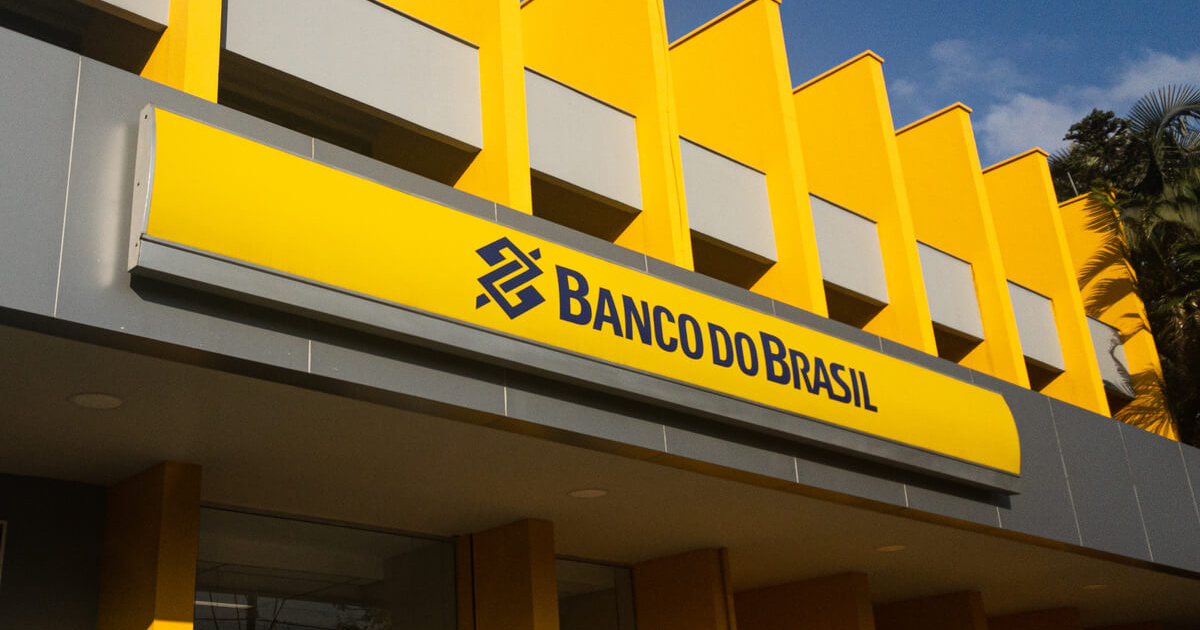
Banco do Brasil Reports Drop in Profit and Shrinkage of Credit Portfolio in July, Raising Alarm Among Analysts and Investors. Meanwhile, Competitors Had More Consistent Performance During the Same Period.
The Banco do Brasil reported net profit of R$ 780 million in July, down from R$ 976 million in June, according to Central Bank data compiled by Citi and Bradesco BBI.
The decline raised an alarm about the pace of the bank’s activity at the beginning of the third quarter, while the credit portfolio shrank 0.8% during the month, according to reports from the two investment banks.
Although the result surpassed May, when profit was R$ 516 million, analysts emphasize that the performance remains far from what was observed at the beginning of the year.
-
Inflation in March reaches 0.88% according to IBGE and pressures the Brazilian economy, impacting family budgets and requiring more strategic decisions to maintain financial control.

-
In Paraná, distributor Pacto connects 100% of the load in Coronel Vivida to batteries: a BES of 10 MW and 20 MWh costs just over R$ 30 million and lowers the local tariff now.

-
With a dependence of up to 80% on gas imported from the United States, Mexico is responding with a robust energy strategy, betting on shale gas, creating a scientific committee, and preparing to expand natural gas production to reduce vulnerability and strengthen its energy security in the coming years.

-
The United States proposes to Brazil a critical minerals agreement with a minimum price to combat Chinese dumping and priority for investment, but the Planalto is blocking the signing out of fear of upsetting China and due to electoral calculations in a year of competition.

The picture for July, therefore, suggests a more pressured quarter for BB, with an impact on both the results and the volume of loans.
Banco do Brasil’s Profit Decline
The Bradesco BBI team classified the number as “very weak,” estimating R$ 2.3 billion on a quarterly basis for Banco do Brasil — about 41% below what it projected.
This assessment is based on the monthly profit decline and the contraction of the portfolio, movements that usually signal lower revenue generation and greater selectivity in lending.
At Citi, the reading was similar regarding the direction of the month, but with emphasis on the longer horizon.
Analysts wrote that profit expectations for the third quarter and for 2025 are already low and that “the focus should be on the level of renegotiation of rural loans to show improvement in 2026.”
In other words, the advancement of negotiations and potential regulatory relief for the rural segment could be decisive for the public bank’s results trajectory.
Caution with Readings from Just One Month
Although the July snapshot brings negative signs for BB, firms emphasize that this is just the first month of the quarter.
There is, during this period, greater volatility due to managerial adjustments and seasonal effects.
This caveat applies not only to Banco do Brasil but also to other major banks, which may adjust provisions, expenses, and credit mix throughout the quarter.
Still, the combination of lower profit and smaller portfolio tends to increase market attention to margins, delinquency, and provision expenses in upcoming disclosures.
In a scenario of intense competition in retail and renegotiations in specific fronts, the pace of origination and asset quality remain at the center of focus.
Immediate Impact on Shares
The preliminary numbers dropped bank sector shares in Wednesday’s (1st) session.
Shares BBAS3 fell 0.77%, to R$ 21.92.
ITUB4 dropped 1.73%, to R$ 38.38.
BBDC4 lost 1.70%, to R$ 17.39.
SANB11 ended down 1.26%, to R$ 29.03.
The movement reflected the reading that the picture in July adds uncertainty for the quarter, especially in the case of Banco do Brasil, but contaminated the mood of the sector as a whole.
Generally, when the market detects a simultaneous weakening of profit and portfolio, concerns about future profitability grow.
Depending on the risk reading, investors may demand a greater discount on multiples until new data indicates stabilization or improvement.
Results from Itaú, Bradesco, Santander, Nubank, and Inter
The compiled numbers also show a more favorable picture, in relative terms, for some peers.
Itaú Unibanco reported net profit of R$ 4.214 billion in July, up from R$ 3.487 billion in June, accompanied by a 0.4% increase in the credit portfolio.
The data indicates that, at least in that month, the activity of the largest private bank continued to grow moderately.
At Bradesco, profit was R$ 2.008 billion, slightly below R$ 2.052 billion from the previous month, but with 1.3% growth in the portfolio.
Santander Brazil reported R$ 1.843 billion, versus R$ 1.530 billion in June, and 0.2% portfolio expansion during the period.
Among digital banks, Nubank earned R$ 1.258 billion in July, down from R$ 1.464 billion in June, maintaining a 3.5% advance in the credit portfolio.
Inter totaled R$ 30 million, down from R$ 88 million in June, with a 1.4% increase in the portfolio.
The distinct trajectories reinforce that the competitive dynamics of credit remain intense, with significant differences in strategy, target audience, and risk appetite.
Outlook for the Quarter
The consolidated reading of the third quarter will depend on the interaction between credit origination, financial margin with clients, risk cost, and operating expenses.
In the case of Banco do Brasil, in addition to traditional indicators, the market will remain attentive to the progress of rural credit renegotiations, identified by analysts as a key variable for recovery throughout 2026.
Meanwhile, private institutions tend to focus efforts on balancing growth and asset quality.
In July, Itaú and Santander showed recovery of profit margin and some expansion of the portfolios, while Bradesco showed stability in results with accelerated credit growth.
The picture of a single month, however, does not eliminate risks of fluctuations, whether due to seasonality or provisioning and pricing decisions.
For now, the data that drew the most attention was the simultaneous drop in profit and portfolio at Banco do Brasil, a movement that led firms to revise short-term expectations.
If upcoming readings confirm a trend of weakness, pressure on margin and profitability may persist.
Conversely, targeted adjustments to provisions, recomposition of spreads, or improvement in origination may mitigate the decline observed in July.
The season for disclosing the complete quarterly numbers should clarify to what extent the fluctuations in July were one-off or signal a trend change.
Until then, the question looming over the sector is straightforward: will banks be able to maintain credit growth while controlling delinquency as profitability continues to fluctuate month to month?









-

-

-

-

-

-

37 pessoas reagiram a isso.