





 Portuguese
  English
  Spanish
  4 min of reading
  0 comments


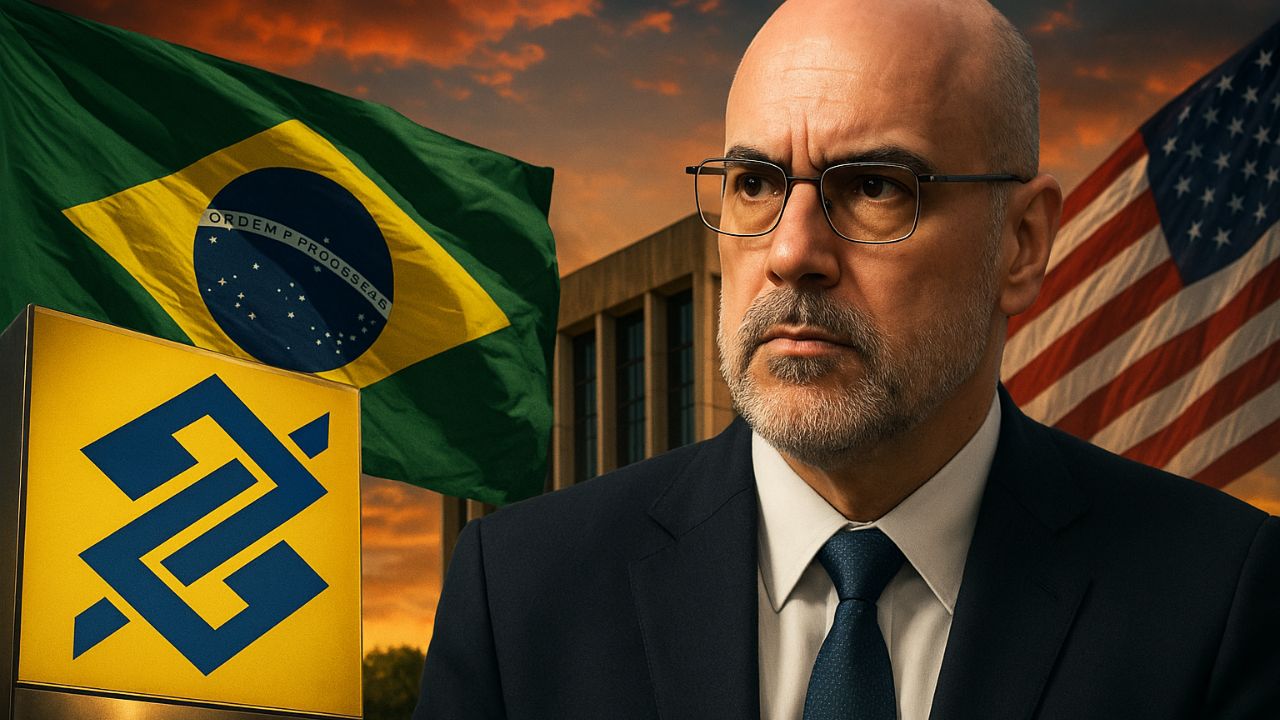
Expert Details That If Government Presses for Account Maintenance, Institution May Suffer “Individual Penalties” from the U.S., While Private Banks Must Cut Ties.
The extension of the Magnitsky Act sanctions to the wife and a company linked to Minister Alexandre de Moraes of the Supreme Federal Court (STF) has put the Brazilian financial system on alert. The main crossroads falls on the Banco do Brasil, which, as a mixed-economy institution controlled by the government, can be forced to maintain its business relationship with the sanctioned individuals, risking suffering “individual penalties” from the U.S. Treasury. In contrast, the expectation is that private banks will close accounts and services to protect their access to the global financial market.
The technical analysis of the impact of the measures was detailed by lawyer Davi Aragão in an interview with the Revista Oeste channel. According to him, the sanctions are not limited to the main individual but expand to the entire network that enables the movement of their wealth, a strategy from the U.S. government to prevent evasion maneuvers. This expansion creates a domino effect that financially isolates the target, forcing companies and service providers to distance themselves to avoid being sanctioned as well.
Why Were Sanctions Extended to the Family and Company?
The U.S. government’s decision to include Viviane Barce de Moraes, the minister’s wife, and the Lex Institute of Legal Studies in the sanctions was not an arbitrary act, but a technical measure provided in the Magnitsky Act. As explained by Aragão in the Revista Oeste, the legislation aims to directly target individuals accused of human rights violations or corruption but also encompasses anyone or entity that facilitates the concealment of assets. The minister’s wife was included for being the managing partner of the family holding, legally responsible for managing the assets.
-
Inflation in March reaches 0.88% according to IBGE and pressures the Brazilian economy, impacting family budgets and requiring more strategic decisions to maintain financial control.
-
In Paraná, distributor Pacto connects 100% of the load in Coronel Vivida to batteries: a BES of 10 MW and 20 MWh costs just over R$ 30 million and lowers the local tariff now.

-
With a dependence of up to 80% on gas imported from the United States, Mexico is responding with a robust energy strategy, betting on shale gas, creating a scientific committee, and preparing to expand natural gas production to reduce vulnerability and strengthen its energy security in the coming years.

-
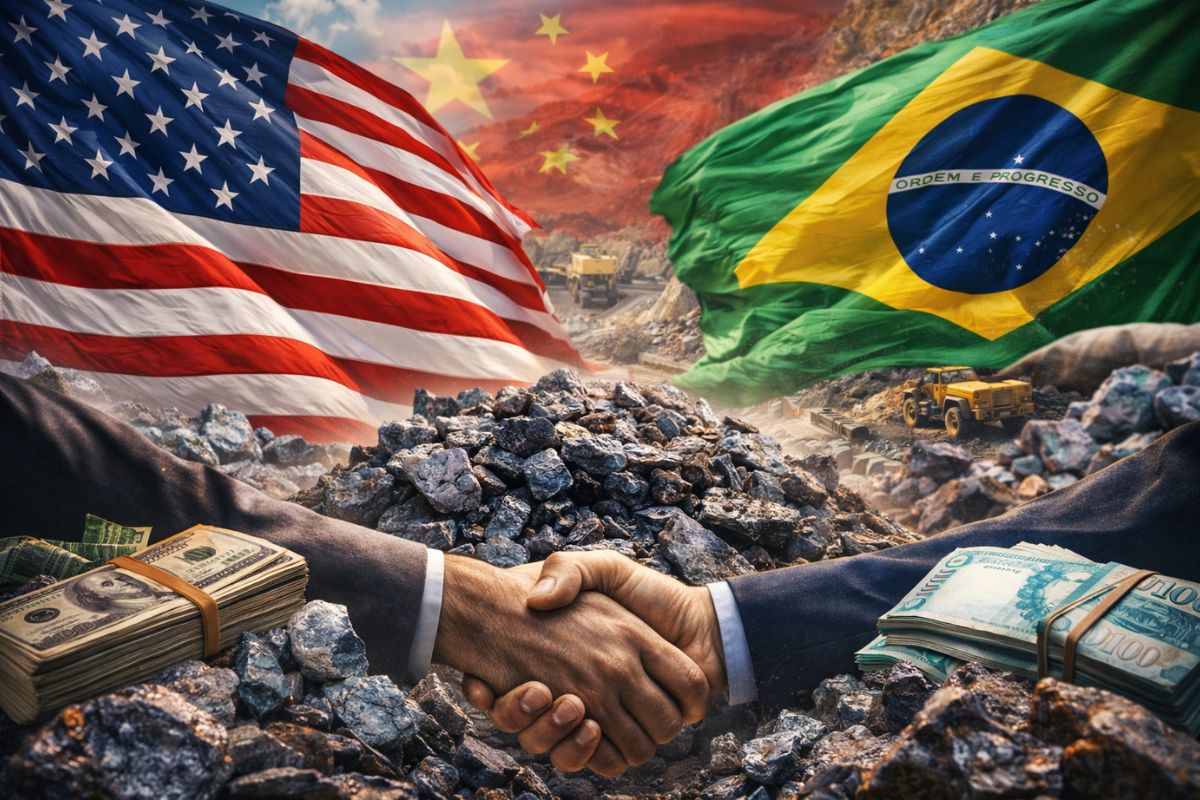
The United States proposes to Brazil a critical minerals agreement with a minimum price to combat Chinese dumping and priority for investment, but the Planalto is blocking the signing out of fear of upsetting China and due to electoral calculations in a year of competition.
This “financial suffocation” strategy is standard procedure. The lawyer emphasizes that any individual facilitating the evasion of sanctions may suffer accessory punishment. This includes partners, accountants, lawyers, or any business associate. The goal is clear: dismantle the structure that allows the sanctioned individual to continue operating financially. Therefore, the measure does not hinge on the family bond itself but on the administrative role that Moraes’ wife holds over the family’s assets.
The Dilemma of Banks: The Risk for Banco do Brasil

The most immediate and practical impact of the sanctions falls on financial institutions. For Brazilian private banks, the decision tends to be purely commercial and risk management-driven. According to Davi Aragão’s analysis shared on the Revista Oeste channel, there is no law in Brazil that requires a private bank to maintain a relationship with any client. Given the risk of losing access to the vital U.S. financial market, the natural tendency is to close accounts, cancel credit cards, and halt any services provided to the sanctioned entity.
The scenario is completely different for the Banco do Brasil. As a mixed-economy company, its strategic decisions are directly influenced by the federal government, its controlling entity. If the government decides, for political reasons, that the bank must continue its relationship with Moraes and his family, the institution will be compelled to comply. However, this decision would come at a high cost. “It is a government decision, and the Banco do Brasil may suffer individual penalties from the United States for maintaining the relationship,” Aragão warned. This possibility places the state bank in a uniquely vulnerable position in the sector.
The Domino Effect: How Sanctions Isolate the Target
Many Brazilians expect an immediate result from the sanctions, but the lawyer explains that the process is slow and gradual, functioning as financial and social “suffocation”. The Magnitsky Act is designed to isolate the target over months, or even years, making them a toxic figure for any type of commercial relationship. With each expansion of sanctions, like the one that just occurred, more companies, institutions, and professionals distance themselves from the sanctioned entity to avoid the risk of being next on the U.S. Treasury’s list.
This progressive isolation goes beyond banks. Clients of the law firm of Moraes’ wife, for example, may start to terminate contracts, fearing their fee payments may be interpreted as “material support” to a sanctioned individual. Similarly, service providers and business partners will begin to avoid any association. According to the analysis from Revista Oeste, the message from the U.S. Treasury Department is unequivocal: they will continue to pursue anyone providing support to Moraes, continuously and systematically tightening the noose.
The application of the Magnitsky Act creates a clear division in the Brazilian financial market: on one side, the private banks, guided by compliance and risk logic; on the other, the Banco do Brasil, susceptible to a political decision that could be costly. The situation highlights how foreign legislation can have direct and complex impacts on the economy and institutions of the country.
Do you agree with this change? Do you think it impacts the market? Leave your opinion in the comments; we want to hear from those who experience this firsthand.







-

-

-

-

-

-

15 pessoas reagiram a isso.