





 Portuguese
  English
  Spanish
  5 min of reading
  0 comments



Material Still Surrounded by Distrust on the Construction Site Can Reduce Costs, Speed Up Execution, and Improve Thermal and Acoustic Performance When Applied with Technical Criteria, Contrary to Common Perceptions About Fragility, Humidity, Difficulty of Use, and Limitations in Renovations.
The cellular concrete block, also partially known in the market as foamed cellular concrete or autoclaved cellular concrete, still encounters resistance in construction and renovations due to recurring doubts about strength, humidity, cost, and execution.
In practice, when the material is purchased from manufacturers with quality control and applied correctly, it consolidates as a lightweight alternative for non-structural masonry, with productivity gains and the potential to reduce the overall cost of the project, even if the unit price seems higher compared to traditional bricks and blocks.
Why Cellular Concrete Still Generates Distrust in Civil Construction
Part of the apprehension comes from the contrast between appearance and performance.
-
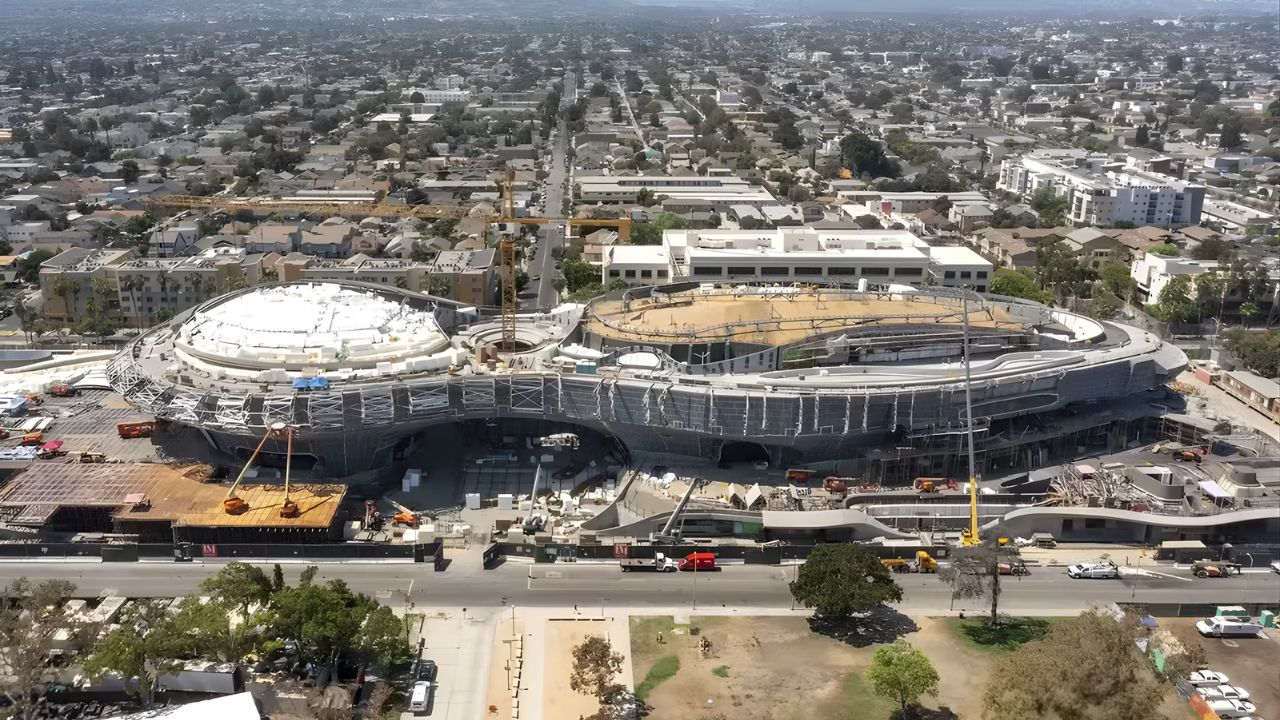
Created by George Lucas with over $1 billion, a futuristic museum in the shape of a spaceship with 1,500 curved panels is about to open in Los Angeles and will house one of the largest private collections of narrative art in the world.
-
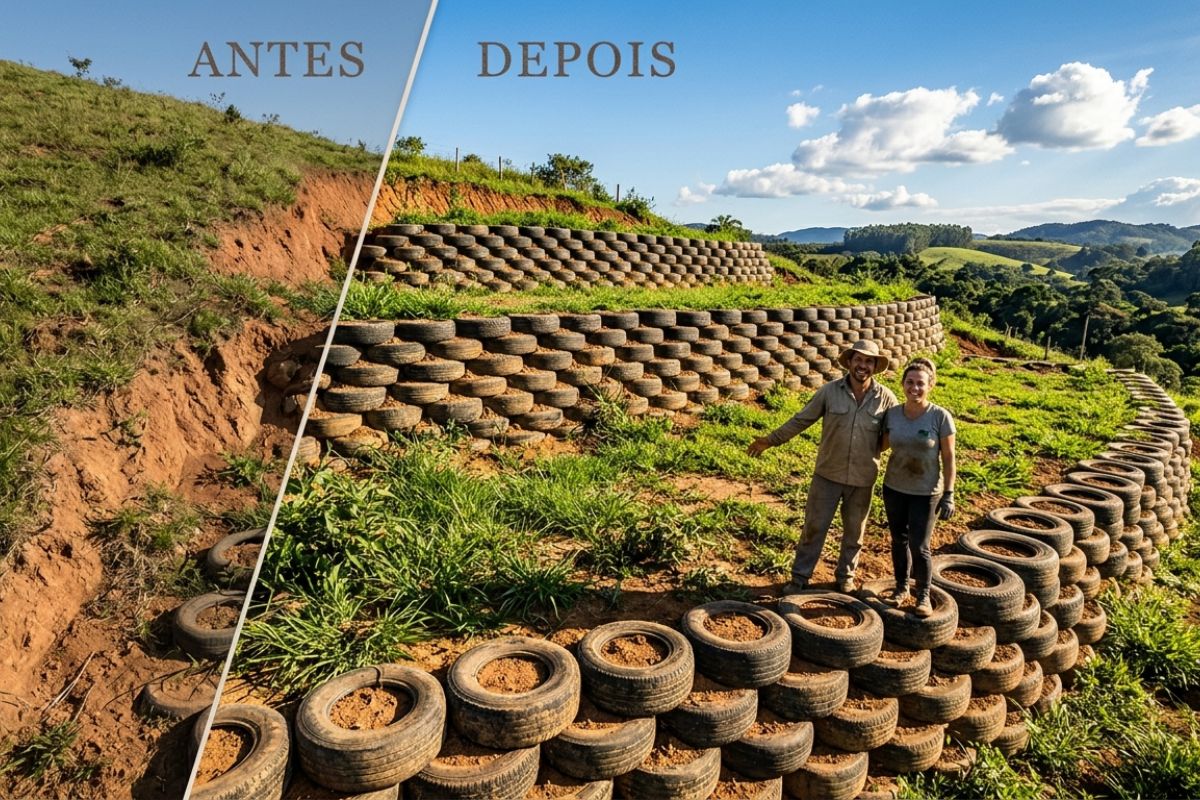
Couple shows how they built a retaining wall on their property using 400 old tires: sloped land turned into plateaus, tires are aligned, filled, and compacted with layers of soil, with grass helping in support and at almost zero cost.
-
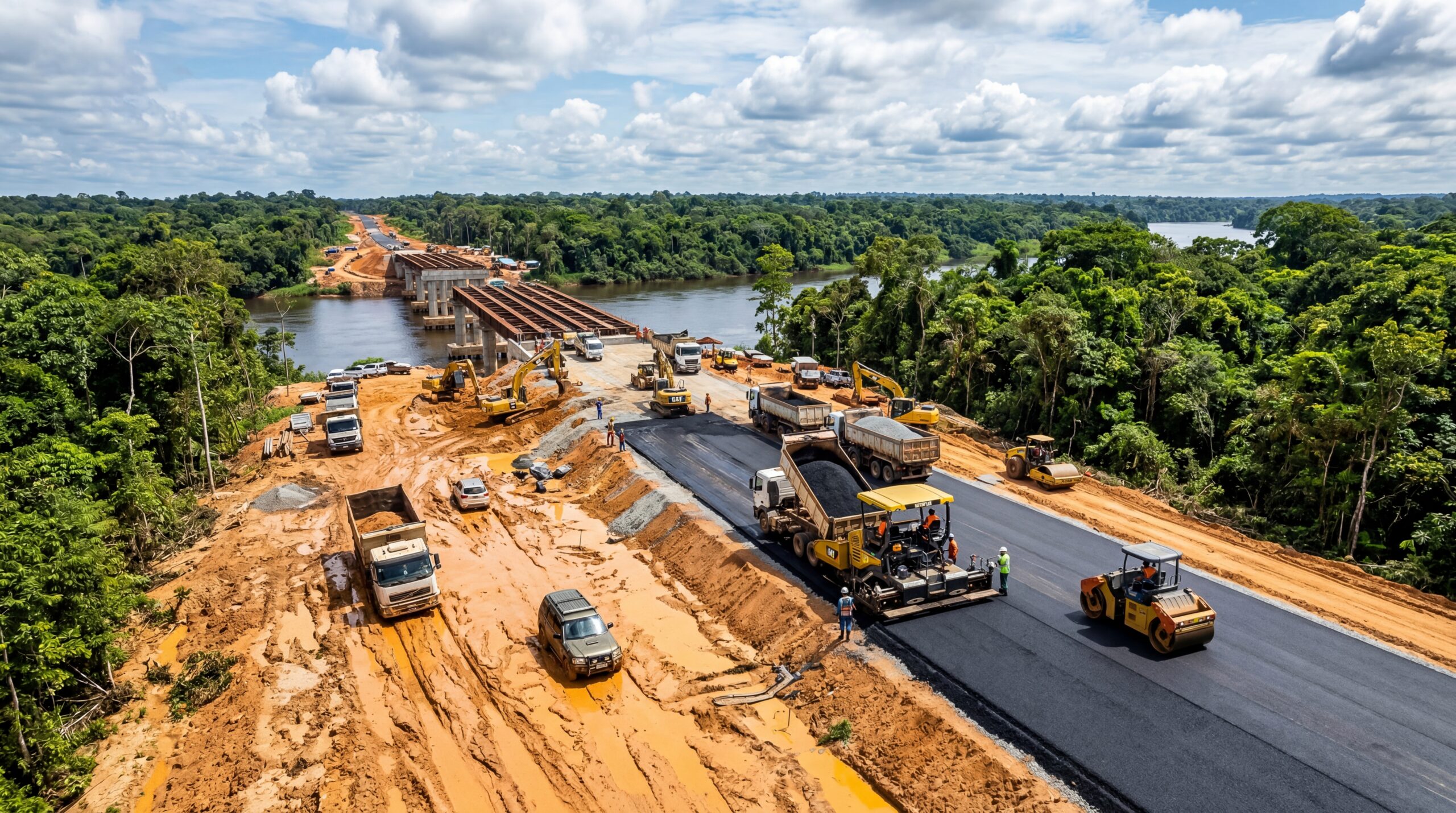
Engineer explains drainage during the rainy season: the difference between surface water and deep water, ditches, gutters, and water outlets on the road, as well as drains and drainage mattresses, to prevent erosion, aquaplaning, and flooding at the construction site today.

-
With 55 floors, 177 meters in height, a 15-meter walkway between the twin towers, ventilated facade, and 6,300 m² of leisure space, Ápice Towers already has one tower completed and another nearly at the top.


Being a lighter material with a porous structure, the cellular concrete block is often hastily associated with fragility or low durability.
Another reason is cultural.
Studies on the subject indicate that civil construction tends to repeat techniques that are already known and widely mastered, which makes it difficult to adopt new solutions when there is a lack of purchasing standardization, training, and detailed work planning.
Strength of the Cellular Concrete Block and Application Limits
The cellular concrete block is not inherently “weak”.
Strength directly depends on the production process and composition, just as it occurs with conventional concrete.
In the case of cellular concrete, technical literature highlights that variables such as specific mass and cement consumption influence the final result, reinforcing the importance of dosage and production control.
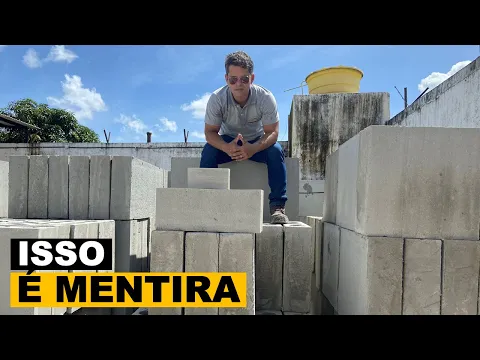

At this point, the risk usually arises when the product is made in an artisanal manner, without control of the water-cement ratio and without adequate curing.
In industrial lines, the blocks are manufactured with a focus on the intended application, especially in walls and partitions, with performance compatible with use in sealing.
It is also important to separate functions.
Generally, the cellular concrete block serves as non-structural sealing, meaning it does not replace columns, beams, and foundations.
A correct reading of the project and the manufacturer’s specifications prevents the material from being demanded beyond what it was designed to deliver.
Cost of the Project with Cellular Concrete Goes Beyond the Price of the Piece
The unit price can be confusing because direct comparison between “one piece and another” often ignores what really matters in the budget: mortar consumption, waste, execution time, internal logistics, and productivity.
In sector publications and in manufacturers’ materials, the central argument is that the system tends to reduce losses and speed up masonry by requiring fewer pieces per square meter and by facilitating cuts and adjustments.
In this logic, the final cost can decrease significantly, and some attribute a reduction of up to 30% in certain project scenarios, especially when the analysis includes a lighter structure and less rework.
Even when this maximum savings is not confirmed in all projects, the technical point remains.
Comparing only the value of the block is often a poor shortcut.
The global cost depends on the execution method, type of coating, embedded installations, and the level of rationalization on the job site.
Execution and Productivity on the Construction Site
On the job site, lightness is a game-changer.
The cellular concrete block tends to reduce effort in transport and placement, in addition to simplifying adjustments during execution.
Another factor is workability.
Manufacturers and technical documents describe the material as easy to cut and adapt, which assists in creating openings and fitting installations, with less debris generation when the modulation is well planned.
When the project adopts a coherent layout and anticipates tying points and wall junctions, execution tends to become more predictable.
On the other hand, the gain diminishes if the job site tries to improvise solutions without adhering to application and finishing guidelines.
Infiltration, Humidity, and Behavior of Cellular Concrete
The discussion about water almost always arises from the word “porous”.
Cellular concrete, by its nature, has a structure with air voids, which changes the behavior in some tests.
Still, total immersion testing is an extreme scenario and is not very similar to what happens in a finished wall, protected by coatings and construction details.
In practice, performance against moisture depends on two points: block specification and surface protection.
In studies with autoclaved cellular concrete blocks, the indication is that it can be used efficiently both in internal environments and in external applications, as long as it receives appropriate treatments to avoid problems associated with humidity.
Additionally, it is worth remembering the basics that usually apply to any sealing.
Without waterproofing at the base, without drip edges, without proper finishing, and without compatible coatings, the risk of pathology increases regardless of the material chosen.
Renovation and Flexibility in Buildings with Cellular Concrete
Since the cellular concrete block is typically applied as sealing, renovations follow the same logic as other non-structural masonry.
This means that it is possible to open and close openings, redistribute internal walls, and adapt installations, as long as the main structure of the building is respected.
The critical point, once again, is design and execution.
Layout changes require checking loads, columns, and beams, and this does not change because the sealing is made of cellular concrete.
In other words, renovation is not “prohibited” by the material, but must adhere to the structural limits of the property.
Where Cellular Concrete Typically Delivers More Results
The cellular concrete block is often remembered for lightweight, thermal and acoustic insulation, and ease of execution.
In research characterizing autoclaved blocks, these attributes appear as part of the rationale for valuing the material, including the ease of cutting and fastening and the potential to contribute to more energy-efficient buildings.
Still, real delivery depends on compatibility of details: type of mortar, coating, load fastening on the wall, joints, and treatment of wet areas.
Without these precautions, the material becomes a scapegoat for flaws that, at their origin, are due to specification and execution.
In the end, cellular concrete is neither a “miracle” nor a “villain”.
It is an alternative with its own rules, which can be competitive when applied with technical criteria and compared by the whole project, not just by the price of the piece.








-

-

-

-

-

-

27 pessoas reagiram a isso.