





 Portuguese
  English
  Spanish
  3 min of reading
  0 comments



Understand How the Boeing 757 Catfish, an Aircraft with a Bizarre Appearance and Full of Modifications, Became a Key Piece in the Development of Cutting-Edge Technology for the F-22 Raptor.
If you are fascinated by aviation, you may have wondered about that airplane that looks like it has been “patched” with strange parts, such as a disproportionate nose and a wing installed above the cockpit. This is the Boeing 757 Catfish, an aircraft that was born for civil transport but was reinvented as a flying laboratory for cutting-edge technology testing.
The Boeing 757 Catfish was the first prototype of the 757 model, officially known as November 757 Alpha. Built in the 1980s, it took on a different purpose in 1997 when it began to serve as a test platform for the United States Air Force. And why was this transformation so important? Because it played a crucial role in the development of the F-22 Raptor, considered one of the most modern and advanced aircraft in the world.
From Commercial Airplane to Flying Laboratory

The Boeing 757 Catfish began its journey as a commercial aviation prototype but never carried passengers. It was adapted by Boeing and Lockheed Martin to test innovative components and systems of the F-22, such as the APG-77 AESA radar, capable of detecting targets over 500 km away, and a functional cockpit integrated with the fighter’s systems.
-
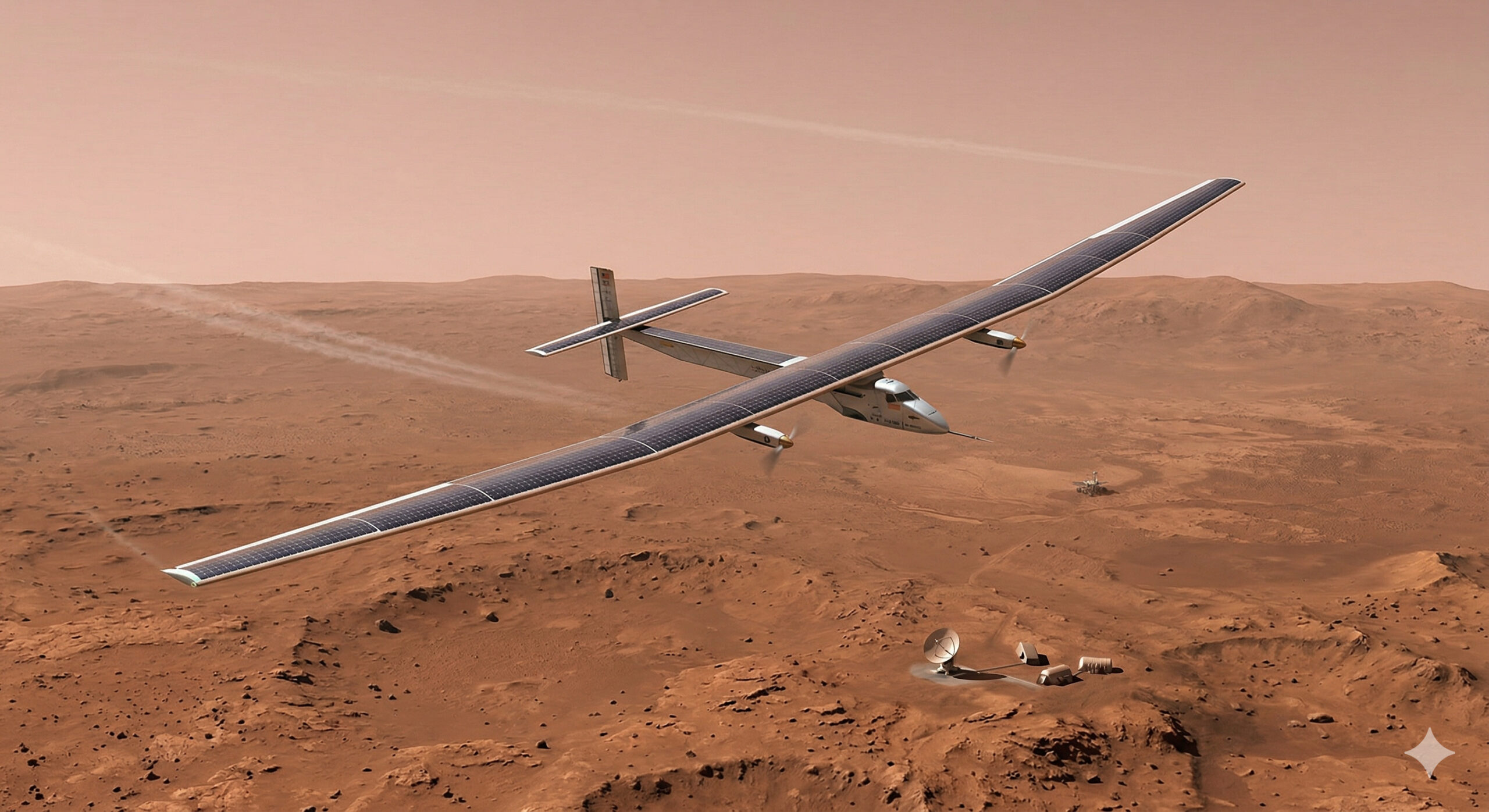
An engineer designs a solar plane to fly on Mars at an altitude of 1,000 meters and a speed of 300 km/h, covering 16,000 kilometers in a Martian year, 900 times the distance traveled by the Ingenuity helicopter in three years on the planet before experiencing a rotor failure, and NASA is already funding the feasibility study.
-
A new phenomenon of contactless magnetic friction intrigues scientists and questions a theory that has been valid since the 17th century.

-
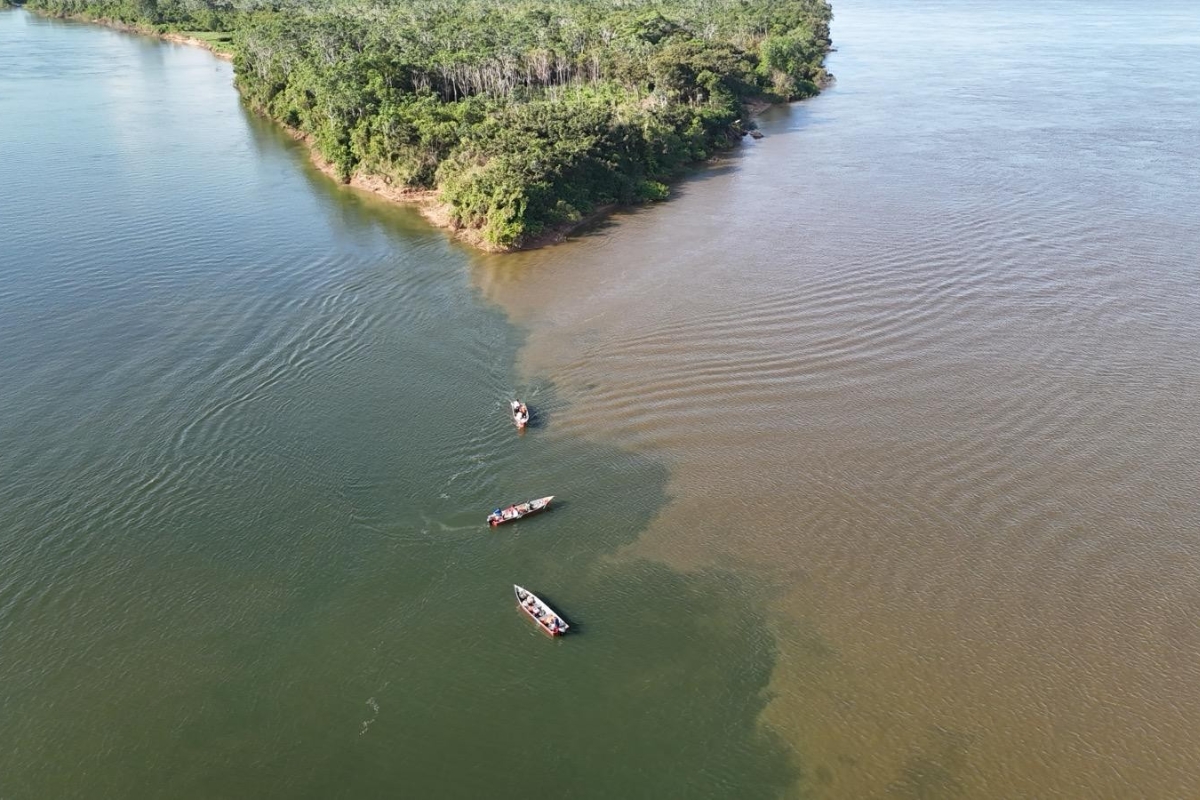
An impressive phenomenon in Northern Brazil causes rivers of different colors to flow side by side, revealing secrets about sediments, currents, and biodiversity.
-
While many schools are still struggling with the basics, a teacher in China went viral for having elementary school students build a two-stage rocket using plastic bottles, water, and pressurized air in a science class that caught the attention of the entire world.

These adaptations resulted in visible and unusual changes, such as the addition of an F-22 nose to the fuselage and the installation of a small wing above the cockpit. Internally, the aircraft gained workstations for up to 30 engineers to monitor tests in real-time. Private pilot Fernando De Borthole, with over 20 years of experience, explains: “These modifications transformed the Boeing 757 Catfish into one of the greatest advancements in the use of flying test platforms.”
Why Does It Matter?
Test platforms like the Boeing 757 Catfish save millions in development and provide operational safety. Instead of conducting direct tests on F-22 prototypes, which would require constant takeoffs and landings, the 757 ensured long continuous flights, simulating sensors, software, and avionics in a controlled environment.
It was this efficiency that allowed the F-22 to make its first flight in 1997 and obtain certification in 2005, resulting in a billion-dollar program that produced 187 units of the fighter by 2011.
The Future of the Boeing 757 Catfish
Today, the Boeing 757 Catfish continues to operate at the Saint Louis Air Force Base in Missouri, providing support for updates to the F-22 systems until at least 2031. Its story is a testament to how the combination of creativity and cutting-edge technology can transform even a retired airplane into an essential tool for the advancement of military aviation.
What seems to be a “patched airplane” is, in fact, a milestone in aeronautical innovation. With almost 50 years of history, the Boeing 757 Catfish continues to fly and revolutionize the future of the skies.








-

Uma pessoa reagiu a isso.