






 Portuguese
  Spanish


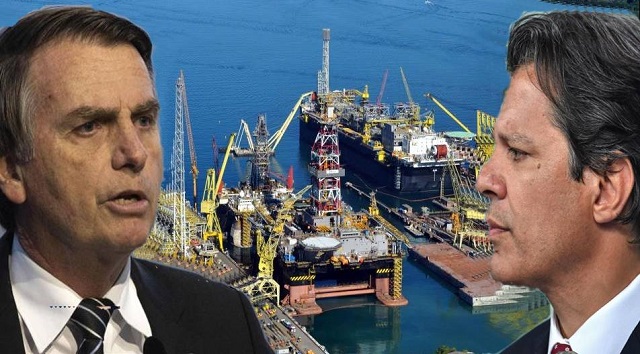

Whether Haddad or Bolsonaro, Know Their Main Characteristics and Government Plans for the Oil and Gas Sector in 2019
Any potential election result favoring Fernando Haddad, representative of the Workers’ Party, or Jair Bolsonaro of the Social Liberal Party, will bring definitions for the currently weakened Brazilian oil and gas industry. It is worth remembering that all of this mainly involves a strategic decision from our future head of state. Before we cite the pros and cons of the victory that each candidate may bring, we will discuss the beginning of national content.
In 1999, Fernando Henrique Cardoso, then president of Brazil, following the example of countries like England and Norway, during the first round of bidding for exploratory blocks, imposed the requirement for national content which would later be substantially reduced by CNPE Resolution No. 7 of April 11, 2017, which had significant impacts on our supply chain.
-
Lenovo Unveils Legion Y700 Tablet with RGB Backlighting, 5G, and SIM Card Support
-
Lenovo Unveils Legion Y700 Tablet with RGB Backlighting, 5G, and SIM Card Support
-
Northern Brazilian City Prepares Task Force to Mitigate El Niño Impacts with Stockpiled Fish, Drone Monitoring, Firefighting, and Water Supply Reinforcement in Remote Areas

-
Brazil to Issue “Panda Bonds” in China, Aiming to Raise Up to 5 Billion Yuan at Lower Interest Rates Than Dollar Debt

Fernando Haddad
The Brazilian people, more precisely the 13.2 million unemployed, long for definitions and in a possible handover of the presidential sash to Haddad, it is expected that the much-discussed national content will return to levels that boost market development, as well as recall the campaign of Lula’s first term (2003) when he brought back to the country construction contracts, for example, for platforms P51 and P52.
Well, that would be the positive point, but the negative would be the fear that such a revival of the shipbuilding industry, with many contracts to be negotiated, would bring back the specter of corruption, after all the efforts of Operation Car Wash, it would really not be good to see the country return to such undesirable paths as those we have gone through in the last 4 years.
Jair Messias Bolsonaro
In another scenario, with Bolsonaro ascending the ramp of the Planalto on January 1, 2019 as president, if judged by the government plan, privatization of Petrobras is expected to create free competition in the domestic market, lowering fuel costs and their inputs, with the state focused on education, health, and security, we would finally have the efficiency so dreamed of by Brazilians.
The negative side is that without state intervention, there is an expectation of approval of the already existing requests for review of local content (downwards according to his government plan) by winning petroleum companies from the bids, and why not say even a significant increase in these requests. The repetition of the current scenario, where the Japanese MODEC, winner of the Libra field, contracted only one topside module in Brazil (at Brasfels in Angra dos Reis), is a nightmare that workers in the shipbuilding industry do not want to continue facing in a new government.
Whether Haddad or Bolsonaro, in 2019 once again Brazilians are filled with hope for a stronger oil and gas industry, a stronger country, as the strength of our democracy is increasingly proven.







