





 Portuguese
  English
  Spanish
  4 min of reading
  0 comments


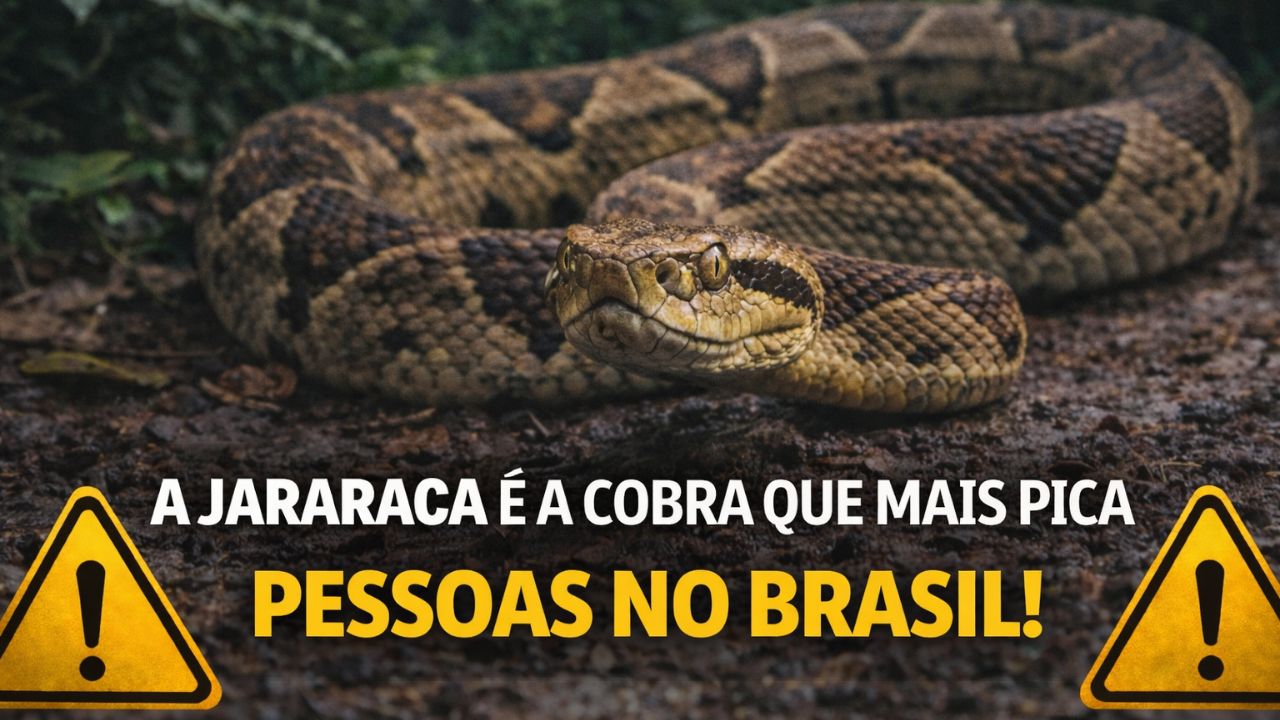
The Jararaca Is The Snake That Bites The Most People In Brazil. Learn Where It Lives, Why It Is So Common, And How To Avoid Accidents In Forested Areas.
Those who frequent trails, rural areas, or regions near the forest need to be extra careful: the jararaca is currently the snake that bites the most people in Brazil. Present in much of the national territory, this venomous serpent is behind most of the recorded accidents involving snake bites in the country.
Experts explain that the combination of wide distribution, high adaptability, and proximity to human environments makes the jararaca a real risk, especially in areas of vegetation.
Knowing where it lives, how it behaves, and what to do to avoid accidents can make the difference between a scare and a serious case of poisoning.
-
Goodbye iron: new technology from Xiaomi promises to revolutionize the way we iron clothes with 500 kPa steam, continuous flow of 120 g/min, heating in 65 seconds, and six smart modes for different fabrics.

-
Rio Pardo, the most mysterious city in Rio Grande do Sul: untouched Pampas castle, the missing treasure of the Devil Boy, bride’s saint, invisible tunnels, and a 200-year curse today.

-
China retires the J-7 fighter after years of military protection and can now transform military items into drones, following more than 60 years of operation of the J-7, derived from the MiG-21, with thousands of units produced and strategic use in the PLAAF and PLANAF.

-
Volunteers are sought to live in the mountains for a month: a study pays people to stay at 2,500 meters, with 24-hour monitoring of sleep, metabolism, and blood pressure.


Jararaca Leads Statistics Of Bites In Brazil
Among all the venomous snakes found in the country, the jararaca ranks first when it comes to the number of victims.
Estimates indicate that 69.3% of the recorded snake bites in Brazil are caused by species of the genus Bothrops, to which the jararaca belongs.
In some states, such as São Paulo, this percentage is even higher, approaching 90% of cases.
This scenario makes the jararaca considered, by far, the snake that bites the most people in Brazilian territory.
Where The Jararaca Lives And Why Contacts Are So Frequent
The jararaca is an extremely adaptable snake. It occurs from Northeast to South Brazil, with a strong presence in areas of the Atlantic Forest, mountainous regions, agricultural zones, and even locations near urban areas.
In addition to forests, this serpent can be found in pastures, fields, backyards, and areas with a buildup of debris.
The explanation lies in the availability of food: rodents, frogs, and small animals, common in these environments, attract the jararaca close to homes and areas frequented by people.
This increasingly close contact between nature and human occupation helps explain why the jararaca is the snake that bites the most people in Brazil.
Camouflage And Behavior Increase The Risk Of Accidents
Another factor contributing to the high number of bites is the jararaca’s own survival strategy.

This snake has varied coloration, ranging from brown to grayish and yellowish, usually with spots that blend in with dry leaves, branches, and the forest floor.
With a size that can reach 1.5 meters in length, the jararaca often remains motionless for long periods, making it difficult to spot.
Many bites occur when a person accidentally steps on the animal or gets too close without realizing its presence.
How Does The Jararaca Venom Act In The Organism?
The venom of the jararaca is considered one of the most complex among Brazilian snakes.
It mainly affects the circulatory system and tissues, causing intense pain, swelling, and changes in blood coagulation.
In young snakes, the venom tends to be more anticoagulant, facilitating bleeding. In adult specimens, inflammatory effects predominate, which can lead to necrosis—when tissue death occurs at the bite site.
If not treated promptly, poisoning can develop into more serious complications, such as infections and kidney problems.
Most Common Symptoms After A Jararaca Bite
The signs of a bite from this snake usually appear quickly. Among the most frequent symptoms are:
- Intense pain at the site
- Progressive swelling
- Bleeding from gums or wounds
- Formation of blisters or darkening of the skin
In more severe cases, systemic complications may arise, reinforcing the importance of immediate medical attention.

How To Avoid Dangerous Encounters With The Jararaca
Prevention is still the best way to reduce accidents with the snake that bites the most people in the country.
Some simple measures make a difference:
- Wear boots or closed footwear when walking in areas of forest or tall grass
- Avoid moving debris, firewood, or dry leaves without protection
- Keep backyards clean and free of scraps that attract rodents
- Never attempt to capture or kill the snake
In case of sighting, it is best to keep a distance and call the Fire Department or environmental agencies.
What To Do Immediately After A Snake Bite?
If a bite occurs, the guidance is clear: seek medical attention as quickly as possible.
Antivenom is the only effective treatment against the venom.
While waiting for help, it is recommended to wash the area with soap and water, avoid physical exertion, and not to make cuts, tourniquets, or apply homemade remedies.
Photographing the snake, if possible and safely, can help with identification.

Why The Jararaca Demands Constant Attention
Although only a small portion of Brazilian snakes is venomous, the jararaca stands out for its wide distribution and close coexistence with humans.
For this reason, it remains the snake that bites the most people in Brazil.
Information, care, and respect for wildlife are essential to reducing accidents and allowing for a safer coexistence between people and wildlife.
Knowing the jararaca does not mean fearing it, but knowing how to act to avoid unnecessary risks.
With information from National Geographic Brasil.








-

-

2 pessoas reagiram a isso.