





 Portuguese
  English
  Spanish
  5 min of reading
  0 comments


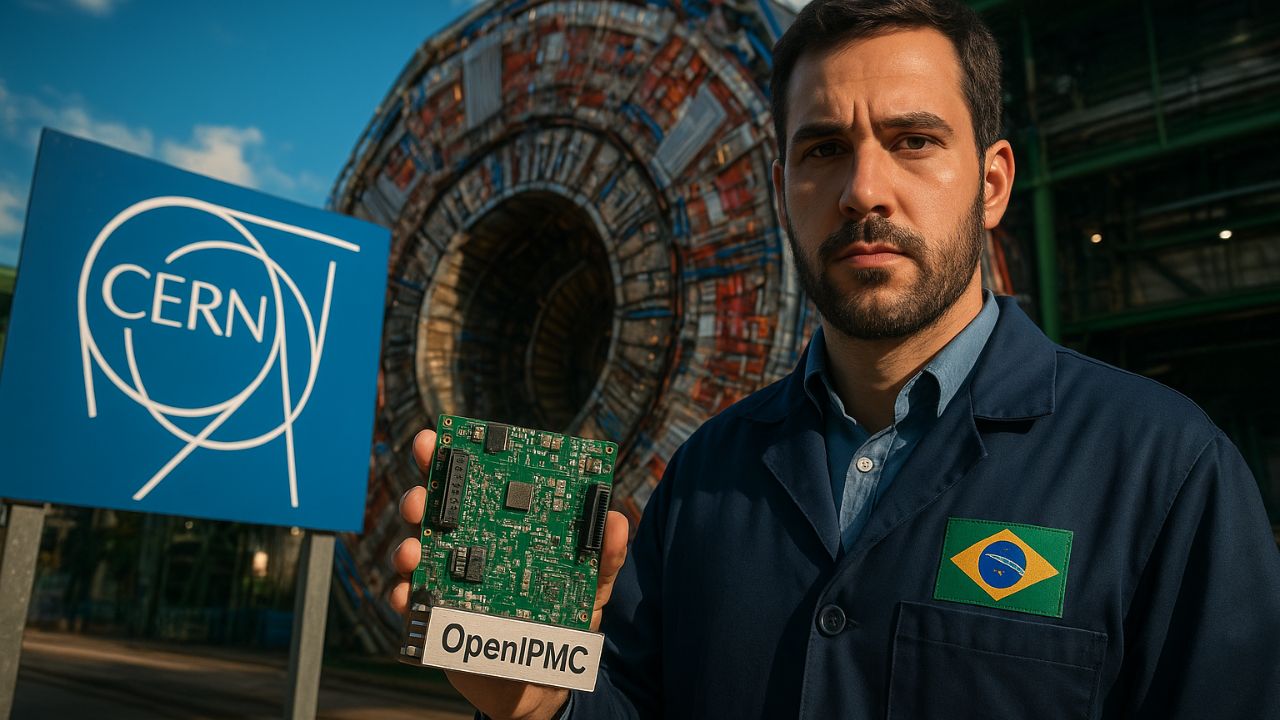
Created by Unesp and manufactured in São Paulo, the OpenIPMC system marks a new phase for the country at CERN, consolidating the transition from consumer to developer of cutting-edge technology.
For the first time in the history of collaboration with the European Organization for Nuclear Research (CERN), Brazil is no longer just a consumer but becomes a strategic supplier of critical components. A cutting-edge technology system, fully developed in the country, will be integrated into the heart of the Large Hadron Collider (LHC), the largest and most powerful particle accelerator on the planet. The information, released by the Jornal da Unesp, highlights a milestone for national science and industry.
The project, named OpenIPMC, was conceived by researchers from the São Paulo Research and Analysis Center (SPRACE), based at Unesp, and is being manufactured by a company in São Paulo. This change not only elevates Brazil’s status in the global scientific community but also opens precedents for the Brazilian high-tech industry to participate in future bids at one of the world’s most advanced laboratories.
What Is the OpenIPMC and What Is Its Function at CERN?
The OpenIPMC system will function as a monitoring brain for the CMS (Compact Muon Solenoid), one of the main detectors of the LHC. Its mission is to monitor in real-time the performance and integrity of the ATCA electronic boards, which are responsible for processing the immense amount of data generated during each particle collision. In practical terms, it ensures everything operates perfectly by controlling critical variables such as temperature, voltages, and electric currents.
-
They seemed like common bones, but scientists were surprised to find a relic over 12,000 years old that dates back to before the Bronze Age.

-
With an almost perfect ring of 70 km visible from space, known as the “Eye of Quebec” and over 100 km in length, the Manicouagan Crater in Canada reveals the colossal mark left by a giant asteroid and has become one of the most impressive formations ever identified on the Earth’s surface.

-
Scientists have found in China dinosaur embryos dating back 190 million years in various stages of development, and the discovery still preserves traces of extremely rare proteins in the bones, something that could change what is known about life before hatching.

-
The CEO of Honor in Spain says that smartphones will change with AI, foldables, and even robot phones; the component crisis is making cheap models more expensive in 2026 and shifting the focus to premium.

According to the Jornal da Unesp, this task is essential for the operation of the experiment. Any failure or anomaly is instantly detected by the OpenIPMC, which can make autonomous decisions, such as shutting down a component to prevent damage from overheating. It is thanks to this level of control and precision in data collection that historic discoveries, such as the confirmation of the Higgs boson in 2012, were made possible. The Brazilian system will therefore be a central piece for the reliability of future CERN research.
The Innovation of Open Source: Why Did Brazil Lead the Change?
Management systems like the IPMC (Intelligent Platform Management Controller) already exist, but until now, they were proprietary technologies. As explained by Luigi Calligaris, the researcher who led the project at SPRACE, using them required purchasing licenses and signing strict confidentiality agreements. This created a significant barrier for academic research, as it limited access to the source code, preventing essential customizations and, primarily, the involvement of students.
Faced with this impasse, the Brazilian team proposed a disruptive solution: to create the first fully open-source IPMC system. “In research activities, students represent the future. They need to be trained,” said Calligaris to the Jornal da Unesp. The open nature of the OpenIPMC allows any researcher in the world to use it, modify it, and adapt it to their needs, eliminating legal and financial barriers. This initiative not only solved a problem for CERN but also made the technology available for other areas, such as quantum computing and the aerospace and telecommunications sectors.
From University to Industry: The National Production of Technology
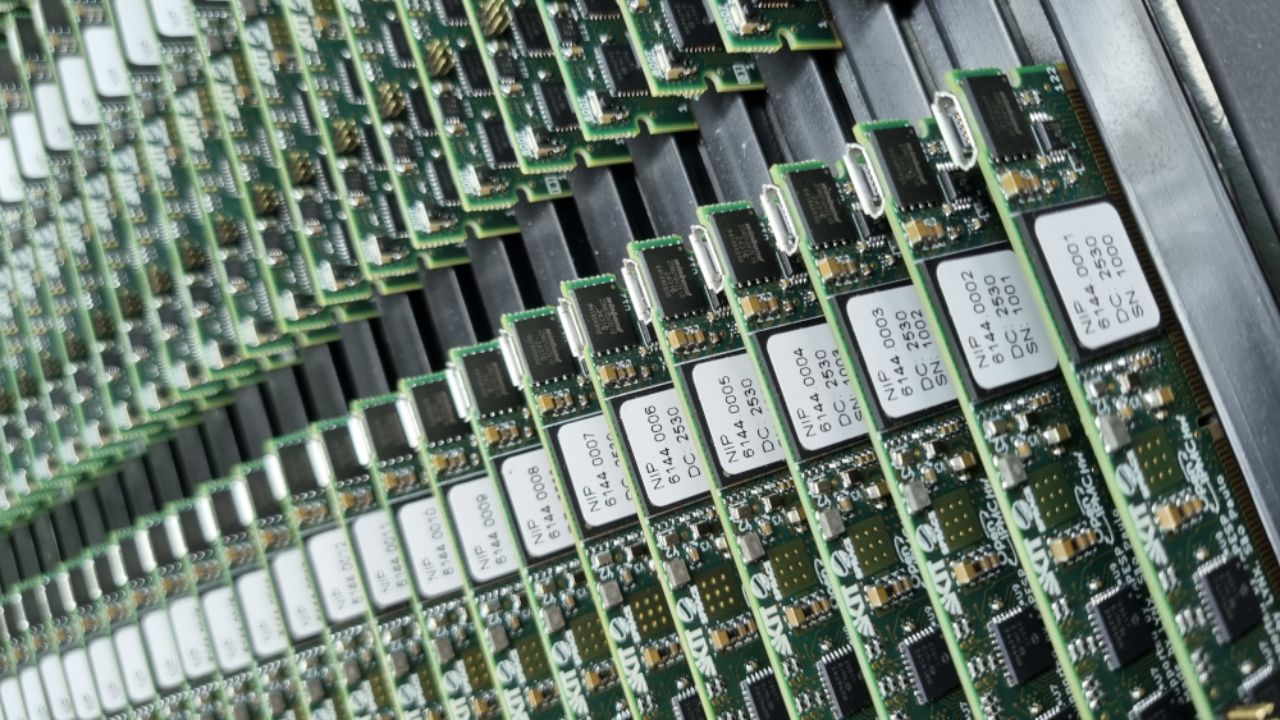
The success of the project is not limited to academic development. The manufacturing of the components is being carried out entirely in Brazil by the company Lynx Tecnologia Eletrônica, under the supervision of the Polytechnic School of USP. A batch of 1,100 units of the OpenIPMC has been ordered by CERN, with the first 100 already shipped in August, validating the country’s industrial capacity to produce cutting-edge technology on a large scale.
This strategic partnership is one of the direct fruits of Brazil’s entry as an Associate Member of CERN. To maintain this status, the Brazilian government invests approximately US$ 12 million annually. Contracts like the one established with Lynx allow this amount to return to the country, fostering the national industry. “We are helping to transform Brazil from a consumer to a supplier of critical technology at the forefront of scientific knowledge,” emphasized physicist Sérgio Novaes, the responsible researcher at SPRACE.
The Future of the LHC and the Strategic Role of Brazil
The boards with the OpenIPMC system will be installed between 2027 and 2028, during a major upgrade of the accelerator, which will be renamed the High-Luminosity Large Hadron Collider (HL-LHC). This new phase will allow for a drastic increase in the number of particle collisions, generating data with unprecedented precision and paving the way to investigate some of the universe’s greatest mysteries.
With the upgrade, scientists hope to test the limits of the Standard Model of Physics and seek answers to still unexplained phenomena, such as the nature of dark matter. The Brazilian contribution will be crucial in this effort, with national technology ensuring the stability and efficiency of data collection that could lead to the next great discoveries in physics. It is proof that knowledge generated in public universities can position Brazil at the forefront of world science.
The creation and production of the OpenIPMC is more than a technical advance; it is a declaration of technological capacity and sovereignty. By delivering an innovative and essential solution for the largest scientific experiment in the world, Brazil not only strengthens its position on the global stage but also demonstrates that continued investment in science and education is the path to a future of prominence and development.
Do you agree with this change? Do you think this impacts the market? Leave your opinion in the comments; we want to hear from those who live this in practice.






Seja o primeiro a reagir!