





 Portuguese
  English
  Spanish
  4 min of reading
  0 comments


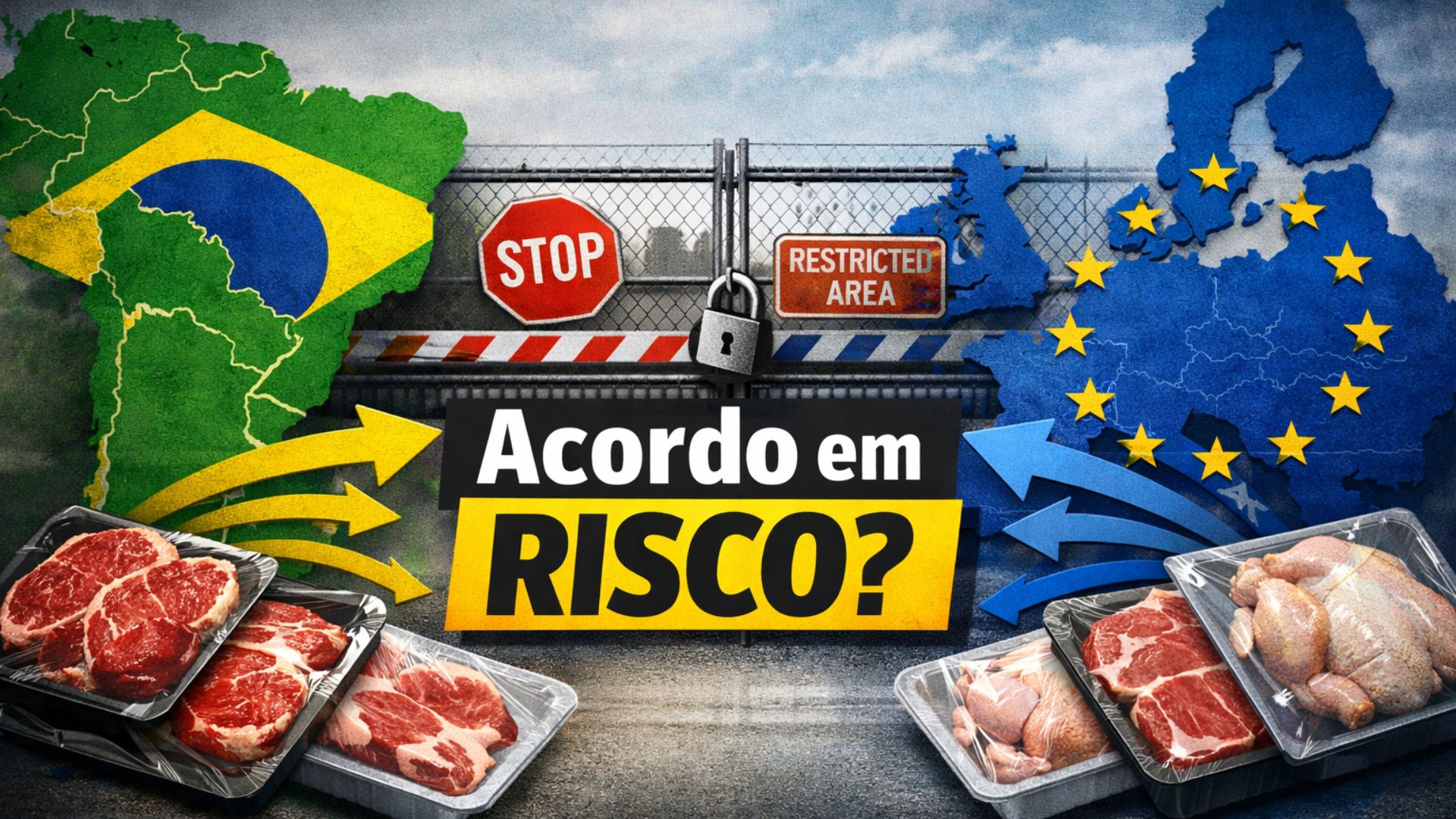
Discussed Safeguards in the European Union Raise Concern in the Animal Protein Sector, Which Follows Rules on Import Limits, Shorter Investigation Periods, and Possibility of Commercial Reciprocity If Tariff Preferences Are Suspended in the Agreement with Mercosur.
The possibility of the European Union adopting protection mechanisms under the Mercosur-EU agreement has led representatives of the animal protein sector to discuss potential responses from South American countries.
In an interview with CNN Money, the president of the Brazilian Animal Protein Association (ABPA), Ricardo Santin, stated that if the European safeguard results in restrictions on trade flow, Mercosur may consider adopting reciprocal measures.
According to Santin, the practical viability of the agreement will depend on how the European bloc applies the stipulated rules and respects the principle of free trade.
-
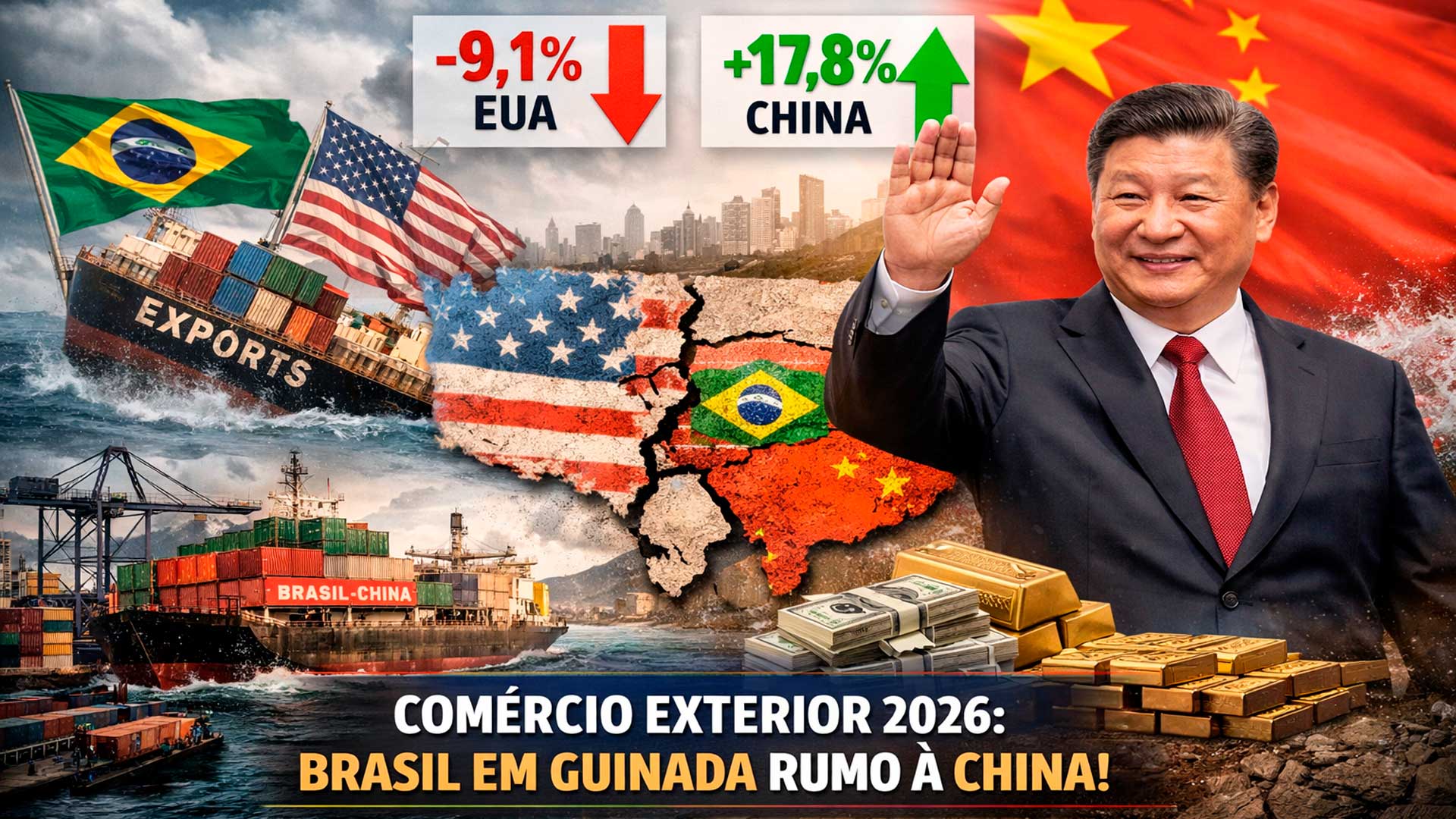
Brazil’s exports to the U.S. plunge for the eighth consecutive time, while China expands its leadership, and this is changing the landscape of foreign trade in 2026.
-
The Federal Government wants to curb family indebtedness and is considering releasing FGTS with a renegotiation that could cut up to 80% of debts for families and individual micro-entrepreneurs (MEIs).

-
‘Theory of the Madman’ is the strategy that explains why Trump threatened to end Iran and hours later offered a two-week truce as if nothing had happened.
-
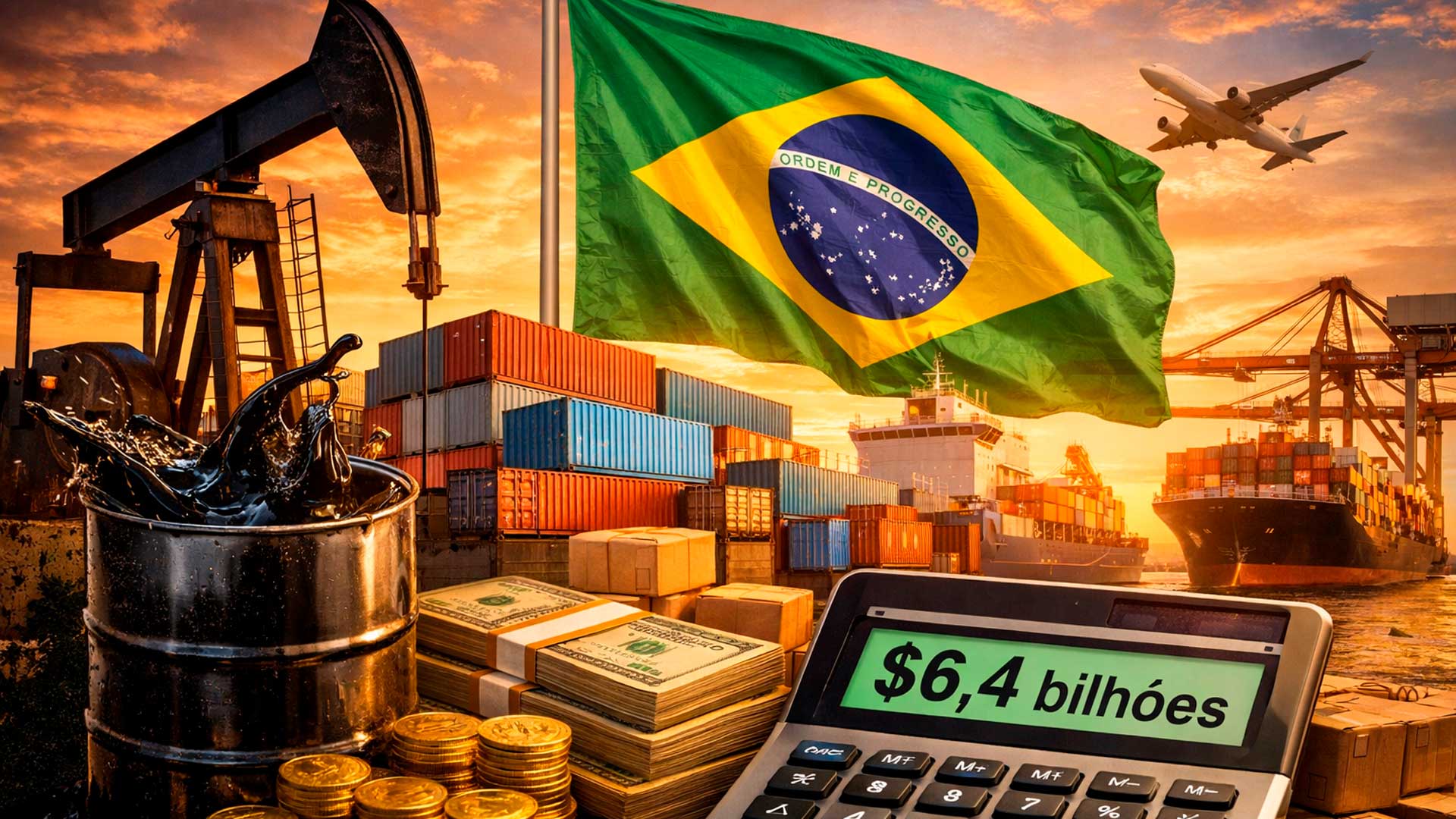
Oil secures a larger drop, exports advance in March, and Brazil ends the month with a surplus of $6.4 billion despite the strong rise in imports.
He stated that if there are practices considered protectionist, the sector’s expectation is that the Brazilian government will act in a coordinated manner with other Mercosur countries, adopting equivalent safeguards.
Application of the Mercosur-EU Agreement Under Sector Analysis
However, the leader emphasized that it is still not possible to anticipate the concrete effects of the safeguard on the agreement.
According to Santin, ABPA is awaiting the final version of the text to assess the real impact of the measures.
Even so, he acknowledged that the protection designed by the European Union for its farmers tends to make the trade environment more complex.
In the president’s assessment, the dynamics of trade between the blocs will not be defined solely by the safeguards.
He pointed out that internal factors of the European market also influence export flows, such as inflation, sanitary issues affecting livestock, energy costs, and production expenses.


How the Safeguard Provided by the European Union Works
The safeguard provided in the agreement establishes conditions for the European Union to temporarily suspend tariff preferences granted to agricultural products classified as sensitive.
Among them are poultry and beef from Mercosur.
The suspension can occur if imports are deemed harmful to European producers.
The mechanism was incorporated into discussions as a way to address concerns from agricultural sectors in the EU.
European lawmakers argue that the tool should allow for quicker reactions to increases in imports or questions related to production standards.
Limit of 5% for Initiation of Investigations
One of the points that drew the most attention from agricultural sector representatives is the trigger foreseen for the initiation of investigations.
According to the text in debate, the European Commission may initiate an inquiry when imports of sensitive agricultural products increase by an average of 5% over a three-year period.
The percentage is lower than the initially proposed level, which considered a 10% increase.
For sector analysts, a lower limit increases the likelihood of investigations being opened, especially in segments where Brazil has a significant market share in Europe.
Reduction of Timeframes for Adoption of Safeguards
In addition to the new trigger, the European Parliament advocated reducing investigation timeframes.
In general items, the period would be reduced from six to three months.
In the case of sensitive products, such as meats, the timeframe would be cut from four to two months.
The justification presented by European lawmakers is to allow that safeguard measures be adopted more quickly.
Brazilian agricultural entities assess that the combination of shorter timeframes and stricter criteria increases uncertainty for exporters.
Regulatory Requirements and Equivalence Criteria
Another relevant aspect of the text is the provision for initiating investigations whenever there are indications that imported products with tariff preferences do not meet requirements equivalent to those demanded from producers in the European Union.
Among the cited issues are environmental standards, animal welfare, health, and labor protection.
Foreign trade specialists point out that the definition of what constitutes regulatory equivalence is one of the main sensitive points in the negotiations.
The interpretation of these criteria can directly influence the implementation of safeguards, especially in production chains classified as sensitive by the EU.
Sector Avoids Projections and Monitors Negotiations
Despite advocating for the possibility of reciprocity, ABPA avoids making projections about the final impact of the mechanism.

The entity has highlighted that the performance of the agreement will depend on a broad set of variables.
These factors include both the final text and the economic and productive conditions within the European market itself.
In this context, the sector’s position is one of cautious monitoring of negotiations.
Representatives of the animal protein chain assert that the central concern is to ensure that agreed tariff preferences are not neutralized by instruments triggered on a recurring basis.
Political Pressure and Possible Effects on Exports
The discussion on safeguards occurs amid the resumption of the political debate about the Mercosur-EU agreement within the European Union.
Agricultural sectors are pushing for protection mechanisms.
At the same time, authorities are seeking alternatives to reduce internal resistance to the ratification of the treaty.
On the South American side, governments and business entities are monitoring the final design of the rules to assess their effects on access to the European market.
If the safeguards are frequently applied, the possibility of adopting equivalent measures by Mercosur is likely to gain traction in official discussions.
How will the countries in the bloc balance the defense of their exporters with the maintenance of the trade agreement?






-

-

-

4 pessoas reagiram a isso.