





 Portuguese
  English
  Spanish
  2 min of reading
  0 comments


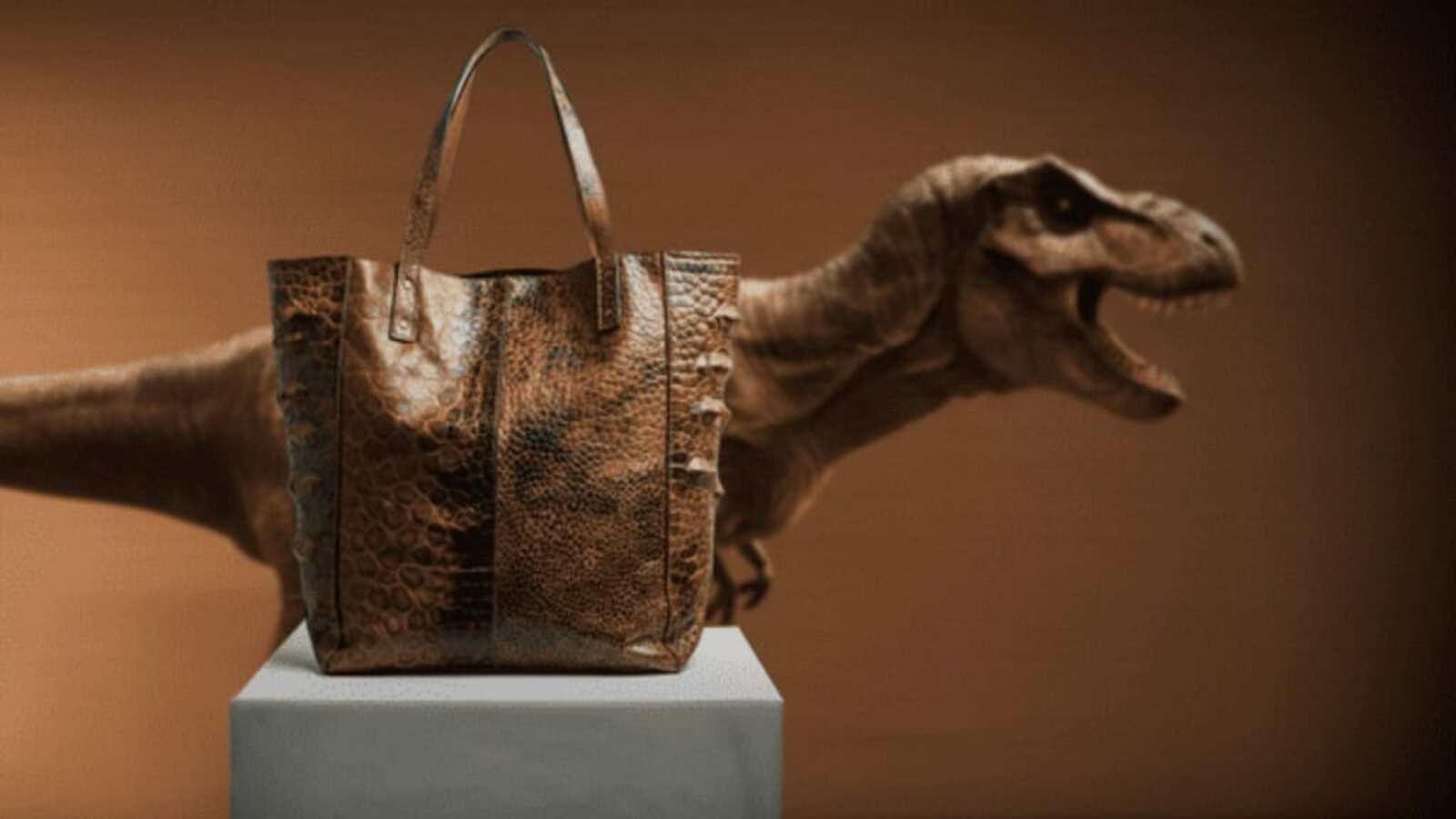
Presented in Amsterdam, T. rex-inspired bag mixes biotechnology, luxury design, and marketing, while paleontologists challenge the scientific basis of the material
The T. rex bag presented in Amsterdam, Netherlands, became the central theme in science and technology news by uniting lab-grown collagen, luxury design, and marketing, while raising doubts about the scientific reach of the proposal.
Luxury item draws attention
Inspired by the Tyrannosaurus rex, the bag has a bluish-green color and a sophisticated finish.
The piece was created to showcase the potential of so-called lab-grown leather, a material developed to resemble animal leather without the need for breeding or slaughter.
-
Three teenagers surprise the world by creating a powder with tamarind seeds that removes microplastics from water, requires no electricity, and wins an international prize of $12,500 at The Earth Prize 2026.

-
China prepares a “panoramic Hubble” with 2.5 billion pixels and a field of view 300 times larger: Xuntian will have a 2-meter mirror, resolution close to that of the American telescope, can dock at the Tiangong space station for maintenance, and promises to map 40% of the sky in a decade.

-
The deepest underground copper mine in Chile is digging deeper and deeper in search of the metal the world needs to electrify.

-
EMS launches Ozivy pen for R$ 452 and fully enters the weight loss battle that is driving pharmacies and patients in Brazil.





The project brought together biotechnology and design companies. The proposal combines genetic engineering, fashion, and a high-impact marketing strategy, driven by the use of the name of the most famous dinosaur in prehistory.
How the material was developed
The creators claim that fragments of fossil proteins attributed to the T. rex, found in the United States, served as the basis for the molecular reconstruction of the collagen used in the bag.
These sequences were reportedly inserted into living cells to generate the material applied to the accessory. The initiative was presented as an example of how lab-reconstructed proteins can lead to new materials.
Auction increases repercussion
In addition to the scientific and visual appeal, the T. rex bag gained attention in the news due to its projected value. The piece is expected to be auctioned with an opening bid in the hundreds of thousands of dollars.
This price point helped drive headlines with billion-dollar figures in reais. The combination of exclusivity, biotechnology, and luxury transformed the accessory into one of the most discussed topics in recent days.
Academic community reacts with skepticism to T. rex bag
The repercussion was accompanied by strong distrust among paleontologists. Researchers question whether the preserved remnants in T. rex fossils would be sufficient to accurately reproduce any tissue similar to the animal’s skin.
Another point raised is that the proteins found in fossils usually come from bones, not skin. This weakens the direct association with the idea of dinosaur leather and amplifies the skepticism of the scientific community.
Debate between science and market
The T. rex bag reignited the discussion about the limits of using science as a narrative of luxury and exclusivity.
Between real innovation and commercial appeal, the case has come to symbolize the intersection of paleontology, the creative industry, and the high-end market.
With information from Aventuras na História.





-

1 person reacted to this.