





 Portuguese
  English
  Spanish
  5 min of reading
  0 comments


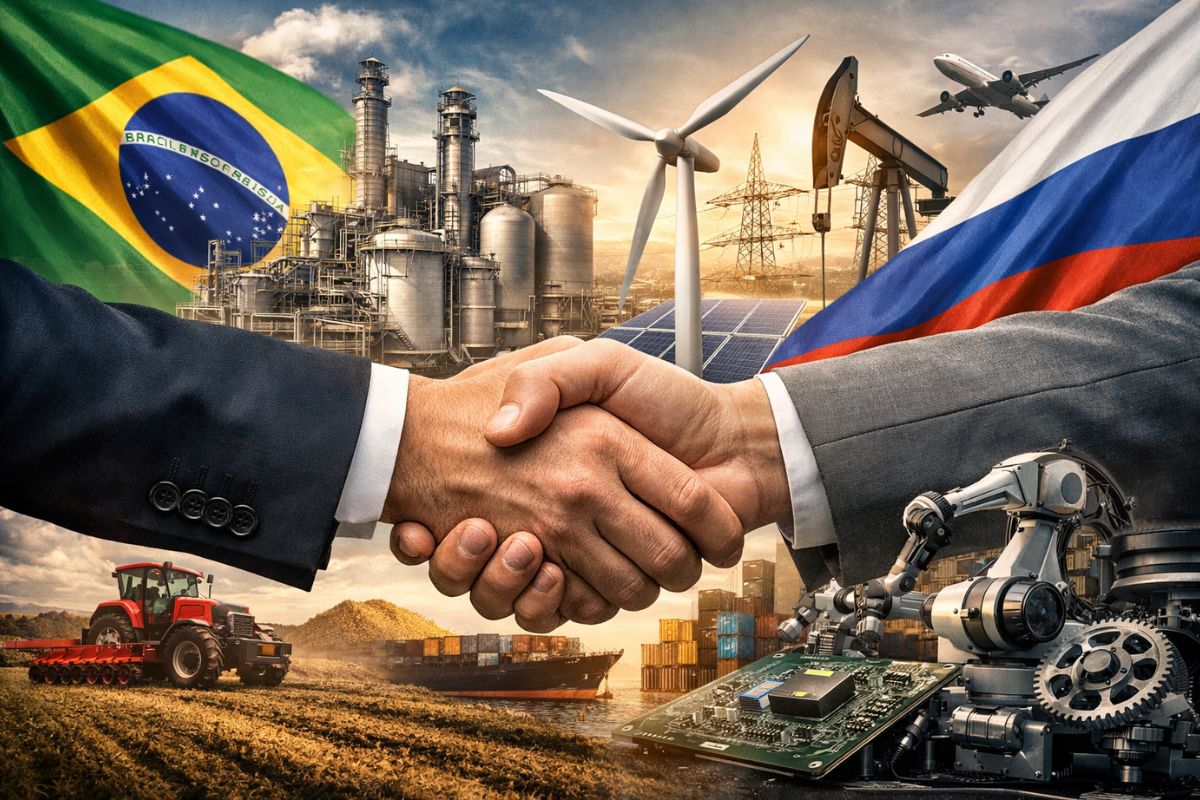
On the Eve of the High-Level Meeting Between Governments, the Industrial Alliance Between Brazil and Russia Moved from Rhetoric to Executive Agenda: MDIC and the Russian Delegation Discussed Innovation, Trade, Logistics, and New Projects to Strengthen Productive Chains, Employment, Income, and Security of Strategic Inputs for Both Countries.
The alliance between Brazil and Russia entered a more objective phase in Brasília, focusing on themes that connect industrial policy, foreign trade, and productive capacity. In the technical meeting, both sides discussed ways to increase investments, bring companies closer together, and accelerate cooperation in areas of high economic impact.
This movement preceded the diplomatic agenda at the Itamaraty Palace and reinforced that the bilateral conversation was not restricted to institutional statements. The framework under discussion includes joint production, exchange of technical experience, and coordination to reduce bottlenecks in strategic sectors, prioritizing fertilizers, machinery, clean energy, logistics, and industrial digitalization.
What Was on the Agenda of the Meeting and Why It Gained Priority Now
The meeting held on February 4, within the scope of MDIC, addressed a broad package of industrial themes: productive partnerships, technological innovation, attracting investments, and expanding bilateral trade.
-
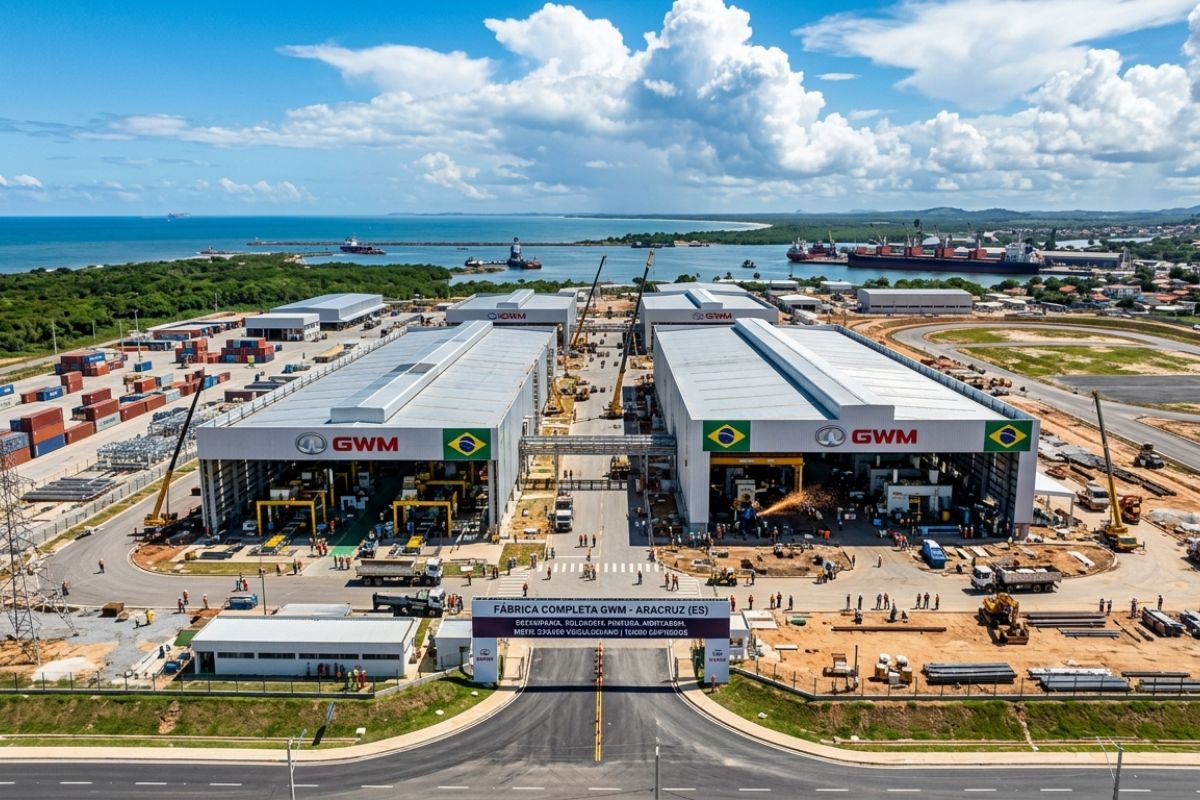
GWM chooses Aracruz and puts Espírito Santo on the automotive map: a complete factory in the Americas, with stamping, welding, painting, and assembly, aiming for 200,000 vehicles per year and up to 10,000 jobs.
-
Labor shortages are prompting Portugal, Spain, Germany, and Canada to open up opportunities for foreigners in 2026, with salaries ranging from 920 euros in Portugal to 50,700 euros per year in Germany.

-
The government is considering a temporary subsidy for cooking gas following the spike in oil prices due to the war in Iran and warns about the impact of 20% of imports on the prices paid by families.
-
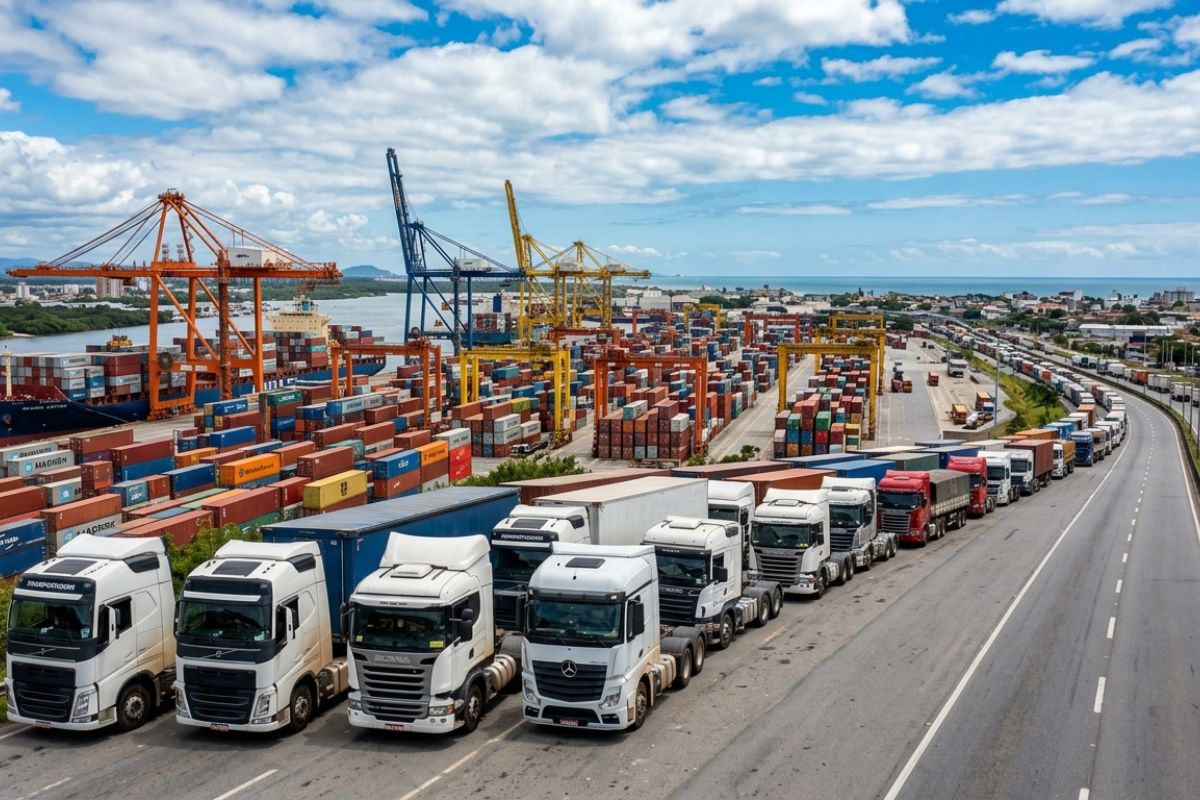
The lack of truck drivers in the country is already halting shipments and threatening deadlines: 88% of transport companies are unable to hire, with an average of eight trucks idle, and the port complex of Itajaí is now feeling the impact.

In practice, the alliance was presented as a tool to increase economic resilience in a more competitive international scenario subject to supply disruptions.
By placing fertilizers and machinery at the center of the agenda, the Brazilian government signaled a clear objective: to reduce supply vulnerabilities and strengthen local production with higher added value.
In the clean energy and technology sector, the discussion progressed on how to combine industrial expansion with productive modernization without losing competitiveness in cost, scale, and quality.
Who Participated and What Political Message Was Conveyed
On the Brazilian side, the leadership was with the Executive Secretary of MDIC, Márcio Elias Rosa, accompanied by Tatiana Prazeres, Uallace Moreira Lima, Guilherme Rosa, and other members of the ministerial team.
On the Russian side, the delegation was led by Alexei Gruzdev, Deputy Minister of Industry and Trade, with participation from Viktor Sheremetker, commercial representative of the embassy in Brazil. The institutional message was one of continuity and deepening of the alliance.
In the political reading of the meeting, what stood out was the combination of diplomatic language with concrete industrial goals. Brazil reinforced its priority to reduce external dependence on essential inputs and expand local capacity.
Russia, in turn, highlighted its interest in expanding joint industrial projects and sharing experience in infrastructure, technology, and productive security, paving the way for more structured technical cooperation.
Where the Alliance Can Generate Economic Impact More Quickly
The first effects are likely to appear in the supply chains where dependence on inputs and equipment directly affects cost, predictability, and production pace.
This is the case for fertilizers for the agribusiness sector, machinery and equipment for industrial modernization, and technological solutions for digitalization. In these segments, the alliance can reduce supply uncertainties and shorten the time between investment and result delivery.
Another point is clean energy, treated as a cross-cutting front of the new strategy. By connecting storage, efficiency, and industrial infrastructure, Brazil and Russia are discussing a cooperation that is not limited to buying and selling but aims to enhance productive capacity in the national territory.
If the projects advance, the benefit could come from both the industrial and logistical avenues, improving flow and stability in the productive chains.
Joint Production, Innovation, and Bilateral Trade Under One Architecture
One of the most relevant aspects of the meeting was the attempt to integrate three agendas that have historically been separate: industrial policy, foreign trade, and economic diplomacy.
The alliance was presented as a platform to align these fronts around projects with real execution, not just memorandums. This includes technological exchange, cooperation between industrial sectors, and business promotion alongside attracting productive capital.
The Brazilian strategy, according to government representatives, combines innovation, sustainability, and value aggregation as vectors of competitiveness. In practical terms, this means seeking partners capable of contributing to the modernization of plants, process qualification, and strengthening critical chains.
On the Russian side, the emphasis on technology and infrastructure reinforces the interest in medium-term cooperation, with measurable industrial impact.
Itamaraty and CAN: The Diplomatic Step That Aims to Consolidate the Industrial Step
The meeting at MDIC was only the preparatory stage of a high-level agenda scheduled for February 5, at the Itamaraty Palace, within the VIII Meeting of the Brazil-Russia High-Level Commission.
The presence of Vice President Geraldo Alckmin adds political weight to the process and indicates that the alliance has begun to be treated as a strategic government theme, rather than just a sectoral concern.
This connection between the technical meeting and the diplomatic encounter is relevant because it tends to give institutional continuity to the projects discussed.
In other words, what started as a conversation about opportunities may gain an implementation path with goals, defined interlocutors, and coordination between areas.
For the Brazilian industry, the central point is to know which projects will be prioritized for implementation and how they will be distributed among innovation, production, and trade.
What Is at Stake for the Brazilian Industry
In the short term, the main potential gain lies in increasing predictability for supply chains sensitive to supply shocks.
In the medium term, the discussion on joint production may open space to raise the technological content of the installed industry in Brazil, impacting qualified employment, productivity, and international integration.
The alliance also serves as a signal of diversification of external partnerships at a time of competition for markets and technology.
At the same time, the effectiveness of the agenda will depend on the ability to translate political intention into contracts, timelines, and execution governance.
Without this, cooperation tends to remain in the realm of good intentions. Thus, it could turn into a concrete front for industrial repositioning. The difference between rhetoric and results, here, will be measured in factories, logistics, and real trade.
Brazil and Russia put investment, innovation, productive integration, and diplomacy on the same table, focusing on sectors that weigh on the present and future of Brazilian competitiveness.
The alliance gained substance by advancing from the technical level to the political level, with a clear agenda on fertilizers, machinery, clean energy, and technology.
Which area should be prioritized first in this alliance to generate quicker effects on employment and production costs in Brazil: fertilizers, machinery, clean energy, or industrial technology?






-

-

2 pessoas reagiram a isso.