





 Portuguese
  English
  Spanish
  3 min of reading
  0 comments


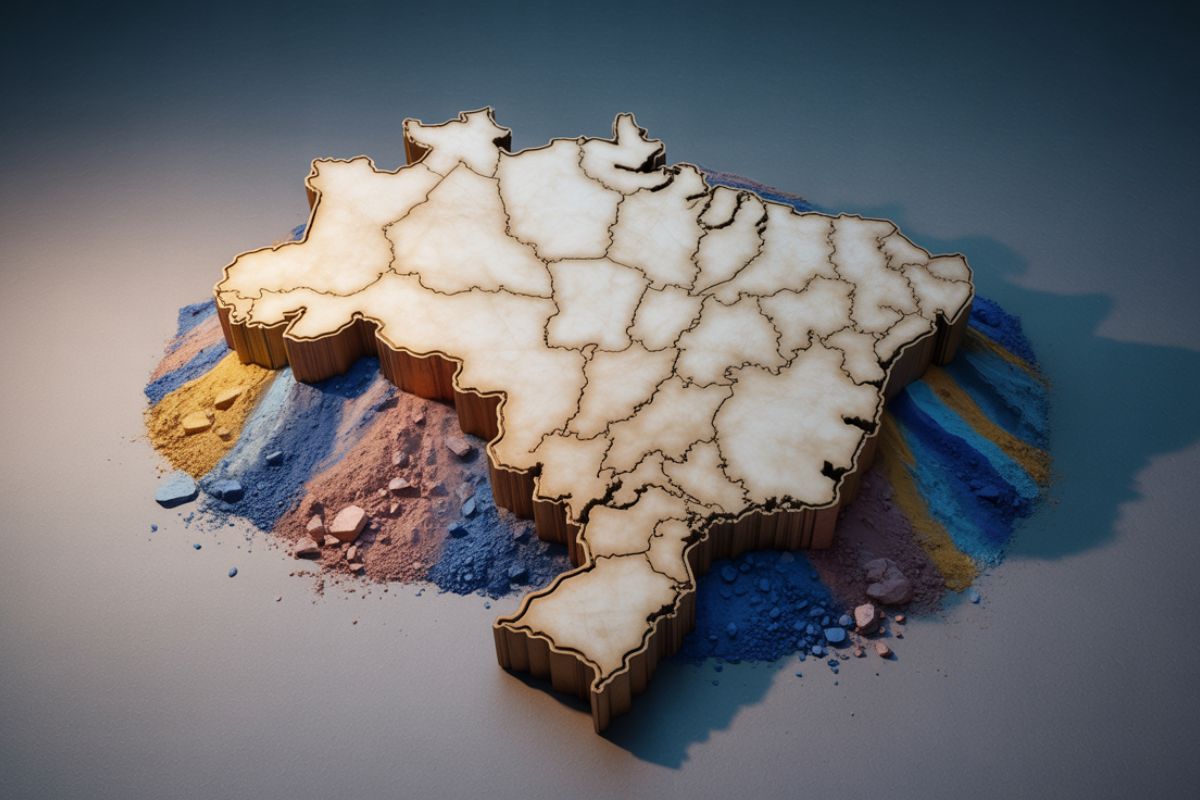
With the Second Largest Rare Earth Reserves in Brazil, the Country Has the Chance to Break the Chinese Monopoly and Become a Strategic Supplier for the Global High-Tech Industry.
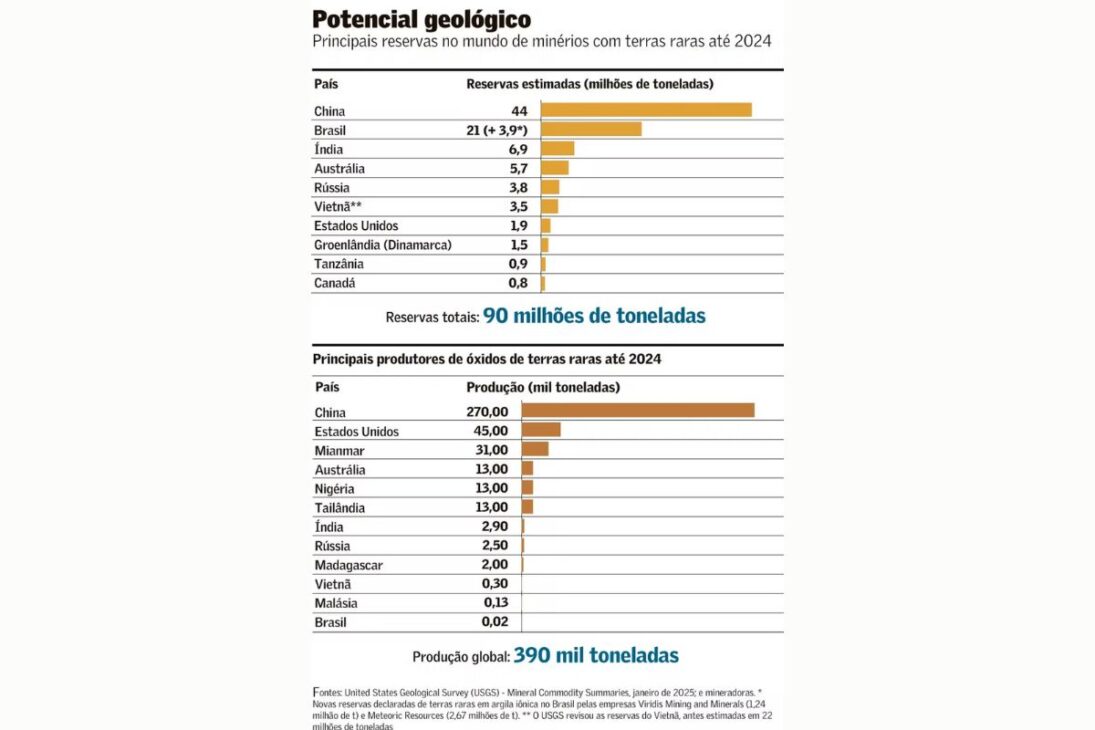
Brazil is sitting on a treasure that could redefine its role in the global economy: the rare earth reserves in Brazil. Essential for the manufacturing of everything from iPhones and electric cars to wind turbines and missiles, these 17 chemical elements are the “oil” of the 21st century. And Brazil, with about 21 million tons, holds the second largest reserve on the planet, behind only China.
However, the country faces a paradox: despite its immense potential, it produces less than 1% of the global total, while China dominates over 70% of production and nearly 90% of refining. In a scenario of increasing geopolitical tension, where the West desperately seeks to diversify its sources, the rare earth reserves in Brazil become an unprecedented strategic opportunity for economic development and technological sovereignty.
The Treasure Map: Where Are the Rare Earths in Brazil?
The rare earth reserves in Brazil are primarily concentrated in alkaline rock complexes and clay deposits, which are easier and less harmful to the environment to mine. According to data from the National Mining Agency (ANM) and the Geological Service of Brazil (SGB/CPRM), the main deposits are located in:
-
Brazil extracts 26.3 million tons of ore from what was previously treated as waste, transforming residues into wealth, producing over 3 million tons of sand, and demonstrating how national mining is relearning to generate value.
-
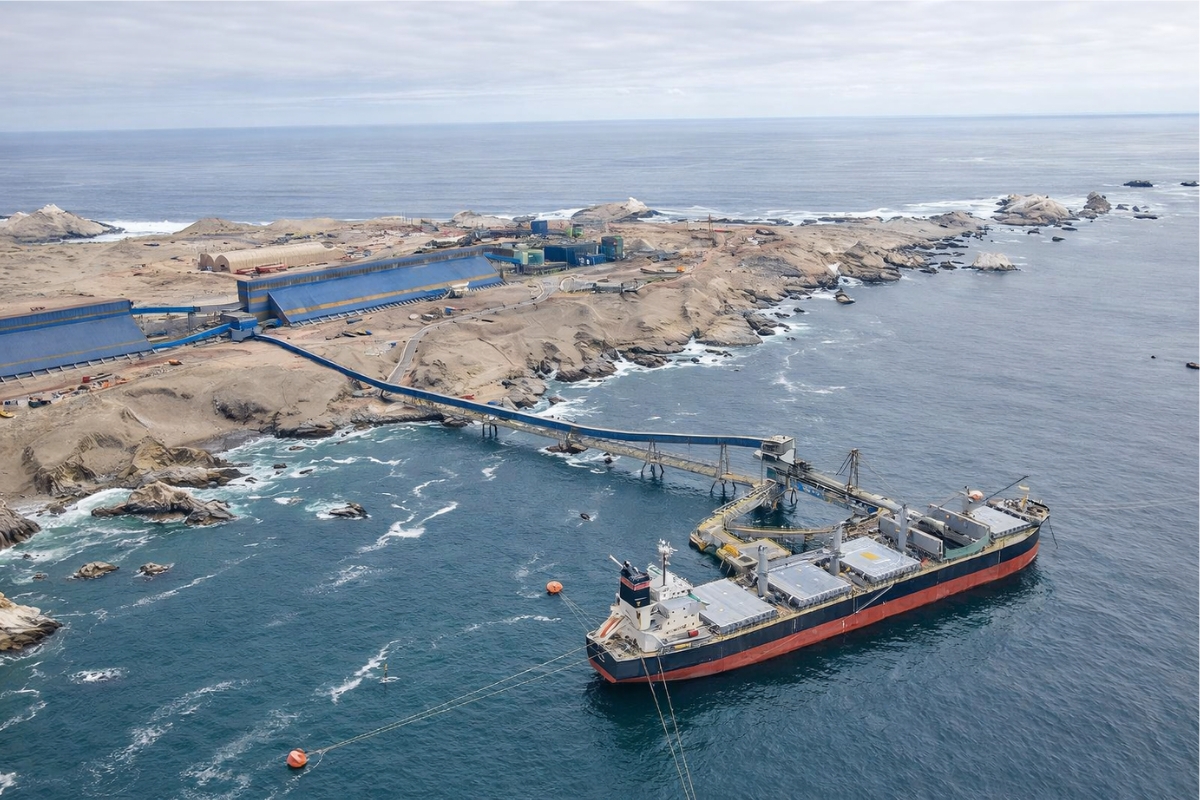
A $3.5 billion megaproject in Latin America pumps desalinated seawater at 1,050 liters per second over 194 km to keep a copper supermine in the Andes operational for another 20 years.
-
A hidden mine in the Andes valued at nearly R$ 1 trillion is starting to attract global attention, containing copper, gold, and silver, and raises an intriguing question: why do Argentina and Chile need to act together to exploit this gigantic wealth?
-
A silent discovery in the interior of Bahia could change the future of energy in Brazil: a uranium reserve in Lagoa Real has an estimated capacity to produce 400 tons per year and is already attracting the attention of energy sector specialists.
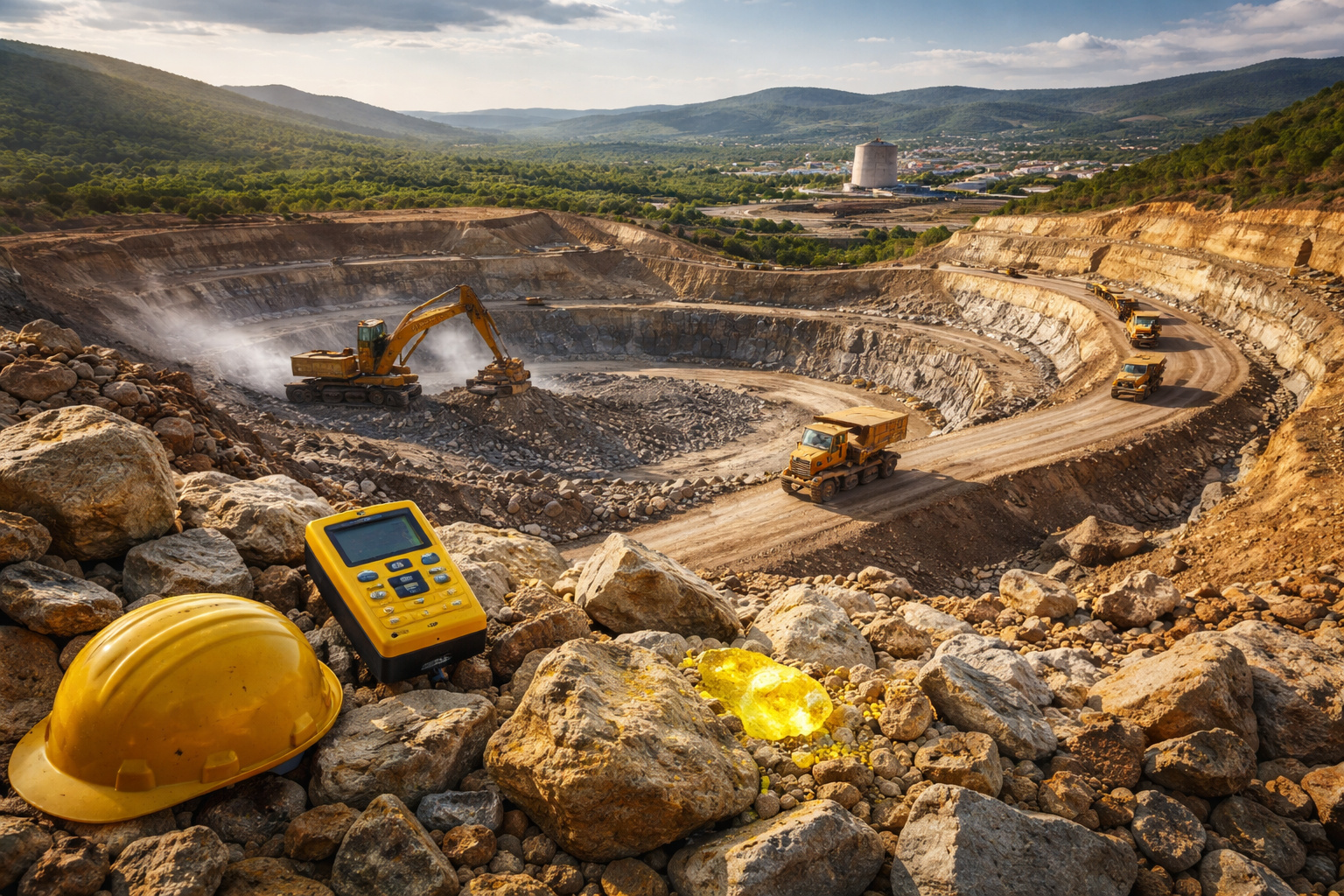

Minas Gerais: The state is the epicenter of rare earths in the country, particularly Araxá, where the elements are associated with the rich niobium deposits, and Poços de Caldas, with high-value ionic clays.
Goiás: The city of Minaçu hosts the Serra Verde project, the first and only commercial scale rare earth mine in Brazil.
Amazonas: The Pitinga region also has significant deposits.
The Global Race and Chinese Domination
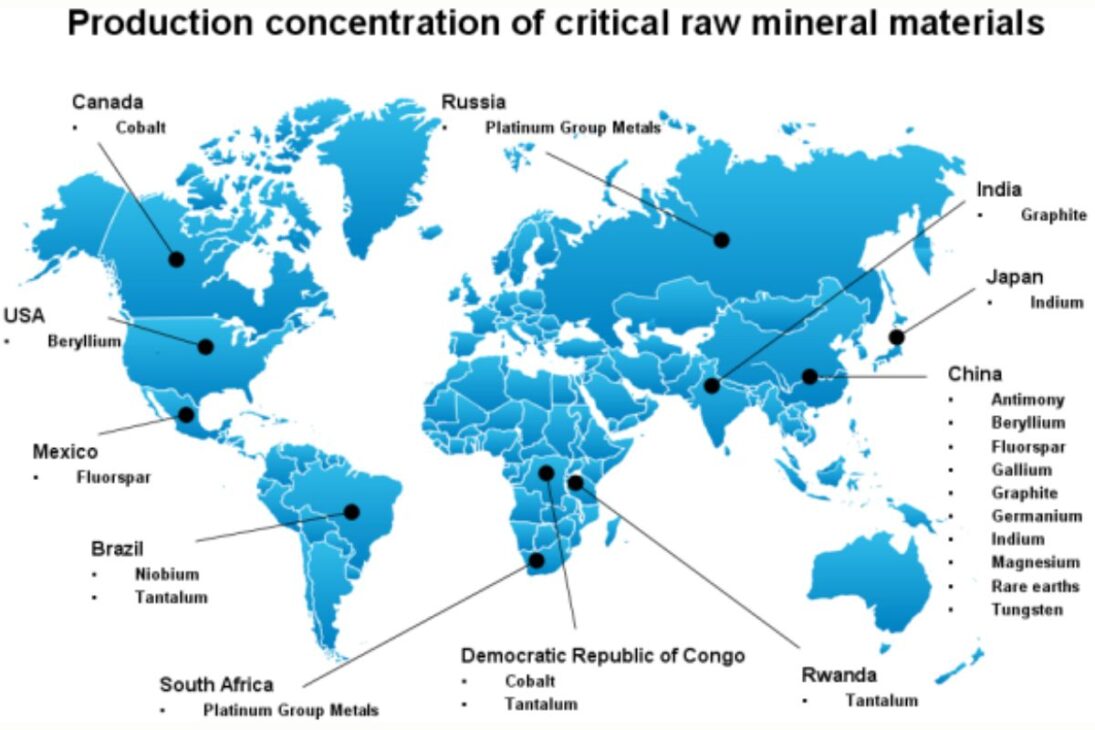
The urgency to develop the rare earth reserves in Brazil is driven by a geopolitical factor: China’s overwhelming dominance. The Asian country not only holds the largest reserves but controls the entire production chain, from mining to processing and manufacturing high-performance magnets.
This dependency has become a point of vulnerability for the West, which is now actively seeking strategic partners to diversify supply. And that’s where Brazil comes in as one of the most promising players.
Who Is Exploring Rare Earths in Brazil?
The exploration of the rare earth reserves in Brazil is finally coming to fruition, driven by national and foreign companies.
Serra Verde Mineração (Goiás): In November 2024, the company began commercial production in Minaçu, a historic milestone for the sector in the country. With a focus on sustainable operation, the mine has the capacity to produce 5,000 tons of concentrates per year.
CBMM (Minas Gerais): The world leader in niobium, in Araxá, already produces rare earths as a byproduct of its main operation and has announced expansion plans.
Meteoric Resources (Australia): The Australian company is developing the Caldeira Project in Poços de Caldas, using a low environmental impact mining technique called in-situ leaching, with plans to start production in 2026.
The Challenge: Going Beyond Extraction
The great challenge for Brazil is not just extraction, but adding value. Historically, the country has been content to export raw ore, leaving the lucrative refining and high-tech product manufacturing processes to China.
For the rare earth reserves in Brazil to transform into real wealth, it is crucial to invest in technology for processing the elements and in creating a national magnet and other components industry. The government, through initiatives like the Decadal Plan for Mining Resource Research (PlanGeo), has already begun mapping new areas and encouraging the sector, but the path to industrialization is still long and requires massive investments.
And what do you think? Will Brazil be able to seize the opportunity of its rare earth reserves in Brazil to become a leader in future technology, or will it continue to be a mere exporter of raw materials? Leave your opinion in the comments!






-

-

2 pessoas reagiram a isso.