





 Portuguese
  English
  Spanish
  3 min of reading
  0 comments


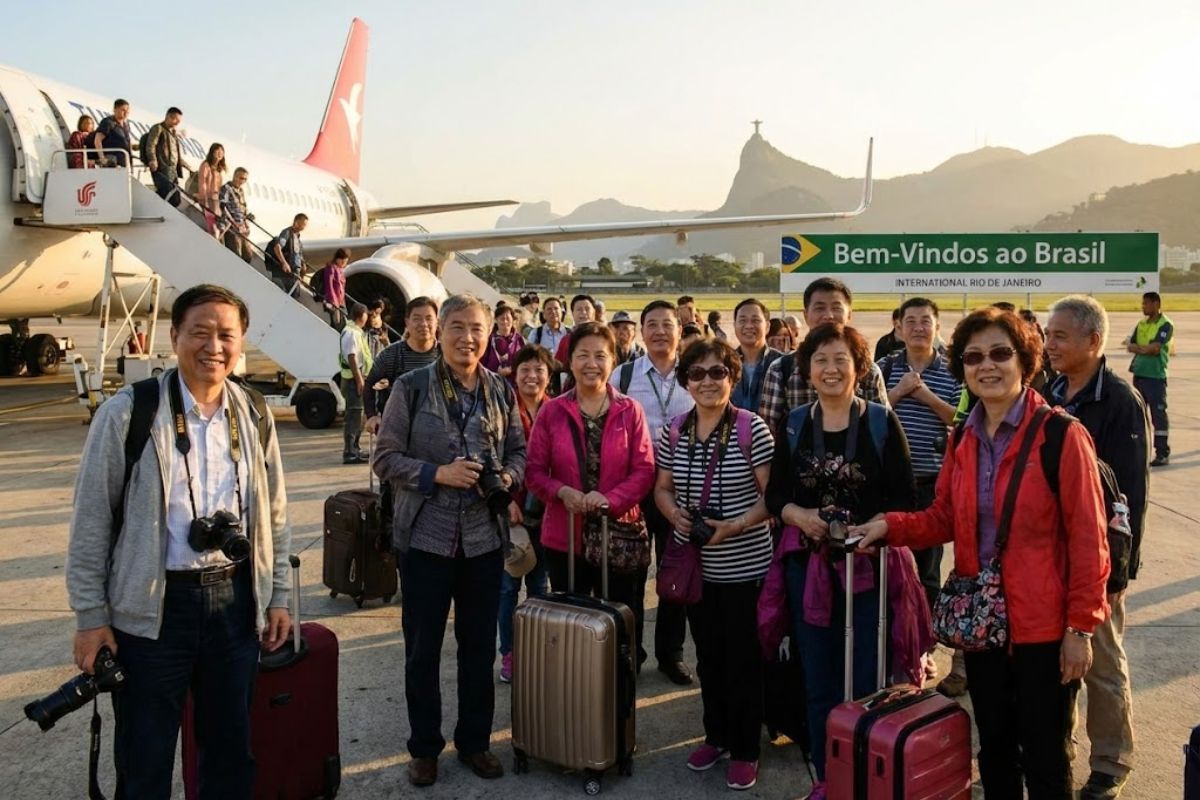
The Visa Waiver for Chinese Citizens, Valid Until December 31, 2026, Made Brazil the Most Sought-After Destination. After Lula’s Conversation with Xi Jinping, Qunar Reported Increased Searches: Brasília 84%, Rio 27%, and São Paulo 22%, Indicating a Chinese Tourist and Business Invasion in This Scenario
The term Chinese invasion began to circulate after the announcement that Chinese tourists will no longer need short-term visas to enter Brazil, a measure attributed to a conversation between President Luiz Inácio Lula da Silva and Chinese President Xi Jinping.
With the waiver in effect until December 31, 2026, the government states that the change has already been reflected in the behavior of travel searches, increasing interest in destinations like Brasília, Rio de Janeiro, and São Paulo, as well as stimulating expectations of greater circulation of Chinese tourists and businesspeople in the country.
What Changed: Visa Waiver for Chinese Tourists Until December 31, 2026
The announced decision states that Brazil will no longer require a short-term visa for Chinese tourists, with the exemption valid until December 31, 2026. The announcement is linked to a conversation between Lula and Xi Jinping.
-
“No one will make us change the Pix,” says Lula after the US report.

-
Lula responds directly to Trump and says that Pix is from Brazil and will not change under pressure from anyone, after a report from the United States pointed out the Brazilian payment system as an American trade barrier.

-
Amazon has just announced a new fee on all deliveries, and your online purchases will become more expensive starting April 17, including for those buying from the United States here in Brazil.

-
He sold his share for R$ 4 thousand, saw the company become a giant worth R$ 19 trillion, and missed the opportunity of a lifetime.


In practice, the immediate effect described is an increase in interest in traveling to Brazil, with the country being perceived as a more attractive destination for Chinese tourists throughout the validity period of the measure.
Immediate Impact on Flight Searches: The Numbers Cited by the Qunar Platform
Minutes after the announcement, the Chinese platform Qunar reported a sharp increase in searches for flights to Brazil. The percentages disclosed were:
Brasília: 84% increase in searches
Rio de Janeiro: 27% increase in searches
São Paulo: 22% increase in searches
In addition to the initial spike, it was also noted that weekly searches for flights from Chinese cities to Brazil have increased significantly since then, indicating that the movement was not limited to a momentary reaction.
Why the Term Became “Chinese Invasion”: Mass Tourism and Focus on Three Capitals
The use of the term Chinese invasion is associated with the volume and speed of interest in travel, especially when the data indicates an almost immediate increase in flight searches and concentration in specific cities.
In this context, Chinese invasion does not describe territorial occupation but reflects an accelerated increase in visitor flow and a potentially more visible Chinese presence in hubs like Brasília, Rio de Janeiro, and São Paulo, which are precisely the three destinations highlighted in Qunar’s percentages.
The Cultural and Educational Dimension: Exchange as an Effect of Facilitated Entry
The visa waiver is described as something that goes beyond tourism. The measure may also facilitate cultural and educational exchanges, strengthening ties between Brazil and China.
Among the mentioned points is the interest of Chinese tourists in exploring natural beauty and participating in local cultural events, increasing the circulation of people and the exchange of experiences throughout the waiver period.
The Business Vector: Investment in Infrastructure, Technology, and Agribusiness
The movement is also associated with the expansion of commercial opportunities. The facilitated entry could benefit Chinese businesspeople in investment decisions and increasing their presence in Brazil, with areas mentioned as a focus:
infrastructure
technology
agribusiness
The argument presented is that simplifying the entry procedures into the country may facilitate participation in events and fairs, accelerate investment decisions, and strengthen existing partnerships.
What Might Happen By 2026: Expanding Flow and Expectation of Continuity
With the waiver policy already producing “observable benefits” in interest for flights, the expectation described is for continued growth, both in tourism and in business connections.
It is also mentioned that the flow of tourists and businesspeople between Brazil and China is already expanding, associated with the adoption of a reciprocity policy, reinforcing the notion that this trend may be sustained as long as the waiver remains valid.
In your opinion, is the so-called Chinese invasion an accurate reflection of what might happen in 2026, or is it just an exaggerated way to discuss the increase in tourism and business?









-

-

-

-

6 pessoas reagiram a isso.