





 Portuguese
  English
  Spanish
  4 min of reading


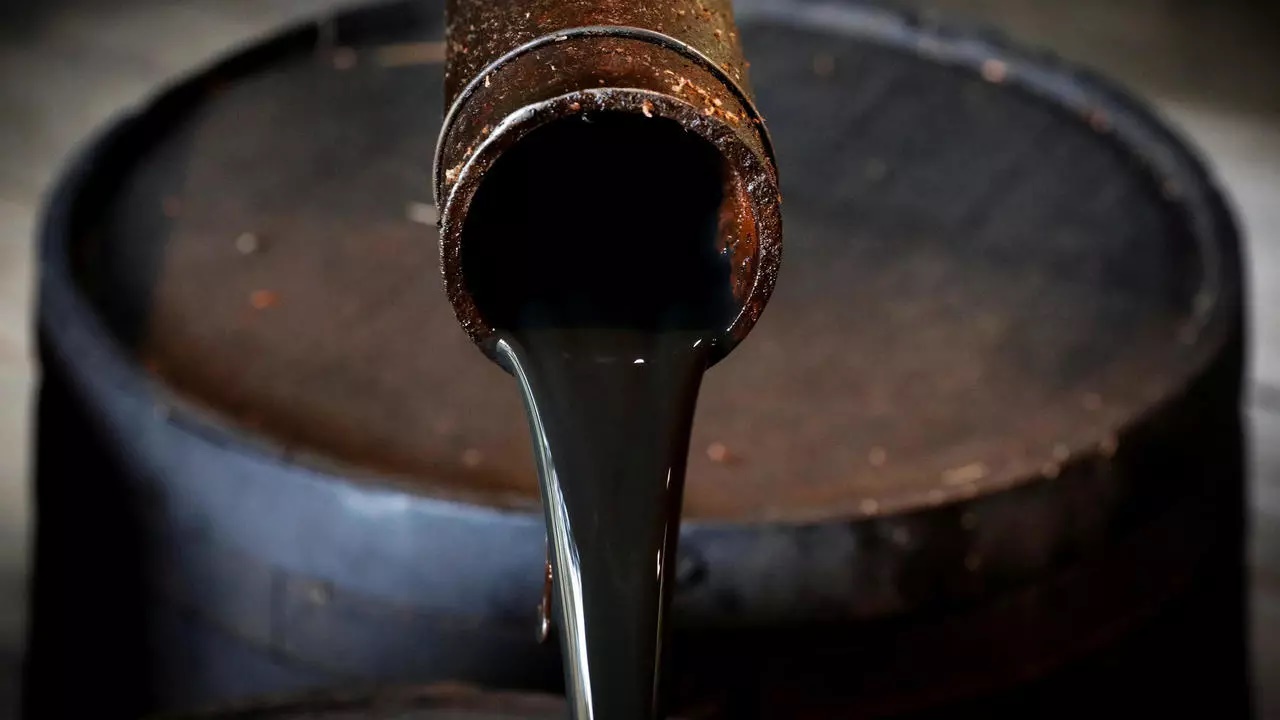
Oil Reserves in Suriname and Guyana Fuel Expectations About Energy Potential in the Brazilian Equatorial Margin
Suriname’s Minister of Foreign Affairs, International Business and International Cooperation, Albert Ramdin, made a working visit to Brasília on August 13. During the visit, Brazil showed its willingness to collaborate on the development of oil and gas exploration in the neighboring country. This was his first visit to Brazil since assuming the position of chancellor. The Surinamese authority was received at Itamaraty by the Minister of Foreign Affairs, Ambassador Carlos Alberto Franco França.
Also Read
- Bunge, One of the Global Leaders in Agribusiness, Calls for Workers in Plants and Factories in RJ, SP, PE, MT, PR, TO, and GO; Candidates Without Experience Can Apply for Trainee Program Jobs in 2022
- The World’s Largest and First Offshore Converter Station Has Been Installed! The Giant Steel House Weighing 22,000 Tons and 15 Stories Will Supply Electricity to 1.36 Million Homes in China
- Company Calls for Brazilians for Home Office Job Openings with Opportunity to Move to Portugal; Salary of Up to R$ 18,000 and Candidates from All Over Brazil Can Participate
- PicPay Offers Over 220 Job Openings with the Possibility of Home Office Work on August 16
- Looking for a Job But Don’t Have Experience? Heineken Calls for Workers in September; Candidates from All Areas Across Brazil Can Compete for Internship Positions on August 15
The meeting was the first opportunity for the chancellors to discuss, in person, issues on the bilateral, regional, and inter-American agendas, including stability and democracy in the region, and the upcoming elections for the Inter-American Court of Human Rights.
Brazil Can Collaborate with Suriname in the Oil Sector, Says Minister

In relations with Suriname, initiatives related to technical and energy cooperation stand out. This latter area presents great potential, due to Brazil’s experience in the sector and recent discoveries of oil and gas in Suriname.
-
The next exploration auction in the pre-salt will offer 23 blocks in the Campos and Santos basins and may change the interest of oil companies in Brazil.

-
The next exploration auction in the pre-salt will offer 23 blocks in the Campos and Santos basins and could change the interest of oil companies in Brazil.

-
Red Sea, from biblical site to oil hope: South Korea reveals ambitious plan to create new oil routes through the Red Sea with the dispatch of 5 ships, agreements with 3 countries, and a focus on the strategic port of Yanbu.

-
SISTAC expands contract with Petrobras for maintenance of platforms in the Santos, Campos, and Espírito Santo basins using ROV and specialized underwater operations.
“We talked about the recent discoveries of oil and gas in Suriname and Brazil’s willingness to collaborate in developing a local industry that can generate benefits for Suriname and its people,” said França after a closed-door meeting with Ramdin. “We discussed some bilateral contacts in this area that have already taken place, and I assured the willingness of Itamaraty to coordinate missions and dialogues between Brazilian companies and agencies with their counterparts in Suriname.”
According to the Institute of Strategic Studies of Oil, Natural Gas, and Biofuels Zé Eduardo Dutra (Ineep), linked to the Unified Federation of Oil Workers (FUP), the former Dutch colony has emerged as a new South American oil player, alongside Guyana, “raising global expectations regarding the energy and economic potential of the region.”
Major International Oil Companies Have Already Purchased Oil Blocks in Suriname
In Suriname, the main offshore blocks have already been acquired by major international oil companies such as ExxonMobil, Statoil, and Hess, through production-sharing agreements signed with the Surinamese state-owned company Staatsolie.
At the end of July, TotalEnergies and Apache Corporation announced they found oil in another well off the coast of Suriname, the Sapakara South-1, in Block 58. “These repeated positive results confirm our strategy, which aims for large volumes of resources [extracted] at low development costs,” said TotalEnergies Senior Vice President of Exploration, Kevin McLachlan.
“The recent discoveries of oil reserves in the maritime areas of the countries north of South America have attracted the attention of the world’s major oil companies, contributing to changing the geopolitics of the region and strengthening, in this case, the importance of Guyana and Suriname as robust oil producers,” the institute states in a situational analysis published on its website.
Oil and Gas Reserves in Suriname and Guyana Fuel Expectations About Energy Potential in the Brazilian Equatorial Margin
In addition to the geopolitical effects, the reserves found in Suriname and Guyana have fueled expectations about the energy potential of the basins of the Amazonas River Mouth, Pará-Maranhão/Barreirinhas, and Potiguar, located in the so-called Brazilian Equatorial Margin. Studies conducted by the State University of Northern Fluminense (Uenf), based on data from the National Agency of Petroleum, Natural Gas, and Biofuels (ANP), point to geological similarities between the Brazilian sedimentary basins and those of the two neighboring countries—a fact that, according to experts, is a strong indication of the presence of oil and gas also on the Brazilian side.
“It is important to highlight that our side of the Equatorial Margin is located in the same geological context as Guyana and Suriname, and within this process, due to the discoveries on the Equatorial Margin on the side of these countries [Guyana and Suriname], we have great interest and urgency in understanding the potential on our side,” declared ANP Director Raphael Moura during a virtual seminar held on August 4.
“The ANP believes in the potential of the Brazilian Equatorial Margin as a catalyst for regional development, especially in Northern and Northeastern Brazil. Who knows, maybe we can replicate the success of our neighbors Guyana and Suriname? To achieve this goal, we need a joint effort and collaboration from industry, academia, regulators, and government policies. Investments in research and development are necessary, and our universities play a central role in these efforts so that we can convert the potential of the activity into prosperity for Brazilian society,” Moura added.









Seja o primeiro a reagir!