





 Portuguese
  English
  Spanish
  5 min of reading
  0 comments


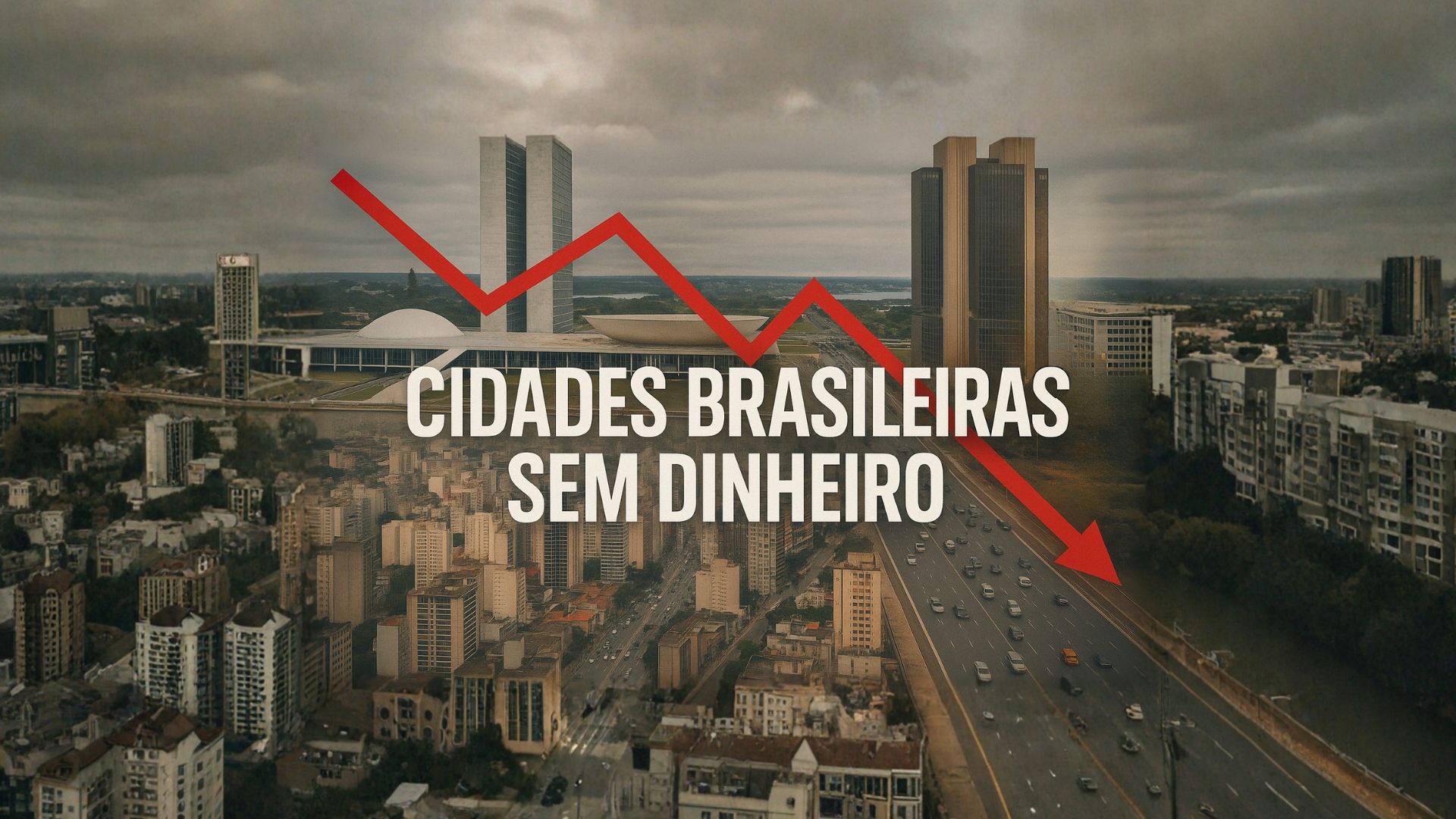
More Than Half of Brazilian Municipalities Ended 2024 With Deficit and May Repeat the Result in 2025. The Pressure for Increased Transfers of the Federal Participation Fund Grows, While New Expenses Amplify Fiscal Imbalance.
More than half of Brazilian municipalities ended 2024 with a deficit in public accounts and may repeat the scenario in 2025.
According to a survey by the National Confederation of Municipalities (CNM), 54% of city halls reported negative results, totaling R$ 33 billion in imbalance.
The Sao Paulo Association of Municipalities (APM) assesses that, without new sources of revenue, the percentage is likely to remain stable or increase this year.
-
“No one will make us change the Pix,” says Lula after the US report.

-
Lula responds directly to Trump and says that Pix is from Brazil and will not change under pressure from anyone, after a report from the United States pointed out the Brazilian payment system as an American trade barrier.

-
Amazon has just announced a new fee on all deliveries, and your online purchases will become more expensive starting April 17, including for those buying from the United States here in Brazil.

-
He sold his share for R$ 4 thousand, saw the company become a giant worth R$ 19 trillion, and missed the opportunity of a lifetime.


Municipalities Call for Increase in the Participation Fund
The president of the APM, Fred Guidoni, advocates for the approval of PEC 25/2022, which calls for a 1.5% increase in the Federal Participation Fund (FPM), a resource formed by federal taxes transferred by the Union.
According to him, the change would add between R$ 10 billion and R$ 12 billion annually to municipal coffers, with about R$ 2 billion allocated to the State of São Paulo.
“In the association, we have the Municipalist Movement, because life happens in the city. The current tax distribution does not meet the needs of the population. The PEC 25 provides for an additional 1.5% in the FPM’s participation, which would mean an additional R$ 10 billion to R$ 12 billion for the municipalities,” Guidoni stated.
According to the APM, the increase in transfers would help offset part of the growth in local expenses with health, education, and transportation, which have been rising above revenue averages.
The municipalist movement demands that Congress prioritize the processing of the proposal, which is still awaiting a vote in the plenary.
Special Retirement Pressures Municipal Finances
Mayors also express concern over measures approved in Brasília that create financial impacts without compensation forecasts.
An example is the Proposed Amendment to the Constitution (PEC) that establishes special retirement for community health agents and epidemic combat agents, approved on October 7, 2025 by the Chamber of Deputies and forwarded to the Senate.
The CNM estimates that the measure could represent an additional cost of R$ 69.9 billion for municipalities.
The text guarantees full and equal benefits to professionals after 25 years of activity, allowing the retirement amount to match the last salary of the career and receive the same adjustments applied to active servers.
According to Guidoni, the impact of the new rule worries local managers.
“Nothing against the profession, which must be dignified. But this will generate a cost to the cities in a single move. Who will pay this bill?” he questioned.
Growth of Expenses and Decline in Revenue Challenge Cities
The CNM indicates that the growth of mandatory expenses and the real decline in federal and state transfers aggravated the fiscal situation in 2024.
The study shows that the problem affects municipalities of all sizes, but it is more pronounced in medium and large cities, which concentrate higher-cost services.
For municipalist entities, the main cause is the imbalance in tax distribution, which has become outdated since the Constitution of 1988.
Since then, municipalities have been increasingly responsible for executing public policies without a proportional increase in revenues.
Tax Reform Could Modernize Revenue Collection
The Consumption Tax Reform, approved in 2023 and in the regulatory phase, is seen as a possible avenue for financial relief.
The proposal creates the Tax on Goods and Services (IBS) and the Contribution on Goods and Services (CBS), collecting at the destination and establishing automatic revenue distribution mechanisms.
Guidoni believes that modernization could improve revenue collection and reduce evasion but emphasizes that the results will depend on implementation.
“It is an ambitious reform, completely digitized. The tax will be sent to the federated entity immediately from a system. It will greatly improve tax collection in Brazil. What needs to be adjusted are minor details to ensure it works well for all of society,” he said.
In June 2025, the Federal Revenue Service launched a pilot project to test digital revenue collection systems in a split payment model, where taxes are separated at the time of the commercial operation and automatically transferred to federated entities.
The experimental phase is taking place in conjunction with companies from the financial and technology sectors.
Constitutional Amendments and Programs Without Funding
Guidoni also highlighted the existence of constitutional norms that prohibit the creation of programs aimed at municipalities without defining funding sources.
According to him, this rule has been circumvented through amendments to the Constitution that impose new obligations without ensuring the corresponding transfer of resources.
“Our struggle is for a constructive dialogue with federated entities so that they recognize the importance of municipalities and trust in their management. The goal is to ensure that cities have resources to innovate and improve the quality of public services,” he stated.
Prospects and Challenges for 2025
The municipalist movement focuses on the approval of PEC 25/2022 and defending an automatic compensation mechanism when new responsibilities are created without increasing transfers.
The APM also advises mayors to adopt administrative adjustments to curb spending and seek efficiency in management, such as reviewing contracts and modernizing revenue collection.
In São Paulo, Guidoni estimates that the reinforcement of the FPM would mean R$ 2 billion additional per year, which would help alleviate some pressures on local finances.
According to him, the fiscal situation will remain delicate as long as municipalities accumulate obligations without a proportional increase in revenues.
With 54% of city halls in deficit and new expenses projected for 2025, the central question is whether the expansion of the FPM and tax modernization will be sufficient to prevent Brazilian cities from closing another year in the red.








Seja o primeiro a reagir!