





 English
  Francês
  Alemão
  Italiano
  Japonês
  Norueguês
  Portuguese
  Spanish
  4 min of reading


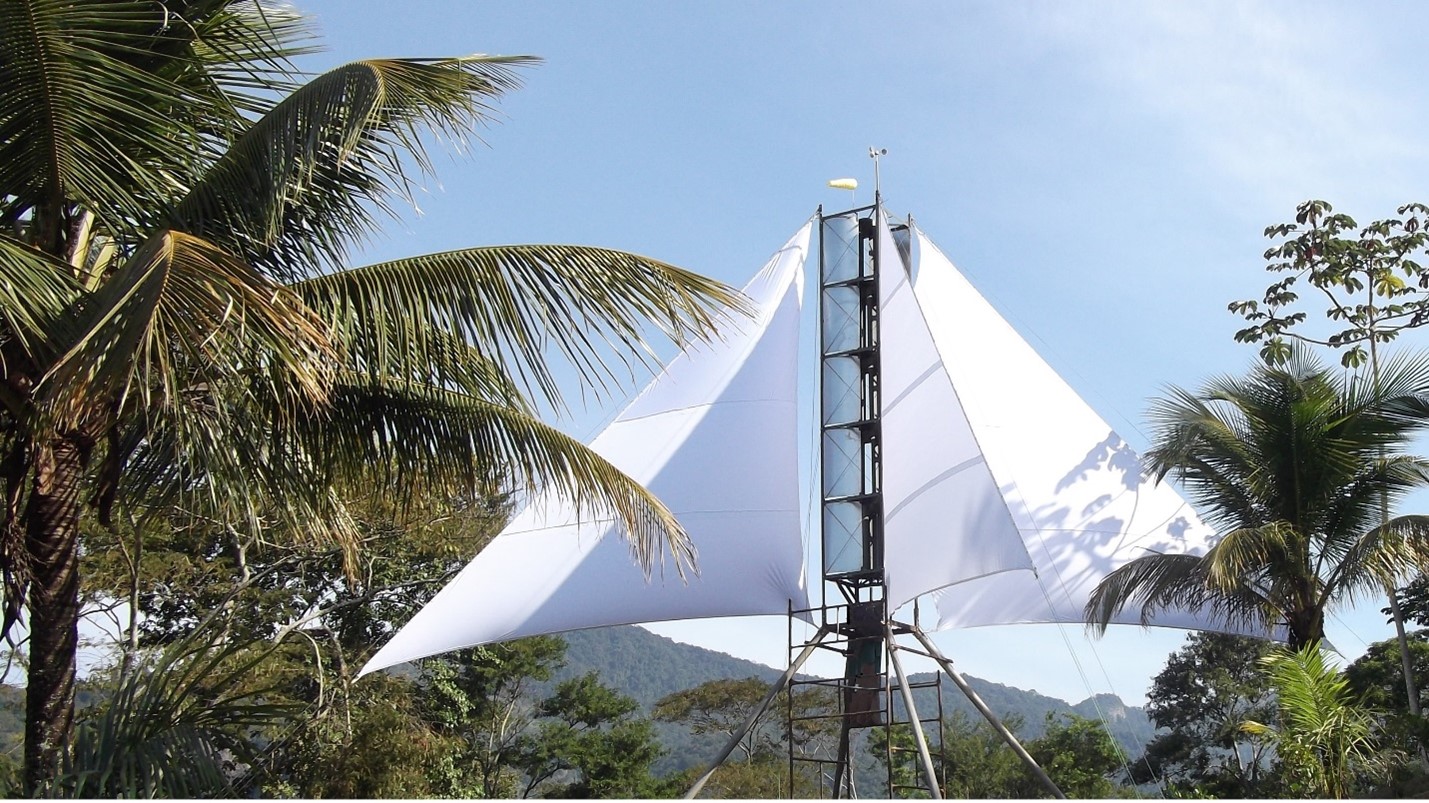
Urban Wind with Concentrating Sails Enables Micro-Producer Park
The Wind Cube is a disruptive innovation in wind energy generation, “zero impact,” fully recyclable, friendly to fauna and flora, and it installs in 6 hours—coming in a telescopic tower, just erect and guy it. Literally, it is possible to have a wind farm of high capacity in very small areas with this type of wind turbine.
- Government of Rio Grande do Norte presents a proposal for the application of EIA-RIMA to wind power plants with more than 150 MW
- New renewable energy technologies feature a 23-meter generator that produces wind energy for 24 hours
- Billion-dollar investment in the Northeast: 2W Energy receives authorization from Aneel to start construction of plants and explore wind energy generation in Ceará
- Seven new wind power plants will be built and more than 1200 jobs will be generated in Bahia after BNDES financing
The picturesque image of nautical sails in a grass field, evoking the most sustainable and historically most impactful means of transportation—the sailboat—has a strong media appeal, and a campaign that explores the image of the Wind Cube could have worldwide repercussions.
How the Wind Cube Works Video

The wind can come from any direction as it uses 4 sails in the shape of an X that concentrate the wind at the vertex, where a rotor of the wind turbine spins at high speed, eliminating the gearbox, completely enclosed in a guyed tower, which prevents the projection of parts, making it the safest wind turbine in the world.
-
Rio Grande do Sul accelerates energy transition: State invests in renewable technologies and consolidates decarbonization strategies and pathways to attract billions in new industrial investments.

-
With 160,000 m² of collectors, an area larger than 20 football fields, Silkeborg, in Denmark, hosts a solar thermal plant that heats 19,500 homes and could become the largest solar heating plant in the world.

-
A study reveals the expansion of renewable energy procurement in Brazil and shows how companies are taking advantage of opportunities to reduce expenses, ensure energy efficiency, and strengthen strategic environmental commitments.

-
Mato Grosso do Sul excels in the sugar-energy sector: the state reaches a milestone of 22 operating mills and accelerates the production of clean energy in MS with a focus on sustainability.


In certain areas of Brazil, the wind blows 80% of the time, one of the most constant in the world, yet it is weak. Wind energy is a cubic function of speed—a wind of 3 m/s has 8 times less energy per area than one of 6 m/s.
There was a lack of a turbine with technology adequate to the Brazilian regime, as elsewhere in the world turbines are used for 10 m/s, which do not work here since only along the coast of the NE and at 100 m high do we have winds of that speed.
The Wind Cube, with its gigantic sail area, solved this problem brilliantly, capturing and concentrating weak winds, protecting the tower with disconnectors that release the sail tip in case of gales, allowing it to withstand “tipped” tornadoes of 120 km/h.
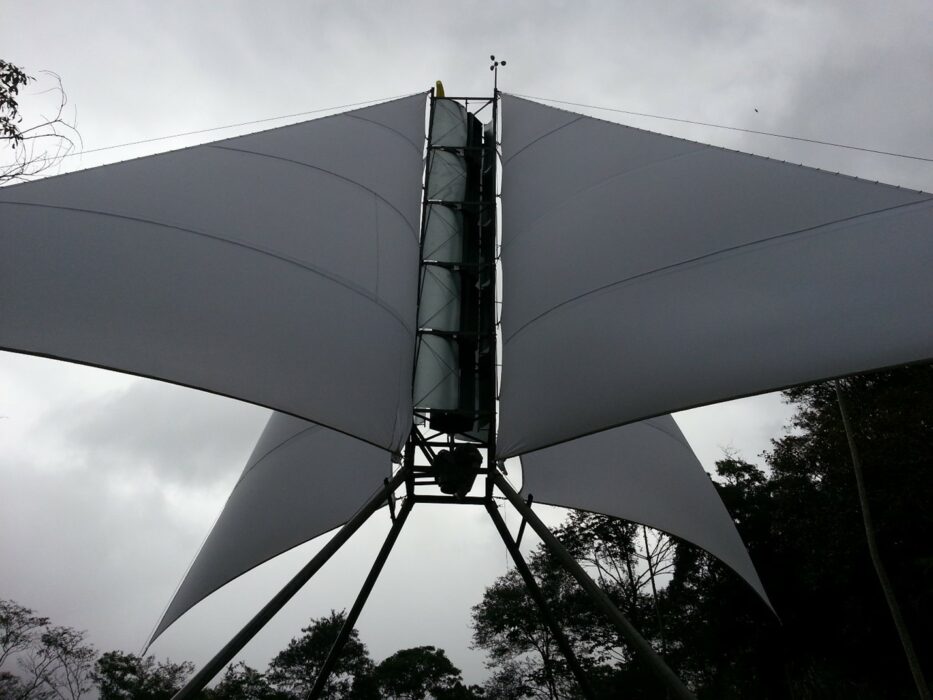
Awarded in an Innovation hub of SABESP, the second-largest electricity consumer in SP, the Wind Cube competes directly with photovoltaics and has a crucial advantage: photovoltaics only produce energy when there is sunlight, and only if the weather is not cloudy for satisfactory production.
The Wind Cube generates always, whether day, night, with rain, with thunderstorms, and with “Martian invasion or defeat in the World Cup”.
According to the website Epower Bay, the most efficient wind farm was Testa Branca I, in Piauí with a Capacity Factor (FC) of 81.31%, owned by Omega Energia.
The most efficient photovoltaic park was Pereira Barreto I with FC of 34.44%, in SP, from EDP Renováveis, the 5th largest in the world, with a team of specialists permanently maintaining productivity at its peak, with adjustments, washing, and replacement of panels. With 250,000 kW, it employed 1500 people in its construction.
If the FC of massive centralized photovoltaics is already low, in small distributed installations, it gets drastically worse, with micro producers sometimes producing less than 20%. Some solar installations below 400 kW.h will not even break even over their useful life.
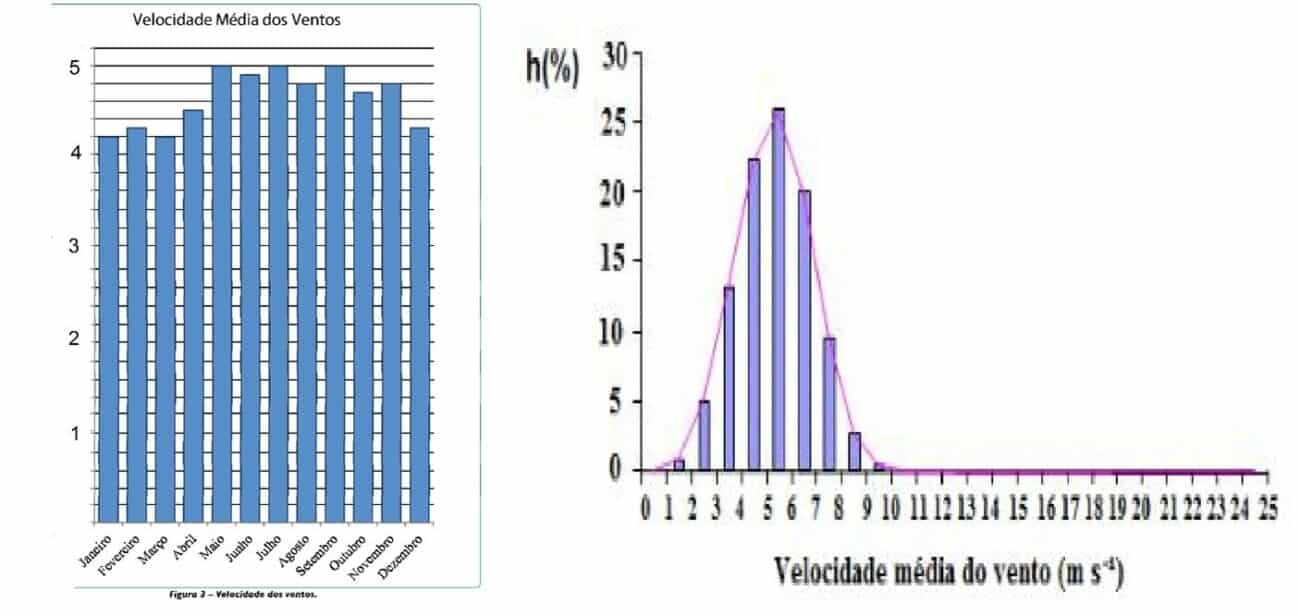
In areas with a breeze regime, the annual variation of wind is much lower than that of solar energy between summer and winter, bringing the assurance of more stable production.
The asynchronous induction generator is famous for its robustness, the tower is hot-dipped galvanized, and the guys ensure stability in any situation, allowing for an expectation of 20 years of operation without issues.
In areas with favorable winds, the Wind Cube pays for itself in 2 years, supported by 4 times greater productivity, lower maintenance, and minimal space occupied, efficiently protecting the investment through leasing the turbines with guaranteed production via performance contracts.
All of the Lakes Region up to the coast of Espírito Santo, points in the Mantiqueira Mountains, and much of the interior of SP, peaks in the interior of MG, and some tall buildings have enough wind to make the installation of a Wind Cube feasible.
Considering only the SE region, the richest and with the highest number of captive consumers who pay the highest tariff (main customer), we have a potential of 5 billion Reais within 10 years.
On a national scale, a skilled entrepreneur (since no investment is needed, just skill) can easily double this amount.
And the rest of the world, with similar winds, can be a new Eldorado.
Source: Marco Sombra, Academic and Inventor in the Field of Energy and Brazilian Sustainability







Seja o primeiro a reagir!