





 Portuguese
  English
  Spanish
  5 min of reading
  1 comment


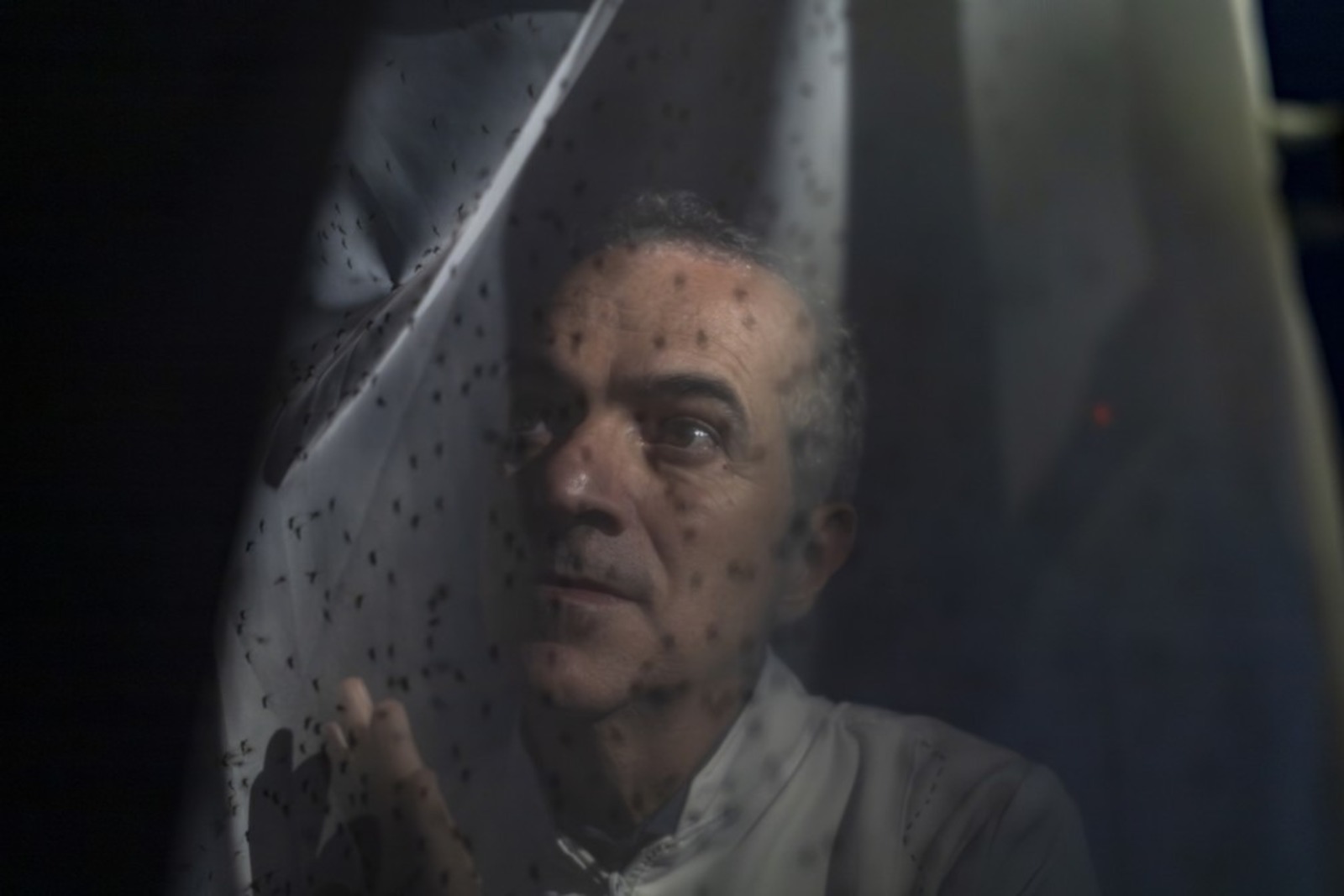


Luciano Moreira’s Research Uses Wolbachia Mosquitoes to Reduce Dengue Transmission, Achieving Up to 89% Reduction in Brazilian Cities
The international recognition received by researcher Luciano Moreira, included by Nature magazine among the ten figures who shaped science in 2025, reinforced a work that has already been transforming dengue combating in Brazil as it showed the direct impact of national research on everyday problems.
The announcement made on Monday highlighted a journey that began 17 years ago when he decided to investigate alternatives to reduce diseases transmitted by the Aedes aegypti mosquito without eliminating the species from the environment and without causing ecological damage.
The Research That Changed the Approach to Arboviruses
Over the years, Moreira and his team discovered how to insert the Wolbachia bacteria into the eggs of Aedes aegypti.
-
Cardboard drone created in Japan reaches 120 km/h, has up to 80 km of range, low-cost design can be assembled in a few minutes and stands out for its simplicity and mass production.
-
Ceará stands out in the world: it appears in the first photo of Earth taken by Artemis II, and a detail in the Brazilian Northeast catches attention even with clouds covering part of the state.
-
With a 6-liter tank and a door that opens by itself, the Midea countertop dishwasher cleans 30+ items without installation, promises up to 70% less water usage, and 30% faster drying, featuring a display, child lock, and anti-leak system.

-
Enormous carvings over 1,000 years old reappear on a beach in Hawaii after being buried for years, and the impressive details of these ancestral images intrigue locals and experts.
The bacteria, which is naturally present in other insects, interferes with the replication of dengue, zika, and chikungunya viruses inside the mosquito.
This process prevents the virus from multiplying adequately and reduces its ability to transmit to humans. The insect remains alive and active, but loses a significant part of its infection potential.
This strategy has made the mosquito almost harmless to the population; moreover, it created a sustainable protection cycle as the contaminated females transmit Wolbachia to their offspring.
Thus, each generation is born with the characteristic that prevents the development of viruses, eliminating the need for continuous releases and lowering project costs in the long term.
Moreira reported that the excitement of learning about the inclusion on Nature’s list came with a sense of responsibility.
For him, the direct impact on the reduction of cases and deaths shows that Brazilian science has the ability to produce globally relevant results even when facing resource limitations.
This recognition placed his name alongside significant advances of the year, such as the gene therapy led by Sarah Tabrizi and the development of the world’s largest astronomical camera, coordinated by Tony Tyson in Chile.
Results Observed in Brazilian Cities
The Wolbachia mosquitoes are already circulating in 16 cities. Recent studies have recorded significant reductions in dengue cases, reaching up to 89% in some areas.
On average, research published in The Lancet showed a 63% decrease in municipalities where the method was applied.
These numbers, cited as milestones by Moreira, represent an important change in addressing the disease.
The relevance grows as Brazil has faced intense dengue cycles for years. In 2025, over 1,700 people died from arboviral diseases, a reflection also of climate changes that expand the mosquito’s reach.
Therefore, solutions that strengthen prevention are seen as essential for the future of public health.
The initiative also generated the largest mosquito factory in the world, located in Curitiba. The site produces millions of Wolbachia specimens that supply the participating cities.
The constant advancement of the technique, according to Moreira, depended on creativity and persistence, as the team needed to find alternative pathways in light of shortages of supplies or specialized equipment.
He recalled that many solutions arose from adaptations within the lab itself, something he considers a distinctive feature of Brazilian science.
The Origin of the Idea and the Beginning of Luciano Moreira’s Journey
Moreira’s curiosity about insects began in childhood when he observed species in his backyard.
He jokingly says that some mixtures he made there shouldn’t be replicated today, but admits that this interest marked his professional choice.
Upon entering the scientific world, he realized he wanted to work on something capable of helping people without generating negative impacts on nature.
It was in this context that the question arose that would guide his career: would it be possible to neutralize the mosquito without eliminating it?
This reflection led him to Wolbachia. The bacteria, already known in other insects, offered an opportunity because it prevented the internal multiplication of viruses.
The challenge, however, was to insert it into Aedes aegypti in such a way that it remained stable across generations.
From this difficulty, the team began tests and adjustments that lasted years until they arrived at the method used today.
Moreira highlights that Nature’s recognition reinforces the importance of investing in science. He states that Brazil achieves significant results even with limitations and that the creative use of available resources has been decisive.
Still, he believes that larger investments could speed up discoveries and expand the reach of initiatives like his.
Other Names That Marked Global Science
The list published by Nature gathered nine other names from different fields. Mengran Du, from China, led an expedition that took a submersible to 9,000 meters deep, revealing an unknown marine ecosystem.
Yifat Merbl, from Israel, identified a new function of proteasomes, showing that they can produce antimicrobial peptides that help the body in fighting infections.
The group also included researcher Sarah Tabrizi, from the United Kingdom, whose work delayed the progression of Huntington’s disease.
The case of KJ Muldoon, in the United States, was highlighted as the first example of a cure through genetic editing after a two-year-old boy received experimental therapy that seems to have reversed his ultra-rare condition.
Another name mentioned was Liang Wenfeng, from China, creator of the DeepSeek language model, developed with limited resources and released in open weight format, allowing users to freely modify the system.
Achal Agrawal, from India, investigated scientific fraud and helped drive changes in the evaluation of universities in the country.
In the area of international cooperation, South African Precious Matsoso led negotiations that resulted in the first global treaty on pandemic preparedness.
Lastly, Susan Monarez, from the United States, was recognized for her stance in defense of science within the public service by refusing political pressures during the Trump administration.
An Achievement That Expands the Reach of Brazilian Science
The presence of a Brazilian researcher on this list brought new focus to national scientific production.
Moreira believes that the impact of his discovery can open doors to new lines of research and strengthen confidence in long-term projects.
For him, science remains a tool capable of reducing suffering and saving lives, something he considers the great engine of his journey.
The researcher states that they will continue working to expand the method and reach new municipalities because he believes the strategy has the potential to transform the landscape of arboviruses in the country.
The goal, according to him, remains clear: to increasingly reduce cases and move towards the elimination of diseases transmitted by Aedes aegypti.
With information from G1.





Quando uma pessoa só, faz a diferença, que maravilha!
Quais os 16 lugares que estão sendo beneficiados com essa tecnologia de eleminar o mosquitos da dengue? Todos no Paraná ? Com interesse do governo, poderiam espalhar para o Brasil, né mesmo?
Parabéns excelente cientista! 👏👏