






 Portuguese
  Spanish
  3 min of reading
  0 comments


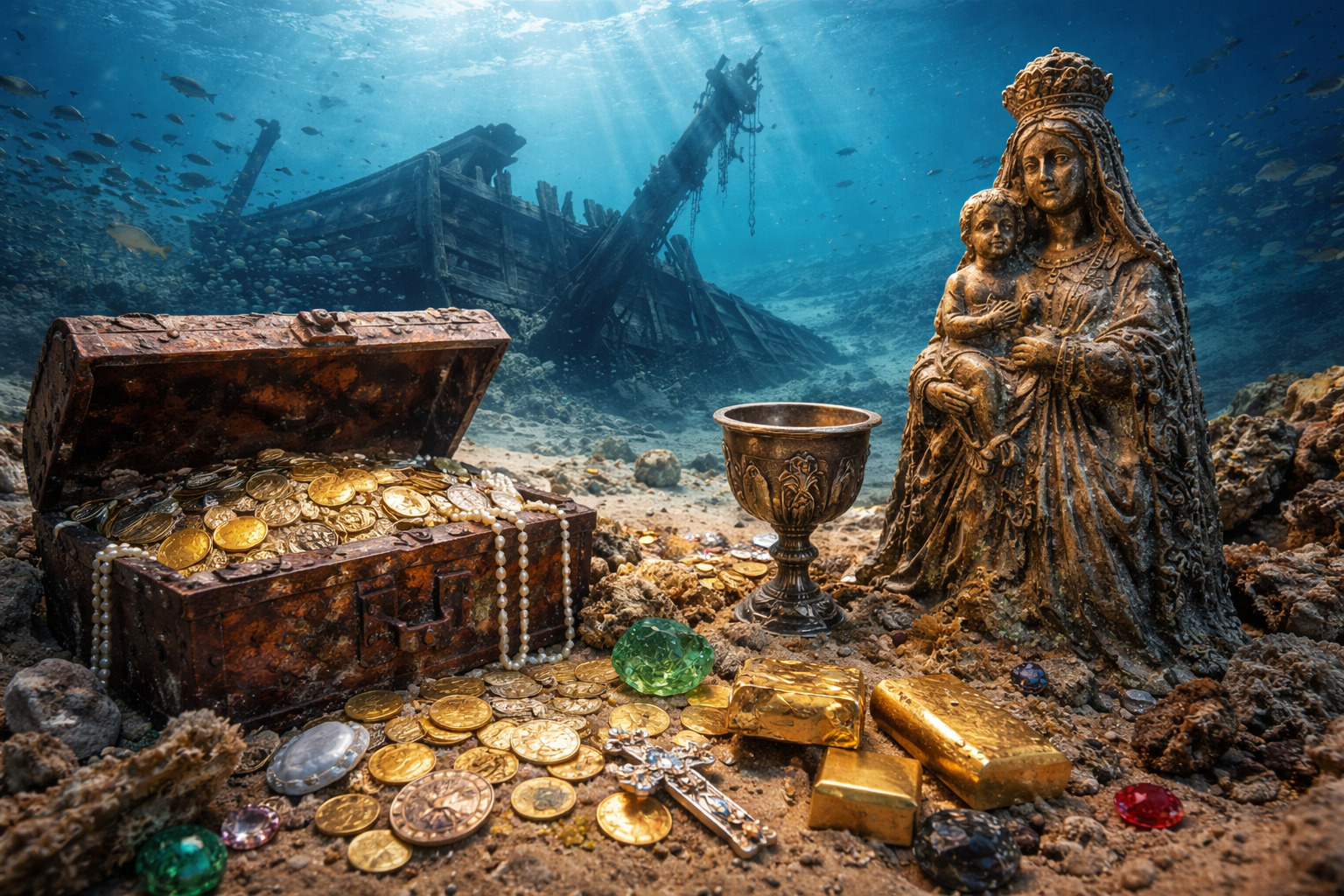
Shipwreck in Madagascar reignites search for pirate treasure linked to Portuguese ship captured in 1721, after 16 years of underwater research and over 3,300 recovered artifacts, although identification still depends on independent confirmation and keeps historical debate open on the case.
Two American archaeologists claim to have found, off the northeast coast of Madagascar, the wreckage of the Nossa Senhora do Cabo, a Portuguese ship captured by pirates in 1721 and long associated with a missing pirate treasure.
The vessel had departed from India bound for Portugal. On board were high-ranking officials, religious figures, and a cargo described in historical records as extremely valuable, which helped keep the story alive for centuries.
The identification of the wreck, however, has not yet been confirmed by independent entities.
-
Invisible Induction Technology Enables Wireless Power for Blenders, Coffee Makers, and Air Fryers, Reducing Countertop Cables

-
Smart Outdoor Lighting Transforms Gardens into Living Spaces with Weather Resistance and App-Controlled Scenes

-
Green dot on top of smartphone intrigues users, signals privacy alert in Android 12 that experts say shouldn’t be ignored.
-
Humanoid Robot Climbs 6,263-Meter Volcano in Ecuador, Sets Sights on Everest Challenge





Even so, the researchers maintain that the body of evidence gathered over 16 years reinforces the connection of the site to the ship.
Storm facilitated attack in the Indian Ocean
In 1721, the Nossa Senhora do Cabo was carrying the Portuguese viceroy and the archbishop of Goa, as well as about 200 enslaved people.
Near Reunion Island, it was intercepted by pirates led by Olivier Levasseur, known as The Vulture.
The report published by the Center for Historical Shipwreck Preservation states that the ship had already been damaged by a storm. This facilitated its capture, made with little resistance by the pirates.
After the attack, the vessel was taken about 400 miles west to Nosy Boraha, then called Île Sainte-Marie.
The region fit into a broader scenario of intense pirate activity in the Indian Ocean.
Valuable cargo helps explain fame of the case
Historical descriptions cited by Live Science indicate that the cargo included bars of gold and silver, coins, silks, and hundreds of gemstones, including diamonds and emeralds.
The size of the shipment helps explain why the episode continued to attract interest for so long.
The alleged pirate treasure linked to the ship became a central part of the fascination surrounding the shipwreck.
Archaeologists Brandon Clifford and Mark Agostini said they located the site after years of work with sonar and remote sensing. The results were published in the journal Wreckwatch.
According to the researchers, more than 3,300 artifacts have been recovered. The Center for Historical Shipwreck Preservation highlighted that, despite extensive records about the capture and the shipwreck, the exact location of the ship remained uncertain.
Religious objects and coins recovered from the wreck
Among the items retrieved from the seabed are religious objects believed to be from Goa, such as statuettes of the Virgin Mary and plaques referencing Jesus of Nazareth.
Fragments of pottery and gold coins with Arabic inscriptions were also found. Some of this material was still buried under sand and mud, indicating that new discoveries may occur at the same site.
The findings may help document how goods, people, and religious articles circulated through Portuguese colonial networks.
This material enhances the historical value of the site beyond its association with the pirate treasure.
Destiny of wealth and historical gaps remain open
Records indicate that Levasseur and his crew removed much of the wealth before abandoning the ship.
Some items, along with the captured viceroy, were later returned to Lisbon as part of a ransom.
There are no clear records about the fate of the archbishop or the 200 enslaved people. The area around Nosy Boraha was known as a pirate operation base, favored by calm waters and limited colonial control.
Clifford stated that there may be up to 10 shipwrecks in the area, with several possibly in the same harbor.
Agostini said that the site has been historically overlooked, leaving ample room for new discoveries and more information about this shipwreck.
With information from Daily Galaxy.




Be the first to react!