





 Portuguese
  English
  Spanish
  6 min of reading
  0 comments


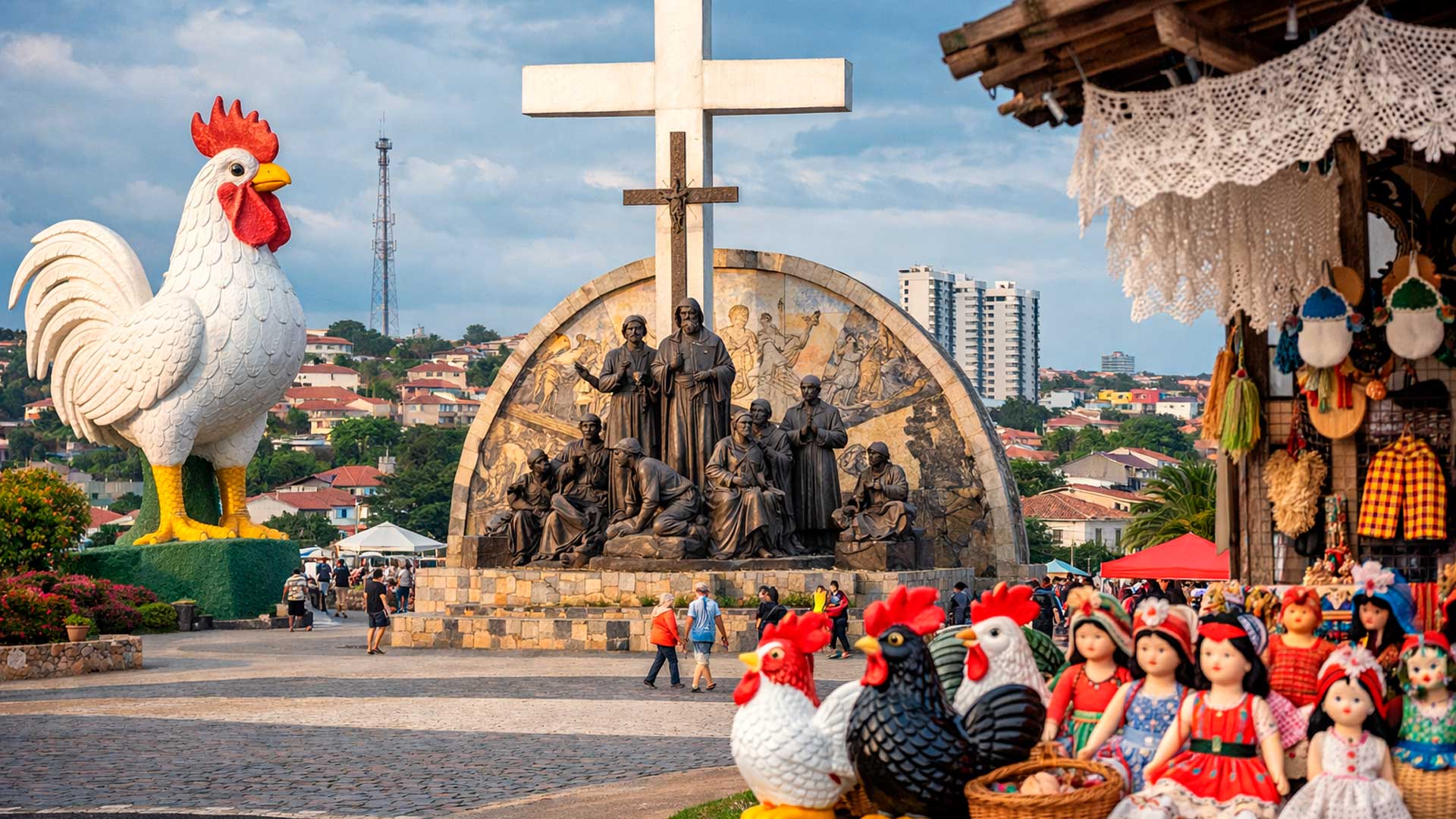
São Gonçalo do Amarante brings together faith, historical memory, centenary folklore, and regional cuisine just minutes from the international airport of Rio Grande do Norte
Those landing at the Aluízio Alves International Airport often do not even realize they are already in São Gonçalo do Amarante, a municipality in Greater Natal that tends to be overlooked by those heading straight to the coast. The city, however, holds one of the most significant episodes in the religious history of the country and a cultural life that has helped shape the identity of Rio Grande do Norte.
On the banks of the Potengi River, the municipality combines sanctuaries, historic churches, rare popular manifestations, and craftsmanship recognized throughout the state. It also houses a gastronomic hub known for its shrimp dishes, highly sought after by residents of the metropolitan area.
The historical weight of São Gonçalo do Amarante spans centuries. It was there, in the community of Uruaçu, that a massacre occurred on October 3, 1645, which would later lead to the canonization of the first saints born in Brazil.
-
Few people know, but no one lives in this place, as it is considered the hottest on the planet; still, it surprises with unreal landscapes and extreme temperatures. Discover Dallol, in Ethiopia.

-
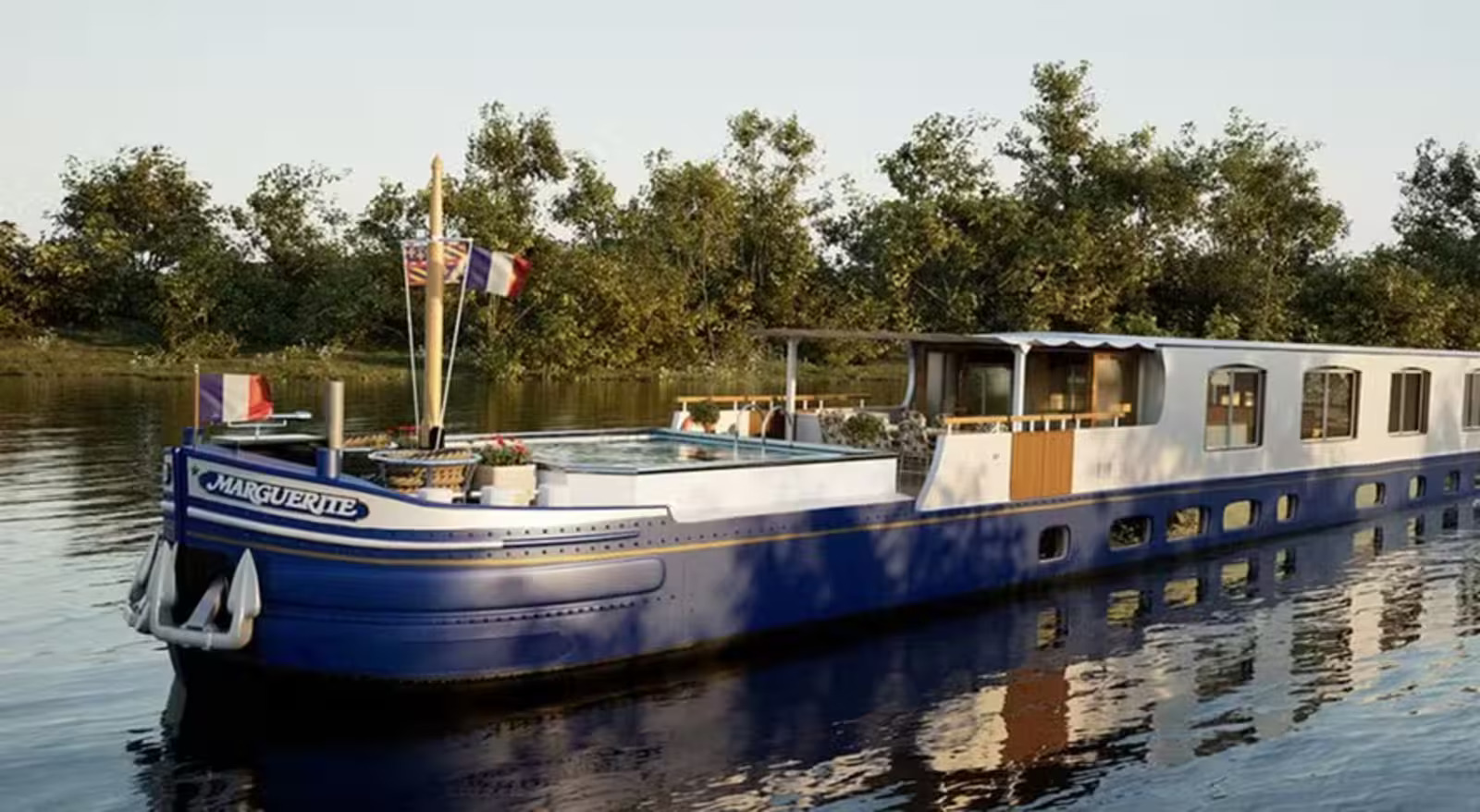
This 39-meter hotel boat offers luxury trips through France for around R$ 500,000, accommodates 8 guests, features 4 cabins inspired by golden daisies, and will debut in the European summer of 2026.
-
Measuring 13 meters in wingspan, the Boeing F-15EX Eagle II is an American multirole strike fighter capable of carrying 22 missiles and speeds exceeding Mach 2.5.

-
Step into Pelé’s incredible mansion in New York: with 3,384 square feet, where celebrities like Madonna and Steven Spielberg have lived, the property was owned by the King for 40 years and was sold for millions more.

Despite this array of attractions, the city is still underestimated by some visitors. Just stepping off the beaten path reveals a destination that blends religion, heritage, popular culture, and regional cuisine within short and easy distances.
The massacre of Uruaçu in 1645 transformed the municipality into a pilgrimage site and marked the history of the martyr saints of Brazil
On October 3, 1645, troops led by the Dutch Jacob Rabbi attacked Catholic faithful in the community of Uruaçu, an area that today is part of São Gonçalo do Amarante. In this episode, Father Ambrósio Francisco Ferro and dozens of laypeople were killed for not renouncing their faith.
Three months earlier, another massacre had already occurred at the Engenho de Cunhaú, in Canguaretama. Together, these episodes became central to the devotion to the so-called Cunhaú and Uruaçu Martyrs, whose memory has been preserved by generations in Rio Grande do Norte.
The official recognition from the Catholic Church came centuries later. The 30 martyrs were beatified by Pope John Paul II in 2000, and their canonization was presided over by Pope Francis on October 15, 2017, in St. Peter’s Square, in the Vatican.
As a result, they came to be recognized as the first saints born in Brazil. The significance of this milestone is so great that October 3 became a state holiday in Rio Grande do Norte, a date when thousands of pilgrims head to Uruaçu every year.
Monuments, baroque church, and craft market form a strong itinerary for those who want to know the history and local identity


The main religious visitation point is the Monument to the Martyr Saints, erected in Uruaçu at the site of the 1645 massacre. The sanctuary has a capacity for 20,000 pilgrims and holds masses every 3rd of each month, functioning as a permanent center of devotion.
Another highlight is the Mother Church of São Gonçalo, a rare example of baroque architecture in the state. The temple preserves wooden altars from the 19th century and was listed by the National Institute of Historical and Artistic Heritage, IPHAN, in 1963.
In the district of Santo Antônio do Potengi, visitors find the Monument of the White Rooster, a 12-meter sculpture inaugurated in 2016. The work honors one of the most well-known symbols of Potiguar folklore and has become a frequent photo stop.
Nearby is the Dona Neném Felipe Craft Market, a space where local artisans sell pieces made of clay, vine, scraps, and sisal. It is also the most remembered place for those seeking the famous Ceramic White Rooster, one of the images most associated with the city’s culture.
Câmara Cascudo helped to consolidate the fame of the cradle of popular culture in a municipality that preserves rare traditions in the Northeast
The historian Luís da Câmara Cascudo called São Gonçalo do Amarante the Cradle of Popular Culture. This title gained official recognition from the Legislative Assembly of RN and makes sense when observing the number of manifestations that remain active in the municipality.
Among them is the Boi Calemba Pintadinho, the Potiguar version of bumba meu boi. The tradition has been around for over a hundred years and maintains performances accompanied by rabeca and pandeiro, preserving an artistic language that has disappeared in many parts of the Northeast.
The Pastoril Dona Joaquina, formalized in 2005, is another local symbol. The group gathers 18 pastorinhas in performances marked by the scenic rivalry between the blue and red cords, a classic structure of northeastern pastoril.
The Congos de Guerra also remain alive, a manifestation that reenacts battles between African kings through song and improvisation. This persistence of popular forms reinforces São Gonçalo’s role as one of the most important municipalities for the preservation of Potiguar intangible heritage.
Another essential name in this memory is Dona Militana, a romanceira born in Sítio Oiteiros in 1925. Guardian of medieval Iberian romances transmitted orally, she received the Maximum Order of Popular Culture in 2005 from President Lula, and her collection is preserved in the municipal museum.
Pajuçara and Santo Antônio do Potengi maintain tradition of dishes with shrimp and expand the tour beyond the religious and cultural route
In the rural area, the Pajuçara Gastronomic Hub has become a reference for residents throughout Greater Natal. The rustic-style restaurants focus on hearty and well-known recipes in the region, especially shrimp in various preparations.
Among the most sought-after dishes are shrimp with garlic and oil, fillet with coconut broth, gratin shrimp, and especially shrimp pirão, noted as the most frequent order. The portions usually come with tapioca or cassava, while complete meals include green beans, rice, and farofa.
In Santo Antônio do Potengi, the Dona Neném’s White Rooster combines typical food and crafts along the same route. The proposal makes it easier for those who want to have lunch, taste regional flavors, and leave with a souvenir made by local artisans.
Hot climate year-round and easy access via BR 101 and RN 160 help explain why the destination fits in an afternoon or a weekend
The climate in São Gonçalo do Amarante is hot tropical year-round. The rainy season concentrates between March and July, while the heat remains constant in the other seasons, favoring outdoor itineraries for much of the calendar.
Access is also simple. The Aluízio Alves International Airport is located within the municipality and is about 22 km from downtown Natal, making São Gonçalo the gateway for many tourists arriving in the state.
For those coming by car, the connection to the capital occurs in just a few minutes via BR-101. The center of São Gonçalo do Amarante is 17 km from Natal via RN-160, a short enough distance to include the city in the itinerary before heading to the Potiguar beaches.
The video from the channel FLAVIO DRONE, shown earlier, presents the city and highlights its strategic and economic weight. Regardless of the chosen route, the municipality offers a rare combination of easy access with a rich historical and cultural content.







Seja o primeiro a reagir!