





 Portuguese
  English
  Spanish
  5 min of reading
  0 comments


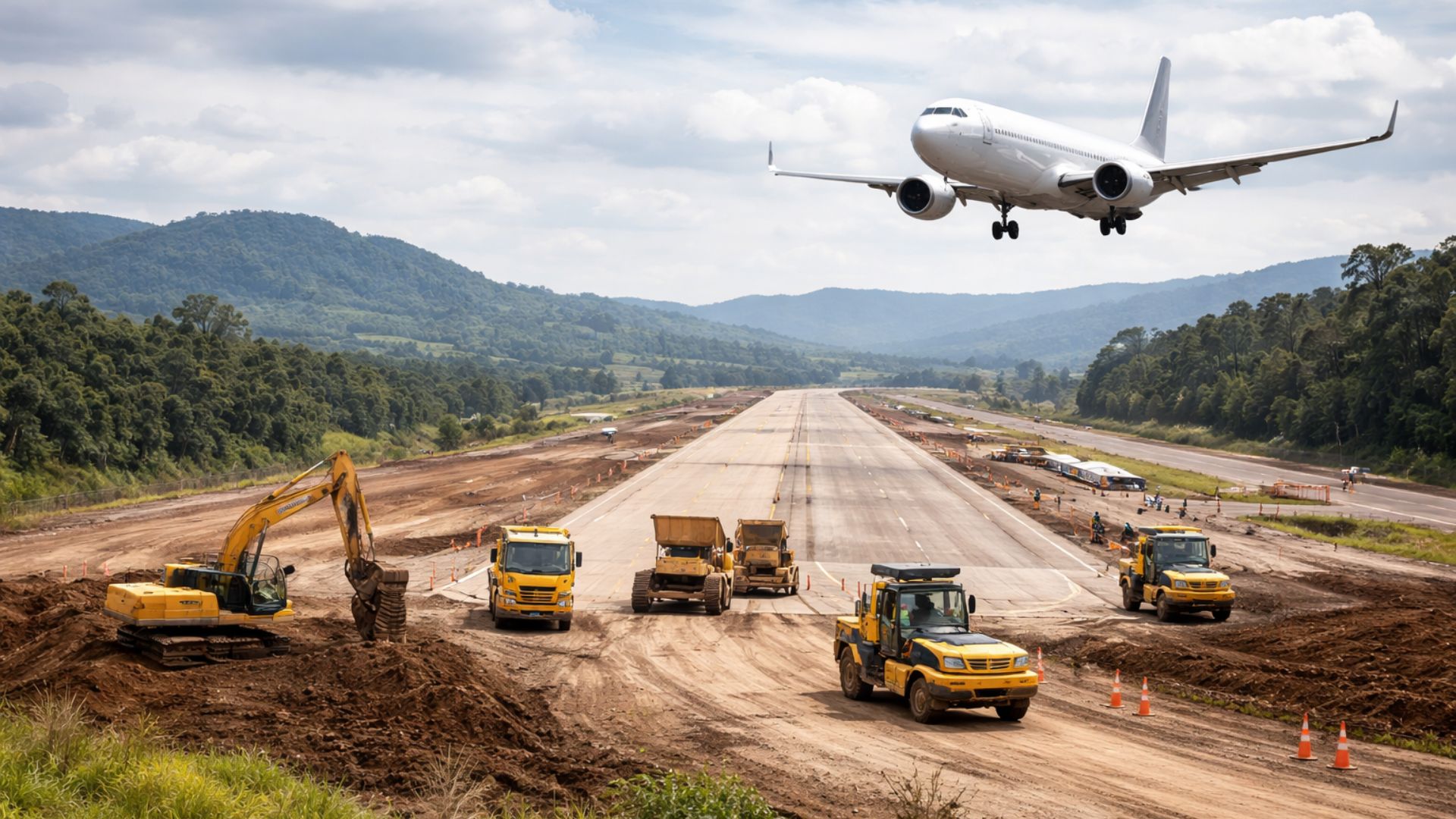
Project advances in Serra Gaúcha with consortium definition, forecast for commercial jet runway and robust federal investment in strategic airport infrastructure, consolidating a decisive stage after years of technical studies, environmental licensing, and integrated public planning.
The process to bring the Regional Airport of Serra Gaúcha in Vila Oliva to fruition has advanced with the qualification of the Aero Caxias Consortium, led by Construtora Artec S/A from Brasília, to execute the first phase of the work.
The confirmation was announced by the City Hall of Caxias do Sul on Monday, March 23, 2026, after analysis by the Central Bidding Office (Cenlic), and opened a new three-day period for appeals from other competitors.
The group had already been ahead in the previous phase of the bidding, achieving 81.10 points in the sum of technical and price criteria.
-
Elderly individuals aged 65 or older who have never contributed to the INSS can receive R$ 1,621 per month in 2026 without having paid any contributions in their lifetime: learn how the benefit works that already supports nearly 7 million Brazilians.

-
The gaucho city reduced the number of Bolsa Família beneficiaries by almost 40% in just a year and a half with active outreach that connects each registered person directly to job vacancies in Bento Gonçalves in Rio Grande do Sul.
-
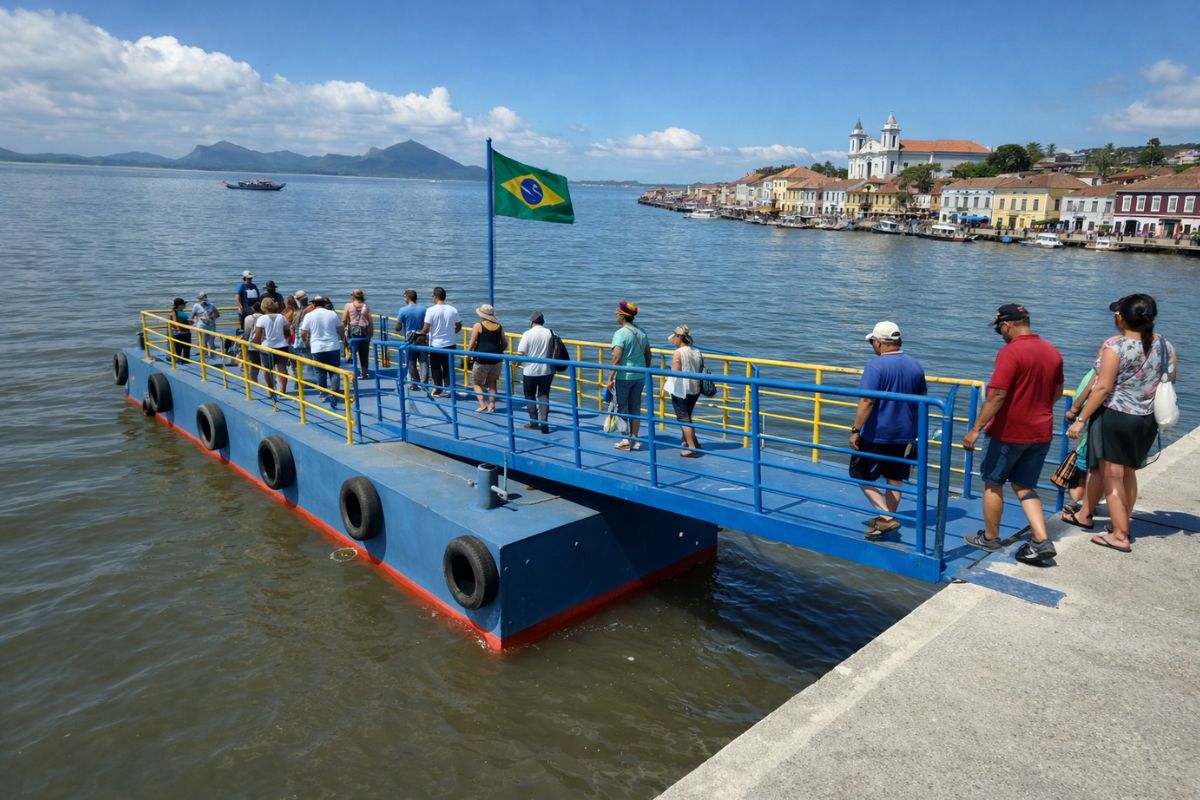
The bluest city in Brazil has just gained a new floating bridge for the free crossing between the island and the mainland, connecting residents and visitors to the historic center of São Francisco do Sul every day of the week.
-
In a silent race, Shopee signs a mega contract in Guarulhos and accelerates the e-commerce war with faster deliveries, pressured shipping, and a new threat to rivals in Brazil.


Subsequently, the municipal administration informed that the proposal passed the qualification stage, keeping the consortium at the forefront of the bidding for the so-called Airside, the initial core of airport infrastructure that will allow the future operation of the terminal.
Airside structure concentrates the base of airport operation
This stage concentrates the most sensitive physical base of the enterprise.
It includes earthworks, the implementation of the runway for takeoff and landing, taxiways, aircraft parking, and vehicle parking.
Also included are drainage, signage, hydrosanitary installations, electrical and electronic systems, as well as air navigation aids, an essential structure for the airport to advance from the design phase to actual execution.
Characteristics of Vila Oliva airport and expected operational capacity
According to the City Hall of Caxias do Sul, the first phase involves an investment of around R$ 200 million from the federal government’s Growth Acceleration Program, PAC.
The latest official project released by the municipality describes a runway of 1,930 meters long by 45 meters wide, an aircraft parking area of 31,650 square meters, and parking for approximately 500 vehicles.
The critical aircraft expected include Boeing 737-8 MAX, Airbus A321neo, Airbus A320neo, and Embraer E195-E2.
Public documents show that the technical design has undergone adjustments over the years.
In 2019, when the preliminary project was presented by the then Ministry of Infrastructure, the forecast was for a runway of 1,930 meters, a parking area of 26,000 square meters, and a passenger terminal of 4,700 square meters, in an area of about 445 hectares.
The most recent version published by the municipality maintains the 1,930 meters of runway but expands the parking area to 31,650 square meters and preserves the estimate of 500 parking spaces.
In addition to the initial configuration, the technical studies mentioned by the city hall foresee the possibility of future expansion.
Among the alternatives already mentioned are the extension of the runway to up to 2,200 meters, the implementation of a parallel taxiway for smaller aircraft, areas for cargo, hangars, and refueling.
This planning indicates that the work was conceived not only to meet immediate demand but to allow operational growth as the new airport complex matures.
Final stages of bidding and mandatory federal processing
With the qualification of the consortium, the process enters a decisive administrative phase.
Once the appeal period is over, the Secretary of Planning and Strategic Partnerships must assemble the final process, a stage that the city hall estimates will take about 30 days.
Subsequently, the documentation will be sent to the National Civil Aviation Secretary for the issuance of the Verification of the Result of the Bidding Process (VRPL).
Only after this federal validation can the contract be signed.
This is not the final procedure yet.
After the approval by the National Civil Aviation Secretary, the contract will be sent for acknowledgment by the federal agency, which must issue the Authorization to Start Object.
The financial release from the Union also depends on this sequence of acts.
In other words, the local advancement of the bidding is relevant, but execution still remains conditioned to the technical and bureaucratic processing in Brasília.
Project history and evolution to the current phase
The history of the airport helps to frame why each stage has been treated as a milestone.
The timeline released by the municipality shows that studies for a new terminal for the region date back to at least 2004.
In 2014, Hugo Cantergiani Airport was deemed unfeasible for expansion by the Civil Aviation Secretary, and Vila Oliva began to be treated as the most suitable area for the new airport site.
Since then, the project has gone through phases of preliminary design, environmental licensing, expropriations, archaeological studies, preparation of executive projects, and authorization to bid for the work.
There have been parallel infrastructure advancements along this path.
The city hall reports, for example, that the Samae water pipeline to serve the future airport has already been put into operation, following a municipal investment announced in previous years to bring water to the chosen area in Vila Oliva.
The official timeline also includes the obtaining of the installation license and the approval, in 2025, of the infrastructure project stages, including the projected budget, as well as the complementary approval of archaeological studies by Iphan.
In practice, the qualification of the Aero Caxias Consortium does not end the bidding but consolidates the group’s first position and brings the project closer to the contractual phase.
For a project discussed for over two decades and linked to successive technical, environmental, and federal stages, this movement represents the transition from a historically stalled project to a stage where construction begins to depend less on conceptual definition and more on the formal compliance with the last administrative procedures.







Seja o primeiro a reagir!