Portuguese
  Spanish


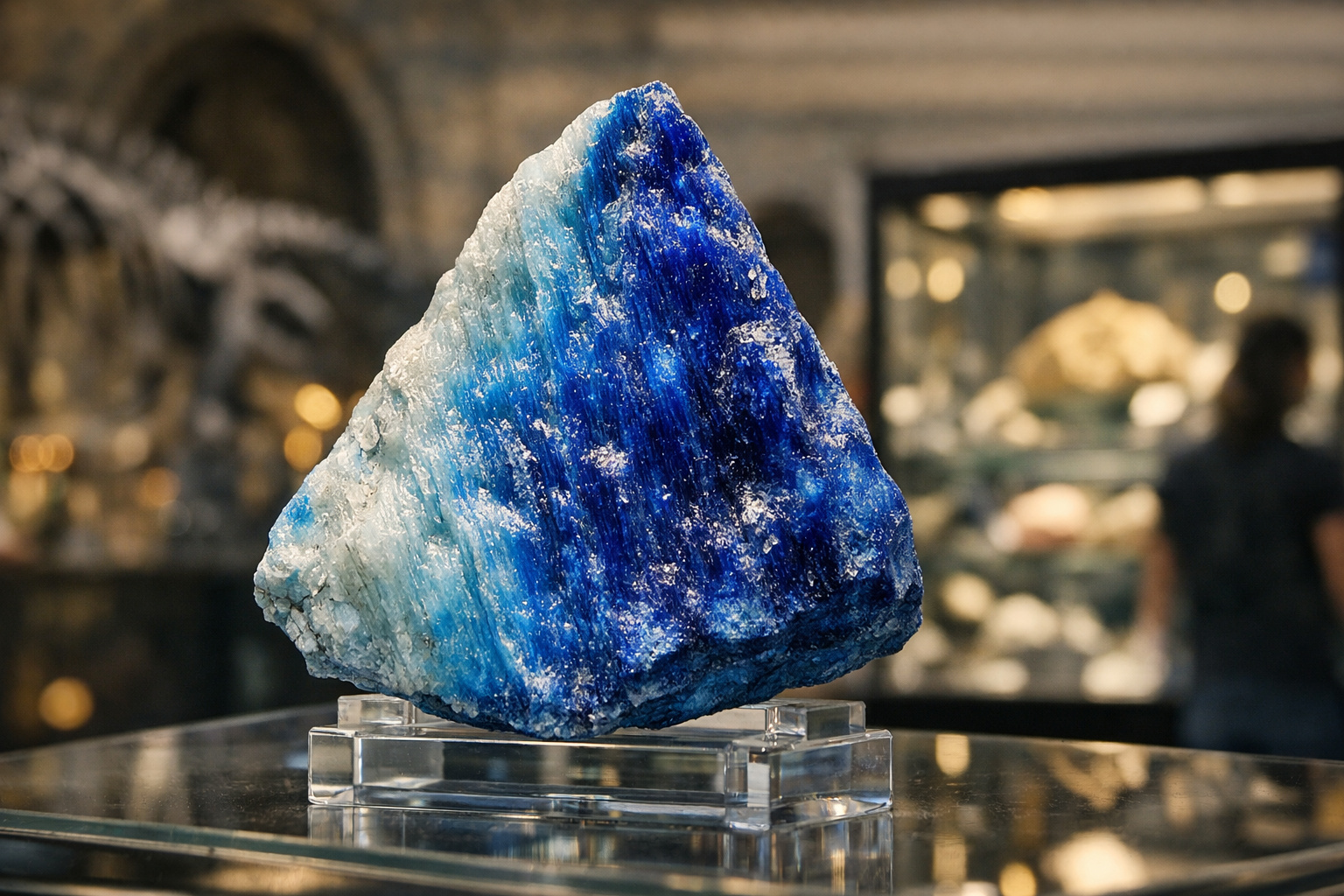

A blue stone mineral mistaken for another species reveals unique properties and returns to the museum as a rare example of aerinite
A blue stone purchased as something common ended up becoming one of the most curious cases in recent mineralogy. The material, identified as aerinite, drew attention for changing its appearance depending on how it is observed.
The information was released by IFLScience, an international scientific dissemination website. The episode involves an analysis that lasted over 1 year and mobilized specialists from the Natural History Museum in London.
Stone purchased as lapis lazuli raised suspicions from the start
It all started when geologist Anna Grayson acquired the stone in Morocco. The seller claimed it was lapis lazuli, a mineral known for its intense blue color.
-
An empty pool of almost 3 meters turned into tilapia farming in the backyard after a family transformed the dangerous space for children into an urban greenhouse with eggs and organic food.

-
Danger of Technological Hyperstimulation: USP specialists warn that intense use of multiple screens and digital stimuli can gradually reduce essential cognitive abilities, while scientists analyze how technological overload affects memory, concentration, and intellectual performance over the years.

-
After three years living in a van, a couple bought an abandoned historic house and had to deal with mold, damaged plumbing, raccoons, and heavy cleaning before moving in.
-
In the city that the market called “road cockroach,” between Balneário Camboriú and Florianópolis, he launched a planned neighborhood worth R$ 1 billion with a marina for 90 boats and sold 80% of the lots in the first phase in 1 week.




Even so, the different appearance made her suspicious of the identification. The decision to take the material for analysis at a public event at the museum initiated a detailed investigation.
Detailed analysis revealed that the mineral was already known to science
The material attracted so much attention that it was studied for over a year by specialists led by a researcher from the museum. The initial hypothesis was that it could be an unknown mineral.
Advanced X-ray examinations allowed the identification of its composition. IFLScience, the international scientific dissemination website, showed that the mineral had been previously described and was named aerinite, a term linked to the blue color of the sky.
Microscopic structure explains impressive color change
Aerinite has an unusual structure formed by extremely small fibers. These fibers contain iron atoms in different states, allowing for the movement of electrons.

This process alters how light is absorbed. Therefore, the mineral can appear intensely blue or even colorless, depending on the angle of observation.
Discovery helped identify other unknown minerals
The study of the stone was not limited to the identification of aerinite. The analysis also contributed to recognizing other minerals that were unclassified within the museum’s collection.
The case gained public attention and thus became a reference within the team responsible for mineralogy, expanding knowledge about little-understood natural materials.
Mineral returns to the museum and becomes an attraction for visitors
Years after the first analysis, the stone returned to the Natural History Museum of London. The material is now part of a gallery open to the public.
In addition to its scientific value, the mineral has become an impressive visual example of how internal structure can directly influence the appearance of a material.
The story shows how a simple purchase can lead to significant discoveries and spark interest even beyond the scientific community.
The return of aerinite to the museum reinforces the role of research in revealing hidden details in nature and expanding understanding of rare minerals.
If you found this discovery curious, it’s worth sharing with others or leaving your opinion about this type of natural phenomenon.