





 Portuguese
  English
  Spanish
  3 min of reading
  0 comments


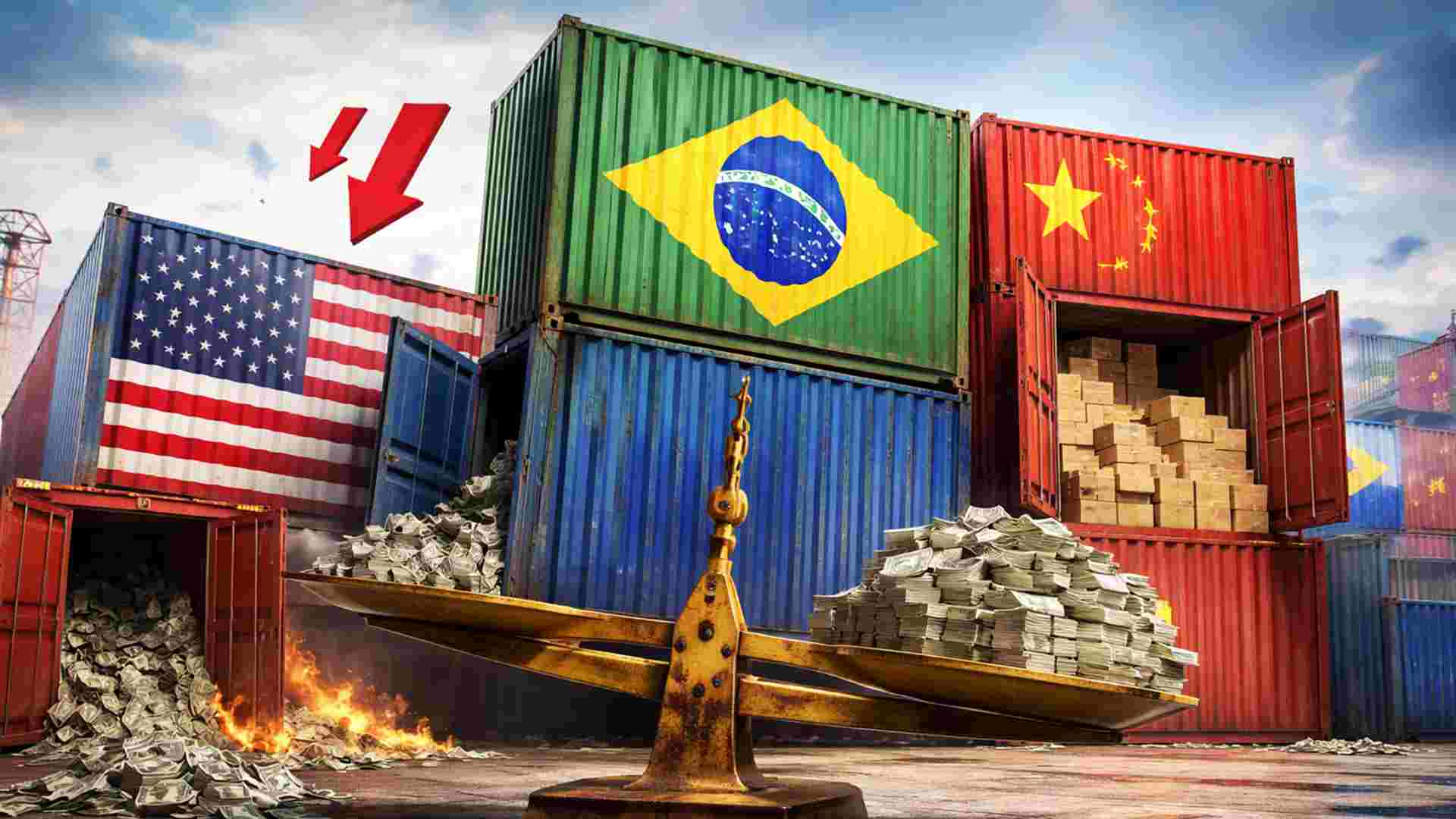
Brazilian product exports to the United States fell 9.1% in March 2026 and registered the eighth consecutive decline after the surcharge imposed in 2025, while China increased purchases, opened a billion-dollar surplus, and reinforced the change in the weight of Brazil’s main trading partners
Brazilian product exports to the United States decreased by 9.1% in March 2026, totaling US$ 2.894 billion, while imports from the North American market fell by 6.31%, to US$ 3.314 billion. With this result, the trade balance between the two countries closed the month with a deficit of US$ 420 million.
The figures were released on Tuesday, the 7th, by the Foreign Trade Secretariat of the Ministry of Development, Industry, Commerce, and Services. The decline in sales to the United States marked the eighth consecutive drop after the 50% surcharge imposed by the Donald Trump administration on Brazilian products in mid-2025.
At the end of 2025, some Brazilian products were no longer subject to the additional tariffs. Still, the ministry estimates that 22% of Brazilian exports remain subject to the tariffs established in July, including goods that pay an extra rate of 40% and others subject to the sum of this rate with the base tariff of 10%.
-
Boa Safra (SOJA3) targets Nigeria: $10 million JV brings corn technology to Africa and challenges expensive credit in 2026.

-
Russia and China already conduct 99% of their trade with each other without using the dollar, and BRICS is creating a digital tool on blockchain so that other countries in the bloc can do the same soon.
-
IBGE’s revision redraws the map of Santa Catarina and changes the borders of 18 municipalities, with Penha gaining a piece of Balneário Piçarras the size of an entire neighborhood without anyone noticing.

-
The Chinese chain that surpassed McDonald’s, Subway, and Starbucks in the number of stores worldwide arrives in Brazil this Saturday with ice cream priced at R$ 3 and a billion-dollar plan to open thousands of units by 2030.

Brazilian product exports to the USA continue to decline
From January to March 2026, Brazilian product exports to the United States fell by 18.7% compared to the same period the previous year. Sales totaled US$ 7.781 billion, while imports decreased by 11.1%, to US$ 9.169 billion.
As a result, the trade balance with the United States recorded a deficit of US$ 1.388 billion in the first quarter. The performance reinforces the sequence of losses in bilateral trade since the adoption of additional tariffs on Brazilian products.
China increases purchases and secures surplus for Brazil
In relation to China, the scenario was the opposite of that observed with the United States. In March 2026, Brazilian product exports to the Asian country grew by 17.8% and reached US$ 10.490 billion, up from US$ 8.903 billion recorded in March 2025.
Imports from China also increased during the month, rising by 32.9%, totaling US$ 6.664 billion. Nevertheless, Brazil ended March with a surplus of US$ 3.826 billion in the trade balance with the Asian partner.
From January to March, sales to China rose by 21.7% and reached US$ 23.890 billion. Meanwhile, imports fell by 6.0% during the period, to US$ 17.907 billion, resulting in a surplus of US$ 5.983 billion in the first quarter.
European Union and Argentina had distinct results
Brazilian product exports to the European Union grew by 7.3% in March, totaling US$ 4.110 billion. Imports from the bloc increased by 14.9%, to US$ 4.687 billion, and the trade balance for the month ended with a deficit of US$ 577 million.
However, in the first quarter, the balance with the European Union was positive. Between January and March, exports rose by 9.7%, to US$ 12.232 billion, while imports fell by 2.2%, totaling US$ 11.607 billion, resulting in a surplus of US$ 625 million.
In trade with Argentina, exports fell by 5.9% in March, to US$ 1.470 billion. Imports grew by 13.1% and reached US$ 1.128 billion, ensuring a surplus of US$ 342 million for the month.
Between January and March, sales to Argentina decreased by 18.1% and totaled US$ 3.447 billion. Imports also fell by 6.5%, to US$ 2.744 billion, and the trade balance with the neighboring country ended the period with a positive balance of US$ 703 million.
Main partners concentrate the quarterly results
China, the United States, the European Union, and Argentina remain among Brazil’s main trading partners. The performance of these markets helped shape the overall result of the trade balance in March, which recorded a surplus of US$ 6.405 billion.
The data was presented by Secex of MDIC along with the consolidated result for the month. The performance of Brazilian product exports showed a decline in sales to the United States and Argentina, while there was an increase in exports to China and the European Union.










Seja o primeiro a reagir!