





 Portuguese
  English
  Spanish
  5 min of reading
  5 comments


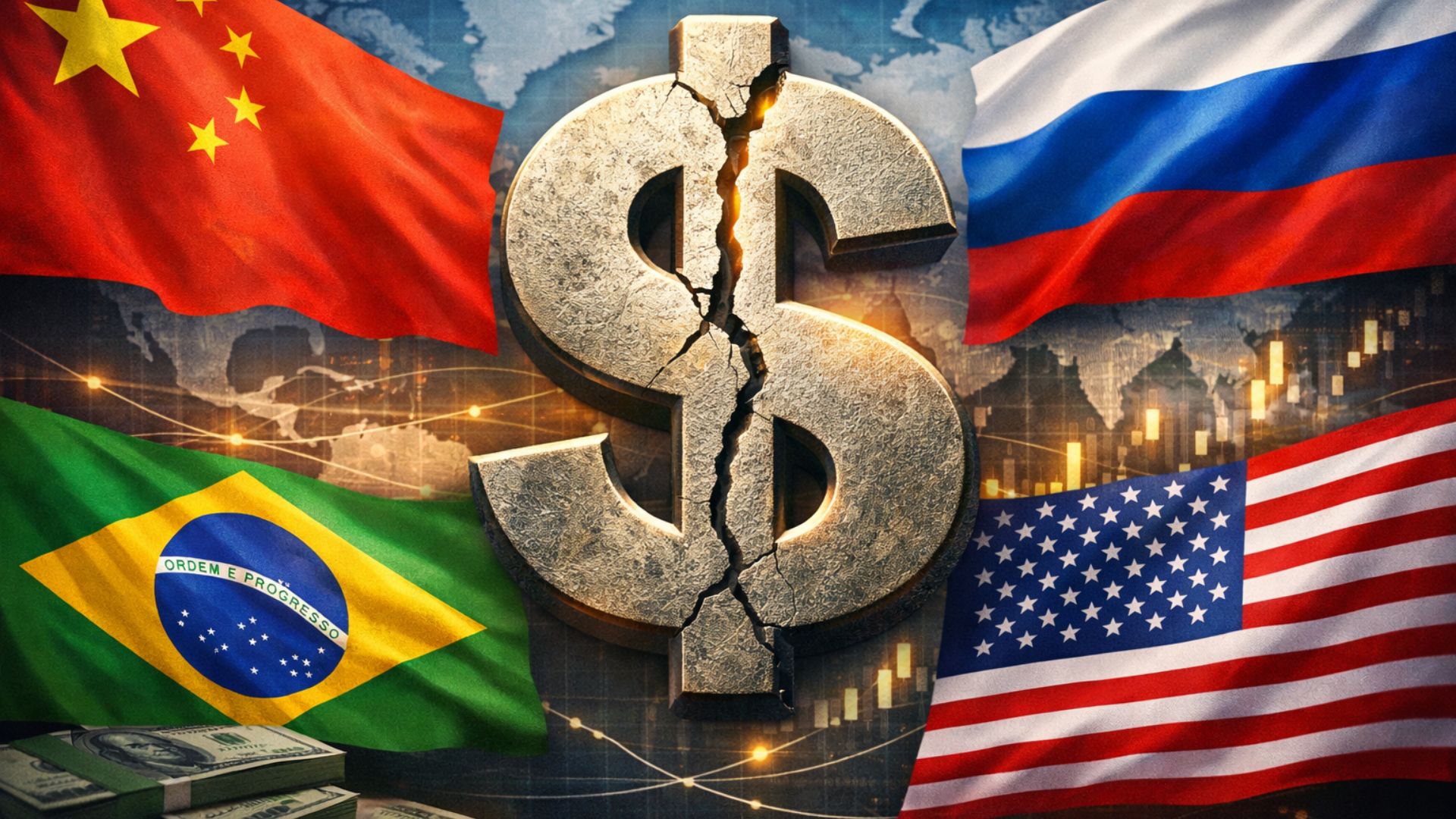


Debate In BRICS Gains Momentum With Proposals For Alternative Payment Systems, Critiques Of The Petrodollar, And Analyses Of Gold, Yuan, And Blockchain Amid A Decline In The Dollar’s Share Of Global Reserves And The Advancement Of Financial Initiatives Outside The Orbit Of The United States.
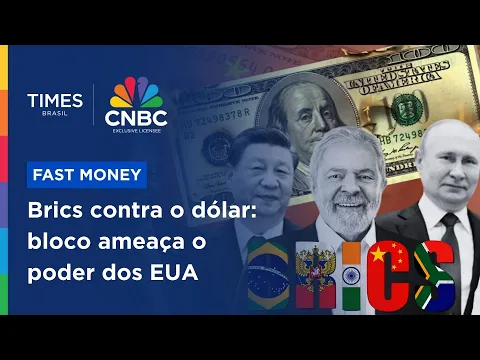
The intensification of debates about alternatives to the dollar in international trade has gained new momentum within BRICS, a bloc that includes Brazil, China, Russia, India, South Africa, and newly incorporated countries.
According to Pepe Escobar, journalist and correspondent for various international publications, this is a structural movement that goes beyond technical adjustments in the global financial system.
The analyses were presented in an article published in his column on the Brasil247 portal, in which the author interprets the current situation as a direct challenge to the hegemony of the dollar.
-
“No one will make us change the Pix,” says Lula after the US report.

-
Lula responds directly to Trump and says that Pix is from Brazil and will not change under pressure from anyone, after a report from the United States pointed out the Brazilian payment system as an American trade barrier.

-
Amazon has just announced a new fee on all deliveries, and your online purchases will become more expensive starting April 17, including for those buying from the United States here in Brazil.

-
He sold his share for R$ 4 thousand, saw the company become a giant worth R$ 19 trillion, and missed the opportunity of a lifetime.


According to Escobar, the so-called petrodollar is one of the central pillars of the economic order led by the United States since the post-World War II period.
In this model, global energy trade is priced predominantly in dollars, sustaining a constant demand for U.S. Treasury bonds and enabling high deficits.
According to the journalist, any attempt to escape this circuit tends to provoke financial sanctions, asset freezes, or exclusion from dominant payment systems.
Furthermore, the columnist states that this arrangement faces an unprecedented restriction today.
Simultaneously maintaining rising military expenditures and control of the international financial system requires resources that are increasingly difficult to sustain.
Escobar cites trillion-dollar budget proposals for defense in the United States, pointing out that the cost of hegemony has begun to pressure the very stability of the system.
Asset Freezing And The Geopolitical Turning Point

In Pepe Escobar’s assessment, the freezing of Russian reserves abroad after the onset of the war in Ukraine marked a watershed moment.
The exclusion of Russia from the SWIFT system, according to him, highlighted to various countries that dollar reserves can become vulnerable in geopolitical tension scenarios.
As the journalist pointed out, the reaction was immediate.
Central banks intensified gold purchases, expanded bilateral agreements in local currencies, and began to consider alternative payment systems in a more concrete way.
He argues that it is not about abruptly overthrowing the current order, but about building parallel pathways capable of reducing risks.
BRICS As A Laboratory For Alternatives To The Dollar
According to the article, BRICS emerges as a coordination space for these initiatives, especially for countries of the so-called Global South.
Escobar notes that the bloc has begun to function as a “laboratory” for financial testing, where different models are evaluated to facilitate international trade without the dollar’s intermediation.
Among these models, he highlights the proposal for a non-sovereign unit of account, based on blockchain, known as the Unit.
According to the journalist, this structure would not be a traditional currency, but a commercial settlement instrument, inspired by mechanisms like the Special Drawing Rights of the International Monetary Fund, but restricted to the BRICS ecosystem.
Unit, mBridge, And BRICS Pay Under Review
According to Escobar, the Unit could be backed by a basket of commodities or currencies, reducing the weight of any single country.
He emphasizes that the proposal is still in the conceptual stage but symbolizes the attempt to create a “non-political” means of settlement.
The journalist also mentions mBridge, a project for a digital currency shared among central banks, led by Asian institutions, that inspired the so-called BRICS Bridge.
According to his analysis, the central goal is to enable direct transactions between national currencies, without prior conversion into dollars.
Another axis mentioned is BRICS Pay, described by Escobar as a payment infrastructure aimed initially at everyday uses, such as tourism and small transactions.
However, he notes that the challenge remains in higher-value operations, which still depend on systems like SWIFT and Western card brands.
Gold, Currency Reserves, And The Weakening Of The Dollar
Pepe Escobar points out that the context favors these initiatives.
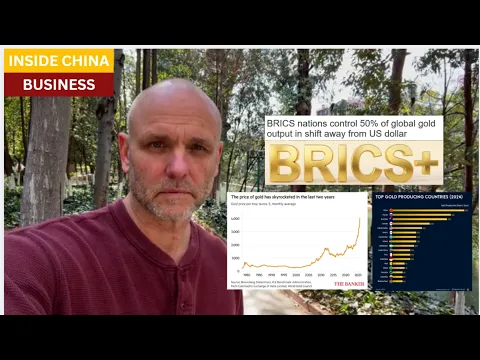
According to him, the dollar’s participation in global currency reserves has fallen to less than 40%, the lowest level in at least two decades.
Gold, in turn, has surpassed currencies like the euro, yen, and pound sterling when considered together.
In the journalist’s interpretation, these numbers reinforce the perception that the current system has lost neutrality and is being viewed as a tool of political pressure.
Yuan, CIPS, And The International Academic Debate
The article also draws on the analyses of economist Michael Hudson, cited by Escobar as one of the leading scholars on dollar hegemony.
Hudson, according to the text, argues that the path of least resistance would be to expand the use of the yuan and the Chinese international payment system, CIPS.
Escobar recalls that CIPS is already operational in over a hundred countries, giving it a practical advantage.
Still, Hudson assesses that a new international institution, modeled after the Bancor proposed by Keynes in 1944, could offer greater long-term balance.
Brazilian Proposal For A New International Currency
The journalist also cites economist Paulo Nogueira Batista Jr., former vice president of the New Development Bank, who advocates for the creation of a new international currency restricted to external transactions.
According to Escobar, Batista Jr. assesses the dollar system as inefficient and vulnerable to political uses.
According to this proposal, the currency would be backed by a weighted basket of the currencies of participating countries, with weights defined by GDP in purchasing power parity.
The author observes that the weight of the Chinese economy would be central to confer credibility to the arrangement.
Risks, Sanctions, And The Horizon Of BRICS
Pepe Escobar emphasizes that both Hudson and Batista Jr. acknowledge the risk of retaliation from the West, including sanctions and diplomatic pressures.
Even so, according to the journalist, the cost of inaction tends to grow as the current order becomes more unstable.
Finally, he notes that BRICS arrives at the next annual summits facing a scenario that could mark a historic turning point in the international financial system.
The central question, as he suggests, is whether the involved countries will be able to coordinate sufficient economic and political interests to sustain a viable alternative to the dollar without triggering larger-scale conflicts.







O governo do amor só se alia a gente boa …
Enquanto não ver o Brasil virar uma Venezuela não vão sossegar 🤬
Tudo tem origem.em um ” não” no pós guerra se dividia de um lado o comunismo liderados pela URSS.e de outro o capitalismo liderado pelos EUA. Os EUA criaram a OTAN.para se opor militarmente URSS.e está criou o Pacto de Varsóvia com o mesmo propósito.em 89 a URSS.implementaram a glasnost.e a perestroika.que terminou com o fim da URSS.a devolução dos países ocidentais. E o fim do pacto de Varsóvia.em contrapartida a OTAN. Tbm deveria ser extinta. Mas não cumpriu ainda assim para tranquilizar a Rússia o ocidente havia feito a promessa de não avançar nem um metro sequer sobre a Rússia.( mas não cumpriu) então a Rússia pediu para ser aceita na OTAN. E recebeu um não! E com o avanço da OTAN em volta da Rússia ficou claro suas intenções. E ao tentarem cooptar a Ucrânia para a OTAN. Isso foi a gota d’água. Era questão de sobrevivência evitar a OTAN.tao perto. É igual trump.hj querer fazer o mesmo na groenlandia. Por medo de esta ilha ser usada como base de ataque aos EUA. Logo se os EUA tivessem incluído a Rússia na OTAN em 1991 não haveria sanções nem BRICS. Nem O NDB.e o sistema de pagtos nBRIDGE. Nem Hugo chaves.maduro.. PT é outra se os EUA tbm não tivessem sido gananciosos ao liderar a debandada de empresas ocidentais para produzir barato na China o que desindustrializou o Brasil. A china jamais seria essa potência que se tornou hoje.enfim tudo que está aí hoje.foi decisões tomadas lá atrás.de maneira egoísta e unilateral.plantou agora está colhendo. Agora com o acordo Mercosul X união europeia temos a chance de oferecer a zona franca aos industriais europeus e ter aqui a nossa shenzen. Se o brasil não fizer isso rápido as indústrias irão todas para o Paraguai. É a nossa chance de atrair multinacionais e não ser apenas o fazendão do mundo.É a nossa última chance!!
Vocês e o Lula estão doidos para jogtem muito mais ar o Brasil em um ma guerra contra os USA, senão vejamos: No BRICS a Rússia está praticamente quebrada, e quem falou isto foi o próprio BC deles… a India não vai se meter em confusão com os USA… a China sabe que se entrar em uma guerra tem muito mais a perder no momento… o resto do BRICS, é o resto… sobra para quem??? BRASIL… todo mundo que falou em derrubar o dolar, se lascou… exemplos mais recentes foram Afeganistão, Líbia e Iraque… fica a dica… …
O Petro dólar é um erro monumental, tem que acabar e os países vão fazer negócios entre si nas suas respectivas moedas. O BRICs está aí para isso, quem for mais competitivo e competente fará os melhores negócios e terá os melhores ganhos.