





 Portuguese
  English
  Spanish
  3 min of reading
  2 comments


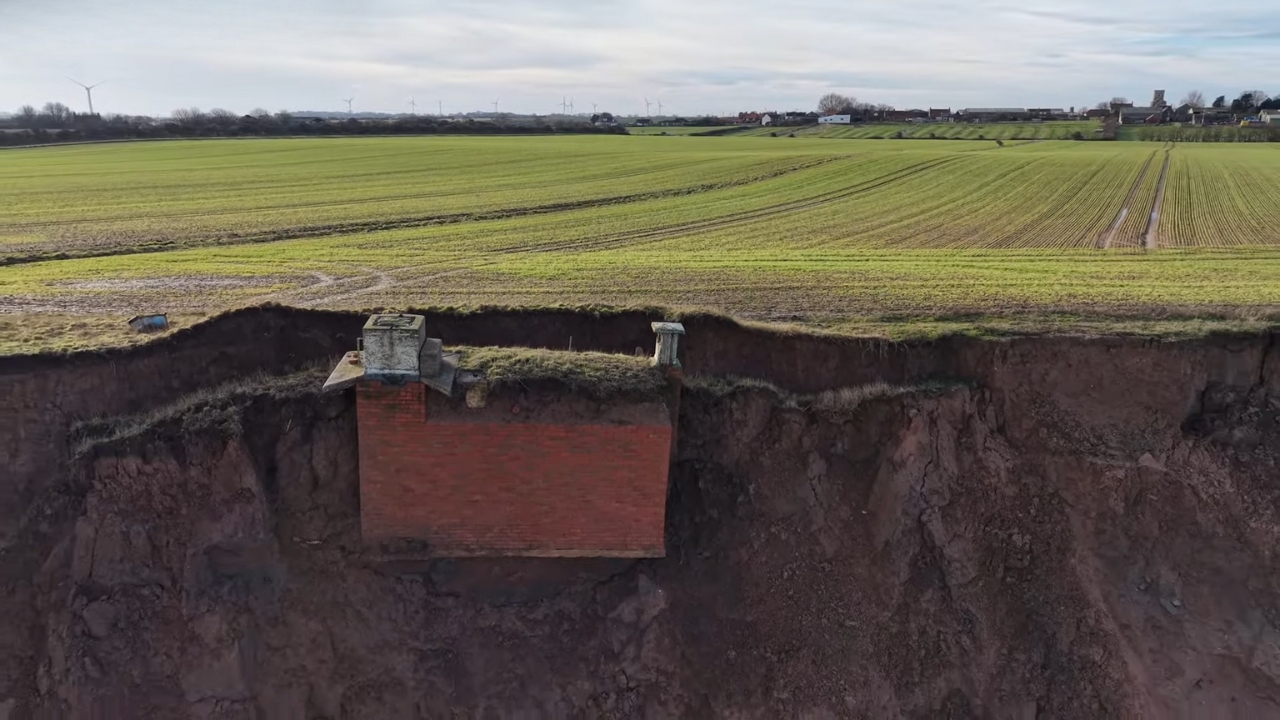


Historical Structure In Tunstall Is At The Limit, And The Advancement Of Erosion Increases The Risk Of Collapse In A Few Days
An anti-nuclear bunker built during the Cold War may disappear into the sea much sooner than expected. The structure is located near Tunstall, on the eastern coast of England, and is about to collapse due to coastal erosion.
The site was designed to withstand extreme situations, but now faces a direct and silent risk: the accelerated loss of land at the top of the cliff.
The scene has turned into a warning and also a clear portrait of what erosion can do to ancient structures in vulnerable areas.
-
Goodbye iron: new technology from Xiaomi promises to revolutionize the way we iron clothes with 500 kPa steam, continuous flow of 120 g/min, heating in 65 seconds, and six smart modes for different fabrics.

-
Rio Pardo, the most mysterious city in Rio Grande do Sul: untouched Pampas castle, the missing treasure of the Devil Boy, bride’s saint, invisible tunnels, and a 200-year curse today.

-
China retires the J-7 fighter after years of military protection and can now transform military items into drones, following more than 60 years of operation of the J-7, derived from the MiG-21, with thousands of units produced and strategic use in the PLAAF and PLANAF.

-
Volunteers are sought to live in the mountains for a month: a study pays people to stay at 2,500 meters, with 24-hour monitoring of sleep, metabolism, and blood pressure.


Bunker Built For Nuclear War Now Faces The Force Of The Sea
The refuge was planned to function in a nuclear explosion scenario, serving as a point of surveillance and communication.
Even with this original purpose, the current danger does not come from military conflict. The risk lies at the edge of the cliff, which has been giving way over time.
The building, made of bricks, is about 70 years old and could collapse at any moment.
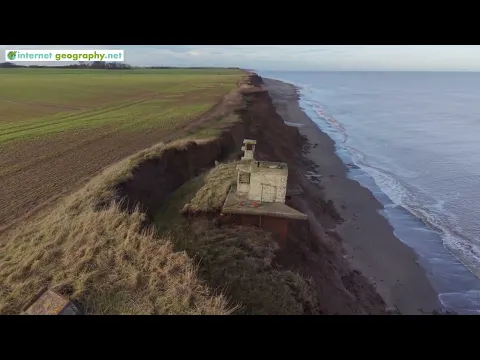

Tunstall Becomes A Focus Of Attention With Risk Of Collapse In A Few Days
The bunker is located near Tunstall, in eastern England, and the situation is being treated as critical.
An amateur historian named Davey Robinson has been documenting the site while it is still standing. He stated that the bunker could fall into the sea in a few days.
The constant monitoring has increased public curiosity and heightened anticipation about the moment of collapse.
Unstable Cliff Causes Authorities To Advise Distance From The Area
The risk involves more than just the historical structure. The instability of the land also concerns those who travel through the region.
Local authorities have advised the public to avoid the top of the cliff and also the beach just below.
The recommendation is to keep a distance from the base of the eroding cliffs, as collapses can happen without warning.
East Yorkshire Has One Of The Fastest Erosions In The United Kingdom
The bunker is located in East Yorkshire, an area exposed to accelerated erosion.
This type of wear changes the shape of the coast, reduces the available land, and increases the risk for any structures near the edge.
The advance of the sea in this stretch constantly transforms the shoreline, making collapse a real possibility.
YouTube Channel Shows The Bunker Being “Devoured” Day By Day
The documentation of the bunker has been ongoing. Davey Robinson and his partner, Tracy Charlton, visited the site for the last nine mornings.
The images have been published on a YouTube channel and have sparked interest in various parts of the world.
The couple intends to keep filming while the structure is still visible.
Tunstall ROC Post Operated Until The 1990s With Very Basic Structure
The bunker is known as Tunstall ROC, linked to the Royal Observer Corps, referred to by the acronym ROC.
The construction was reportedly built in 1959 and ceased operations in the early 1990s.
The space had dormitories and conditions considered very basic, aimed at keeping people inside during a possible nuclear event.
Holderness Coast Loses About 2 Meters Per Year And Has Already Taken 23 Villages
The bunker is on the coast of Holderness, where the average annual erosion reaches about 2 meters, equivalent to 6.5 feet.
It is estimated that approximately 5 kilometers of land have been lost since Roman times, including 23 villages.
In this scenario, the bunker has become a physical symbol of the advance of the sea and the speed of coastal transformation.
The situation of the anti-nuclear bunker near Tunstall shows how coastal erosion can bring down historical structures in a short time.
With the risk of collapse in a few days, the case also reinforces the need to keep a distance from the cliffs and avoid unstable coastal areas.










‘The Tunstall ROC gas station’ Gas? This is perhaps being confused with other installations along the same coast. ‘Royal Body of Observers’. Poor translation: ROC is short for Royal Observer Corps. ‘The space had dormitories’. It has/had a single iron bed frame in one corner. As for ‘Rock the Cat’…!
Todos sabemos que el mar recupera su espacio; aquel que países como Kuwait, Dubai estan invadiendo con sus islas artificiales. No necesariamente afecta al lugar donde se invade pero el mar es global y hacia algún lugar esa agua desplazada necesita ir.