





 Portuguese
  English
  Spanish
  5 min of reading
  0 comments


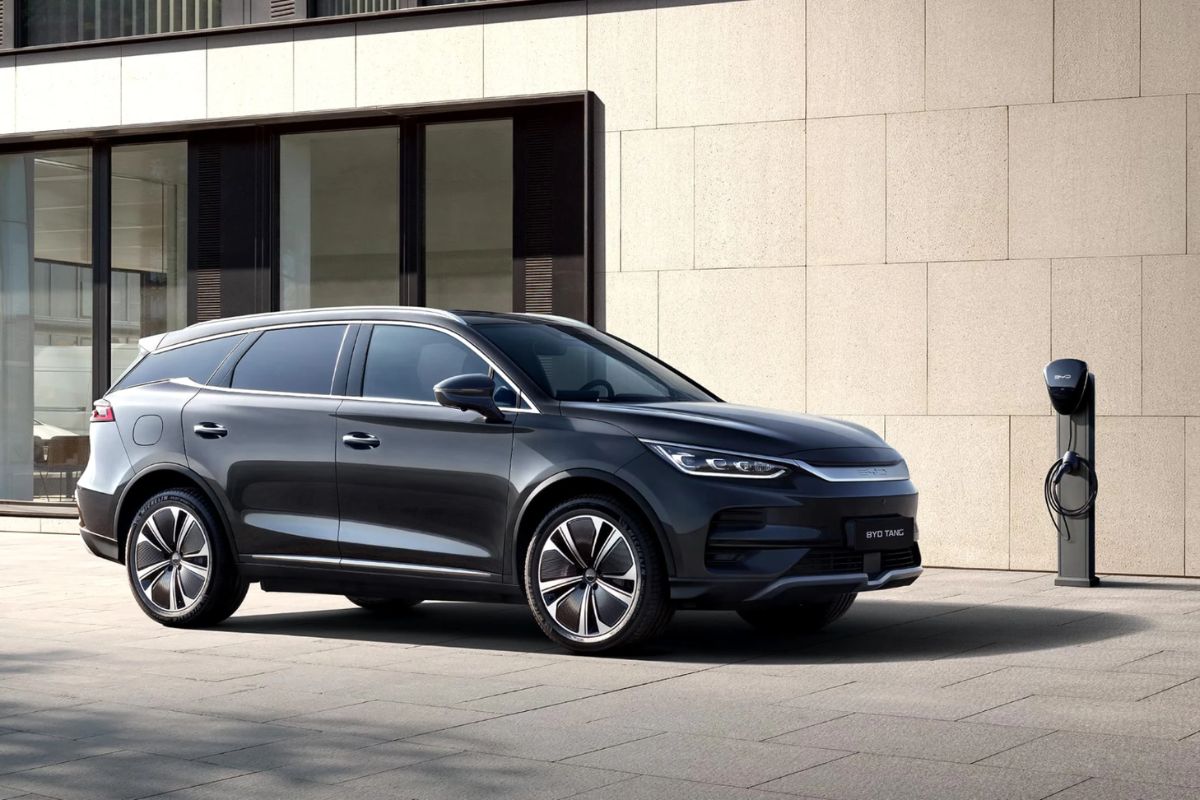
New BYD SUV begins to arrive at dealerships in China with three-row configuration, up to 585 kW in the AWD version and acceleration from 0 to 100 km/h in 3.9 seconds.
The BYD presented the new Great Tang as its most advanced SUV in size and technology within the brand’s lineup, betting on an electric utility vehicle with seven seats focused on families, long trips, and high autonomy. In the initial units arriving at Chinese dealerships, the model features a second-generation Blade battery, a range of up to 590 miles in the CLTC cycle, and versions with rear-wheel and all-wheel drive.
The new BYD SUV is born from the Dynasty-D concept and occupies the top of the company’s portfolio in the segment. With over 5.3 meters in length, a wheelbase of 123 inches, and a family-oriented proposal, the Great Tang tries to combine interior space, strong performance, and high range in an increasingly competitive market.
BYD positions the Great Tang as its largest SUV in the lineup
The Great Tang arrives as the largest crossover ever launched by BYD so far. The model was designed with three rows and seven seats, reinforcing a proposal clearly aimed at buyers who prioritize space, comfort, and capacity for family use.
-
Owner of EcoSport 1.5 with 124,000 km gets a shock when opening the engine and discovers a problem with the oil-soaked belt that turned preventive maintenance into a bill of over R$ 4,100.
-
The Chevrolet Camaro will be reborn as a true sports car, with a V8 engine and no electric version, in a shift by GM that buries the SUV plan and revives the classic formula of the model.
-
With a 1.5 turbo engine producing 156 hp, the new Chery Tiggo 7 2027 comes with a 24.6” central display, a price equivalent to R$ 52,000, larger dimensions (4.53 m), and a complete package, with an unexpected detail that catches the eye.
-
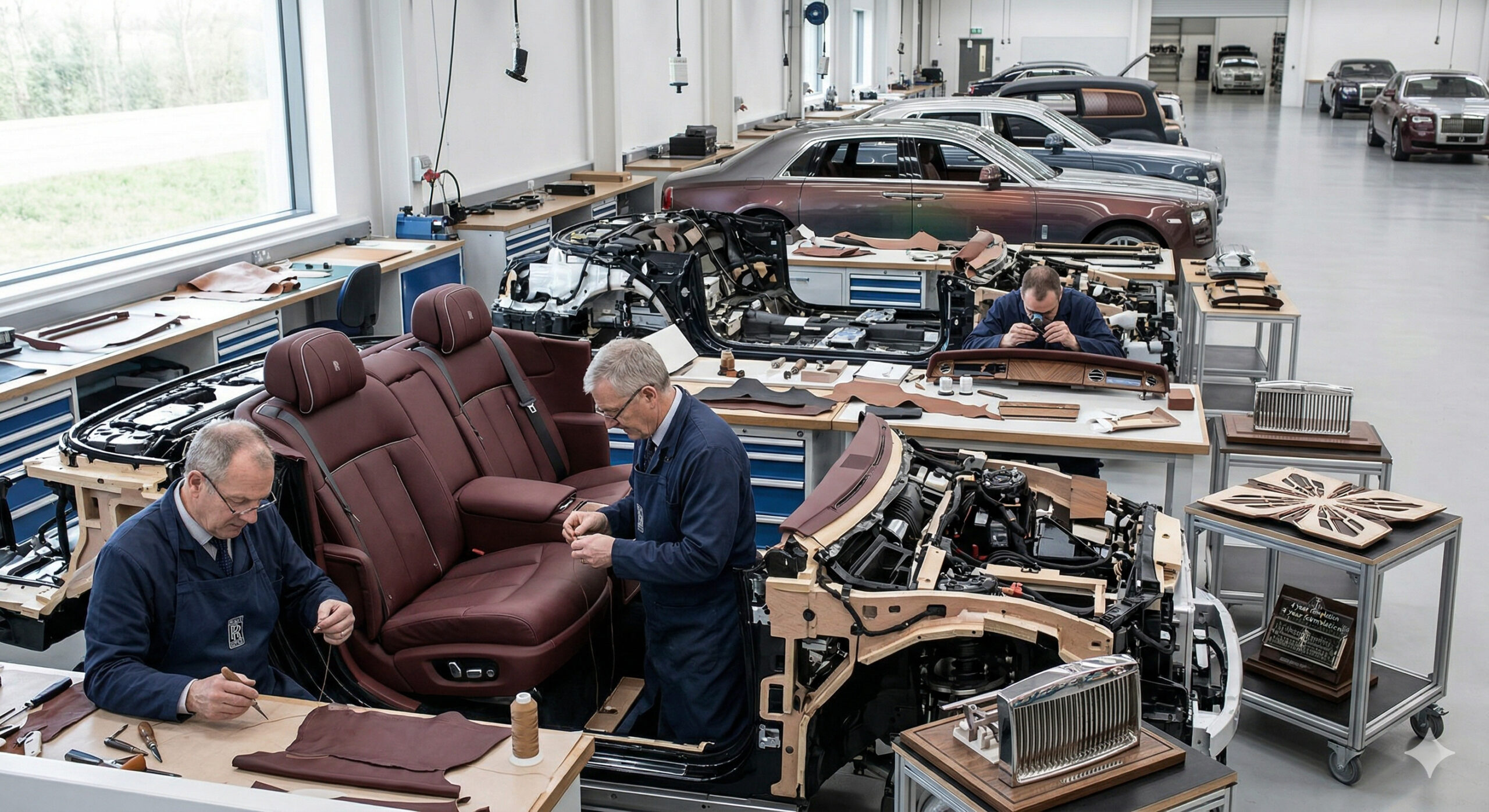
While much of the industry rushes to automate production, Rolls-Royce takes over 600 hours to hand-build each car in Goodwood and still accepts orders so complex that they can take up to four years to be completed.
This position in the portfolio is strategic. BYD places the Great Tang at the top of its SUV line in size and technology, but tries to do so without direct overlap with the premium Denza range. The idea is to compete in the upper segment of the mass market with a broad, sophisticated, and technically competitive product.
BYD’s electric version bets on a range of up to 590 CLTC miles
In the electric configuration with rear-wheel drive, the new BYD SUV uses a second-generation Blade battery with 130.15 kWh and can deliver up to about 590 miles of range in the CLTC cycle. This number places the Great Tang among the long-range electric SUVs already announced in China.
This data is central to the model’s proposal. BYD tries to transform the Great Tang into a long-distance option within the segment, something especially important for consumers looking for a large electric vehicle without sacrificing prolonged use between charges.
AWD delivers 585 kW and acceleration from 0 to 100 km/h in 3.9 seconds
If in the rear-wheel drive version the highlight is the range, in the configuration with two motors and all-wheel drive the focus shifts to performance. In this variant, BYD delivers up to 585 kW of power and acceleration from 0 to 62 mph in about 3.9 seconds.
However, the performance gain comes with a reduction in range. In this AWD configuration, the range drops to about 528 CLTC miles. Still, the number remains competitive within the large electric SUV segment with a high-range proposal.
Blade battery and fast charging reinforce the proposal for long trips
Another important point in the new BYD SUV is the architecture based on the second-generation Blade battery. According to the provided base, the model was designed to support high-power fast charging, which helps reduce downtime on longer trips.
This combination of a large battery, high autonomy, and fast charging strengthens the Great Tang’s strategy. BYD wants to position the model not only as a family SUV but as an electric vehicle capable of handling longer distances with less charging anxiety.
Electric Great Tang coexists with future hybrid versions

Although the main focus is on the fully electric SUV, BYD will also launch plug-in hybrid versions of the Great Tang. These configurations will use the DM-i and DM-p systems, expanding the range of options for consumers with different profiles.
The DM-i variant combines a 1.5 turbo gasoline engine with a 200 kW electric motor and can deliver about 213 miles of electric range in the CLTC cycle.
The DM-p configuration increases the power level, with a set of two motors reaching 400 kW. With this, BYD expands the Great Tang family and tries to cater to both those who prioritize efficiency and those who want performance with hybrid flexibility.
BYD targets families and long-distance users
The new Great Tang was designed for a very specific type of customer. The model targets consumers who want interior space, seven seats, electric efficiency, and capacity for longer trips, in a segment that is growing strongly in China.
This movement accompanies a broader change in the market. The demand for large, family-oriented, and electrified SUVs has been increasing, especially among buyers who want to combine versatility, range, and less dependence on fossil fuels. In this scenario, BYD tries to use scale, technology, and variety of versions as a competitive advantage.
Segment becomes more competitive and BYD enters higher market range
The Great Tang arrives in an increasingly competitive segment. According to the base, the model is expected to face rivals like the Geely Galaxy M9, a large plug-in hybrid SUV that has already shown good initial market traction.
The competition in this range is not simple. BYD enters a space where performance, range, embedded technology, and family appeal need to go hand in hand, and where the consumer compares not only price but also efficiency, size, and versatility of use.
Great Tang shows how BYD wants to rise in the SUV market
More than just launching a new utility vehicle, BYD signals with the Great Tang that it wants to consolidate its presence in a higher part of the electrified SUV market.
The model combines generous dimensions, a family-oriented proposal, a large battery, and strong performance numbers, especially in the AWD version.
Overall, the Great Tang emerges as a product that tries to balance scale, technology, and commercial appeal.
By combining up to 590 miles of CLTC range, seven seats, a 130.15 kWh Blade battery, and up to 585 kW of power, BYD shows that it intends to compete for attention in one of the most strategic spaces of the current Chinese market.
In your opinion, does BYD get it right by betting on such a large and powerful electric SUV, or do models of this size still make more sense in hybrid versions?







Seja o primeiro a reagir!