Portuguese
  Spanish


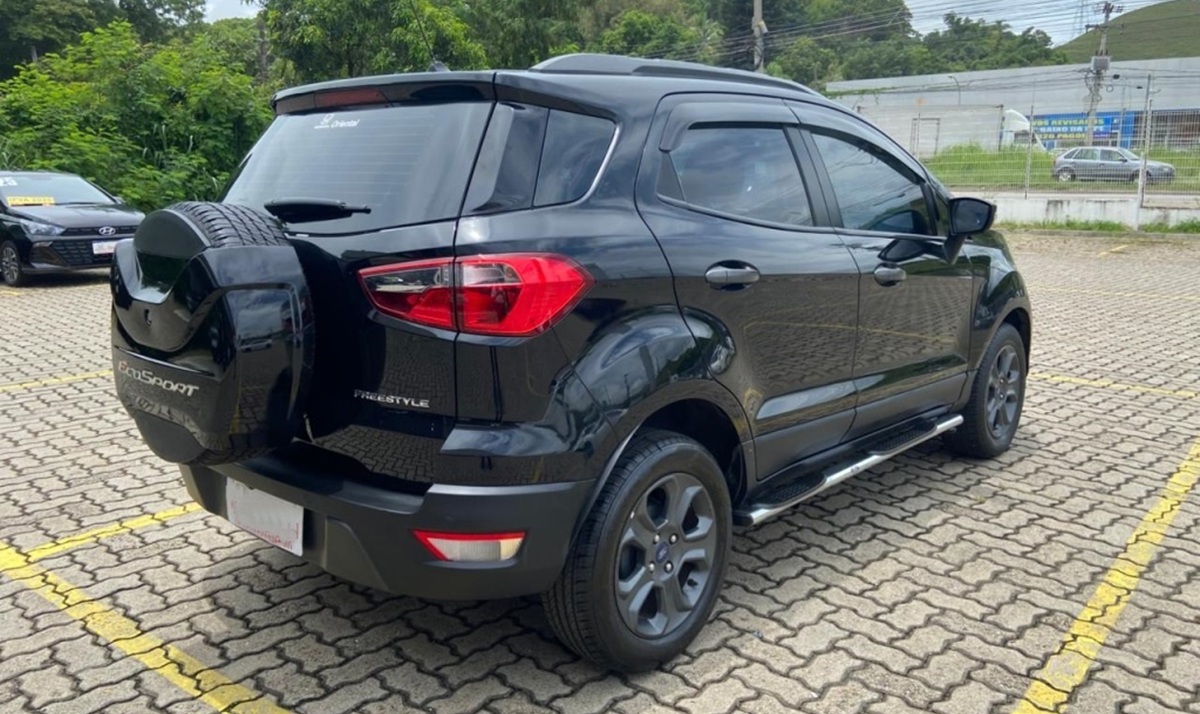

Video from the Carros com Tiago channel shows the disassembly of a 1.5 EcoSport with three cylinders and 124 thousand kilometers, revealing a large volume of oil-soaked belt debris in the engine and exposing a preventive maintenance that exceeded R$ 4.1 thousand
The replacement of the oil-soaked belt of a Ford EcoSport 1.5 with three cylinders and 124 thousand kilometers cost just over R$ 4.1 thousand, including labor and parts, in a preventive maintenance that revealed an accumulation of debris inside the engine. The procedure was shown in a video by the Carros com Tiago channel, which recorded the disassembly, inspection, cleaning of the parts, and complete reassembly of the assembly.
Disassembly begins at the top of the engine
The service began with the removal of installation components to allow access to the internal parts. Right from the first checks, signs of belt debris appeared on the solenoid valve. The manual inspection showed accumulated material, indicating that fragments of the belt were already circulating in the engine.
Next, the plastic valve cover was removed to enhance the analysis. In this area, the camshafts appeared to be clean and in visually normal condition. Nevertheless, the work continued with the need to access the belt area and confirm the actual condition of the system.
-
Fiat Cronos Precision 2018: Affordable Sedan with Spacious Trunk and Reliable Maintenance

-
Volkswagen to Cut Production by 1 Million Cars by 2030, Reducing Jobs and Platforms, Focusing on More Profitable Models

-
Toyota Launches First 100% Electric Car in Brazil: bZ4X with 343 HP, All-Wheel Drive, 361 km Range, Priced at $419,990 BRL, Limited to 99 Units

-
Chinese SUV Achieves 24.4 km/l, Outperforms Toyota Yaris Cross in Real-World Tests with 224 hp Hybrid System, Offers 51-Liter Tank for Greater Range, and Costs Up to R$ 5,000 Less.


Specific tool locks the point before removing the cover
To continue the procedure, a specific tool for that engine was used to lock the point. The equipment was installed at the top and immobilized both camshafts, allowing disassembly with controlled alignment.
After that, the mount was removed, a necessary step to free access to the belt cover. With the area opened, the initial inspection did not show any evident wear on the observed surface. Still, upon closer examination of a part of the component, a difference in color and material detachment was identified. When running a finger over the piece, debris appeared, confirming that there was already wear.
Original parts were separated for maintenance
On the workbench, the video showed the items that would be used in the service. Among them were original concentrated additive, demineralized water for the mixture, original oil, original oil filter, original timing belt, and tensioner. The maintenance then proceeded to a decisive stage: the removal of the oil pan.
This phase aimed to check for belt debris in the lower part of the engine. It was precisely at this moment that the most critical scenario of the entire disassembly appeared.
Oil pan and oil pickup were loaded with debris
With the oil pan removed, the amount of debris was striking. The accumulated material appeared in large volume inside the part. The oil pickup, an essential component for engine lubrication, was also filled with belt debris.
The condition shown during the service highlighted an important risk: the clogging of the pickup. With the oil passage compromised, lubrication could be affected, and the engine could suffer serious damage. The video emphasized this point by showing the volume of material retained in the disassembled parts.
Complete cleaning preceded the assembly of the set
After the inspection, all components involved in the procedure were cleaned. The oil-soaked belt cover, valve cover, and oil pan were sanitized. Then, there was a new point check, using a tool also at the bottom to verify the alignment of the system before reassembly.
The assembly was carried out with the application of glue in the pattern adopted in the service, first on the cover and then on the oil pan. The parts were reinstalled, and the process continued with the assembly of the valve cover, reconnection of components, and placement of new additive.
Engine was started without warning lights on the dashboard
With the service completed, the vehicle was started for testing. The engine ran normally, and the dashboard was shown without warning lights illuminated. The maintenance was presented as finished with the assembly operating regularly.
The budget displayed in the video indicated R$ 1,559 for labor. The parts, brought by the customer, cost R$ 2,550. The total amount was just over R$ 4,100.
This article was prepared based on a video published on the Carros com Tiago channel.