





 Portuguese
  English
  Spanish
  5 min of reading
  0 comments


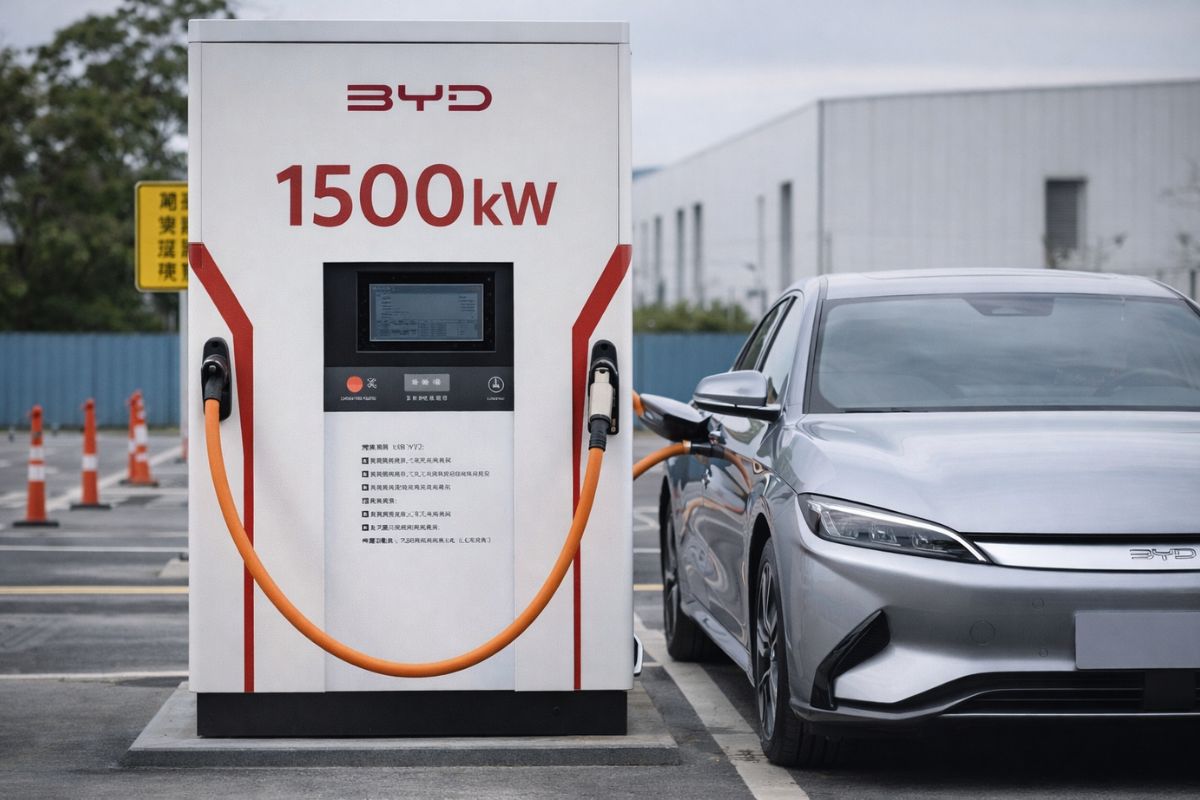
BYD was caught testing its Flash Charge system in Shenzhen with chargers of up to 1,500 kW, three times more powerful than Tesla’s, with a 1,000-volt architecture, liquid-cooled cables, and a price of R$ 0.93 per kWh, redefining what it means to charge an electric car.
While much of the automotive market is still discussing the range of electric cars, BYD has already moved on to the next battleground: charging speed. The Chinese automaker was caught conducting internal tests of a network of Flash Charge chargers in Shenzhen, near its headquarters, using megawatt infrastructure with restricted access for employees and guests. The images show an organized yard that resembles a conventional gas station, with structures over the parking spaces and liquid-cooled cables designed to withstand extreme currents.
The numbers are impressive. BYD’s technical plates indicate chargers with peaks of up to 1,500 kW, a current of 1,500 amperes, and an electrical architecture of 1,000 volts. For comparison, Tesla’s V4 Superchargers in China support up to 500 kW for passenger cars. Most public DC chargers in the country operate in the range of 250 to 600 kW. The leap proposed by BYD is of a magnitude that could completely transform the experience of driving an electric vehicle.
What is BYD’s Flash Charge system and how does it work

According to Automotive News, Flash Charge is the ultrafast charging network that BYD is developing for its most advanced vehicles. The system uses liquid-cooled cables to handle the 1,500 amperes of current without overheating, a crucial technical solution when working with megawatt powers.
-
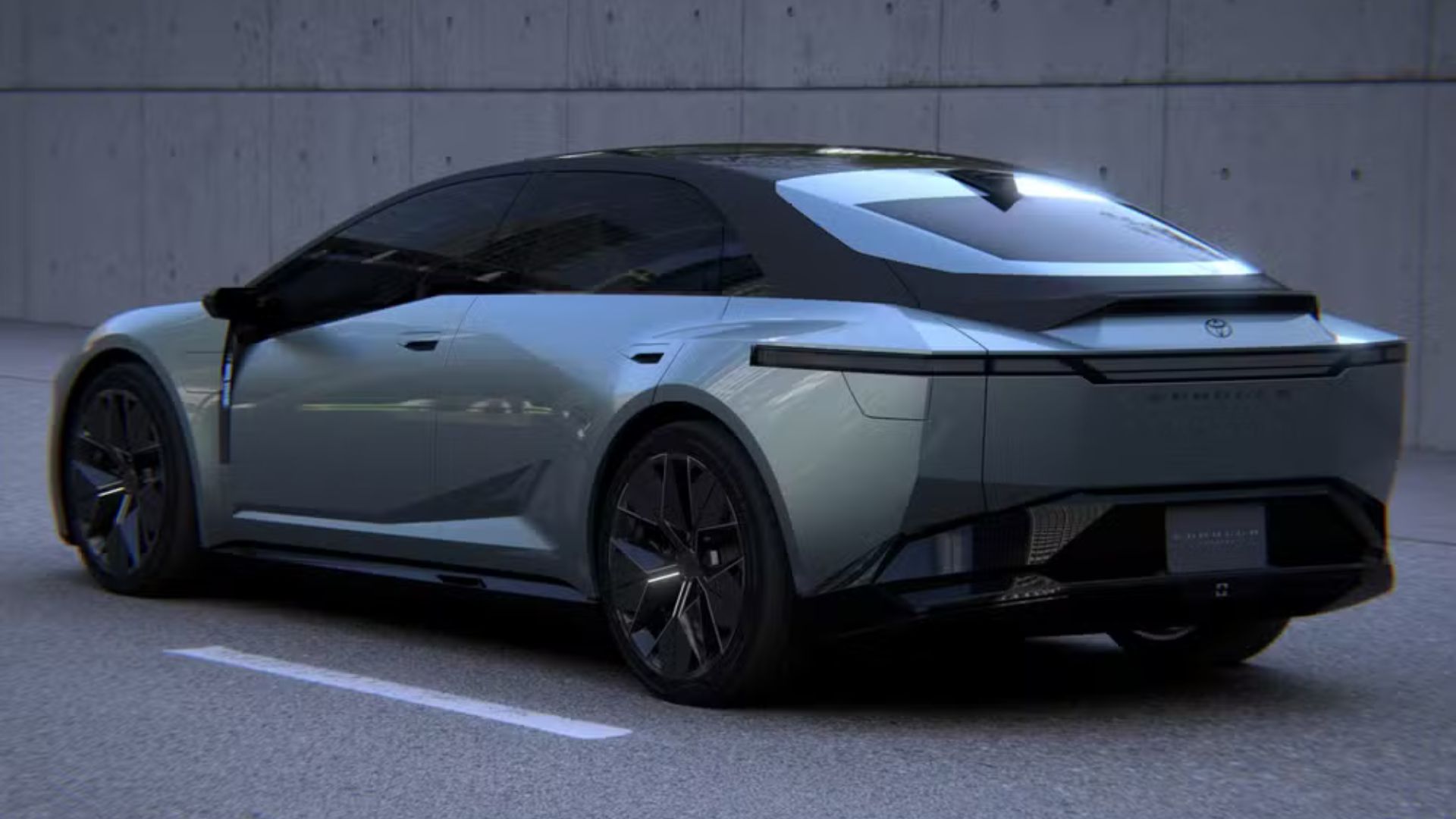
The best-selling car in history, the new Toyota Corolla will have ‘ultra-efficient’ turbo engines with up to 30% more efficiency, more powerful 1.5 and 2.0 options, support for ethanol, hydrogen, and plug-in hybrids, as well as a radical design expected for 2026.
-
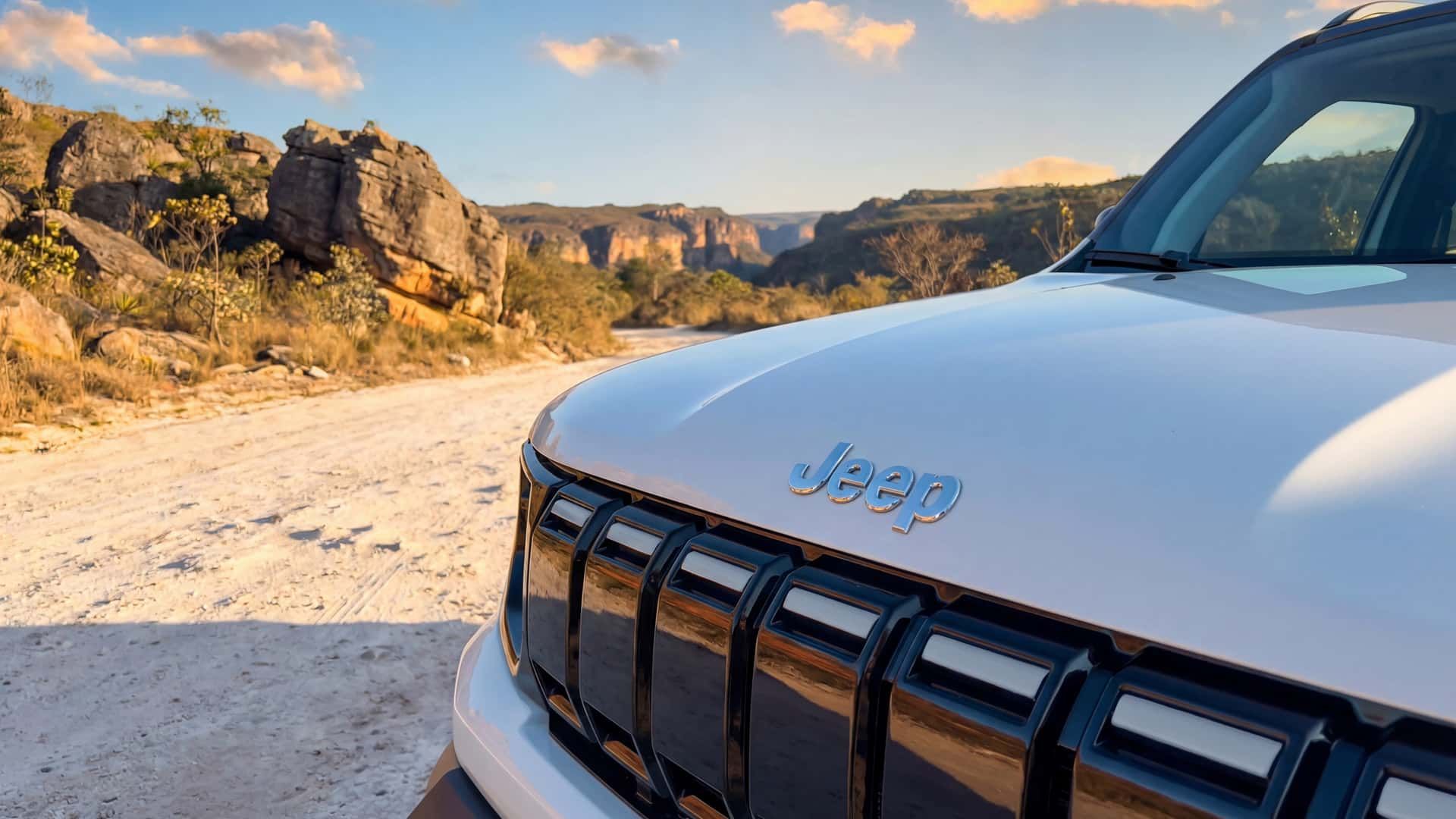
Jeep launches the 2027 Renegade with a 1.3 turboflex engine producing 176 hp, a 48V mild hybrid system, a new 10.1” multimedia system, a digital dashboard, and a starting price of R$ 129,000.
-
In four years, all taxis in New York will be required to have zero emissions, and Kia has just shown how the future will work with an electric vehicle featuring an automatic ramp, 30-minute charging, and a design that prioritizes accessibility.

-
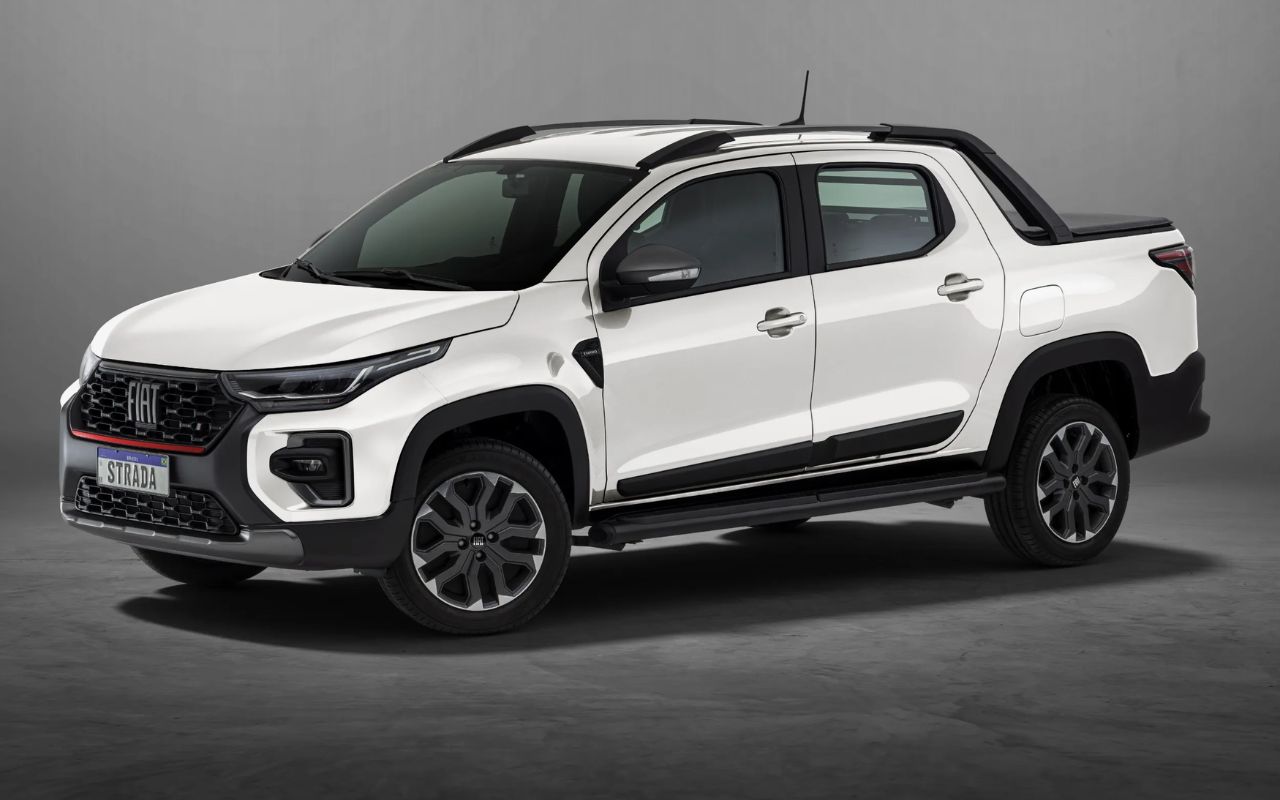
It surpassed the Polo, the Toro, the Hilux, and the Saveiro: with almost 17 thousand units sold, the Fiat Strada was the best-selling car in March 2026.
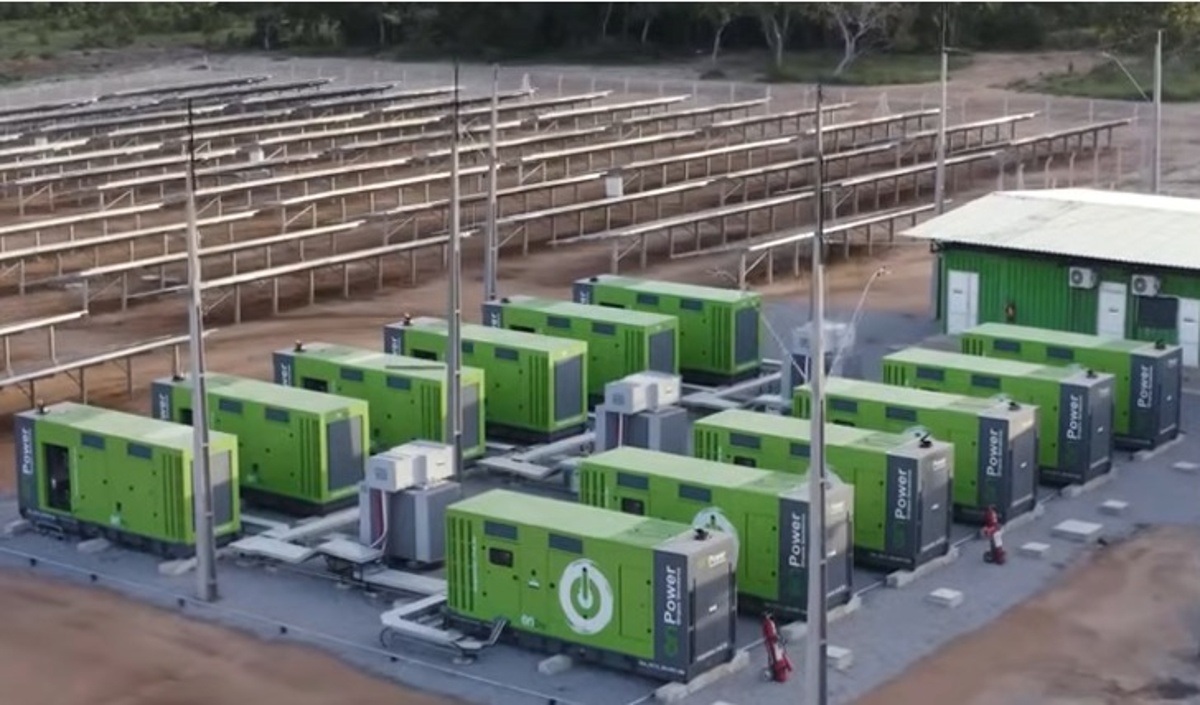
The infrastructure includes next-generation cabinets installed at stations that visually resemble traditional gas stations.
During tests in Shenzhen, BYD chargers accepted only vehicles with the “Flash Charge” emblem on the rear, such as the upcoming Tang 9, Song Ultra, Seal 07, Denza Z9 GT, and FCB Tai.
Local reports indicate that usage was restricted to models capable of receiving more than 1,000 kW of input power, with the system automatically stopping the charging when reaching 97% state of charge. This shows that BYD is targeting extremely fast charges for specific vehicles before expanding the technology to its entire lineup.
BYD’s 1,500 kW vs. Tesla’s 500 kW: what do these numbers mean
The power difference between the systems is significant. Tesla’s V4 Superchargers in China support up to 500 kW for passenger vehicles, while BYD is testing chargers that reach 1,500 kW, exactly three times the capacity.
In practice, higher power means that the battery receives more energy per second, drastically reducing the time needed for a significant charge.
Most public DC chargers in China operate between 250 and 600 kW, making BYD’s leap to 1,500 kW a considerable advancement over the current market standard.
If the numbers are confirmed under real usage conditions, the promise is that charging compatible vehicles will happen in minutes, bringing the experience closer to refueling a combustion car. For BYD, this advantage in charging infrastructure may be as important as the battery range.
The cost of charging and the benefits for BYD car owners
At BYD’s testing site in Shenzhen, the price displayed on the chargers was 1.3 yuan per kWh, with 1.0 yuan for energy and 0.3 yuan as a service fee.
Converted to reais, the amount is approximately R$ 0.93 per kWh, a competitive price compared to current fast charging standards and much lower than the cost of fossil fuels to cover the same distance.
Owners of BYD vehicles compatible with Flash Charge technology should be entitled to 1,000 kWh of free electricity per year, although the official policy has not yet been publicly detailed.
If confirmed, this benefit further reduces the operational cost for those purchasing the brand’s more advanced models. BYD’s strategy combines ultrafast charging hardware with a pricing and incentives ecosystem that can make the cost of using an electric car significantly lower than that of a gasoline vehicle.
The Flash Charging app and BYD’s digital experience
Alongside the hardware, the digital ecosystem has also begun to emerge. BYD’s Flash Charging app is already functional on Android, according to screenshots circulating in Chinese forums.
The interface allows users to search for nearby stations and enables a plug-and-charge mode, where charging starts automatically about 10 seconds after connecting the cable, without the need to scan a QR Code or interact with screens on the charger.
Integration with the Sesame Credit system has also been identified in leaks, suggesting that BYD plans to link the charging experience to user profiles, automated payments, and possible benefits tied to the owner’s digital reputation.
It’s an approach that transforms charging from a mechanical act into an integrated digital experience, aligned with the convenience standard that the Chinese consumer already expects from technological services.
When will BYD’s charger network be expanded
For now, the phase is still one of internal testing and occasional demonstrations in Shenzhen. BYD has not released an official timeline for national deployment or annual coverage goals for the Flash Charge network.
Previous information indicates that the automaker is considering operating more than 4,000 own stations, reaching over 15,000 locations when including partner networks like XiaoJu Charging.
Data on sustained power curves, range recovered in five minutes, and timelines for large-scale expansion are expected to appear only at a future dedicated BYD event. What is already clear is that the automaker is not just manufacturing electric cars.
It is building the entire infrastructure that encompasses the experience of driving an electric vehicle, from the battery to the plug, including the app and the pricing model. If the 1,500 kW network materializes at scale, BYD could redefine what it means to charge an electric car.
What do you think of BYD’s 1,500 kW chargers, three times more powerful than Tesla’s? Do you believe this technology can reach Brazil or will it remain restricted to China? Leave your opinion in the comments. The race for ultrafast charging is just beginning and promises to change the global automotive market.








Seja o primeiro a reagir!