






 Portuguese
  Spanish


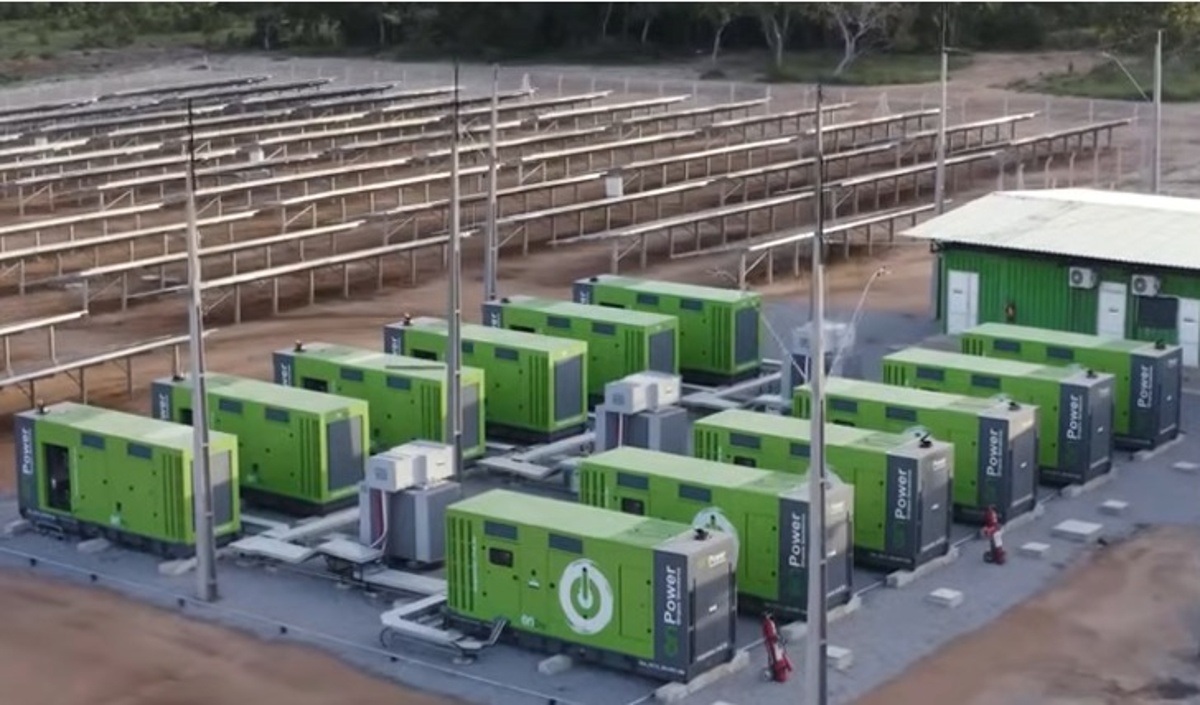

Capacity reserve auctions expand demand for thermal generation and strengthen companies with reliable delivery and consolidated operational history
Furthermore, the result of the Capacity Reserve Auction held in 2026 boosted the Brazilian energy market.
Thus, nearly 20 GW in thermal power plants were contracted, heating the demand for generation technologies.
Therefore, manufacturers of turbines, engines, and generators gained relevance.
In this way, companies with delivery capacity and proven track record began to occupy a strategic position.
Expansion of thermal generation and impact on the market
In this context, the advancement of thermal generation occurs alongside changes in the electrical matrix.
At the same time, the participation of variable renewable sources, such as wind and solar energy, is increasing.
-
Antarctic Volcano Emits Microscopic Gold Particles That Travel Up to 1,000 Kilometers Across the Continent

-
Little-known Japanese factory is the world’s largest zipper manufacturer, producing 7 billion pieces annually and closing half the world’s pants.

-
Brazilian Factory Recycles One-Third of the Country’s Styrofoam Waste, Matching European Levels with 51,000 Tons Reused Since 2007
-
Brazilian Navy Conducts Major Military Exercise with 2,000 Troops, Amphibious Vehicles, and Drones on Lake Furnas in Minas Gerais


Therefore, the need for operational predictability is increasing.
Consequently, the search for solutions that ensure stability in energy supply is growing.
Additionally, according to analyses of the Brazilian energy sector in 2026, this movement demands greater system security.
Thus, dispatchable thermal generation becomes essential for critical moments.
OnPower contracts reinforce presence in the sector
In light of this scenario, OnPower has signed contracts to supply 300 MW in generators.
These equipment will be allocated to winning projects from the 2026 capacity auctions.
Moreover, the generators will be used in plants with a strategic role.
That is, these units will act to reinforce energy supply during periods of higher demand.
On the other hand, this action occurs especially due to the intermittency of renewable sources.
Thus, thermal plants ensure a quick response to the needs of the electrical system.
Role of capacity auctions in energy security
At the same time, capacity auctions are used as a tool for energy planning.
Thus, these mechanisms enable projects with controllable generation.
Furthermore, these plants can come online as needed by the system.
Consequently, this ensures greater reliability in the national electric supply.
According to industry experts, in analyses conducted throughout 2025 and 2026, this model strengthens energy security.
Therefore, it consolidates as a strategic instrument for the country.
Company operations and regional presence
Additionally, OnPower operates in different fronts of the market.
The company provides solutions for Isolated Systems, industrial applications, and plants connected to the National Interconnected System (SIN).
In this sense, the company has a strong presence in the Amazon region.
On the other hand, operations in this area present significant logistical challenges.
Still, the company also operates in other regions of Brazil.
Moreover, it maintains operations in Argentina, expanding its international presence.
Growth in demand for natural gas
According to OnPower’s engineering manager, Sandro Marchini, there is a clear trend in the sector.
According to him, the demand for solutions based on natural gas is growing.
Furthermore, this movement seeks greater operational and financial predictability.
Thus, projects with higher efficiency gain preference in the market.
Decisive factors for suppliers
Finally, energy sector analysts point out critical factors for the success of projects.
As the ventures move into the implementation phase, new challenges arise.
Among the main points, the following stand out:
- Meeting delivery deadlines
- Reliability of equipment
- Cost structure throughout the lifecycle
Therefore, these elements will be decisive for the performance of projects.
Moreover, they will directly influence the consolidation of suppliers in the market.
Thus, in light of this scenario, the thermal generation sector continues to expand.
Consequently, companies with operational efficiency and technical capacity tend to stand out even more.


