





 Portuguese
  English
  Spanish
  3 min of reading
  0 comments


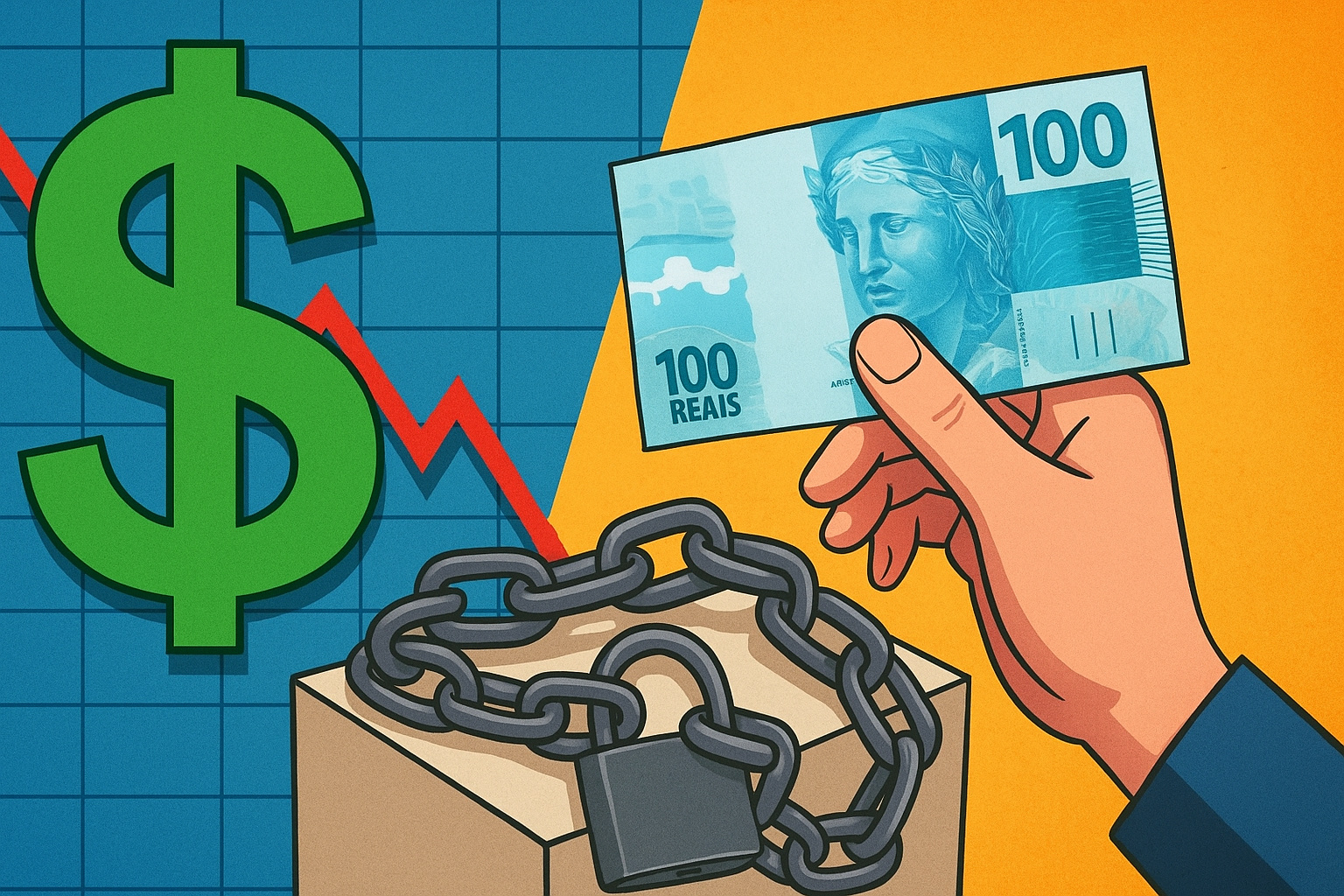
Economy: Appreciated Exchange Rate, High Debt, and Idle Capacity Reduce the Impact of the New Income Tax Exemption on Inflation and Consumption.
Income Tax Exemption up to R$ 5 Thousand Has a Smaller Impact on the Economy Than Expected
The increase in the Income Tax (IR) exemption for salaries up to R$ 5 thousand promises to ease the burden on Brazilians, boosting the economy.
However, experts say the impact on the economy will be limited. The appreciated exchange rate, household debt, and industrial idle capacity explain the reason.
These factors, according to economists, reduce the chance of the measure causing a significant increase in demand or putting pressure on inflation.
-
The institute that trained the greatest aerospace engineers in Brazil has just opened its first campus outside São Paulo after 75 years: ITA Ceará will have R$ 445 million, new courses in energy and systems, and classes are expected to start in 2027.

-
Luciano Hang, owner of Havan, goes to Juiz de Fora after the tragedy in February, brings R$ 1 million, hands out R$ 2,000 cards, and donates up to R$ 15,000 to victims in the region.

-
The Brazilian passport allows legal residence in dozens of countries without the need for a prior visa, and most Brazilians are unaware that they can apply for residency directly upon arriving in nations in South America, Africa, and even Europe.

-
Petrobras sends a message to Brazilian truck drivers after fuel collapse and reveals plan to have 100% domestic diesel.


Measure Seeks Tax Justice, Experts Say
According to Igor Rocha, chief economist of Fiesp, the IR exemption represents a tax reorganization, not a direct stimulus to consumption.
“The exemption up to R$ 5 thousand should be viewed from the perspective of tax justice. This way, the economy becomes more efficient,” Rocha stated.
According to him, the measure corrects distortions and increases purchasing power in a more balanced way. However, the impact on demand will be limited.
Appreciated Exchange Rate Contains Inflation
The exchange rate plays a central role in this scenario. Even with unemployment declining, inflation continues to slow.
According to Rocha, the appreciation of the real and high interest rates attract foreign capital and strengthen the Brazilian currency.
“If the dollar continues to decrease, it tends to offset inflationary pressures,” he said.
Thus, the favorable exchange rate helps to reduce prices, especially for food and imported goods. Therefore, the effect of the exemption on inflation is expected to be small.
Household Debt Limits Consumption
The high debt of Brazilian families prevents the exemption from fully translating into consumption.
According to André Perfeito, economist at APCE, a significant portion of the extra income will go towards paying off debts.
“Families are heavily leveraged. Thus, part of the money goes towards debt repayment, not consumption,” he stated.
As a result, the increase in the exemption may ease the family budget but will not boost the economy as expected.
Idle Industrial Capacity Absorbs Economic Demand
The Brazilian industry still operates with idle capacity, which prevents price pressures even if demand rises.
Data from Fiesp shows that the Level of Utilization of Installed Capacity (Nuci) is at 79.4%. This means there is 20.6% of idleness.
In the machinery and equipment industry, the index is 78.8%, according to Abimaq. Therefore, there is room to increase production.
“There is idleness in some sectors. This can alleviate pressure on demand,” Perfeito noted.
Additionally, the Fiesp Sensor stood at 49.6 points in September, indicating a slight contraction in industrial activity.
Central Bank Must Remain Cautious About the Economy
In this scenario, the Central Bank is likely to maintain its cautious posture.
Rocha believes the institution should observe the effects of monetary policy before altering interest rates.
“The Central Bank should wait to see the effects of the monetary tightening,” concluded the economist.
Thus, the exchange rate, debt, and idle capacity should continue to guide economic policy decisions.










Seja o primeiro a reagir!