





 Portuguese
  English
  Spanish
  6 min of reading
  0 comments


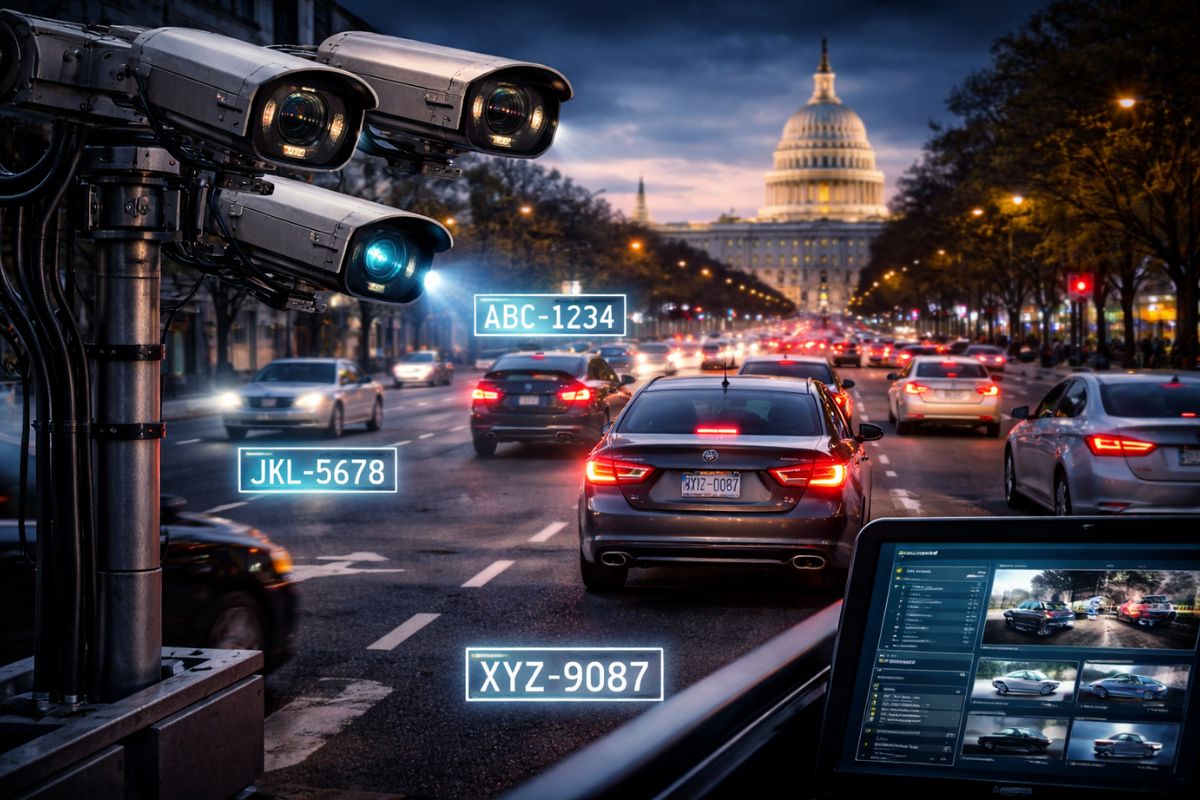
With the Advancement of Automatic License Plate Readers, Washington Is Preparing in 2026 for a Regulatory Shift: Traffic Cameras in 2026 Will Only Be Allowed to Operate Under the Rules of SB 6002, with Short Retention Periods, Geographic Prohibitions, and Access Traceability Following Data Leaks and Sharing Involving ALPR, Including Schools and Clinics.
In Washington, traffic cameras in 2026 have ceased to be merely an urban detail and have become a point of institutional friction regarding tracking. Automatic license plate readers, known as ALPR, capture plates in motion or parked, timestamp them, cross-reference monitoring lists, and feed searchable databases that can reconstruct entire routines.
The state is attempting to reduce this reach with SB 6002, which is being debated to limit who operates it, how long it retains data, and for what purpose it can be queried. The backdrop includes municipal contracts with Flock Safety and similar companies, as well as academic findings showing how local control can fail when data circulates beyond what was promised.
How ALPR Systems Transformed Routes into Searchable Records
ALPR functions as location sensors guided by plates.
-
The oceans are darkening all over the planet – what is happening?

-
An engineer designs a solar plane to fly on Mars at an altitude of 1,000 meters and a speed of 300 km/h, covering 16,000 kilometers in a Martian year, 900 times the distance traveled by the Ingenuity helicopter in three years on the planet before experiencing a rotor failure, and NASA is already funding the feasibility study.

-
A new phenomenon of contactless magnetic friction intrigues scientists and questions a theory that has been valid since the 17th century.

-
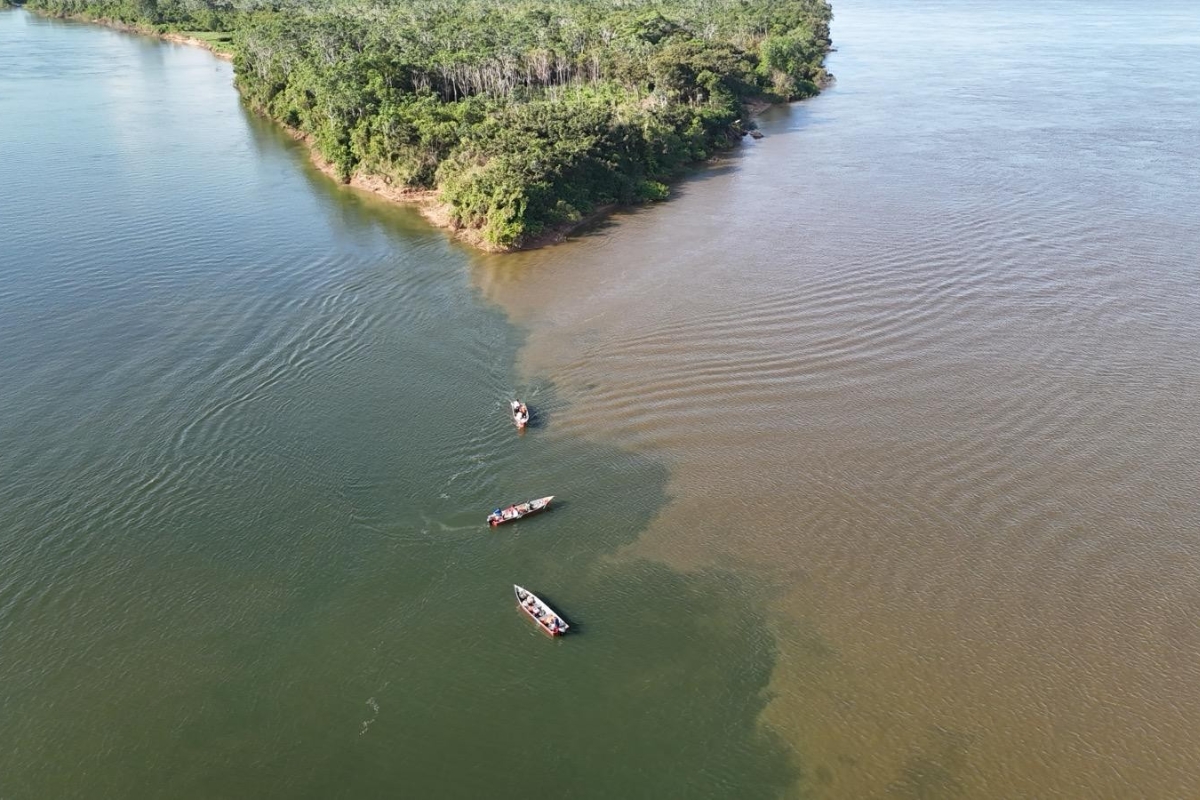
An impressive phenomenon in Northern Brazil causes rivers of different colors to flow side by side, revealing secrets about sediments, currents, and biodiversity.

Each reading generates a point of passage with a timestamp, something that, when accumulated, allows inference of daily movements, such as going to school, work, clinic, or supermarket.
In Washington, over 80 cities, six counties, and three tribal governments have already hired Flock Safety and other providers, expanding the collection network on highways and urban streets.
The discussion around privacy arises from the disconnect between what seems to be an automatic click and what turns into consultable history.
When an ALPR repeatedly captures the same car, investigative utility exists, but so does the possibility of mapping habits unrelated to crime.
It is at this point that traffic cameras in 2026 begin to be treated as data infrastructure, not just as roadway equipment.
What SB 6002 Restricts and Who Will Still Be Able to Operate
SB 6002 outlines a closed list of uses and operators, reducing the logic of broad surveillance.
For law enforcement, traffic cameras in 2026 would be authorized to search for stolen vehicles, missing persons or those in danger, plates associated with warrants for serious crimes, and vehicles already linked to criminal investigations, rather than sweeping everything indiscriminately.
The bill also differentiates the role of other agencies.
Parking agencies could use ALPR to enforce time limits and locate vehicles on impound lists, while toll and transport could maintain recognition for billing, real-time traffic, and short-term traffic studies.
The regulatory intent is to separate operational efficiency from permanent tracking, without turning each movement into a file for future use.
Prohibited Zones and Quick Deletion: Where the Law Tries to Close Loopholes
One of the most sensitive parts of SB 6002 is defining locations where tracking by ALPR would be prohibited.
The proposal bans collection near protected health and immigration facilities and prevents installation in schools, places of worship, courts, and food banks, even in their vicinity.
In practice, the rule aims to prevent traffic cameras in 2026 from becoming an involuntary map of personal vulnerabilities.
The retention time is another hard axis.
Most readings would need to be deleted within 72 hours, with longer periods only for parking enforcement, toll collection, and traffic studies.
Long-term storage would be restricted to situations linked to a specific legal case, with detailed access logs identifying who consulted, when, and why, as an attempt to make privacy auditable.
Leaks and Sharing: When Local Control Cannot Secure the Flow
Researchers from the University of Washington have shown how data can escape the expected perimeter.
The study cited by state authorities indicated that at least eight agencies in the state allowed direct data sharing with the U.S. Border Patrol, despite Washington’s sanctuary policies for immigrants and for those seeking specialized medical care.
The risk arises when ALPR readings leave the original context and become input for decisions outside local control, even on sensitive issues that Washington tries to protect by state law.
In this scenario, a passage of minutes can be reinterpreted as evidence of presence, repetition, or association, even when the route was routine and legitimate.
Another episode described in the same report involves a Texas police department accessing ALPR data from Washington during the investigation of a woman who had an abortion.
The point is not just the case itself, but the elasticity of jurisdiction: when data exists and is searchable, the question of privacy moves from theoretical to practical regarding who can actually pull the history of a route.
Flock Safety, Responsibility, and Legal Consequences of Misuse
The rapid advancement of providers like Flock Safety exposes a governance friction: municipalities buy technology but do not always have robust mechanisms to limit access, log inquiries, and prevent handoffs.
In Washington, the adoption by over 80 cities suggests enough scale that a configuration error or a loose policy could have systemic impact, especially when traffic cameras in 2026 remain installed at strategic points.
SB 6002 attempts to create consequences beyond political embarrassment.
Violations could be treated as unfair practices under state consumer protection law, and data collected in violation could be deemed inadmissible in court.
By placing legal costs on misuse, the bill seeks to align providers, operators, and public managers, creating incentives so that privacy does not depend solely on goodwill.
From Privacy to Energy: Surveillance as Industry and Environmental Impact
At first glance, traffic cameras in 2026 seem to be a strictly civil issue, but the material effect exists.
Analysts predict that the global surveillance market will exceed US$ 100 billion in the coming years, which means more cameras, servers, and networks being manufactured and then discarded.
In surveillance systems, energy studies cited in the debate point out that the cameras themselves can account for 60% to 80% of energy consumption over their lifetime, an ongoing and silent expense.
This cycle ends in electronic waste.
Monitoring supported by the United Nations estimated about 62 million tons of electronic waste in 2022, with only approximately 22% collected and documented for recycling.
The International Telecommunication Union and the World Health Organization warn that the flow grows faster than formal recycling and that improper disposal releases toxic substances.
The privacy discussion intersects with sustainability because each ALPR network is also a network of manufacturing, continuous energy consumption, and disposal, with impacts that accumulate as scale grows.
What Changes for Drivers and Why Trust Became Part of Mobility
For drivers, the most likely scenario is seeing the same boxes on poles and highways.
The difference promised by SB 6002 lies in the post-capture phase: routine readings, like taking children to school, should disappear in hours, not be kept for years in searchable databases.
The goal is to reduce the feeling that traffic cameras in 2026 are turning everyday life into a permanent trail, especially when there is no concrete suspicion.
The debate also touches on mobility policies that require social acceptance. Low-emission zones, congestion control, and digital traffic management depend on trust in the system.
When privacy seems fragile, resistance grows, even to environmental measures that could improve air quality and reduce emissions.
That is why Representative Yasmin Trudeau described the issue as urgent and advocated for public participation: data security and governance must go hand in hand.
Washington is trying to establish an operational and symbolic limit for traffic cameras in 2026, reducing uses, shortening retention, and creating prohibited zones so that ALPR do not become indefinite surveillance.
The SB 6002 does not eliminate the technology, but rewrites its incentives, affecting how providers like Flock Safety deliver, log, and allow access, with privacy at the center.
If traffic cameras in 2026 delete readings within 72 hours, does that increase your sense of security or simply change the conversation? Would you accept ALPR on highways if it were prohibited near clinics, schools, and places of worship? And in your daily life, what is the line of privacy that a city should not cross, even in the name of efficiency?








Seja o primeiro a reagir!