Portuguese
 Spanish


Canadian miner considers building a rare earth processing plant in Brazil, seeks government incentives, and earmarks $780 million for a project starting production in 2029
Canadian miner Aclara Resources is considering building a rare earth processing facility in Brazil, but says a potential investment would depend on government incentives. The company is also developing the $780 million Carina project, negotiating financing, and preparing to begin production in Brazil in 2029.
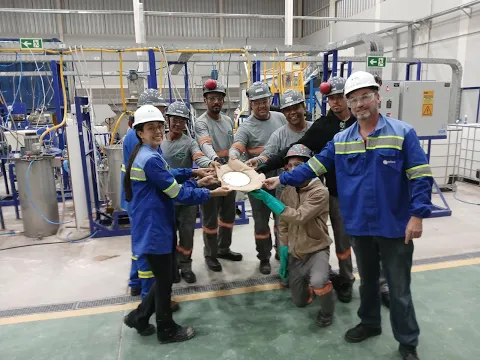

Aclara seeks incentives to process rare earths in Brazil
Aclara CEO Ramon Barua discussed the possibility in an interview with Bloomberg News.
-
Kenya selects U.S. companies to explore rare-earth deposit valued at tens of billions of dollars and rich in niobium

-
AngloGold Ashanti plans $2.5 billion investment in Colombian copper mine if it secures environmental permit

-
U.S. Court Blocks Trump’s Plan to Auction Seabed Mining Areas off American Samoa
-
Brazil Is Home to the World’s Longest Iron Ore Slurry Pipeline: Stretching 529 Kilometers Across 33 Municipalities and Built with 133,000 Tons of Steel. But How Does the Ore Travel Almost Invisibly?


The executive argued that the Brazilian government should offer more attractive financial terms to encourage the processing of these minerals in the country.
In a report published by Bloomberg Línea on November 18, Barua said government support would be decisive in determining where the company makes its next industrial investments.
The miner is weighing factors including energy costs, the availability of engineering professionals, and access to chemicals required for operations.
Brazil has the world’s second-largest rare earth reserves, behind China, but accounts for less than 1% of global production.
The minerals comprise a group of 17 elements used to manufacture smartphones, military equipment, and other technologies.
Brazilian government prepares rules to attract investment
In September, Brazil approved a new framework for the critical minerals sector, including financial support mechanisms and incentives for domestic processing.
The policy also allows a government committee to review changes in corporate control and supply contracts related to projects.
However, the criteria for applying these measures still need to be spelled out. This uncertainty affects the plans of companies interested in investing in the country.
Barua said the United States, Europe, Japan, Korea, and Chile are competing for investment in this market. In his view, offering competitive terms will be essential to attract new projects.
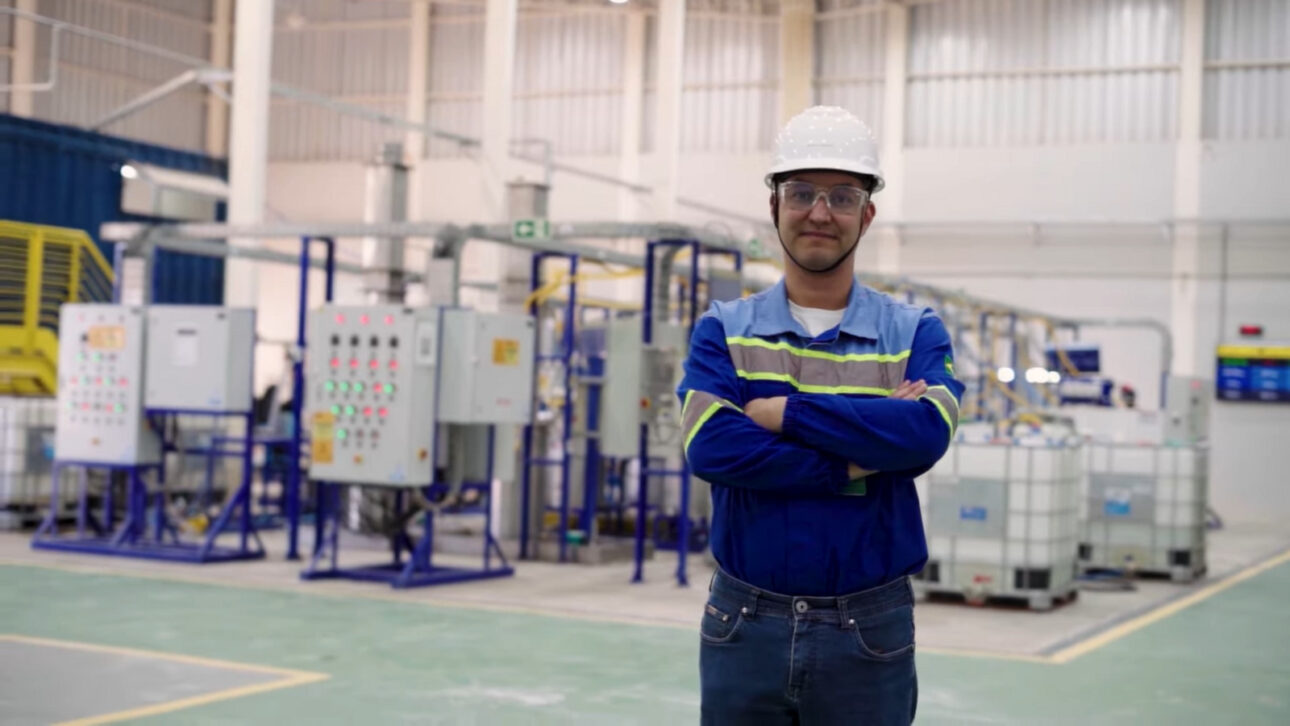
Carina project calls for a $780 million mine, with production set to begin in 2029
While assessing a Brazilian processing facility, Aclara is moving ahead with development of the Carina project, a rare earths venture estimated to cost $780 million.
The company expects to obtain a preliminary environmental license in March 2027. After that stage, it will decide whether to make a final investment in the mine.
Production is scheduled to begin in 2029, about a year later than previously planned.
To finance construction, the mining company is in talks with the U.S. International Development Finance Corporation and has presented the project to Brazil’s National Bank for Economic and Social Development (BNDES).
The company is also negotiating with Brazilian investors and is considering both loans and equity investments.
Company also plans a $494 million plant in the United States
Aclara’s industrial strategy involves approximately $1.5 billion in investments to link Latin American mineral projects with processing in the United States.
Under current plans, materials from Carina and the Penco project in Chile would be sent to Louisiana for separation into oxides and subsequent conversion into metals and alloys.
The U.S. facility is estimated to cost $494 million. The company aims to complete its financing in the second quarter of 2027.
The Export-Import Bank of the United States has issued a nonbinding letter of interest for $750 million to support the project.
Partnership with Japanese organization expands Brazilian projects
Aclara has also formed a business partnership with Japanese organization Jogmec to explore and develop another Brazilian rare earth deposit in ion-adsorption clays.
The possible installation of a separation facility in Brazil is under review. The company has not yet announced the plant’s cost, location, or construction timeline.
For now, plans to process materials in the United States remain the reference point for the Carina and Penco projects.
Article prepared based on data and information from Bloomberg.