Portuguese
 Spanish


Billions of reais will come from public funds to pay for fuel subsidies, but drivers may not see any reduction in prices
The federal government will allocate more than R$6.6 billion to try to limit the effects of rising fuel prices in Brazil. The Chamber of Deputies approved the provisional measure on Tuesday (November 17, 2026), releasing the funds amid the war in the Middle East and pressure on international oil prices.
The news may seem like relief for people who rely on their cars, work in transportation or feel every increase in gasoline and diesel prices in their budgets. But there is an important difference between what was approved in Brasília and what consumers will find when they pull into a gas station.
The R$6.6 billion will not be handed to drivers. Nor is there any guarantee that gasoline or diesel prices will fall after the vote.
-
Gas Prices Adjusted: Government Cuts Fuel Taxes Following Global Oil Surge, Reducing Gasoline Tax by R$0.63 per Liter, Zeroing Ethanol Taxes, and Introducing R$1 Per Liter Subsidy for Diesel

-
The government was preparing to end a subsidy that costs R$ 1.2 billion per month and accounts for almost 17% of the price of gasoline at refineries, but the war changes the plans, postpones the removal of the benefit, and reignites the alert about a new rise in fuel prices in Brazil.

-
Drivers are falling for these scams without realizing: operation reveals closed gas stations, adulterated fuel, and hidden losses when refueling.

-
New Fiat EV, priced at R$ 77,000, will bring a reinterpretation of the 147 and a consumption equivalent to 70 km/l.



The money will be used to pay subsidies to fuel producers and importers. The goal is to offset some of the costs caused by the international crisis and prevent all that pressure from reaching the Brazilian market.
This is where the debate becomes more delicate. The government is using public funds to finance a price-control policy, but consumers have no way of knowing just by looking at the price at the pump how much that money actually helped lower their costs.
The approved proposal is Provisional Measure 1,389/2026, which opens a R$6.605 billion extraordinary credit line for the Ministry of Mines and Energy, with payments made through the National Agency of Petroleum, Natural Gas and Biofuels (ANP), Brazil’s oil and gas regulator.
The measure now goes to the Federal Senate. The vote in the Chamber marks another step in the legislative process for a measure that has been in effect since September.
More than R$5.6 billion will go to diesel, while gasoline gets a smaller share of the funding
The breakdown of the R$6.6 billion helps explain what the government intends to protect first.
Of the total authorized, R$5.607 billion will go toward subsidies for road diesel. Another R$998 million will fund subsidies for the production and import of petroleum products, including gasoline.
In other words, about 85% of the money is concentrated on diesel.
There is an economic reason for this choice. Brazil relies heavily on road transportation to move goods, and diesel is a major expense for truckers and freight companies.
When this fuel becomes more expensive, the problem is not limited to the roads. Higher costs can raise freight rates, put pressure on companies’ expenses and eventually be reflected in the prices of goods sold in supermarkets.
A truck carrying food may travel hundreds or thousands of miles to reach its destination. If the cost of the trip rises, someone has to absorb the difference.
In some cases, the freight company can negotiate new rates. In others, the company hiring it absorbs some of the expense. Depending on market conditions, consumers may end up paying more for the product.
That is why rising diesel prices are such a concern for the government.
But there is another issue: the subsidy may help prevent larger increases without necessarily bringing prices down.
This distinction rarely draws as much attention as the announcement of billions of reais. For drivers filling up, however, it changes expectations completely.
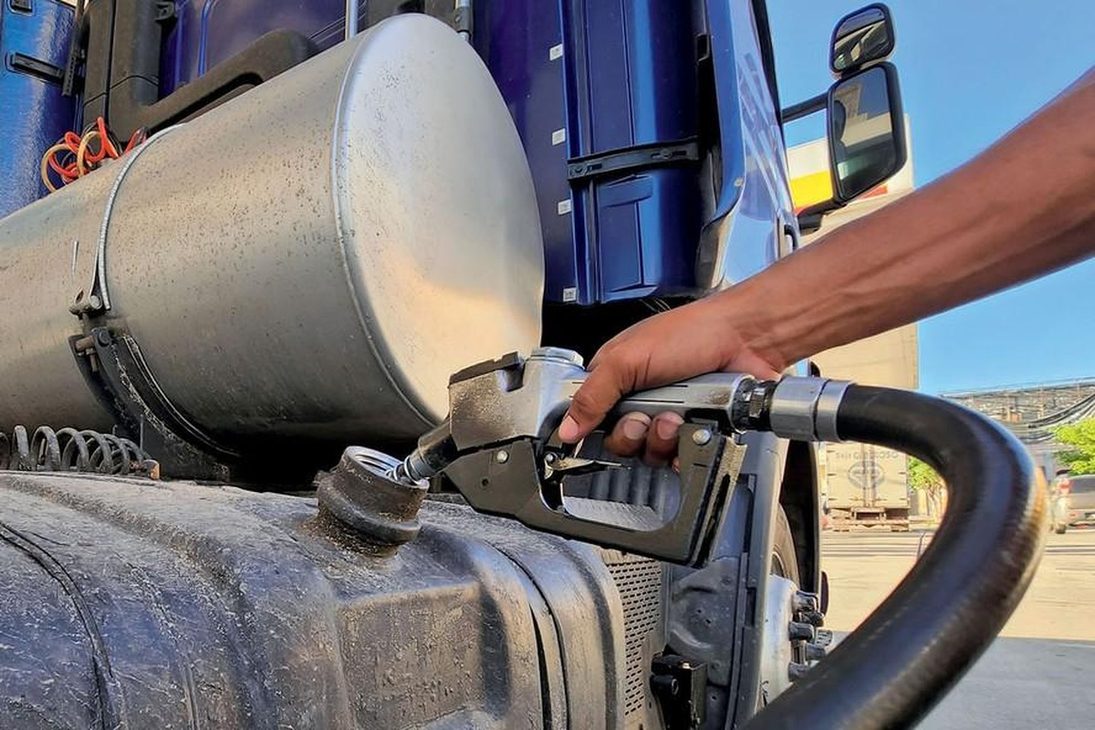
Public money is part of the equation, but drivers are not guaranteed an automatic discount at the pump
Imagine a driver pulling into a gas station after hearing that Brazil’s Chamber of Deputies approved billions of reais in fuel subsidies.
The most immediate expectation would be to find cheaper gasoline or diesel.
But the approved mechanism does not work that way.
The funds will be used to compensate producers and importers financially if they participate in the subsidy programs and meet the government’s requirements.
The payments are made before the fuel is sold at gas stations.
Between production or import and a vehicle being fueled, fuel passes through several commercial transactions. These involve logistics costs, taxes, distribution and sales margins.
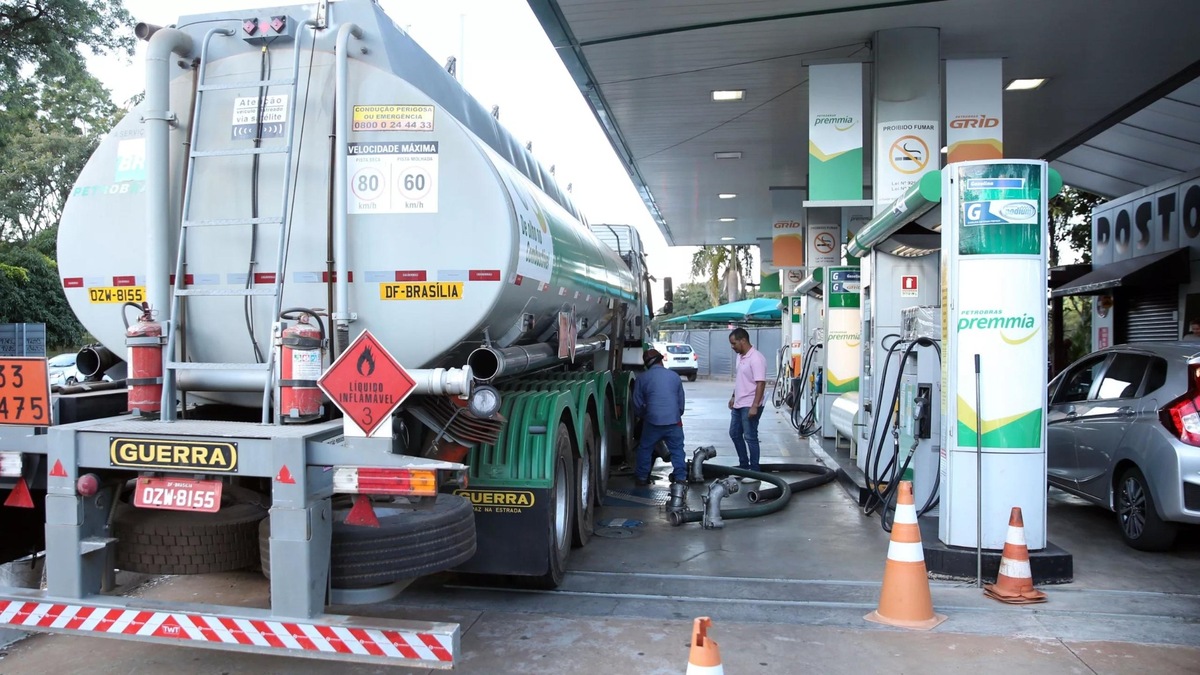
That is why, even if a given producer receives financial compensation, there is no automatic link between that payment and an equivalent drop in the final price.
The government is seeking to prevent the full impact of international price increases from being passed on to the Brazilian market.
But holding down an increase is not the same as lowering a price.
If a given fuel rises less than it would have without the subsidy, the program may have had an economic effect, even if drivers are still paying high prices.
The problem is that this result is not readily apparent at the pump.
Consumers see the price charged at that moment. They cannot compare it with the hypothetical price that would have been charged if the government had not used public funds.
That difficulty makes oversight of the programs and disclosure of their results especially important.
After all, when billions of reais are used to fund a public policy, it is necessary to show what results were achieved.
War in the Middle East has become a problem for Brazil’s fuel supply, even as the country produces oil
The justification for increasing subsidies is tied to the conflict involving the United States, Israel and Iran.
The war has unsettled the international oil market and raised concerns about transporting fuel along strategic routes.
One of the main areas affected is the Strait of Hormuz, a strategic maritime passage for international oil transport, used to ship production from Middle Eastern countries.
The region is important to international energy trade. Any threat to shipping can raise costs, disrupt operations and put pressure on market prices.
Brazil is not insulated from these effects.
Although it is a major oil producer, the country still needs to import some of the fuel it consumes domestically.
Government figures presented in the measure’s justification show that about 10% of the gasoline consumed in Brazil depends on imports.
For diesel, reliance on imports is higher, ranging from 25% to 30%.
That means a significant share of Brazil’s fuel supply remains exposed to international prices.
There is also another aggravating factor: the dollar.
Because oil and petroleum products are traded internationally in U.S. dollars, exchange rates directly affect the cost of imports.
If oil prices rise and the dollar also becomes more expensive, Brazilian companies could face even greater pressure.
It is against this backdrop that the government decided to increase subsidy programs.
The goal is to limit the effects of the international crisis on domestic fuel supplies. But the extent of that protection depends on factors Brasília cannot control, such as how long the conflict lasts and how international prices move.
Diesel subsidy of R$1.12 per liter was already in place before the R$6.6 billion was approved
One important detail helps explain why the House vote should not be interpreted as a new price cut.
The programs receiving the funds had already been established by earlier provisional measures.
Provisional Measure No. 1.358/2026 covers subsidies related to the production and import of petroleum products, including gasoline.
Provisional Measure No. 1.363/2026 established the specific mechanism for road diesel.
In the statement of reasons for Provisional Measure No. 1.389/2026, which details the subsidies and the financial obligations assumed by the government, the executive branch outlined the amounts and funding conditions for the programs.
The diesel benefit was scheduled to run from June 1, 2026, through December 31 of that year.
That does not mean drivers will receive a new per-liter discount after the November vote.
The subsidy amount represents the financial compensation provided for participants in the program.
The measure approved by the House serves a different purpose: securing budget funds to finance the payments.
Some of the obligations had already been assumed by the government before the vote.
According to the statement of reasons submitted to Congress, companies participating in the programs met the established conditions and became entitled to payments.
The extraordinary credit is intended to ensure those obligations are paid.
Therefore, the announcement of R$6.6 billion does not, by itself, create a new benefit for people filling up their vehicles.
The money is intended to sustain a policy that was already in place.
Government argues that delaying payments could make the bill even higher
The executive branch’s justification includes a concern that goes beyond fuel prices.
The government says it needs to meet financial commitments made to producers and importers participating in the programs.
According to the document sent to Congress, these companies conducted transactions under the rules governing the subsidies and became entitled to the corresponding payments.
A lack of funds could lead to delays.
And delaying these payments, the government itself says, could generate additional expenses.
That is because certain obligations are subject to financial adjustment based on the Selic rate, used as a benchmark for interest rates in Brazil’s economy, under the applicable regulations.
In practice, a bill that already amounts to billions of reais could grow if payments were postponed.
The executive branch used this argument to justify opening the extraordinary credit.
But the situation also raises questions about the cost of policies to contain prices.
Subsidies can help ease economic pressures during a crisis. At the same time, they represent expenses that must be funded by the federal budget.
The money used does not come without fiscal consequences. It must be accounted for, spent under legal rules and subject to oversight.
That is why the debate is not simply about supporting or opposing lower prices.
The question involves how much the government is spending, who receives the funds and what results that spending delivers for the public.
House approved measure already in effect since September, a distinction that changes how the news should be understood
Provisional Measure 1.389/2026 was issued on September 8 and published in the Federal Official Gazette the following day.
From then on, the measure had the force of law, as provisional measures issued by Brazil’s president do.
The November 17 vote took place as part of the parliamentary review required to make it permanent law.
This means the House did not authorize the subsidy programs for the first time.
The extraordinary credit had already been opened through the provisional measure.
Congress began reviewing whether it should remain in effect and be converted into law.
In November, the measure’s term was extended by another 60 days, giving lawmakers more time to complete the process.
The bill also received a favorable report from the Joint Committee on Public Plans, Budgets and Oversight.
These steps can be tracked in the legislative record for Provisional Measure 1.389/2026, which compiles documents, reports, deadlines and developments in the National Congress.
After approval by the House, the bill moves to the Senate.
This sequence matters because it prevents a misleading interpretation: that the R$6.6 billion was announced just now and will necessarily lead to an immediate change in prices.
In reality, the vote is part of the legislative process for a budget authorization issued earlier.
What happened on November 17 was a step forward in the measure’s legislative process.
As Brasília debates billions, pump prices still depend on factors subsidies do not eliminate
Fuel prices in Brazil are made up of several components.
The cost of acquiring fuel accounts for a significant share, but it is not the only factor considered in its sale.
Taxes, transportation, storage, distribution and commercial margins are also part of the calculation.
The mandatory blending of anhydrous ethanol also affects the composition of gasoline sold at gas stations.
In diesel, mandatory biodiesel blending is part of the fuel sold to consumers.
As a result, changes in the international market do not necessarily reach consumers with the same intensity or at the same time.
The same is true of subsidies.
Financial compensation for producers or importers may ease some costs, but it does not control every component of the final price.
In addition, prices vary among states, municipalities and businesses.
One gas station may face different logistics costs than another. Local competition also affects commercial terms.
To track these differences, the ANP publishes weekly surveys of gasoline, diesel and other fuel prices, with data by state and municipality.
These surveys help identify price increases and declines, but on their own they do not show how much each subsidy program contributed to a particular price.
Assessing the effectiveness of subsidies requires examining information on payments, sales volumes and market behavior.
Without this data, it would be premature to say that the billions approved will produce a specific price reduction for consumers.
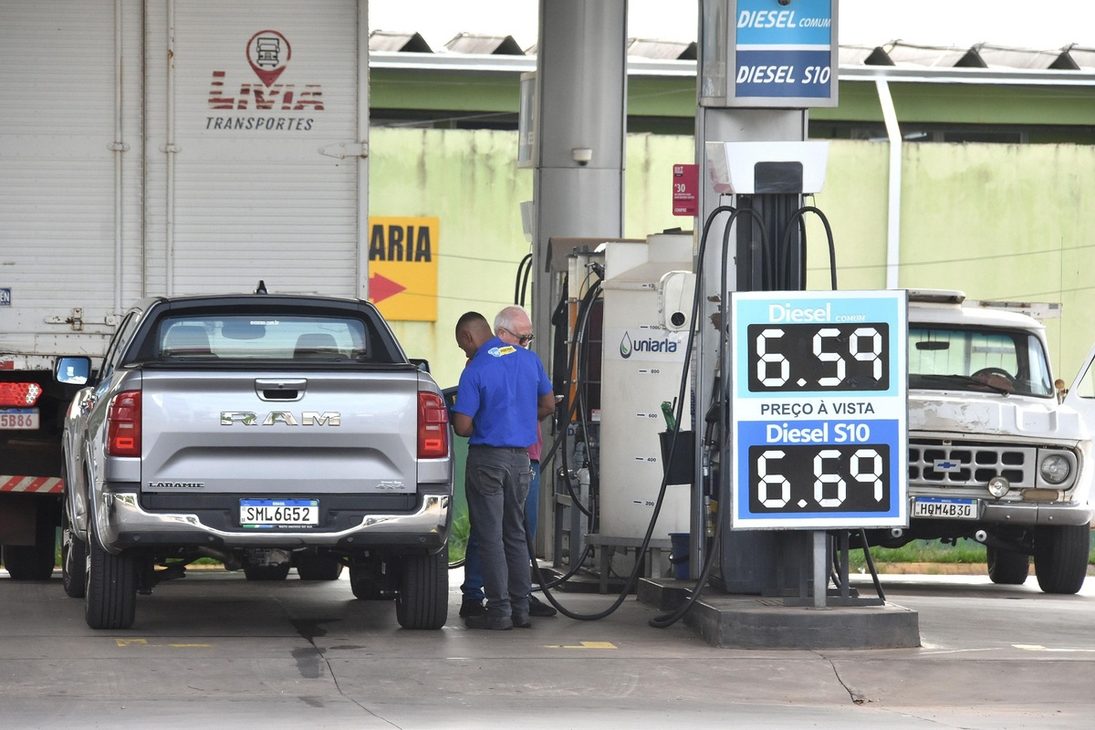
The debate extends beyond gas stations: costly diesel can put pressure on food, freight and services
Even people without cars may feel the effects of a prolonged rise in fuel prices.
Diesel is used in activities essential to the functioning of Brazil’s economy.
Trucks transport food produced on farms, raw materials used by industry and goods destined for stores.
When fuel costs rise, carriers face higher operating expenses.
Depending on contracts and market conditions, some of that increase may be passed on to customers.
In agribusiness, diesel is also used to power farm equipment and transport production.
In industry, it affects the movement of inputs and finished products.
The result may be cost pressures across various sectors.
That does not mean every increase in diesel prices will automatically be passed on to consumers.
Companies may absorb some of the costs, renegotiate contracts or seek logistical alternatives.
However, the longer pressure on fuel prices lasts, the harder it may become to keep certain costs in check.
It is precisely this ripple effect that the government is seeking to limit with the subsidies.
The challenge is to show how far public spending can deliver the intended results.
The Senate will have the next say on R$6.6 billion, but drivers will keep waiting for answers on prices
The Brazilian Chamber of Deputies’ approval of provisional measure 1,389/2026 marks another step in the federal policy of supporting the fuel market.
The government plans to use R$6.605 billion to fund subsidies for the production and import of petroleum products, with priority given to road diesel.
The stated aim is to reduce the impact of the war in the Middle East on Brazil’s fuel supply and meet financial commitments made to companies participating in the programs.
The measure still needs to pass the Senate.
For drivers filling up, however, the main question remains unanswered.
Public money will be used to fund the subsidies, but there is no guarantee that prices at gas stations will fall immediately.
The policy could help prevent larger increases. It could also help preserve fuel supply conditions during the international crisis.
However, its results will depend on how the programs are implemented and on market behavior.
The gap between spending billions to curb a price increase and actually lowering the price consumers pay is precisely the point that deserves the most attention in this debate.
The government will have to show how the funds were used and what effects they produced. In the meantime, Brazilians will continue watching gasoline and diesel prices every time they fill up.
Is it fair to use R$6.6 billion in public funds to subsidize fuel without guaranteeing an immediate price cut at gas stations, or should the government take a different approach to ease the burden on Brazilians?