





 Portuguese
  English
  Spanish
  4 min of reading
  0 comments



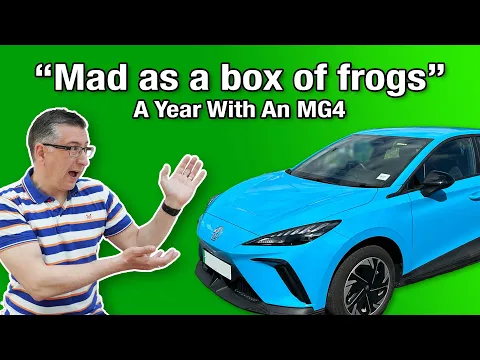
Frenchman Reports Serious Failures in MG4 Electric Car, From SAIC Motor, That Would Have Displayed Unpredictable Autonomous Behavior and Led Insurer to Recommend That the Vehicle Be Kept Parked Due to Safety Risk.
The Frenchman Vincent Pasco claims he was advised by the insurer itself to keep the car parked due to immediate safety risks, following a series of failures in the MG4, an electric hatchback from SAIC Motor.
In less than two years of use, the vehicle allegedly displayed behavior considered unpredictable by the driver, who described that the car “makes unexpected autonomous decisions.”
The recommendation not to drive, according to him, came after reports of anomalies in the assistance system and handling.
-
They seemed like common bones, but scientists were surprised to find a relic over 12,000 years old that dates back to before the Bronze Age.

-
With an almost perfect ring of 70 km visible from space, known as the “Eye of Quebec” and over 100 km in length, the Manicouagan Crater in Canada reveals the colossal mark left by a giant asteroid and has become one of the most impressive formations ever identified on the Earth’s surface.

-
Scientists have found in China dinosaur embryos dating back 190 million years in various stages of development, and the discovery still preserves traces of extremely rare proteins in the bones, something that could change what is known about life before hatching.

-
The CEO of Honor in Spain says that smartphones will change with AI, foldables, and even robot phones; the component crisis is making cheap models more expensive in 2026 and shifting the focus to premium.

The investment, estimated at R$ 200 thousand with the incentive of an ecological bonus, turned into a loss: the car remains parked while the owner seeks a solution with the service network.
Failures From the First Hours of Use
Pasco reports that the problems arose almost immediately.
The steering wheel vibrated and did not remain aligned, compromising stability in a straight line.
Additionally, the lane-keeping assist allegedly caused sudden corrections, interfering with the course of the car and requiring constant intervention from the driver.
The situation, in the insurer’s assessment, would increase the risk of an incident, which is why the vehicle was withdrawn from circulation as a precaution.
Although these occurrences involve a single owner, the narrative exposes vulnerabilities in assistive driving technologies when calibration is not adequate or when there is incompatibility with real road conditions.
Without a conclusive diagnosis and with the car parked, the case drags on through contacts with the dealership and requests for inspections.
Lane Assistance Under Scrutiny

The experience is not isolated in the debate about ADAS (Advanced Driver Assistance Systems).
Independent tests published in 2024 identified episodes in which the MG4 made improper trajectory corrections in specific scenarios, such as narrow roads and edge markings.
In February 2025, the brand announced the distribution of a software update aimed at improving the lane assist behavior and lane departure warnings.
However, the manufacturer treats the issue as a continuous evolution of software and not as a widespread defect.
Meanwhile, there are previous regulatory records that do not relate directly to the case described by Pasco.
In 2023, for example, a recall announcement in the United Kingdom addressed superlocking with the vehicle running, a topic different from the performance of lane assist.
These data help to contextualize the history of adjustments and corrections, but do not confirm, by themselves, the anomalies cited by the French driver.
Consumer Safety and Company Response

The guidance to not drive typically occurs when insurers or workshops identify a concrete risk to the driver and others.
Without a public statement from Pasco’s insurer, it is impossible to know the technical criteria applied in the case.
Car Manufacturers and Dealerships typically conduct inspections and, when necessary, install updates or replace components.
The owner, however, claims to face bureaucracy and lack of effective support to restore the vehicle’s usability.
In the meantime, the stalemate directly impacts finances: the depreciation of a parked vehicle and potential costs of alternative transportation make up the expenses.
The narrative reinforces the importance of agile diagnostic channels, with clear documentation of defects and repair timelines, especially in technologies that depend on fine calibration between sensors, cameras, and steering control.
What the Case Reveals About the Adoption of Electric Vehicles
Vehicle electrification advances supported by incentive policies and efficiency gains.
Reliability, however, remains a critical factor for mass adoption.
Potential failures in newly launched models, even when affecting a limited number of consumers, can shake the perception of safety.
To avoid this effect, experts advocate for extensive testing cycles under varied road, weather, and signaling conditions, along with post-sale monitoring with trackable software updates communicated to the user.
Another central point is transparency. When there are reports of irregular behavior, manufacturers tend to open technical investigations.

If a risk is confirmed, they may adopt service campaigns, technical bulletins, or recalls.
If the analysis points to incorrect use or inadequate configuration of assistance systems, the response may include reprogramming, recalibration of cameras, and guidance to the driver regarding known limitations of ADAS in certain scenarios.
Consumer Between Frustration and the Pursuit of Repair
Pasco says he has seen the expectation of owning a “modern and sustainable” car crumble.
The dialogue with the service network, according to him, has not resulted in a lasting solution, and the vehicle remains immobile.
While waiting for a resolution, the owner tries to formalize the history of failures and prove the risk, a necessary step to claim measures such as replacement, repurchase, value deduction, or warranty extension, according to local legislation and the brand’s policies.
Although each market has its norms, common practices include detailed service orders, independent reports, and repeatable testing protocols.
With robust documentation, it becomes easier to resolve controversies about the origin of the problem and define responsibilities.





Seja o primeiro a reagir!