





 Portuguese
  English
  Spanish
  5 min of reading
  2 comments


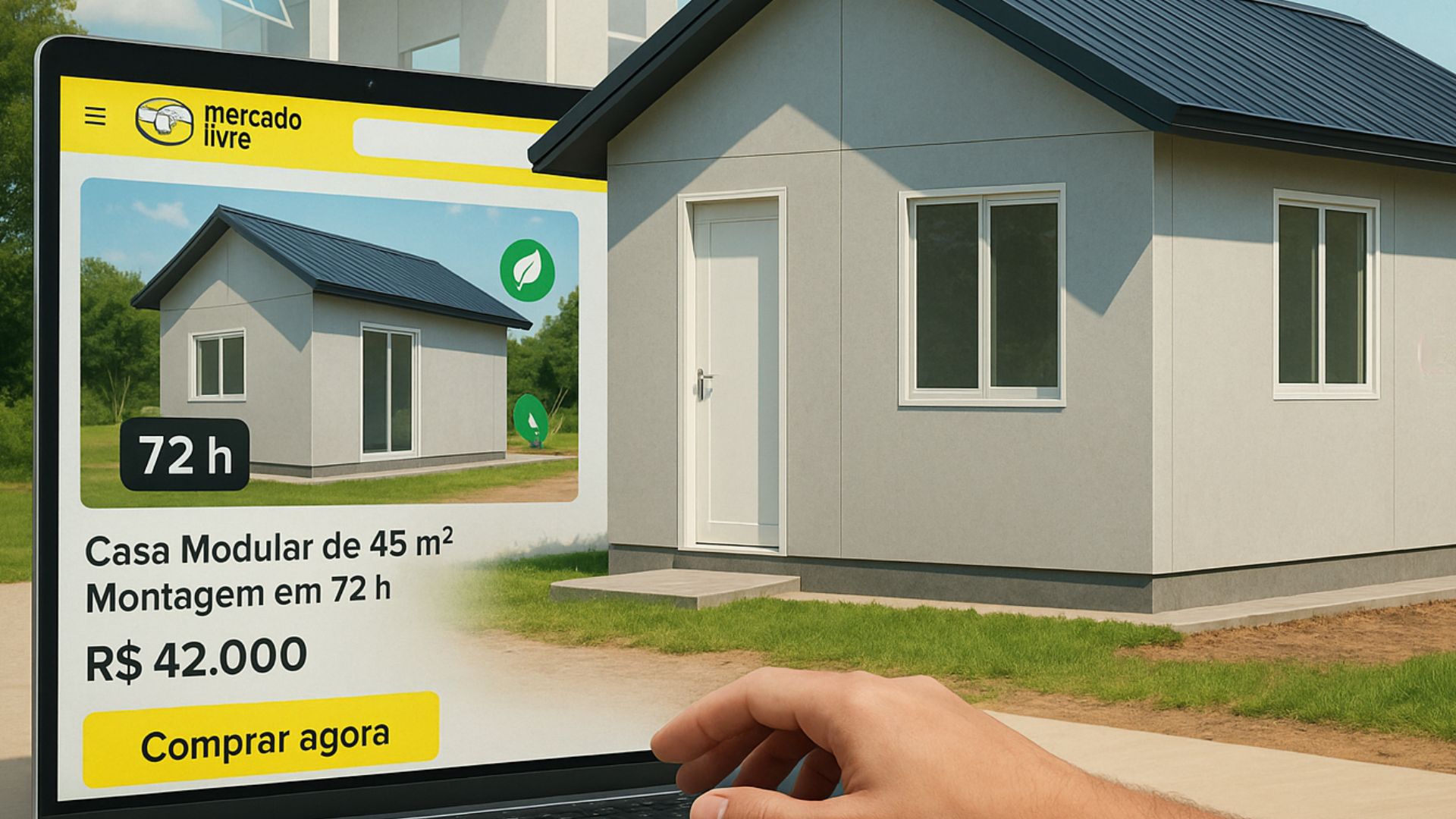


Prefabricated Houses Sold Online Promise Assembly in 72 Hours, Low Cost and Reduction of Waste, Attracting Buyers from Various Regions and Awakening Interest in the Brazilian Real Estate Sector.
A kit of prefabricated house of 45 m², advertised for around R$ 42 thousand in a marketplace, has been standing out in the country and appeals to those looking to reduce costs and construction time.
According to data released by the ND+ portal, more than 1,200 units were sold in 90 days, with a delivery forecast of up to 30 days and assembly completed in 72 hours.
The proposal combines industrialized production and simplified assembly, targeting especially consumers with limited budgets.
-
IPTU exemption for seniors in 2026: see how to secure the benefit.

-
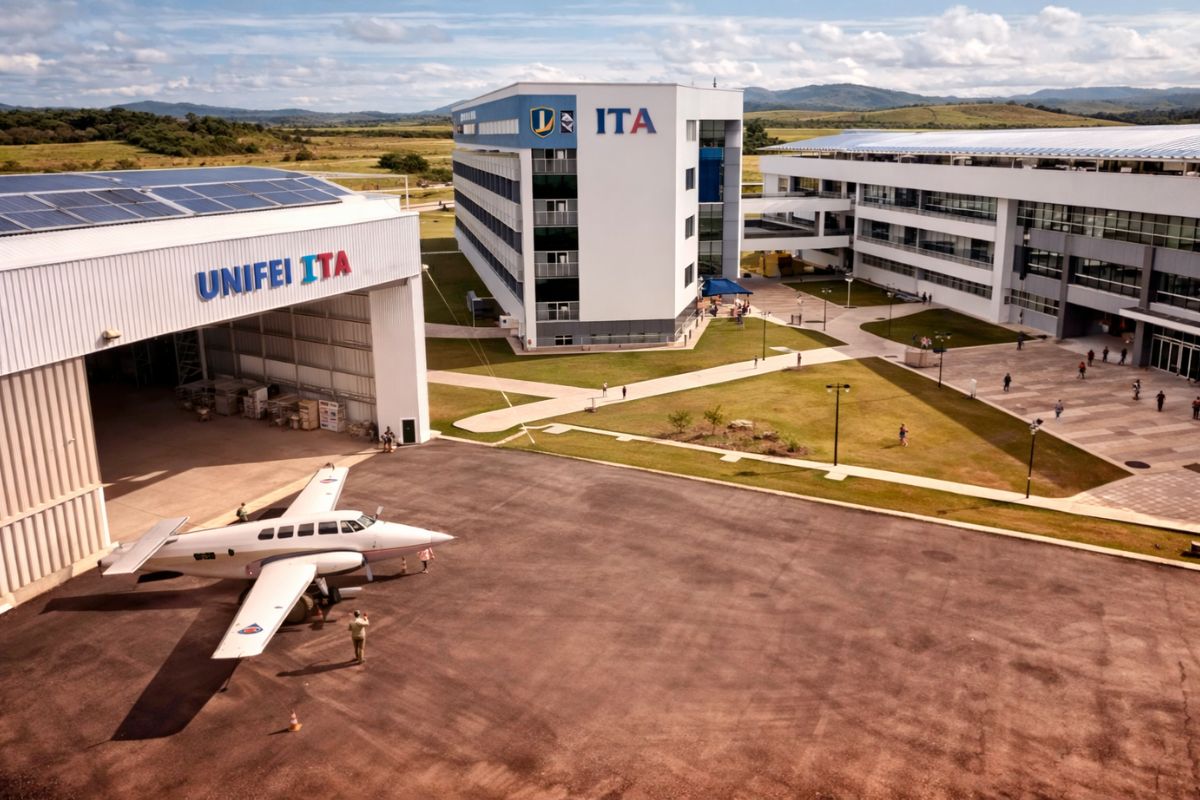
The institute that trained the greatest aerospace engineers in Brazil has just opened its first campus outside São Paulo after 75 years: ITA Ceará will have R$ 445 million, new courses in energy and systems, and classes are expected to start in 2027.
-
Luciano Hang, owner of Havan, goes to Juiz de Fora after the tragedy in February, brings R$ 1 million, hands out R$ 2,000 cards, and donates up to R$ 15,000 to victims in the region.

-
The Brazilian passport allows legal residence in dozens of countries without the need for a prior visa, and most Brazilians are unaware that they can apply for residency directly upon arriving in nations in South America, Africa, and even Europe.

The offer includes a set of 82 prefabricated components that arrive ready for installation in 15 states.
This includes cement boards for the walls, aluminum windows with tempered glass, internal and external coverings, as well as pre-sized electrical and plumbing installations.
The package also includes a bathroom with acrylic box and resin sink, reducing common stages of traditional construction.
It’s not just about speed.
According to the manufacturer, three professionals are sufficient to erect the structure, without the use of conventional masonry.
The model promises 68% reduction in construction time and 42% reduction in total cost compared to the usual method.
The bet on construction site industrialization also reinforces the environmental argument: standardized production decreases 89% of waste, uses 37% recycled materials, and requires 53% less water than typical processes in the sector.
How Assembly and Thermal Performance Work
The installation follows a script that prioritizes fittings and fixings, with inspection of electrical and plumbing connections before the final closure.
The galvanized ceiling with drywall is pointed out as one of the responsible factors for thermal comfort.
According to the supplier, the internal environment tends to stay between 18 °C and 32 °C, a range considered suitable for hot and humid climates.
This performance is reinforced by the insulation applied to the walls and the lower thermal inertia of the lightweight construction, which facilitates ventilation.
Even so, the assembly depends on terrain conditions and a compatible foundation project.
The kit does not include the structural base, whose average cost is reported to be R$ 8 thousand, varying according to the soil.
The freight is also the buyer’s responsibility and can reach R$ 5 thousand for long distances or areas that are difficult to access.
Customization items — such as expanding openings, changing coverings or varying layouts — increase the final price by up to 25%.
To regularize the construction, municipalities usually require a Technical Responsibility Note (ART), with usual values between R$ 500 and R$ 1,200.
Sustainability and Material Reuse
The environmental appeal appears on different fronts.
Mass production reduces losses in cutting sheets and metal profiles, while factory quality control minimizes rework.
In addition, the system was designed to reuse 91% of the parts at the end of their useful life, highlighting metal and standardized components.
This feature favors disassembly, relocation, and recycling, reducing landfill waste and the impact on the construction life cycle.
Another important point is the lower water footprint during construction.
With the base completed, dry assembly requires little use of water, especially in the closure and finishing stages, contributing to efficiency on site and mitigating mud and debris.
In regions with supply restrictions, this operational advantage weighs on the schedule and budget.
Costs, Deadlines and Local Requirements
The entry price is attractive, but the total cost only becomes clear with all components in mind.
Besides foundation, freight, and ART, expenses may arise with connections to water, sewage and energy networks, municipal fees, and any adjustments required by building codes.
The delivery within 30 days depends on stock availability, logistics, and favorable weather for assembly.
In areas subject to strong winds, it is recommended to pay attention to the roof fastening project and the sizing of ties.
For those looking to finance, credit evaluation and acceptance of the construction system by the institution may affect deadlines.
There are cases where the buyer opts to finance the base and assembly with their own resources, leaving additional finishes for future stages.
In rural or periurban contexts, the feasibility of transporting the pieces also integrates planning.
Booming Market and Social Housing
The search for quick and cheap solutions occurs within a favorable cycle for the sector.
In the first half of 2025, according to the Brazilian Chamber of the Construction Industry, launches grew 6.8% and sales advanced 9.6%, totaling 206.9 thousand units sold in the period.
This represents a historic record of launches for a first half since the beginning of the entity’s series.
The movement has a strong contribution from Minha Casa, Minha Vida (MCMV), with a relevant increase in sales in the economic segment.
Economist Celso Petrucci from CBIC assesses that the industrialization of civil construction is gaining space as a scalable alternative for accessing housing.
“The industrialization of civil construction is a global trend. Brazil is starting to see this format as a real alternative for dignified and affordable housing,” he stated.
In practice, modular solutions can shorten deadlines, stabilize costs, and broaden delivery predictability, characteristics valued in housing programs.
Potential Impact on Housing Deficit
In the public debate, initiatives that reduce construction time and cost are seen as allies in combating the housing deficit.
The combination of low initial investment, simplified logistics, and clean construction suggests a path to accelerate large-scale deliveries, especially in smaller municipalities.
At the same time, there remains a need for local regulation, public technical assistance, and access to financing lines compatible with industrialized construction systems.
The mass adoption of modular kits, however, depends on additional factors: workforce qualification for assembly, available urban infrastructure, and standardization of technical norms that facilitate approvals.
In regions with high thermal amplitude or salinity, for example, specifications for anticorrosive protection and insulation must be carefully observed to preserve performance and durability.






Podiam botar o link do anúncio né?
é esse modelo aqui 👉🏾 https://mercadolivre.com/sec/1QET95G